
Note: This article is written as original, publication-ready web content, synthesized from real public information about professional cat photography, feline behavior, pet photography best practices, and the feel-good appeal of funny cat pictures.
There are two kinds of people on the internet: people who love funny cat pictures, and people who have not yet been shown the right funny cat pictures. Somewhere in the middle of that glorious digital jungle lives the “catographer” a photographer who does not merely take pictures of cats, but somehow convinces whiskered chaos machines to reveal their inner comedians.
The title “This ‘Catographer’ Takes Funny Pictures Of Cats That Might Make You Laugh (50 Pics)” points to the kind of photo collection that makes scrolling feel less like wasting time and more like emotional maintenance. A cat mid-yawn becomes an opera singer. A fluffy face in a tiny hat becomes a retired judge who has seen enough nonsense for one lifetime. A wide-eyed kitten looks like it just learned about taxes. These are not just cute cat photos; they are tiny, furry character studies with paws.
One of the best-known artists in this playful niche is Nils Jacobi, often recognized online as “The Catographer” and associated with the FurryFritz brand. His work focuses on expressive cat portraits, funny feline faces, action shots, and clever setups that reveal cats from angles many owners never see. The result is a blend of pet photography, comedy, portrait art, and pure internet serotonin.
Who Is the “Catographer” Behind These Funny Cat Pictures?
The word “catographer” sounds like something invented by a cat walking across a keyboard, but it fits surprisingly well. A catographer is more than a pet photographer. This kind of artist studies feline timing, body language, curiosity, attitude, and the ancient cat law that states: “I will pose beautifully only after you put the camera away.”
Nils Jacobi is widely known for specializing in cat photography and cat video content. His portfolio includes thousands of cat images, ranging from polished studio portraits to wonderfully weird photos where cats appear surprised, dramatic, judgmental, heroic, confused, or suspiciously ready to start a podcast. He has worked across commercial pet photography and social media, building an audience that enjoys cats not as perfect little ornaments, but as expressive personalities.
That is the magic. The best funny cat photos do not laugh at cats. They celebrate them. The humor comes from recognition. Cat owners have seen these faces before: the “you moved my blanket” stare, the “why is the door closed?” outrage, the “I meant to fall off that shelf” dignity recovery, and the classic “feed me, peasant” expression.
Why Funny Cat Photography Works So Well Online
Cats were practically built for the internet. They are independent, mysterious, dramatic, athletic, lazy, elegant, clumsy, and somehow all of those things before breakfast. A funny cat picture succeeds because it captures a contradiction: cats look regal even when behaving like tiny gremlins in fur coats.
Cats Have Naturally Expressive Faces
A cat’s face can change the mood of an image instantly. Wide pupils can make a cat look shocked or playful. Half-closed eyes can suggest royal boredom. Forward ears may create a curious, alert expression, while sideways or flattened ears can signal discomfort or irritation. Whiskers, mouth shape, posture, and tail position all add emotional clues.
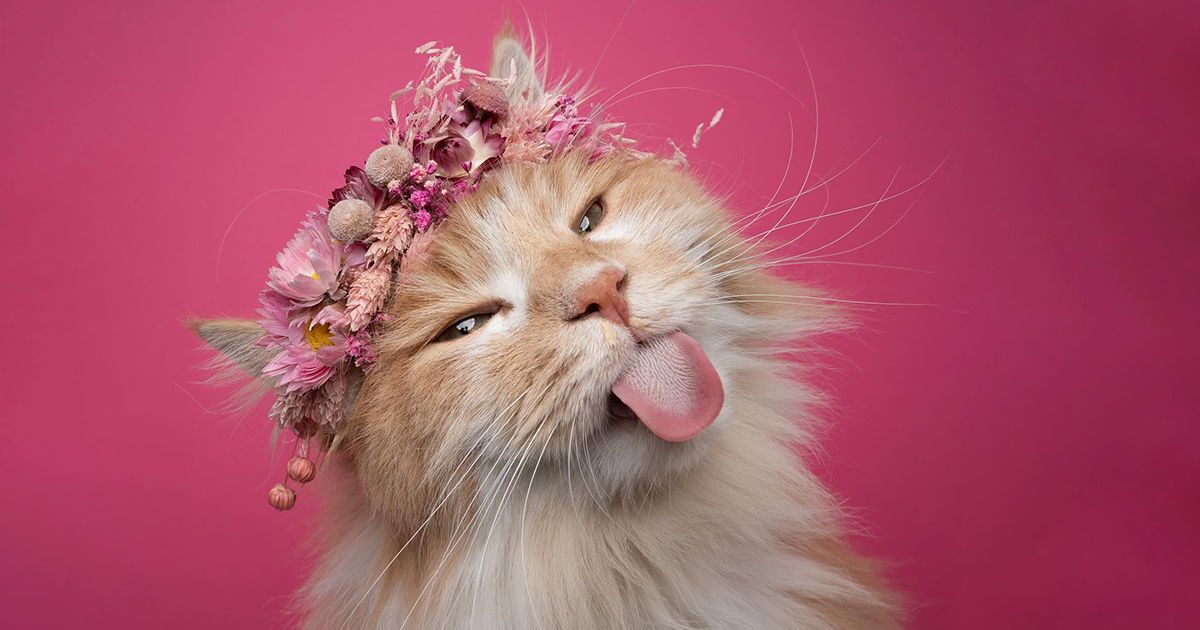
That is why a skilled cat photographer pays attention to the whole animal, not just the face. A photo of a cat licking its nose is cute. A photo of a cat licking its nose while staring directly into the camera with the solemn intensity of a tiny food critic is comedy gold.
The Timing Is Everything
Funny cat photography often depends on fractions of a second. A blink, leap, sneeze, lick, stretch, pounce, or yawn can create an expression that disappears almost immediately. Humans can be asked to hold a pose. Cats, on the other paw, negotiate through silence, tail flicks, and sudden exits.
This is why many great cat portraits feel candid even when they are carefully planned. The photographer may prepare the lighting, background, lens, treats, toys, and safe setup, but the cat supplies the plot twist.
The Photos Feel Relatable
Part of the appeal of funny cat pictures is that viewers project human emotions onto them. A grumpy-looking cat becomes your coworker before coffee. A startled kitten becomes everyone opening their bank app after vacation. A majestic long-haired cat with an accidental goofy expression becomes the villain of a soap opera that only airs under the dining table.
Of course, cats are not literally thinking in memes. But their body language is rich enough to make the joke land. That balance between real feline behavior and human imagination keeps cat photography endlessly shareable.
What Makes These 50 Cat Pictures So Entertaining?
A collection of 50 funny cat pictures works because variety keeps the viewer engaged. Instead of one joke repeated fifty times, the strongest galleries feel like a parade of personalities. One cat looks elegant. The next looks mildly possessed by snack energy. Another appears to be questioning every decision that led to the photoshoot.
1. The “Unexpected Expression” Photos
These are the images where a cat is caught mid-yawn, mid-lick, mid-meow, or mid-sneeze. The face becomes theatrical. A harmless little mouth stretch suddenly resembles a rock concert scream. A tongue flick turns into a red-carpet scandal. These shots are funny because they freeze a moment that the human eye might miss.
2. The “Too Serious for This World” Portraits
Some cats have faces that suggest they manage a very strict office. Put them against a clean background and they become CEOs of a company that sells judgment by subscription. These portraits are hilarious because the cats look deeply important while doing absolutely nothing.
3. The “Action Cat” Images
Jumping, pouncing, twisting, stretching, and swatting can make cats look like athletes, ninjas, dancers, or furry noodles in motion. Action shots show how physically impressive cats are, while still leaving room for silliness. A cat leaping gracefully is beautiful. A cat leaping with one paw pointed in a strange direction and eyes full of chaos is art.
4. The “Glass Table” Perspective
One popular cat photography technique involves shooting from underneath a glass surface. This creates a view of paws, bellies, toe beans, whiskers, and curious faces pressed against the transparent surface. The angle is funny because it reveals a cat from a perspective people rarely see, like discovering the secret underside of royalty.
5. The “Tiny Accessory, Big Personality” Shots
When done safely and gently, simple props can add humor to a cat portrait. A small hat, a paper opening, a soft background, or a themed setup can turn a cat’s natural expression into a complete character. The key is restraint. The cat should remain the star, not a confused mannequin in a craft-store emergency.
The Art Behind Funny Cat Photos
It is tempting to think funny cat photography is just luck. To be fair, cats do provide a generous amount of unpaid chaos. But a strong image still requires composition, light, patience, and understanding. A professional catographer must be part photographer, part animal observer, and part diplomat negotiating with a creature that may suddenly decide the backdrop is suspicious.
Lighting Makes the Joke Clear
Good lighting helps viewers see the expression, eyes, whiskers, fur texture, and tiny details that make a photo memorable. Soft natural light can create warm, gentle portraits. Studio lighting can produce crisp, dramatic images. Harsh flash, however, can be stressful or unflattering, especially for sensitive animals, so thoughtful photographers avoid anything that could startle the cat.
Eye Focus Matters
In pet photography, the eyes often carry the emotion of the image. If the eyes are sharp, the viewer connects with the subject. If the nose is sharp but the eyes are blurry, the photo may feel slightly off, unless the goal is an intentionally silly close-up. With cats, the eyes can communicate curiosity, calm, mischief, annoyance, or the ancient wisdom of someone who knocked a glass off the counter and learned nothing.
Safe, Comfortable Setups Come First
The best funny cat pictures are not forced. A relaxed or curious cat will produce more natural expressions than a stressed one. Good cat photographers work with the animal’s mood. They allow breaks, use safe surfaces, avoid frightening sounds, and never push a cat into a pose that causes fear or discomfort.
This matters because feline body language is subtle. A tucked tail, flattened ears, tense body, or repeated attempts to leave can signal that the cat needs space. The funniest photo in the world is not worth making an animal uncomfortable.
Why Cat Body Language Makes These Photos Funnier
To appreciate funny cat photos more deeply, it helps to understand that cats are always communicating. They use their ears, eyes, whiskers, tail, posture, and movement. A confident cat may stand tall with a relaxed tail. A curious cat may point its ears forward. A playful cat may crouch and focus before pouncing. A nervous cat may lower its body, widen its pupils, or press its ears back.
When a catographer captures these signals at just the right second, viewers read the image almost like a comic panel. The cat does not need a speech bubble. Its face already says, “I have concerns,” “This snack is mine,” or “I regret nothing.”
That is one reason Nils Jacobi’s style resonates with so many people. His portraits often feel like personality snapshots rather than simple pet pictures. Each cat seems to arrive with a backstory, a mood, and possibly a tiny unpaid parking ticket.
How Funny Cat Pictures Affect Our Mood
There is a reason people send funny cat photos to friends during stressful days. Humor can help break tension, and lighthearted animal content gives the brain a small, friendly reset. Looking at a silly cat picture will not solve every problem, but it can make a difficult afternoon feel slightly less like a printer jam with emotions.
Pets also carry emotional meaning for many people. Cats are companions, comfort animals, roommates, alarm clocks, furniture inspectors, and occasional laptop warmers. Even people without cats often enjoy cat photos because they offer quick, low-pressure joy. You do not need to clean a litter box to laugh at a kitten making a dramatic face.
Funny cat photography sits at the intersection of art and mood repair. It is visual comedy with whiskers. The best images invite viewers to pause, smile, share, and remember that the world still contains small absurd miracles, such as a cat looking furious while wearing the expression of someone who just discovered the restaurant is out of salmon.
What Bloggers and Publishers Can Learn From Catographer-Style Content
For websites, funny cat picture collections are not just cute filler. They are highly engaging visual content when presented thoughtfully. A strong article about 50 funny cat pictures should do more than drop images onto a page. It should provide context, personality, captions, related insights, and a reason for readers to keep scrolling.
Use Descriptive Headings
Readers and search engines both appreciate structure. Headings such as “Why Cat Expressions Are So Funny,” “How Catographers Capture Perfect Timing,” and “Tips for Taking Better Cat Photos at Home” help organize the article. They also naturally include related search terms like funny cat pictures, cat photography, cat portraits, feline expressions, and pet photography.
Write Captions With Personality
A great caption can turn a funny photo into a memorable moment. For example, a cat staring at the camera with narrowed eyes might inspire a caption like, “He knows what you did, and he has scheduled a meeting.” A kitten with surprised eyes could be described as, “When the treat bag opens in the other room.” The trick is to keep captions fresh, specific, and playful without repeating the same joke.
Add Helpful Takeaways
Even a humor article can offer value. Explain what makes the photos work. Share beginner-friendly pet photography tips. Mention how to read cat body language. Encourage readers to respect animal comfort. This adds depth and makes the page more useful than a simple gallery.
Tips for Taking Funny Cat Pictures at Home
You do not need a professional studio to capture hilarious cat photos. You do need patience, a camera or phone, and acceptance that your cat may ignore your creative vision because the laundry basket is more emotionally compelling.
1. Photograph at Cat Level
Get low. A photo taken from a cat’s eye level feels more personal and expressive. Instead of looking down at your cat, you enter its world. Warning: this world may include dust bunnies and one missing hair tie from 2022.
2. Use Natural Light
Place your cat near a window or in soft daylight. Natural light makes fur, eyes, and whiskers look better. Avoid sudden bright flashes, especially if your cat dislikes them.
3. Keep the Background Simple
A clean background helps the expression stand out. A plain wall, blanket, chair, or patch of sunlight can work beautifully. If the background contains laundry, snack wrappers, and a mysterious sock, congratulations: your cat is now in a documentary.
4. Let the Cat Lead
Some of the funniest photos happen when cats are allowed to be themselves. Follow their curiosity. If they want to inspect a box, photograph the box inspection. If they decide the photoshoot is over, respect the tiny manager’s decision.
5. Shoot in Bursts
Cats move quickly. Burst mode helps you catch the exact moment when a yawn becomes a roar, a jump becomes a ballet move, or a stretch becomes a noodle impression.
6. Reward, Don’t Force
Use treats, toys, praise, or breaks to keep the experience positive. Funny cat photography should feel like play, not a court summons.
Why These Funny Cat Pictures Stay Popular
Trends change quickly online, but cats remain undefeated. Their appeal is not only cuteness; it is character. Funny cat pictures work because they are endlessly flexible. They can be wholesome, sarcastic, elegant, chaotic, dramatic, cozy, or completely unexplainable.
A talented catographer understands this range. Instead of trying to make cats act like humans, the photographer captures how naturally theatrical cats already are. A flick of the tail, a sideways glance, a paw on glass, a suspicious stare at a toy each moment can become a tiny story.
That is why a collection like “This ‘Catographer’ Takes Funny Pictures Of Cats That Might Make You Laugh (50 Pics)” is more than a gallery. It is a reminder that cats are not one-note pets. They are expressive, curious, independent, affectionate, weird, photogenic, and occasionally shaped like bread.
Experience: What Spending Time With Funny Cat Photography Teaches You
After spending enough time looking at funny cat photography, you start noticing cats differently. At first, you may only see the obvious joke: the tongue out, the giant eyes, the dramatic leap, the grumpy face. But after a while, the smaller details become the real entertainment. One ear turns slightly toward a sound. A whisker bends forward. A tail tip curls like a question mark. A paw lands on the table with the confidence of a tiny landlord collecting rent.
This is where the experience becomes richer than simple scrolling. Funny cat pictures teach patience. They show that comedy often lives in timing, not exaggeration. A cat does not need a complicated costume or a wild setup to be hilarious. Sometimes all it takes is a clean background, soft light, and a face that says, “I heard the treat bag, and I am prepared to negotiate.”
Trying to take these photos at home makes you respect professional catographers even more. You may set up the perfect shot, arrange the light, choose the angle, and prepare your phone. Then your cat walks away and sits in the least photogenic corner of the room, possibly because that corner has better emotional acoustics. Or your cat finally looks straight into the lens, but only while standing in front of a pile of laundry. This is not failure. This is the authentic feline creative process.
The biggest lesson is to follow the cat’s personality. Some cats are natural comedians, always rolling, chirping, flopping, and making faces. Others are quiet philosophers who prefer serious portraits with just a hint of judgment. Some are action stars. Some are loaf specialists. Some appear in exactly one good photo per year, usually by accident and usually when you are trying to photograph something else.
Funny cat photography also reminds us that pets are not props. The best images come from trust. A cat that feels safe will explore, play, stretch, blink, and reveal its character. A cat that feels pressured will shut down or leave. So the real skill is not controlling the cat; it is creating conditions where the cat feels comfortable enough to become its wonderfully strange self.
For readers, these photos offer a small but real kind of joy. They are easy to share, easy to understand, and surprisingly comforting. In a busy world, a cat making a ridiculous face is a tiny pause button. It says: here is something harmless, funny, soft, and alive. Laugh for a second. Send it to a friend. Then return to your day with slightly more whisker-powered optimism.
That is the lasting charm of the catographer’s work. It does not simply show cats being cute. It shows cats being individuals. Each image feels like a meeting with a new character: the suspicious queen, the confused scholar, the snack detective, the dramatic opera kitten, the sleepy loaf, the glass-table acrobat, and the tiny chaos goblin who somehow looks innocent while clearly planning something.
Conclusion
This ‘Catographer’ Takes Funny Pictures Of Cats That Might Make You Laugh (50 Pics) is the kind of topic that proves humor, art, and pet love can fit inside a single whiskered frame. Nils Jacobi and other creative pet photographers show that cat photography is not just about cuteness. It is about timing, empathy, observation, and the ability to see a full personality in one raised paw or sideways glance.
Funny cat pictures remain popular because they are simple, joyful, and oddly universal. Whether you are a lifelong cat owner or someone who only appreciates cats from a safe distance because allergies are rude, these images can still make you smile. Cats are mysterious, expressive, and proudly unpredictable. In other words, they are perfect models as long as we remember that they are also the directors.













