Some trials settle a dispute. Others detonate like a legal firework display and leave history permanently rearranged. The most famous courtroom battles were never just about one defendant, one charge, or one dramatic lawyer pointing at an exhibit. They became public arguments about truth, religion, science, race, war, political power, freedom, and the terrifying possibility that a courtroom can either protect justice or dress injustice in a very official-looking robe.
This list of historic trials that shook the world spans more than two millennia, from ancient Athens to apartheid-era South Africa. Some produced landmark legal ideas. Some exposed prejudice. Some were deeply unfair by modern standards. All of them changed the way people understood authority and the law.
Why Historic Trials Matter
A historic trial matters when its consequences travel far beyond the courtroom door. It can change laws, inspire movements, define public memory, or force society to confront an ugly truth it would rather keep tucked behind a filing cabinet labeled “Please Ignore.”
These trials also remind us that law is never entirely separate from the culture around it. Judges, juries, witnesses, journalists, politicians, and spectators all bring their beliefs into the room. That does not make justice impossible, but it does make vigilance necessary.
1. The Trial of Socrates, 399 BCE
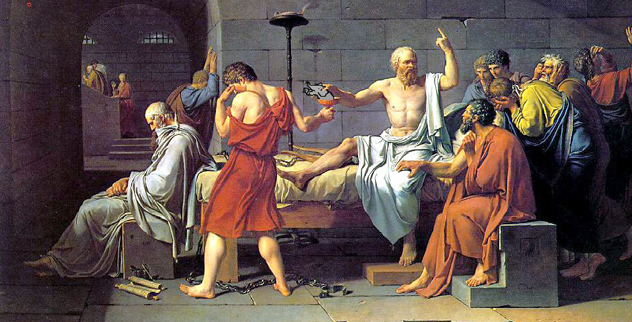
The trial of Socrates is one of the earliest and most influential courtroom dramas in Western history. The Athenian philosopher was accused of impiety and corrupting the youth of Athens. In simpler terms, he had built a career around asking uncomfortable questions, and the people being questioned were not exactly sending thank-you cards.
Socrates was found guilty by an Athenian jury and sentenced to death. He died after drinking hemlock. His trial became a lasting symbol of the conflict between independent thought and political or social conformity. Plato’s accounts of the case helped turn Socrates into a model of intellectual courage, even though historians continue to debate the exact political and religious pressures surrounding the conviction.
Why it shook the world
The trial shaped discussions about free speech, moral duty, civic responsibility, and the danger of punishing dissent. It also made one lesson painfully clear: a society can celebrate debate right up until someone asks a question that makes everyone uncomfortable.
2. Galileo’s Trial Before the Roman Inquisition, 1633
Galileo Galilei did not invent the idea that Earth moves around the sun, but he became its most famous scientific defender. His observations through a telescope supported the Copernican model of the solar system, challenging the belief that Earth sat motionless at the center of creation.
In 1633, Galileo was tried by the Roman Inquisition and found guilty of being strongly suspected of heresy. He was forced to recant certain views and spent the rest of his life under house arrest. The case has often been simplified into a cartoonish battle between science and religion, but its real history was more complicated, involving theology, politics, personality clashes, publishing, and a very unfortunate ability to annoy powerful people.
Why it shook the world
Galileo’s trial became an enduring warning about what can happen when institutions try to control scientific inquiry. It remains a symbol of the importance of evidence, open debate, and the freedom to test ideas that challenge accepted authority.
3. The Salem Witch Trials, 1692–1693
The Salem witch trials remain one of the darkest chapters in early American legal history. In colonial Massachusetts, fear of witchcraft spiraled into accusations, arrests, hearings, and executions. Nineteen people were hanged, and Giles Corey died after being pressed with heavy stones during questioning. Others died in jail.
The proceedings relied heavily on unreliable testimony, including so-called spectral evidence: claims that a person’s spirit had harmed someone. That is not a sentence you want to hear in any courtroom, especially when the evidence department appears to have been managed by nightmares.
Why it shook the world
Salem became a cautionary tale about mass panic, weak procedural safeguards, religious extremism, and the catastrophic consequences of accepting accusation as proof. The phrase “witch hunt” is now used constantly, sometimes accurately and sometimes by people who are merely annoyed about being asked where the receipts went.
4. The Dreyfus Affair, 1894–1906
In 1894, French army captain Alfred Dreyfus, a Jewish officer, was wrongly convicted of treason and sent to Devil’s Island. His case was built on questionable handwriting evidence, secret documents withheld from the defense, and a wave of antisemitic hostility.
As evidence emerged that another officer was likely responsible, the French military tried to protect its reputation rather than admit error. The affair exploded into a national crisis. Writer Émile Zola’s famous open letter, J’Accuse…!, accused the government and military of injustice and antisemitism. Dreyfus was eventually exonerated in 1906.
Why it shook the world
The Dreyfus Affair transformed French politics and exposed how prejudice can infect legal institutions. It also influenced modern discussions about civil rights, government transparency, antisemitism, press freedom, and the obligation to correct a wrongful conviction even when doing so embarrasses powerful institutions.
5. The Scopes “Monkey Trial,” 1925
The Scopes Trial began as a legal challenge to a Tennessee law banning the teaching of human evolution in public schools. John T. Scopes, a young teacher, was accused of violating the Butler Act. The case brought together two nationally famous lawyers: Clarence Darrow for the defense and William Jennings Bryan for the prosecution.
What might have been a local criminal case became a global media event. Reporters flooded Dayton, Tennessee, turning the town into a carnival of headlines, speeches, arguments, souvenirs, and enough public opinion to power a small city. Scopes was convicted and fined, although the verdict was later overturned on a technicality.
Why it shook the world
The Scopes Trial made the conflict between science education, religion, public schools, and free expression a national conversation. It also showed the growing power of mass media to turn a courtroom into a public stage.
6. The Sacco and Vanzetti Trial, 1921
Nicola Sacco and Bartolomeo Vanzetti were Italian immigrants and anarchists convicted of robbery and murder in Massachusetts after a 1920 payroll heist. Their trial became controversial almost immediately because of concerns about anti-immigrant prejudice, anti-radical hysteria, questionable evidence, and the political climate of the Red Scare.
The pair were executed in 1927 despite years of appeals, international protests, petitions, and public debate. Their guilt has been argued over for generations, but the fairness of the trial itself has remained a central concern. In 1977, Massachusetts Governor Michael Dukakis issued a proclamation recognizing that they had not received a fair trial.
Why it shook the world
The Sacco and Vanzetti case became a global symbol of anxiety about immigration, political persecution, class conflict, and the death penalty. It asked a question that still has no easy answer: can a defendant receive a fair trial when the public fears what they represent?
7. The Nuremberg Trials, 1945–1946
After World War II, the Allied powers created an international military tribunal in Nuremberg, Germany, to prosecute leading Nazi officials. The defendants faced charges including crimes against peace, war crimes, crimes against humanity, and conspiracy.
The Nuremberg Trials were not merely about punishing defeated leaders. They established a public record of Nazi atrocities through documents, testimony, film, and eyewitness evidence. Twenty-two major defendants stood trial, and nineteen were convicted.
Why it shook the world
Nuremberg established the principle that government officials can be held individually responsible for international crimes. “I was following orders” was no longer treated as a magic legal umbrella. The trials influenced later war-crimes tribunals, international criminal law, and the broader idea that some crimes are offenses against humanity itself.
8. The Rosenberg Espionage Trial, 1951
Julius and Ethel Rosenberg were tried in the United States during the Cold War for conspiracy to commit espionage. Prosecutors argued that they had helped pass atomic secrets to the Soviet Union. They were convicted in 1951 and executed in 1953.
The case unfolded during a period of intense fear about communism, nuclear weapons, and Soviet espionage. Julius Rosenberg’s involvement in espionage was later supported by declassified evidence, but the degree of Ethel Rosenberg’s involvement and the fairness of the prosecution’s approach have remained subjects of serious historical debate.
Why it shook the world
The Rosenberg trial became one of the defining legal events of the Cold War. It raised lasting questions about national security, political fear, capital punishment, prosecutorial pressure, and whether justice can remain calm when a nation feels existentially threatened.
9. The Eichmann Trial, 1961
Adolf Eichmann, a Nazi official who played a central role in organizing the deportation of Jews during the Holocaust, was captured in Argentina and tried in Jerusalem in 1961. The trial included extensive survivor testimony and was widely televised, bringing the Holocaust into living rooms around the world.
Eichmann was convicted of crimes against the Jewish people, crimes against humanity, war crimes, and other offenses. He was executed in 1962. The legal proceedings did more than determine one man’s guilt; they created a powerful public record of the experiences of Holocaust survivors.
Why it shook the world
The Eichmann Trial changed public understanding of the Holocaust. It gave survivors a global platform and helped establish testimony, memory, and historical documentation as essential parts of justice after mass atrocity.
10. The Rivonia Trial, 1963–1964
The Rivonia Trial placed Nelson Mandela and other anti-apartheid leaders before a South African court on charges including sabotage and conspiracy to overthrow the state. Mandela’s statement from the dock became one of the most famous speeches in the history of political resistance.
Rather than receive the death penalty, Mandela and several co-defendants were sentenced to life imprisonment. Mandela spent 27 years in prison, much of that time on Robben Island. The trial made him a global symbol of resistance to apartheid and racial oppression.
Why it shook the world
The Rivonia Trial exposed apartheid to international scrutiny and strengthened the global anti-apartheid movement. It showed that a courtroom designed to silence political opposition can sometimes give that opposition its most powerful voice.
What Connects These World-Changing Trials?
These historic trials differ in place, period, and legal system, but they share a common theme: law becomes most visible when it is under pressure. Socrates challenged civic conformity. Galileo challenged intellectual authority. Salem revealed the danger of fear. Dreyfus and Sacco-Vanzetti exposed prejudice. Nuremberg and Eichmann confronted mass atrocity. Rivonia turned a political prosecution into a moral indictment of apartheid.
The lesson is not that courts always get everything right. History makes that impossible to claim with a straight face. The lesson is that legal systems need evidence, transparency, independent judges, competent defense lawyers, public scrutiny, and the courage to revisit mistakes.
How to Experience Historic Trials Without Turning History Into a Spectacle
Reading about historic trials can feel strangely personal, even when the events happened centuries ago. A transcript from an old courtroom often begins with dry procedure: names, charges, dates, objections, formal language. Then, suddenly, there is a human voice. A witness describes fear. A defendant refuses to surrender an idea. A judge struggles with pressure. A family waits outside. That is the moment history stops feeling like a textbook chapter and starts feeling uncomfortably close.
One useful way to experience these cases is to read more than the famous quote. Most people know that Socrates defended the examined life, that Galileo challenged accepted authority, or that Mandela declared his commitment to a democratic society. But the surrounding documents matter too. They reveal uncertainty, legal maneuvering, conflicting evidence, and the ordinary mechanics of systems that could produce extraordinary consequences.
Historic trials also become more meaningful when you ask practical questions. What evidence was accepted? What evidence was ignored? Did the defense have access to the prosecution’s documents? Was the jury independent? Were the accused judged for a specific act, or for their religion, nationality, politics, social class, or identity? Those questions turn legal history from a parade of famous names into a guide for recognizing unfairness in real time.
Visiting a courtroom, archive, memorial, museum, or historic site can deepen the experience even further. The rooms are often smaller than expected. That is one of history’s quiet tricks. Decisions that changed nations were sometimes made in spaces that would barely fit a modern office meeting. The setting makes it easier to understand that grand historical events are created by people making choices in ordinary rooms under extraordinary pressure.
It is also worth noticing how public opinion shaped many of these cases. Newspapers helped turn the Scopes Trial into an international event. Antisemitic publications fueled the Dreyfus Affair. Cold War fear intensified the Rosenberg case. Television gave the Eichmann Trial a worldwide audience. Modern readers may feel smug about having social media, livestreams, podcasts, and comment sections, but history suggests that public spectacle has always been a powerful force. The technology changes; the crowd does not.
The best experience of historic trials is not simply to admire dramatic speeches or famous verdicts. It is to leave with sharper questions. Would the evidence convince us today? Who benefited from the prosecution? Who had the power to shape the narrative? What protections were missing? And perhaps most importantly, what would we do if we were in the room?
That final question is why these trials still matter. They are not dusty legal relics. They are reminders that justice is not automatic. It is built, defended, challenged, and sometimes rescued by people willing to insist that facts matter, rights matter, and fear should never be allowed to wear a judge’s robe.
Conclusion
The top historic trials that shook the world were not always models of justice. Some became famous because they advanced human rights and international law. Others became infamous because they revealed how easily courts can be bent by panic, prejudice, propaganda, or political power.
From Socrates to Mandela, these cases show that trials can shape science, civil liberties, public memory, and the future of entire nations. They also offer a durable warning: the courtroom may be one of society’s most powerful institutions, but justice depends on what people are willing to demand from it.
Note: This list is selective rather than definitive. Historic trials are remembered not because suffering can be ranked, but because each case changed how people understood law, power, and human dignity.
SEO Tags
Historical background was cross-checked against U.S.-based archival, museum, university, and legal-history sources.