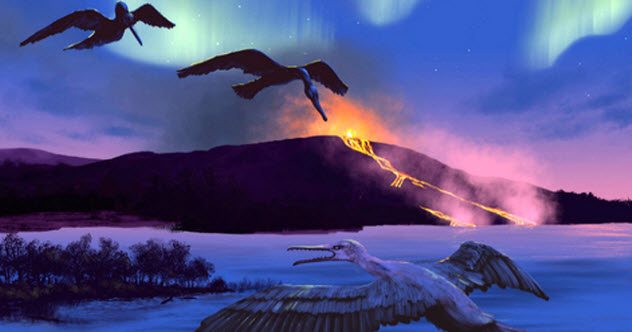
Volcanoes have a terrible reputation, and frankly, they have earned it. They explode, bury cities, rearrange coastlines, and occasionally cancel summer across half the planet. Yet volcanic disasters can also become extraordinary preservation machines. Ash seals footprints before wind erases them, pyroclastic material protects buildings from centuries of weather, and geothermal environments nurture organisms that rewrite biology textbooks.
The most revealing discoveries near volcanoes are therefore not limited to skeletons or pots. They include ancient libraries, entire farming communities, microscopic bacteria that transformed genetics, and ecosystems that survive without sunlight. Together, these volcanic discoveries show how people lived, migrated, adapted, and sometimes escaped just before nature dramatically closed the curtains.
Why Volcanic Landscapes Preserve the Past So Well
Volcanic eruptions produce ash, pumice, lava, mudflows, and fast-moving clouds of hot gas and debris. Under the right conditions, these materials can cover a site rapidly enough to protect fragile evidence from erosion, scavengers, moisture, and later construction. Volcanic layers can also contain minerals suitable for radiometric dating, giving researchers unusually precise chronological markers. In other words, a volcano may destroy the stage while preserving the props, footprints, snacks, and occasionally the audience.
10. The Lost Village Beneath Mount Tambora
A culture buried by the eruption that changed global weather
Mount Tambora’s 1815 eruption on the Indonesian island of Sumbawa was one of the most powerful eruptions in recorded history. Beyond its global climatic effects, the disaster erased settlements near the volcano, including the small kingdom of Tambora.
In the early 2000s, researchers led by University of Rhode Island volcanologist Haraldur Sigurdsson located remains of a Tamboran village beneath roughly 10 feet of volcanic deposits. Excavations uncovered houses, pottery, bronze objects, tools, and charred organic remains. The finds suggested that the community had regional trading connections and a material culture distinct from neighboring societies.
The discovery was revealing because the Tamboran language and much of the kingdom’s identity disappeared after the eruption. Archaeology became the only practical way to reconstruct a society that had been removed from both the landscape and living memory. It was less like finding a misplaced village and more like recovering a deleted chapter of human history.
9. The Ordinary Maya Households of Joya de Cerén
A farming village frozen in the middle of daily life
Royal tombs and monumental temples receive plenty of attention, but they do not always reveal how ordinary people cooked dinner, stored tools, grew crops, or organized their homes. Joya de Cerén in El Salvador does.
Around the seventh century, an eruption of the nearby Loma Caldera buried this pre-Hispanic farming community beneath rapidly accumulating volcanic material. The village remained hidden until 1976, when construction work exposed an earthen structure. Archaeologists subsequently found homes, kitchens, workshops, storage areas, religious spaces, cultivated fields, utensils, sleeping mats, and preserved plant evidence.
No human remains have been found, suggesting that the residents received enough warning to escape. Their possessions, however, were left where they had been used. Joya de Cerén therefore offers an exceptionally intimate look at household routines, food production, architecture, and community organization among Maya farmersnot merely the activities of rulers and priests.
8. The Brilliant Frescoes of Akrotiri
A Bronze Age town with plumbing, trade, and excellent interior decorating
Akrotiri, on the Greek island of Santorini, was buried during the enormous Bronze Age eruption of Thera in the second millennium BCE. Layers of pumice and ash protected multistory buildings, paved streets, pottery, furniture impressions, storage vessels, and some of the ancient Aegean world’s most vivid wall paintings.
The frescoes depict ships, landscapes, animals, religious scenes, fishermen, boxers, and women gathering saffron. Their imagery, along with imported goods and architectural features, demonstrates that Akrotiri participated in a sophisticated maritime trading network connecting the Cyclades, Crete, mainland Greece, Egypt, and the eastern Mediterranean.
Almost no human remains were discovered in the town. Evidence of earthquake damage and limited cleanup before the final eruption suggests that residents may have evacuated. That absence is itself a discovery: Akrotiri preserves not simply a disaster, but signs of how an organized population reacted to escalating volcanic danger.
7. Pompeii’s Human-Shaped Voids
Plaster casts that continue to challenge old assumptions
When Mount Vesuvius erupted in 79 CE, volcanic material buried Pompeii and many of its remaining inhabitants. As bodies decomposed within hardened ash, they left hollow spaces. In 1863, archaeologist Giuseppe Fiorelli developed a method of pouring plaster into those cavities, producing detailed casts of victims in their final positions.
The casts preserved folds of clothing, footwear, body positions, and even impressions of facial features. They turned an ancient casualty count into individual human stories. Modern imaging and biological analysis have made the casts even more revealing. Researchers can examine bones trapped inside the plaster for clues about age, health, diet, ancestry, and physical stress.
Genetic research has also challenged romantic labels attached to several groups. Individuals once described as mothers, daughters, sisters, or embracing relatives were not always female or genetically related. The lesson is delightfully awkward for archaeology: a dramatic pose may inspire a good story, but DNA does not care about the museum caption.
6. The Carbonized Library of Herculaneum
Ancient books preserved by the heat that nearly destroyed them
Herculaneum, another Roman town buried by Vesuvius, experienced different volcanic conditions from Pompeii. Extremely hot surges carbonized wood, food, furniture, and papyrus. In the eighteenth century, excavators working in a luxurious waterfront residence uncovered more than 1,000 blackened papyrus scrolls.
The building became known as the Villa dei Papiri. Its scrolls constitute the only substantial library from classical antiquity to survive in its original archaeological setting. Many contain Greek philosophical works, particularly writings associated with the Epicurean philosopher Philodemus. The villa also produced frescoes, mosaics, and one of the largest collections of Greek and Roman sculpture recovered from a single ancient residence.
Traditional attempts to open the brittle scrolls often damaged them. Researchers now use high-resolution scans, computer vision, and virtual-unwrapping techniques to locate layers and detect ink without physically unfolding the papyrus. The volcano effectively baked the books into charcoal briquettes; modern technology is persuading them to become books again.
5. More Than 400 Footprints at Engare Sero
A prehistoric group captured in motion beside an active volcano
Near Tanzania’s Oldoinyo Lengai volcano, researchers documented more than 400 human footprints preserved in an ancient volcanic mudflow at Engare Sero. The tracks are estimated to be approximately 6,000 to 19,000 years old and represent the movements of at least 20 individuals.
Unlike isolated footprints, the Engare Sero tracks preserve multiple pathways crossing the same surface. Researchers can study direction, walking speed, group composition, body size, and possible social behavior. Some tracks appear to have been made by a group moving together, while others belong to individuals crossing the area separately.
The wet volcanic material hardened almost like concrete, transforming a brief walk into a prehistoric traffic report. Bones can reveal who existed; footprints reveal what bodies were doing. That difference makes Engare Sero one of the most immediate records of human movement ever found.
4. Stone Tools That Survived the Toba Super-Eruption
Evidence against a simple human-extinction story
Approximately 74,000 years ago, the Toba super-eruption in Sumatra dispersed ash across a vast region. One influential hypothesis proposed that the eruption caused a severe volcanic winter and reduced human populations to a tiny number of survivors.
Stone tools discovered at the Dhaba site in northern India complicate that scenario. Archaeologists found related Middle Paleolithic technologies in layers dating from before, during, and after the Toba event. The technological continuity suggests that tool-making populations remained in the region rather than disappearing immediately after the eruption.
The discovery does not prove that Toba had no environmental consequences, nor does it settle every debate about who made the tools. It does show that the relationship between catastrophe and human survival was more complicated than a single global near-extinction event. Early humans, it appears, were already frustratingly good at refusing to follow simple scientific narratives.
3. Thermus Aquaticus in Yellowstone’s Hot Springs
The volcanic bacterium behind a revolution in DNA science
In the 1960s, microbiologist Thomas Brock investigated Yellowstone National Park’s geothermal springs. At the time, many scientists assumed that temperatures approaching the boiling point were too extreme for active life. Brock’s research helped overturn that assumption.
One organism isolated from Yellowstone was Thermus aquaticus, a bacterium capable of thriving at high temperatures. Its heat-resistant DNA-copying enzyme, Taq polymerase, later became essential to the polymerase chain reaction, or PCR. Because Taq polymerase survives repeated heating cycles, laboratories can rapidly amplify tiny quantities of DNA.
PCR transformed medical testing, genetics, criminal investigations, evolutionary biology, and infectious-disease research. A microscopic resident of a volcanic hot spring thus became one of modern biotechnology’s hardest-working employeesand it never even requested dental coverage.
2. Entire Ecosystems at Submarine Volcanic Vents
Life without sunlight at the bottom of the ocean
In 1977, scientists exploring the Galápagos Rift discovered active hydrothermal vents along a volcanically active mid-ocean ridge. Warm, mineral-rich water was emerging from the seafloor thousands of feet below the ocean surface. The vents were exciting, but the biological discovery surrounding them was astonishing.
Large clams, crabs, tubeworms, and dense communities of unfamiliar organisms flourished in total darkness. Instead of relying on sunlight and photosynthesis, the ecosystem depended on chemosynthetic microorganisms that obtained energy from chemicals released by the vents.
The discovery expanded the known limits of life and influenced theories about how life may have originated on Earth. It also strengthened scientific interest in icy moons such as Europa and Enceladus, where subsurface oceans may interact with warm rock. Finding an alien-looking ecosystem on Earth made alien life elsewhere seem slightly less rude for failing to answer our messages.
1. The Laetoli Footprints in Volcanic Ash
Three early humans walking across Tanzania 3.6 million years ago
The Laetoli footprints are among the most revealing discoveries in the study of human evolution. About 3.6 million years ago, early hominins walked across wet volcanic ash in what is now Tanzania. Another ashfall covered the surface, preserving the impressions until researchers led by Mary Leakey excavated the trail in the 1970s.
The best-known trail extends almost 88 feet and contains roughly 70 footprints. The track makers were probably Australopithecus afarensis, the species that includes the famous fossil skeleton Lucy. The footprints demonstrate habitual upright walking long before the evolution of modern human bodies or significantly enlarged brains.
They also preserve something bones cannot: a sequence of steps. Researchers can analyze stride length, foot position, gait, and weight transfer. The tracks show that bipedal locomotion was already well established millions of years ago. No heroic monument was intended. Three individuals simply crossed a damp landscape, and a volcano saved their walk for the rest of us.
What These Volcanic Discoveries Reveal
Despite their different ages and locations, these discoveries share a common theme: volcanic deposits preserve context. A loose object tells researchers that something existed. An object sealed beside a doorway, cooking hearth, footprint trail, crop field, or human body can reveal how it was used and what was happening when it was abandoned.
They also challenge the idea that disasters produce only endings. At Akrotiri and Joya de Cerén, evidence suggests that residents may have escaped. At Dhaba, tool-making traditions continued after an enormous eruption. In Yellowstone and at submarine vents, volcanic energy created environments where unusual life flourished. Destruction and discovery are not opposites in volcanic landscapes; they are often layers of the same story.
Experiencing the Landscapes Behind the Discoveries
What visitors, students, and field researchers can learn on location
Encountering a volcanic archaeological site is different from viewing an artifact inside a museum. The surrounding landscape remains part of the evidence. At Pompeii, Vesuvius rises beyond streets lined with bakeries, fountains, homes, political notices, and scratched graffiti. The volcano is not a decorative backdrop. Its proximity explains why the city is simultaneously ruined and exceptionally complete.
A visit to such a site often begins with scale. Photographs may show one fresco, footprint, or carbonized object, but walking through a preserved settlement reveals relationships between buildings, roads, fields, water systems, and escape routes. At Joya de Cerén, modest household structures demonstrate how ordinary farming families organized work and food storage. At Akrotiri, multistory architecture and drainage systems quickly dismantle the stereotype that Bronze Age communities were technologically simple.
Footprint sites create an especially personal experience. A footprint is not merely an anatomical impression; it records direction and intention. At Laetoli, the trackway encourages visitors to imagine several early hominins moving across fresh ash before the next eruption sealed their path. At Engare Sero, overlapping tracks create the impression of people traveling through a busy landscape rather than posing as isolated specimens in a diagram.
Researchers experience these places more methodically. Fieldwork may involve mapping ash layers, photographing surfaces under controlled light, scanning tracks in three dimensions, collecting microscopic samples, recording the exact positions of artifacts, and comparing volcanic minerals between distant sites. Excavation can be painstakingly slow because the location of an object is often as informative as the object itself. A beautiful pot removed without context becomes decoration. The same pot beside a hearth containing food residue becomes evidence of diet, technology, trade, and household behavior.
Volcanic sites also teach humility. Early interpretations are frequently revised as new tools become available. DNA changed stories attached to Pompeii’s casts. Computer imaging is revealing writing inside Herculaneum’s unopened scrolls. Chemical analysis identifies ancient foods, pigments, and migration patterns. Three-dimensional modeling can preserve a footprint digitally even when the original surface remains vulnerable to erosion.
For travelers, the safest and most meaningful experience comes through managed archaeological parks, museums, geological observatories, and guided routes. Active volcanic terrain can contain unstable ground, toxic gases, sudden weather, extreme heat, and areas closed for monitoring or conservation. Stepping beyond a barrier for a dramatic photograph may damage evidence that survived thousands of yearsor produce a final photograph with an unnecessarily exciting backstory.
The most rewarding approach is to look for small details rather than only dramatic ruins. Wear marks on a doorway, grain stored in a vessel, a repaired wall, or footprints turning in the same direction can reveal decisions made by real people. Volcanoes provide the spectacle, but these quiet traces provide the human connection.
Conclusion
The world’s rarest discoveries near volcanoes reveal much more than the destructive power of eruptions. They preserve movement, household routines, literature, trade, resilience, biological adaptation, and pivotal stages of human evolution. From Laetoli’s ancient footsteps to Yellowstone’s DNA-amplifying bacteria, volcanic environments have repeatedly protected evidence that would otherwise have disappeared.
These sites also remind us that history is not composed exclusively of kings, wars, and monuments. Sometimes the clearest view of the past comes from a cooking pot left beside a hearth, a group walking through wet ash, or a bacterium quietly enjoying water hot enough to make most organisms reconsider their life choices.