Note: Theater superstitions vary by company, region, and production. They are traditions, not safety procedures. Follow your venue’s real rules for rigging, fire safety, props, and backstage conduct every time.
Walk into a theater before curtain time and you may find brilliant, practical adults behaving as though one misplaced feather could summon a thunderstorm. Someone refuses to say a certain Shakespeare title. Another person snaps at a castmate for whistling. A lonely bulb glows on an otherwise empty stage, presumably because the ghosts have excellent taste in lighting.
Welcome to the wonderfully strange world of theater superstitions. These traditions have survived for centuries because live performance is unpredictable by nature. A missed entrance, a snapped costume zipper, a falling prop, or a suddenly silent microphone can make even the calmest actor consider negotiating with the theatrical spirits.
Some theater superstitions grew from genuine backstage hazards. Others are pure folklore, passed down with equal parts affection, anxiety, and dramatic flair. Either way, they remain part of theater culture, from school auditoriums to Broadway dressing rooms. Here are the top 10 theater superstitions, what they mean, and why performers still honor them.
Why Are Theater People So Superstitious?
Live theater is a controlled collision between art and chaos. Every performance depends on people, props, lights, sound cues, costumes, scenery, timing, and an audience that may or may not unwrap candy during the quietest monologue of the night. Unlike film, there is no pause button when a sword breaks, a dancer misses a mark, or a stage door begins squeaking like it has its own union card.
Superstitions offer a sense of ritual in an environment where not everything can be controlled. They also create community. A company that laughs together after someone accidentally says the forbidden title is not simply protecting itself from a curse. It is reinforcing the idea that everyone belongs to the same peculiar, hardworking backstage family.
Top 10 Theater Superstitions Every Performer Should Know
1. Never Say “Macbeth” Inside a Theater
The grand champion of theater superstitions is the belief that saying Macbeth inside a theater brings bad luck. Many performers refer to Shakespeare’s tragedy as “The Scottish Play” instead. It is a little like calling a bear “the large woodland gentleman,” except the bear has witches, murder, prophecies, and a very demanding stage manager.
There are many competing explanations for the so-called Macbeth curse. Some stories claim Shakespeare used real witchcraft in the witches’ scenes. Others point to the play’s long history of accidents, injuries, production disasters, and rumors. None of those origin stories is proven beyond doubt, but the custom itself is deeply rooted in theater culture.
If someone says the title by accident, the remedy depends on the company. A common ritual involves leaving the theater, spinning around three times, spitting, saying a rude word or Shakespearean insult, and knocking to be invited back in. Is it logical? Not especially. Is it memorable? Absolutely.
2. Never Wish an Actor “Good Luck”
Before a performance, theater people generally avoid saying “good luck.” Instead, they say, “Break a leg.” Yes, it sounds like terrible advice from a chiropractor with a grudge, but in theater it is a compliment.
The exact origin of “break a leg” is uncertain. One popular explanation links it to the “legs” or side curtains that hide the wings. To break the leg means crossing from backstage into the visible playing area and getting a chance to perform. Other theories connect the phrase to bows after a successful show or to old vaudeville traditions.
Whatever its origin, the point is clear: theater people use the opposite of a wish for good fortune to avoid jinxing a performance. In opera and dance circles, you may also hear variations such as “Merde,” “Toi toi toi,” or other colorful pre-show blessings that would make a greeting-card company nervous.
3. Never Whistle Backstage
Whistling backstage is one of the theater superstitions with a practical safety origin. In earlier theater eras, stage crews often included sailors or people trained in maritime rigging. Theater scenery used ropes, pulleys, counterweights, and fly systems that resembled equipment found on ships.
Sailors used whistle signals to communicate. A specific whistle could tell crew members to raise or lower scenery. An actor casually whistling a catchy tune might accidentally trigger confusion at the worst possible moment. In a theater with heavy scenery flying overhead, confusion was not charming. It was dangerous.
Modern crews use headsets, cue lights, radios, and well-organized calling systems. Still, the no-whistling rule survives. So save your audition for a whistling role until you are outside the building, preferably far away from the fly rail and anyone carrying a ladder.
4. Always Leave a Ghost Light on an Empty Stage
A ghost light is a single bulb, usually on a stand, left glowing onstage when the theater is empty. According to folklore, it gives resident theater ghosts a place to perform after everyone has gone home. Apparently, even spirits respect rehearsal schedules.
There is also a practical reason for the ghost light. Dark stages can be hazardous. Props, cables, platforms, orchestra pits, stairs, and scenery are all much easier to navigate when someone can see where they are going. A ghost light helps prevent a real person from becoming an accidental ghost while looking for the main switch.
Not every venue uses the same setup, and a ghost light should never replace required work lights or safety procedures. Still, its warm glow has become one of theater’s most recognizable symbols: a quiet promise that the stage is resting, not abandoned.
5. Keep Peacock Feathers Away From the Stage
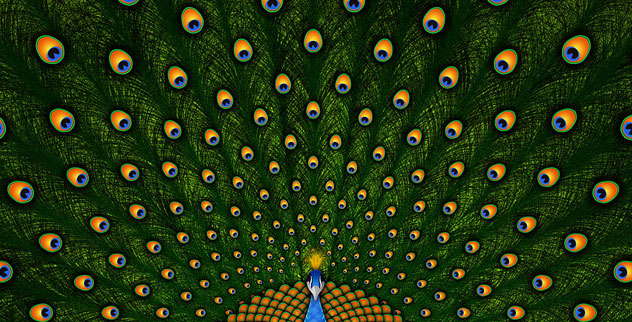
Peacock feathers are beautiful, theatrical, and deeply suspicious to many performers. The circular markings on the feathers resemble eyes, which some traditions connect to the “evil eye.” The idea is that the feather watches the production, notices everyone’s weak points, and then waits until opening night to unleash disaster.
There is no scientific reason to fear a peacock feather, of course. Yet the superstition has remained strong enough that many costume and prop departments choose a safer alternative. A designer may use a printed pattern, a stylized feather, or another decorative element rather than risk upsetting a cast that already has enough to worry about.
In theater, peace of mind is often worth more than a historically accurate accessory. Nobody wants a performer blaming a missed line on an angry bird decoration.
6. Avoid Real Flowers on Stage
Real flowers appear innocent until they begin wilting under hot stage lights, shedding petals across the floor, or releasing a fragrance strong enough to compete with the lead actor’s emotional breakdown. For this reason, many theater traditions warn against using live flowers onstage.
The superstition often suggests that fading flowers symbolize a production losing its life. The practical explanation is less mystical: real plants are unpredictable. They age, droop, stain costumes, attract insects, and look different from one performance to the next.
Artificial flowers allow the prop team to control the appearance of the bouquet throughout a run. That said, professional productions sometimes use real flowers when the script, design, and budget call for them. The key is thoughtful prop planning, not panic at the sight of a rose.
7. Be Careful With Mirrors, Real Jewelry, and Real Money
Many theater people consider mirrors, real jewelry, and real money bad luck onstage. This superstition is less about haunted accessories and more about practical headaches.
Mirrors can reflect stage lights into the audience, create distracting glare, reveal parts of the set that should remain hidden, or make a lighting designer quietly reconsider every career decision. Real jewelry and money can also disappear, get damaged, or become difficult to track once multiple actors and crew members handle them.
Using imitation props protects the production and keeps the audience focused on the story. A fake diamond necklace may not impress a jeweler, but it will not inspire a frantic prop-table search five minutes before curtain.
8. Avoid Wearing Blue Without Something Silver
Older theater folklore says blue costumes are unlucky unless they include silver. This tradition likely has roots in the history of costume dyes. Blue dye was once expensive, and struggling theater companies sometimes used costly blue garments to appear more successful than they really were.
According to the superstition, adding silver suggested genuine wealth and balanced the bad luck. Whether or not the story is historically perfect, the rule survives because it is wonderfully theatrical. Of course a costume color needs a dramatic counterspell involving precious metal.
Today, costume designers use blue constantly, and audiences have survived every shade from navy to electric sapphire. Still, some performers enjoy adding a bit of silver trim, jewelry, or sparkle. It may not defeat fate, but it does look excellent under stage lighting.
9. Give Flowers After the Performance, Not Before
Flowers are a classic way to celebrate an actor, singer, dancer, or musician. Theater tradition says the bouquet should be given after the performance rather than before it. Presenting flowers too early is thought to invite a weak show, a missed cue, or a review that uses the phrase “bold choice” in a worrying way.
There is a practical emotional logic here. A performer should focus on the work ahead, not on holding a bouquet while trying to remember a twelve-minute monologue. Receiving flowers after curtain call turns the gift into a celebration of what has been accomplished.
For opening night, closing night, recitals, and school productions, waiting until the end is a simple way to respect tradition and avoid carrying flowers through the lobby like an overly nervous florist.
10. A Bad Dress Rehearsal Means a Great Opening Night
When the final dress rehearsal falls apart, theater people often repeat one of the most comforting superstitions in the business: “Bad dress, good opening.” The idea is that a chaotic rehearsal uses up all the bad energy before the audience arrives.
Maybe a costume zipper breaks. Maybe a sound cue fires early. Maybe someone forgets a prop and spends thirty seconds pretending an invisible letter is emotionally devastating. Rather than spiraling, the cast reminds itself that the problems happened during rehearsal, where they can still be fixed.
This superstition is really optimism wearing stage makeup. A bad dress rehearsal does not guarantee a perfect opening night, but it can encourage a company to stay calm, solve problems, and trust the work it has done. That is not magic. It is teamwork with a slightly spooky marketing campaign.
How to Respect Theater Superstitions Without Losing Your Mind
You do not have to believe in curses, ghosts, or hostile peacock feathers to respect theater traditions. The best approach is simple: learn the customs of the company, avoid mocking rituals that matter to others, and keep a sense of humor.
Most importantly, never let superstition override professionalism. A ghost light does not replace proper work lighting. Avoiding whistling does not replace clear communication. Calling a play “The Scottish Play” does not replace knowing your lines. The strongest good-luck charm in any production is preparation, collaboration, and a stage manager who has labeled every prop.
Backstage Experiences: What Theater Superstitions Feel Like in Real Life
Theater superstitions are easy to dismiss until you are standing in a dark wing, dressed as a nineteenth-century sea captain, holding a plastic goblet, and someone loudly says the forbidden Shakespeare title. Suddenly, even the most rational person in the room notices that the lights flickered half an hour ago. Nobody wants to be the one who laughs right before the microphone stops working.
In many rehearsal rooms, the Macbeth tradition becomes a mini-performance of its own. A new cast member might accidentally say the title while discussing Shakespeare in class or reviewing a résumé. The room goes quiet for one exaggerated second. Then someone points toward the exit, someone else announces the cleansing ritual, and the offender is ceremoniously sent outside to spin, spit, knock, and return with the dignity of a person who has just apologized to an invisible king.
The ritual is funny, but it also breaks tension. Opening a show is stressful. Actors worry about lines. Crew members worry about cues. Directors worry about everything, including whether the curtain will look emotionally correct. A familiar superstition gives the group a harmless way to laugh, reset, and remember that everyone is nervous together.
The ghost light often creates a different feeling. After a late rehearsal, the theater can be enormous and strangely quiet. The audience seats vanish into darkness. The dressing rooms are empty. The set, which looked ordinary in daylight, suddenly feels like the location of a mystery movie with a very limited budget. The ghost light becomes less of a supernatural object and more of a small, comforting marker that says, “Yes, this place is still here. Please do not walk into the orchestra pit.”
Whistling is another superstition that can become instantly serious. Imagine a student actor casually whistling while the technical crew is rehearsing scene changes. Even in a modern theater with headsets and cue systems, a stage manager may stop the action immediately. The old tradition becomes a teaching moment about backstage awareness. A theater is not simply a room where performers act. It is a workplace where people move heavy objects, climb ladders, run cables, and coordinate dozens of details in seconds.
Then there is the famous bad dress rehearsal. Nearly every company has one. A costume loses a button. A prop vanishes. A sound effect plays during the wrong scene. A performer enters through the wrong door and tries to recover with the confident expression of someone who definitely intended to visit the kitchen during a funeral scene.
After the panic fades, someone inevitably says, “Bad dress, good opening.” The phrase will not repair a broken set piece, but it can stop people from catastrophizing. It encourages the company to identify what went wrong, make a plan, and move forward. In that sense, the superstition works because it changes the group’s mood, not because it changes the universe.
That may be the real secret behind the top theater superstitions. They create rituals around uncertainty. They give artists a shared language for nerves, excitement, fear, and hope. They remind everyone that live performance is fragile, thrilling, and impossible to completely control. And when the curtain rises, the lights hit, and the first line lands exactly where it should, even skeptics may feel that a little backstage magic is not such a ridiculous idea after all.
Conclusion
Theater superstitions are part workplace history, part folklore, and part emotional survival kit. From the Macbeth curse and ghost lights to no whistling backstage and flowers after curtain call, these traditions reflect the risks and rewards of live performance. You do not need to fear every feather, mirror, or costume color, but understanding these customs can make you a more thoughtful member of any cast or crew.