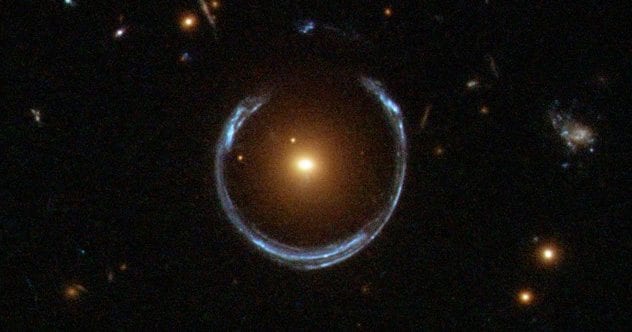
Space has always been the universe’s most dramatic theater, but lately it feels less like a quiet night sky and more like a cosmic group chat that will not stop sending notifications. Telescopes are peering back toward the first chapters of time. Spacecraft are skimming the Sun, chasing icy moons, visiting metal-rich asteroids, and helping scientists learn whether Earth is a lucky accident or just one cozy apartment in a very large neighborhood.
The most mind-melting part? These are not science-fiction trailers. They are real things happening right now in astronomy, planetary science, space exploration, and cosmology. From black holes that should not have grown so fast to asteroid samples carrying ingredients linked to life, the modern space era is making the old “we are tiny” speech feel aggressively accurate.
Below are the top 10 things going on in space that will melt your brain, gently toast your imagination, and maybe make your coffee taste more philosophical.
1. Webb Is Looking Back Almost to the Beginning of Time
The James Webb Space Telescope has become the ultimate cosmic time machine. Because light takes time to travel, the farther Webb looks, the deeper into the past it sees. Some galaxies spotted by Webb appear as they were only a few hundred million years after the Big Bang. That is not just old. That is “the universe still had baby pictures” old.
One of the biggest surprises is how mature some early galaxies look. Scientists expected the young universe to be messy, faint, and still getting its cosmic furniture arranged. Instead, Webb keeps finding galaxies that are brighter, more structured, or more massive than expected. It is like opening a nursery door and finding a toddler doing tax accounting.
Why It Melts Your Brain
These discoveries challenge simple timelines of how quickly stars, galaxies, and black holes formed. If galaxies grew faster than models predicted, astronomers may need to refine their understanding of early star formation, dark matter behavior, and the way gravity shaped the universe’s first neighborhoods.
2. Black Holes May Have Grown Up Way Too Fast
Black holes are already weird enough. They are regions of space where gravity becomes so intense that not even light can escape. But Webb has made them even stranger by helping astronomers find surprisingly massive black holes in the early universe.
The puzzle is simple and rude: how did some black holes become so large so quickly? A black hole can grow by feeding on gas, dust, stars, and other black holes, but the universe was young when some of these objects already looked impressively chunky. Scientists are exploring ideas such as “direct collapse” black holes, where huge clouds of gas may have collapsed rapidly into large black hole seeds instead of first forming ordinary stars.
Cosmic Example
Imagine planting an acorn and coming back tomorrow to find a full-grown oak tree wearing sunglasses. That is the emotional vibe of early supermassive black holes. They exist, they are real, and they are forcing researchers to rethink how the universe built its most extreme objects.
3. The Sun Is Having a Stormy Main Character Era
The Sun looks peaceful from Earth, especially when it is politely helping you take a beach photo. In reality, it is a boiling magnetic beast that throws tantrums in the form of solar flares, coronal mass ejections, and streams of charged particles. During solar maximum, the active peak of the Sun’s roughly 11-year cycle, space weather becomes especially interesting.
Solar storms can brighten auroras, disrupt radio signals, affect satellites, and create challenges for power grids. In other words, the Sun is not just a glowing ball in the sky. It is also the solar system’s largest unpaid infrastructure tester.
NASA’s Parker Solar Probe has taken this drama personally. It has flown closer to the Sun than any previous spacecraft, diving through the outer solar atmosphere, called the corona, and collecting data from a place no human-made object had previously explored so intimately.
Why It Matters
Understanding solar activity helps protect astronauts, satellites, communications systems, and power networks. It also helps explain one of the Sun’s strangest mysteries: why the corona is far hotter than the visible solar surface. Yes, the Sun has temperature drama. Of course it does.
4. NASA Is Preparing Humanity’s Return to the Moon
The Moon is back on humanity’s calendar, and this time the goal is not just to visit, plant flags, collect rocks, and return home with the coolest vacation story in history. Through the Artemis program, NASA and its partners are working toward a sustained human presence around and on the Moon.
Artemis is designed to test deep-space systems, develop lunar infrastructure, and prepare for future crewed missions to Mars. The Moon is becoming a training ground, science lab, and stepping-stone all at once. Think of it as humanity’s cosmic practice field, except the grass is regolith and the neighbors are silent craters.
The Brain-Melting Part
Future lunar missions could involve habitats, rovers, power systems, resource use, and long-duration operations. Scientists are especially interested in lunar south pole regions, where permanently shadowed craters may preserve water ice. Water on the Moon could support astronauts and potentially be split into hydrogen and oxygen for fuel and life support.
5. Europa Clipper Is Headed for an Ocean World
Jupiter’s moon Europa looks like a cracked ice ball, but beneath its frozen shell may be a global ocean. That possibility makes Europa one of the most exciting places in the solar system for astrobiology. NASA’s Europa Clipper mission is traveling toward Jupiter to study whether this icy moon has conditions that could support life.
The spacecraft will not land on Europa. Instead, it will perform repeated flybys, using instruments to examine the moon’s ice shell, surface chemistry, magnetic environment, and possible ocean characteristics. It is basically a detective mission, except the detective is a spacecraft and the suspect is an alien ocean under ice.
What Scientists Want to Know
Europa may have three ingredients scientists associate with habitability: liquid water, chemical energy, and essential elements. Nobody is saying there are fish under the ice wearing tiny astronaut helmets. But if life exists beyond Earth in our solar system, an ocean world like Europa is one of the places worth checking carefully.
6. A Spacecraft Is Chasing a Metal-Rich Asteroid
NASA’s Psyche mission is headed to an asteroid also named Psyche, a fascinating object located in the asteroid belt between Mars and Jupiter. Scientists think Psyche may be rich in metal and could offer clues about the cores of early planet-building bodies.
Earth’s metallic core is buried beneath thousands of miles of rock, which is inconvenient for scientists and anyone who dislikes being vaporized. Psyche may provide a rare chance to study material similar to the building blocks of planetary cores without drilling through an entire planet. Very thoughtful of the asteroid, honestly.
Why Psyche Is So Strange
If Psyche is the exposed remnant of a once-forming planetary core, it could reveal how rocky planets differentiated into layers such as crust, mantle, and core. Even if it turns out to be something more complex, the mission will help scientists understand collisions, planet formation, and the violent construction era of the early solar system.
7. We Have Already Changed an Asteroid’s Motion
Humanity has officially poked an asteroid and changed its path. NASA’s DART mission intentionally crashed a spacecraft into Dimorphos, a small moonlet orbiting the asteroid Didymos. The goal was to test whether a kinetic impact could alter an asteroid’s motion in space.
It worked. The impact shortened Dimorphos’ orbit around Didymos, demonstrating that asteroid deflection is not just a disaster-movie fantasy. To be clear, no dangerous asteroid was involved in the test. This was a controlled planetary defense experiment, not Bruce Willis improvising near a rock.
Why This Is Huge
Earth has been hit by space rocks before, and it will be hit again. Most are small, but planetary defense is about preparation. DART showed that with enough warning, humans may be able to nudge a hazardous asteroid off course. That is a spectacular sentence. We live in the timeline where asteroid nudging is a real engineering field.
8. Asteroid Bennu Brought Back Ingredients Linked to Life
NASA’s OSIRIS-REx mission returned samples from asteroid Bennu, and scientists have been studying them like the universe handed over a sealed envelope labeled “ancient chemistry gossip.” The samples contain organic compounds, including amino acids and nucleobases, which are important to life as we know it.
This does not mean Bennu had life. It means the chemical ingredients associated with life were present in primitive solar system material. That matters because asteroids and comets may have delivered water and organic compounds to early Earth.
The Big Question
If life’s ingredients were widespread in the early solar system, how rare is life itself? Chemistry is not biology, but Bennu suggests that prebiotic ingredients may be more common than once imagined. The kitchen may be stocked in many places; the mystery is how often the recipe actually cooks.
9. Gravitational Waves Are Turning the Universe Into an Audio Track
Gravitational waves are ripples in spacetime caused by extreme cosmic events, such as merging black holes and neutron stars. Detectors like LIGO, Virgo, and KAGRA do not “hear” space in the normal sense, but they detect tiny distortions created as these waves pass through Earth.
The scale is absurd. These instruments can measure changes smaller than a fraction of a proton’s width across kilometers-long detector arms. That is like noticing the distance to the nearest star changed by less than the width of a human hair, which is a sentence that deserves to sit down.
Why It Melts Your Brain
Gravitational-wave astronomy gives scientists a new way to observe the universe. Traditional telescopes use light. Gravitational-wave observatories use spacetime itself. Together with optical, radio, X-ray, and gamma-ray observations, this creates multi-messenger astronomy: studying cosmic events through different signals at once.
10. New Sky Surveys Are About to Flood Astronomy With Data
The next generation of sky surveys is turning astronomy into a data avalanche. NASA’s SPHEREx mission is mapping the entire sky in many infrared colors, helping scientists study galaxies, cosmic history, water ice, and organic molecules. The Vera C. Rubin Observatory is designed to repeatedly scan the sky and detect changes, from exploding stars to moving asteroids.
Meanwhile, NASA’s Nancy Grace Roman Space Telescope is preparing to deliver wide-field infrared views that could transform studies of dark energy, dark matter, exoplanets, and galaxy evolution. These missions are not just taking pretty pictures, although the pictures will absolutely be pretty enough to make your desktop wallpaper feel insecure.
The Data Revolution
Modern astronomy is shifting from “look at one object very carefully” to “map enormous sections of the universe again and again.” That means scientists can track change over time, discover rare objects, and build statistical pictures of the cosmos. The universe is becoming less like a photo album and more like a live-streaming documentary with billions of cast members.
Why These Space Discoveries Matter
It is tempting to treat space news as entertainment for people who own too many telescope stickers. But these discoveries matter deeply. Space research improves technology, strengthens planetary defense, helps protect satellites, advances climate and solar monitoring, and expands our understanding of where Earth fits in the cosmic story.
Studying the Sun protects modern infrastructure. Studying asteroids helps us prepare for impact risks and understand life’s chemical origins. Studying exoplanets helps answer whether Earth-like worlds are common. Studying dark energy and dark matter addresses the biggest missing pieces in modern cosmology. The universe is not just “out there.” It is the system we live inside.
Experience Section: What It Feels Like to Follow Brain-Melting Space News
Following modern space discoveries feels a little like standing beside a fire hose that sprays wonder instead of water. One day, you are reading about a telescope seeing galaxies from near the dawn of time. The next day, a spacecraft is flying past Mars to borrow gravity like a cosmic rideshare. Then you learn that asteroid dust contains molecular ingredients linked to life, and suddenly your sandwich seems more existential than usual.
The experience is humbling, but not in a gloomy way. Space has a special talent for making everyday problems feel smaller without making life feel meaningless. A traffic jam is still annoying, but it becomes slightly funnier when you remember that somewhere out there, black holes are merging and shaking spacetime. Your inbox may be terrifying, but at least it is not a supernova.
One of the best ways to enjoy space science is to let yourself be amazed before trying to understand every technical detail. You do not need a PhD in astrophysics to appreciate that Webb is seeing ancient galaxies or that Parker Solar Probe is flying through the Sun’s atmosphere. Start with the image, the basic idea, and the “wait, how is that real?” feeling. The deeper explanations can come afterward.
Space also rewards patience. Missions take years or decades. Europa Clipper will spend a long time traveling before its main science begins. Psyche is on a multi-year journey. Roman and Rubin will generate discoveries over time, not all at once. This slow pace is part of the beauty. In a world addicted to instant updates, space exploration reminds us that some of the most meaningful answers require careful engineering, international teamwork, and a willingness to wait while a robot crosses millions or billions of miles.
There is also something emotionally powerful about realizing that space science is a human project. Every mission involves engineers, programmers, technicians, scientists, mission planners, communicators, and countless people solving problems most of us would file under “absolutely not.” Someone designs heat shields. Someone calculates trajectories. Someone checks whether a spacecraft can survive radiation. Someone writes the software that keeps a telescope pointed with astonishing precision. Space discoveries may look magical, but they are built from human patience and very serious spreadsheets.
For readers, the best experience is to treat space as an ongoing story rather than a finished textbook. The facts change as new data arrives. That is not a weakness; it is science doing its job. A possible biosignature may become stronger, weaker, or disappear under further study. A galaxy may be reclassified. A model may be updated. The universe does not owe us simple answers, and honestly, it seems to enjoy keeping the plot spicy.
If you want to feel the full brain-melting effect, go outside on a clear night after reading about these missions. Look up. The stars will not look different, but you will. That quiet sky contains exploding stars, wandering asteroids, hidden oceans, ancient galaxies, invisible gravitational waves, and planets we have not yet imagined properly. The night sky is not empty. It is busy, ancient, violent, beautiful, and very much still under investigation.
That is the real magic of space news. It stretches the mind without breaking it. It makes us curious, careful, and a little less convinced that we have everything figured out. And in a universe this enormous, that is probably a healthy attitude.
Conclusion
The top things going on in space right now are not just cool facts for trivia night. They are clues to the largest questions humans can ask: Where did we come from? Are we alone? How did the universe begin? Can we protect Earth? What hidden physics still waits beyond our current understanding?
From Webb’s early galaxies to Europa’s buried ocean, from asteroid defense to gravitational waves, space science is entering an era of breathtaking discovery. The universe is not running out of mysteries. It appears to be manufacturing them wholesale, possibly with a dedicated department and excellent benefits.
Note: This article synthesizes current public space science information from reputable U.S. space agencies, observatories, and research institutions. It is written for educational publishing, SEO use, and general readers who enjoy having their brains lightly toasted by the cosmos.