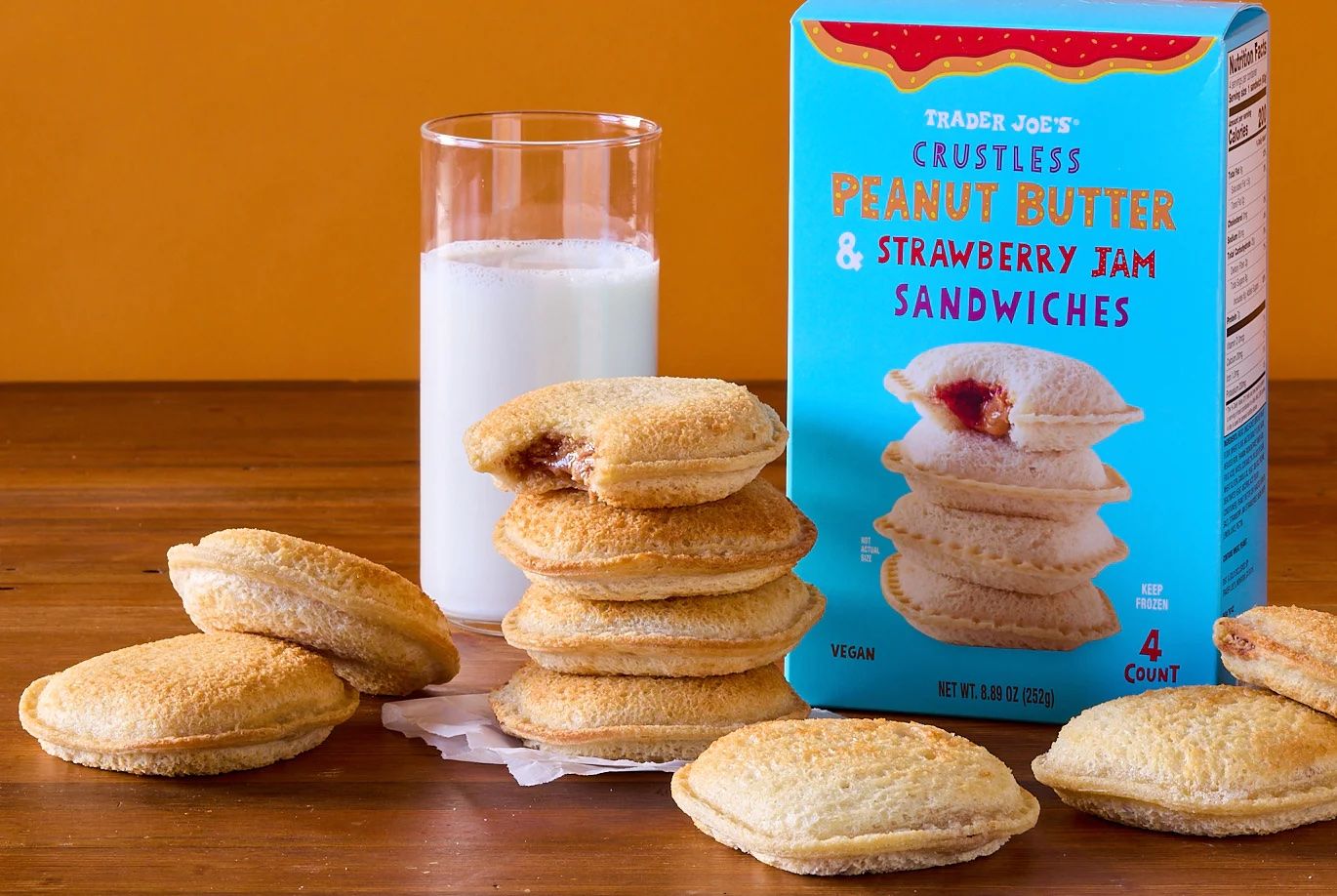
Some grocery stories are small. This is not one of them. This is a frozen-food-aisle plot twist. Trader Joe’s has entered one of America’s most sacred snack arenas with a crustless peanut butter and jelly sandwich that looks suspiciously like the lunchbox royalty many of us grew up worshipping: Uncrustables. And honestly? The little freezer-circle drama is delicious.
Trader Joe’s Crustless Peanut Butter & Strawberry Jam Sandwiches tap into two things shoppers rarely resist: convenience and nostalgia. On one hand, it is just a peanut butter and jelly sandwich. On the other hand, it is a sealed, crust-free, thaw-and-eat PB&J that requires zero knives, zero cleanup, and zero emotional strength before 8 a.m. In other words, it is exactly the kind of product modern grocery shoppers pretend they do not need right before tossing two boxes into the cart.
The bigger reason this product matters is simple: Trader Joe’s did not just release another frozen snack. It stepped directly into a category that Smucker’s Uncrustables has dominated for years. That means every detail gets examinedthe bread, the filling, the sweetness, the chew of the sealed edge, the freezer convenience, the school-lunch appeal, and yes, the all-important question: does it actually rival the classic?
Why Trader Joe’s Crustless PB&J Is Getting So Much Attention
The answer starts with familiarity. Uncrustables built an empire by taking one of the most familiar sandwiches in America and making it easier. Trader Joe’s looked at that formula and said, “Cool, but what if we make it feel a little more Trader Joe’s?” The result is a frozen four-pack of crustless sandwiches filled with peanut butter and strawberry jam, designed to thaw quickly and disappear even faster.
That alone would have been enough to spark curiosity. But this launch did more than wink at a classic. It hit shoppers right in the childhood memory bank. PB&J is not just food in the United States; it is cultural shorthand. It is field trips, lunch boxes, rushed mornings, after-school hunger, and the universal kitchen sigh of relief when there is “at least something to eat.” Trader Joe’s turned that memory into a freezer item with just enough polish to feel current.
And the timing was smart. Convenience foods that still feel a little nostalgic are having a moment. Consumers want grab-and-go options, but they also want products that feel fun, familiar, and emotionally rewarding. A crustless PB&J hits all three. It is practical enough for busy mornings, snackable enough for adults, and playful enough to trigger instant recognition.
What Makes Trader Joe’s Version Different?
It leans into strawberry, not grape
This matters more than it sounds. In the world of frozen PB&J, grape feels classic and lunchbox-iconic, while strawberry comes across as a little brighter and slightly more grown-up. Trader Joe’s decision to go with peanut butter and strawberry jam gives the sandwich a fresher, fruitier personality. It still feels nostalgic, but it does not taste like a photocopy of the old-school favorite.
It has a more peanut-butter-forward flavor
One of the most consistent reactions from reviewers and shoppers is that Trader Joe’s version puts the peanut butter more front and center. That changes the whole experience. Instead of leading with sweetness, it leans nuttier and richer, with the strawberry jam acting more like a supporting character than the main star. If Uncrustables can sometimes feel like dessert in a sandwich disguise, Trader Joe’s version often reads more like an actual PB&J first and a sweet snack second.
It fits Trader Joe’s brand identity
Trader Joe’s is very good at selling the idea that convenience does not have to feel cheap or overly engineered. That branding advantage matters. Shoppers often expect Trader Joe’s products to come with a cleaner, friendlier image, even when the item itself is delightfully simple. The fact that this sandwich is vegan also adds another point of difference that broadens its appeal for certain shoppers scanning the freezer aisle.
Trader Joe’s vs. Uncrustables: The Real Comparison
Let us address the sealed, crustless elephant in the room. How does Trader Joe’s stack up against Uncrustables?
On nostalgia: Uncrustables still has seniority. It is the original lunchbox celebrity. For many Americans, the round shape, the super-soft bread, and the jelly-heavy center are practically edible time travel. Trader Joe’s can imitate the vibe, but it cannot fully replace the memory.
On flavor balance: This comes down to preference. If you love a sweeter PB&J with a generous jam hit, Uncrustables still feels like the reigning champion. If you prefer more peanut butter character and less sugar-rush energy, Trader Joe’s starts looking very appealing.
On texture: Uncrustables is often praised for how soft and pillowy the bread feels after thawing. Trader Joe’s is close, but some comparisons describe it as a little less airy. That is not a deal-breaker. It simply means Trader Joe’s lands more in “really good dupe” territory than “identical twin separated at the freezer aisle.”
On value: Trader Joe’s has a strong argument here. A four-pack priced under four dollars makes this feel like an easy add-to-cart impulse buy, especially for shoppers already filling the freezer with weeknight backups and emergency snacks. In a grocery economy where every small price gap gets noticed, being even modestly cheaper than a category giant is a real advantage.
On brand flexibility: Uncrustables still wins on variety and market reach. You can find it in more stores, in more flavors, and with more shelf recognition. It is the big-league incumbent. Trader Joe’s, meanwhile, benefits from exclusivity. You cannot get its version everywhere, which weirdly makes it more tempting. Scarcity is the unofficial seasoning of Trader Joe’s fandom.
Why This Product Works So Well for Real Life
There is something almost comically efficient about a frozen crustless PB&J. It solves problems you barely notice until you are having a chaotic day. No spreading. No crumbs from trimming crusts. No sticky knife abandoned in the sink like a tiny domestic betrayal. No need to assemble lunch while half awake and fully annoyed.
For parents, it is obvious why this works. It is fast, portioned, portable, and familiar enough that picky eaters are less likely to stage a sandwich-related protest. For college students, it is a freezer staple that feels easier than “cooking,” which, to be fair, covers a lot of scenarios. For adults without kids, it lands as a low-effort comfort snackthe culinary equivalent of wearing your softest hoodie on purpose.
This is also where Trader Joe’s shines. The brand has built a loyal following by stocking foods that feel halfway between smart shortcut and harmless indulgence. A crustless PB&J is exactly that. It is not trying to be health food, gourmet food, or life-changing food. It is trying to be convenient, tasty, and weirdly fun. Mission accomplished.
The Ingredients Conversation: Simple, Familiar, and Strategic
Another reason this launch landed so well is that it frames itself as a more straightforward alternative in a category often dismissed as overly processed. That messaging matters to today’s shoppers. Consumers do not necessarily expect a frozen PB&J to become a wellness icon, but they do like hearing that it is made without a bunch of extras they were not hoping to invite to lunch.
Trader Joe’s also benefits from the perception that it curates rather than floods. So when it introduces something this playful, shoppers assume there was at least some taste logic behind it. The sandwich feels like it was designed by people who understand the emotional importance of PB&J, but also understand that adults buying freezer snacks want a few reassuring details on the box.
At the same time, nobody should pretend this category became a luxury experience overnight. This is still a convenience food. That is the point. It succeeds because it respects the original format while giving shoppers a version that feels slightly more current, slightly less cloying, and slightly more aligned with present-day grocery habits.
What This Means for the Frozen Snack Market
Trader Joe’s launching a crustless PB&J is not just a fun grocery headline. It reflects a broader truth about food retail in America: consumers are still obsessed with foods that make busy life easier, but they increasingly want those foods to come with a stronger personality. The era of bland convenience is fading. If a product is going to live in your freezer, it has to offer more than utility. It needs a point of view.
That is exactly why this product stands out. It is not merely convenient; it is conversation-worthy. It invites comparison, debate, and nostalgia. It also proves that legacy brands no longer get to own a category uncontested. If a retailer can create a compelling private-label alternative with strong flavor, fair pricing, and social-media-friendly buzz, shoppers will absolutely give it a chance.
Meanwhile, Uncrustables is not standing still. The brand still has enormous recognition, broader distribution, and evolving convenience features of its own. So this is less about one sandwich replacing another and more about a category becoming more competitive. For consumers, that is great news. Competition in the freezer aisle usually means better products, smarter pricing, and more excuses to buy snacks you definitely “need.”
So, Does Trader Joe’s Really Rival the Classic?
Yeswith a tiny asterisk shaped like a crustless circle.
Trader Joe’s Crustless Peanut Butter & Strawberry Jam Sandwiches absolutely rival Uncrustables in the ways that matter most to many modern shoppers: convenience, flavor, value, and freezer-to-hand simplicity. They are not a carbon copy, and that is probably why they work. They offer a slightly less sugary, more peanut-butter-led experience that feels tailored to today’s palate while still honoring the lunchbox nostalgia people actually want.
Uncrustables still owns the crown for pure legacy status and classic texture. But Trader Joe’s did not need to dethrone it completely to score a win. It only needed to make shoppers pause, taste, and say, “Wait… this is actually really good.” By that standard, Trader Joe’s nailed it.
In a grocery world packed with products that overpromise and underwhelm, this one is refreshingly honest. It is a crustless PB&J. It lives in the freezer. It saves time. It tastes good. It makes adults weirdly emotional about elementary school lunch. Sometimes that is all a product needs to do.
The Experience of Eating a Crustless PB&J in Real Life
What makes this whole thing so memorable is not just the sandwich itself, but the experience around it. A crustless PB&J has a strange superpower: it turns a very ordinary food into something that feels oddly special. The second you pull one from the freezer, you are not just preparing a snack. You are activating a tiny memory machine.
For a lot of people, the experience starts with pure convenience. Mornings are hectic. Somebody cannot find their shoes, somebody else forgot there is a school project due, and the coffee has only just begun its noble work. In that kind of chaos, a thaw-and-eat sandwich feels less like a grocery item and more like a peace treaty. It is grab, pack, move on. No slicing bread, no opening jam jars, no peanut butter knife cementing itself to the countertop. You win five extra minutes, and sometimes five minutes is the difference between a decent morning and a full household meltdown.
Then there is the lunchbox factor. A crustless PB&J looks intentional. It looks tidy. It feels more fun than a regular homemade sandwich, even though the ingredients are familiar. That sealed edge gives it a snack-like charm, like the sandwich got dressed up for public appearance. Kids see something playful. Adults see something efficient. Both sides leave happy, which is basically the Super Bowl of lunch packing.
For adults, though, the emotional experience is even funnier. You stand in your kitchen in full grown-up modepaying bills, answering emails, pretending to understand retirement accountsand then you bite into this sandwich and suddenly you are nine years old again. That is the magic. It is not gourmet. It is not trend-chasing. It is comfort made portable. The soft bread, the sweet jam, the peanut butter sticking gently to the roof of your mouth like an old friend with no concept of personal spaceit all works.
There is also the freezer-snack joy of it all. Late at night, when you want something easy but not too dramatic, a crustless PB&J has incredible appeal. It is dessert-adjacent without being full dessert. It is filling without requiring cooking. It feels a little silly, a little nostalgic, and a little genius. On road trips, after workouts, during study sessions, or in the weird gap between lunch and dinner when everything sounds either too heavy or too boring, this kind of sandwich makes perfect sense.
Trader Joe’s version fits neatly into that emotional space. It feels like the more modern, slightly more self-aware version of a childhood favorite. It gives you the comfort, the convenience, and the fun, but with a flavor profile that reads a little less sugar-blasted and a little more balanced. That is why the experience resonates. It is not just about eating a crustless PB&J. It is about feeling cared for by your freezer, which is not a sentence anyone expected to read today, but here we are.
Final Take
Trader Joe’s did not reinvent peanut butter and jelly. It did something smarter: it repackaged a beloved classic in a way that feels timely, useful, and genuinely enjoyable. That is why this launch matters. It is playful without being gimmicky, practical without being boring, and nostalgic without feeling stuck in the past.
If you love Uncrustables, Trader Joe’s new crustless PB&J is worth trying. If you have never understood the hype, this may be the version that converts you. And if nothing else, it proves once again that the frozen aisle is no longer just a place for vegetables and regret. Sometimes it is where the best lunch drama happens.