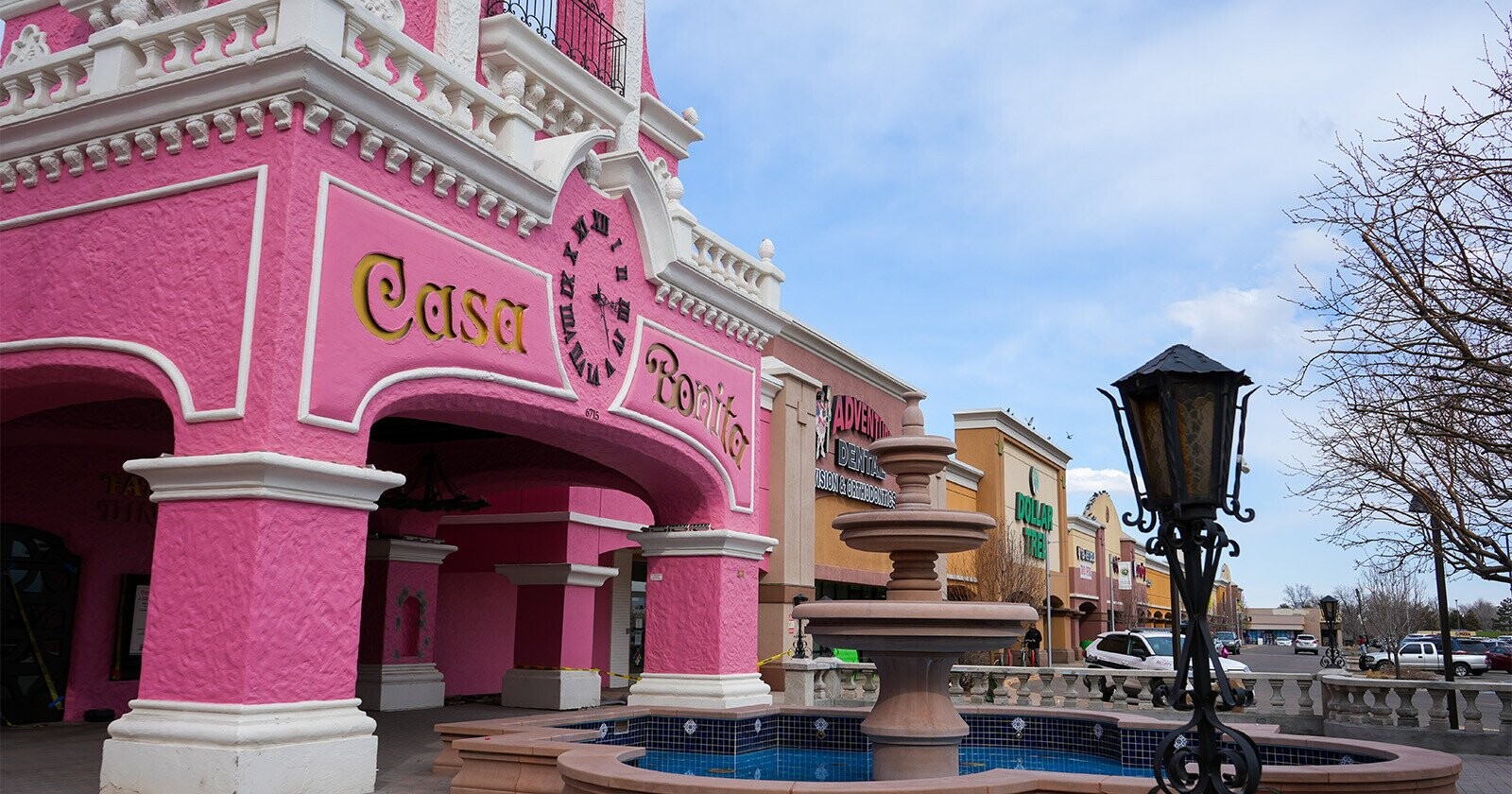
Casa Bonita has always been the kind of place where reality walks in wearing a mariachi jacket, slips behind a waterfall, and somehow comes back with sopapillas. So when Trey Parker and Matt Stone, the creators of South Park, decided to bring the legendary Lakewood, Colorado restaurant back from near-death, no one expected a quiet little reopening with a ribbon, a smile, and a sensible cheese enchilada. This was Casa Bonita. The walls are pink, the cliff divers are real, and nostalgia is served with a side of theatrical chaos.
But one of the most talked-about changes was not hidden in Black Bart’s Cave or launched from the top of the indoor waterfall. It was printed into the pay structure: Casa Bonita would move away from traditional tipping. Servers and bartenders would receive a higher hourly wage instead of relying on tips. In the great American restaurant debate, this is the equivalent of walking into a crowded room and shouting, “What if we just paid people predictably?” Then everyone drops their chips and salsa.
The headline practically writes itself: Trey Parker and Matt Stone declare that Casa Bonita will have no tipping except, jokingly, for Rascal scooters. The scooter line is not an actual restaurant policy. It is the kind of absurd, sharp-edged joke that fits the Casa Bonita universe perfectly: part labor economics, part Denver fever dream, part “of course this would happen at the restaurant with cliff divers.”
Casa Bonita: More Than a Restaurant, Less Than a Normal Place
To understand why the no-tipping news became such a spectacle, you have to understand Casa Bonita itself. This is not a typical Mexican restaurant where guests quietly compare guacamole and politely debate whether the salsa has enough heat. Casa Bonita is closer to an indoor theme park that happens to include dinner. It has long been famous for cliff divers, cave-like walkways, theatrical characters, arcade games, live entertainment, and a building that looks like it was designed by someone who asked, “What if a restaurant had main-character energy?”
The Lakewood location opened in the 1970s and became a Colorado landmark. For many locals, it was where birthday parties, school memories, family outings, and slightly confusing childhood dreams collided under one very pink roof. For many non-Coloradans, Casa Bonita became famous through South Park, especially the 2003 episode that turned the restaurant into a pop-culture shrine.
Parker and Stone were not outsiders buying a kitschy brand for a quick publicity stunt. Both have deep Colorado connections, and Parker has spoken about loving Casa Bonita as a child. Their purchase was less “celebrity vanity project” and more “expensive emotional rescue mission.” And expensive is putting it gently. The renovation ballooned into a massive restoration effort, with reports putting the final cost above $40 million. That is a lot of money to spend on a place famous for cliff divers, but then again, most restaurants do not come with their own mythology.
The No-Tipping Model: What Actually Changed?
Casa Bonita’s no-tipping policy drew attention because it challenged one of the most familiar habits in American dining. In the traditional restaurant model, servers often depend on tips to make up a large portion of their income. That can be lucrative on busy nights, but unpredictable on slow ones. It can also put workers in the exhausting position of performing cheerfulness like a Broadway understudy who knows rent is due Friday.
At Casa Bonita, the new ownership shifted the structure by offering service workers a higher flat hourly wage. Reports around the reopening described a move to roughly $30 per hour for servers and bartenders, replacing the previous tip-based expectation. The stated idea was to create more dependable pay and prevent guests from facing unexpected costs after an already unusual dining experience.
On paper, the concept sounds simple: raise wages, remove tipping pressure, make pricing more predictable, and let everyone enjoy the waterfall without doing mental math at the table. In practice, however, the change landed with mixed reactions. Some employees reportedly felt the new wage was more stable, while others were upset because they believed tips during busy periods could have earned them significantly more.
That tension is the heart of the Casa Bonita tipping story. No-tipping policies can sound progressive, practical, or even luxurious depending on your perspective. But for workers who are used to high-volume tipped shifts, eliminating tips can feel like losing upside. A guaranteed wage is comforting when the room is half full. It may feel limiting when the place is packed, the margaritas are flowing, and the crowd is spending like they just found treasure in Black Bart’s Cave.
Why Parker and Stone’s Decision Became a National Conversation
Tipping is not just a payment custom in the United States. It is a cultural argument with receipts. Ask ten people what the “right” tipping percentage is and you may accidentally start a town hall meeting. Add celebrity owners, a beloved restaurant, a giant renovation, and South Park creators known for poking at American absurdities, and suddenly Casa Bonita is not just a restaurant story. It is a case study in wages, hospitality, pricing transparency, and whether anyone really knows how much dinner should cost anymore.
For guests, a no-tipping model can feel refreshing. Instead of finishing a meal and staring at a tablet that suggests 22%, 25%, or “custom amount, coward,” diners know more clearly what they are paying. That is especially helpful at a place like Casa Bonita, where the experience is part dinner, part show, and part pilgrimage. People are not simply ordering tacos; they are entering a cultural attraction.
For restaurant owners, no tipping can make labor costs easier to forecast. It can also support a more team-based pay philosophy, especially in venues where entertainment, kitchen work, hosting, service, cleaning, and guest operations all shape the experience. At Casa Bonita, the server is not the only person delivering value. The diver jumping into the water, the kitchen staff improving the menu, the performers, the bussers, and the people keeping the maze-like building from turning into a theme-park panic attack all matter.
For employees, though, the math depends on hours, guest volume, scheduling, benefits, and whether the new system truly matches or improves previous earnings expectations. That is why the backlash was not surprising. Even a higher hourly wage can become controversial if workers expected a different compensation structure when they accepted the job.
Casa Bonita’s Current Service Fee Adds Another Layer
Casa Bonita’s official language now describes a mandatory service charge that is not a gratuity and is used to help support wages and benefits. That distinction matters. A service fee is not the same thing as a voluntary tip handed directly to a server. It is part of the bill, controlled by the business, and intended to support broader compensation costs across the operation.
This reflects a growing trend in hospitality. Some restaurants are experimenting with service charges, hospitality fees, living-wage fees, or no-tip pricing as a way to stabilize wages and reduce reliance on guest-by-guest generosity. The challenge is communication. Customers do not like feeling surprised, and employees do not like feeling that familiar income streams disappeared overnight. A no-tipping system can work, but it needs transparency so everyone understands where the money goes and how workers benefit.
Casa Bonita is uniquely positioned to try this because it is not a standard neighborhood restaurant. It is an attraction. Guests already expect the experience to be packaged differently from a normal dinner out. If any place can make “the tip is baked into the model” feel natural, it might be the pink palace with cliff divers and an army of fans trying to get reservations.
The Renovation Was Also a Reinvention
The tipping debate sometimes overshadows the larger Casa Bonita transformation. Parker and Stone did not simply buy the restaurant, dust off the old menu, and reopen the doors. They rebuilt and restored a complicated, aging entertainment venue with the enthusiasm of people who love it and the financial pain of people who probably learned several expensive lessons about plumbing.
The renovation became the subject of the documentary ¡Casa Bonita Mi Amor!, which follows the long, costly, and occasionally ridiculous process of bringing the restaurant back to life. That documentary helps explain why the project resonated with fans. This was not just another celebrity restaurant. It was a rescue attempt for a place that meant something to Colorado culture, South Park fans, and anyone who believes dinner is better when someone might leap off a cliff indoors.
Chef Dana Rodriguez was also brought in to improve the food, which had historically been part of the Casa Bonita joke. For decades, the restaurant’s entertainment was the headliner, while the food had a reputation somewhere between “edible nostalgia” and “the price of admission.” The reboot aimed to preserve the weird magic while making the meal itself more respectable. In other words: change nothing, improve everything, and try not to anger the ghost of childhood birthday parties.
Why No Tipping Fits the New Casa Bonita Brand
Casa Bonita’s no-tipping approach fits the larger reboot because the owners are trying to make the place function less like a chaotic relic and more like a modern entertainment business. A predictable wage model matches an operation where the guest experience is scripted, staged, timed, and heavily managed. It also helps position Casa Bonita as a place where visitors pay for a complete experience rather than a meal with surprise add-ons.
There is also a branding element. Parker and Stone have built careers out of questioning social norms with a mix of satire, stubbornness, and gleeful discomfort. Eliminating tipping at a famous restaurant is not exactly a South Park episode, but it has the same DNA: take something Americans accept as normal, poke it until it makes a strange noise, then stand back while everyone argues.
The “except for Rascal scooters” joke works because it exaggerates how deeply American tipping culture and consumer habits can collide. It paints a cartoon picture of the only remaining tip being the physical tipping-over of a mobility scooter, not a restaurant gratuity. Again, not an actual policy, not a recommendation, and definitely not something guests should do. It is simply the kind of absurd line that captures how ridiculous the debate can feel when a restaurant famous for fictional chaos becomes the setting for a real labor conversation.
Guest Experience: Less Math, More Waterfall
For diners, the clearest benefit of no tipping is mental peace. Nobody has to debate whether the server deserved 18% or 25% while a cliff diver is preparing to launch into a pool nearby. Nobody has to wonder if they are under-tipping after already paying for a premium experience. Nobody has to pass the receipt around the table like it is an ancient tax document.
Instead, the cost is more integrated. That can make Casa Bonita feel more like a ticketed entertainment venue, even as its reservation and payment systems have evolved. You pay for the experience, the food, the show, and the atmosphere. The staff is supposed to be compensated through the business model rather than through a post-meal generosity quiz.
That does not mean every guest will love it. Some diners like tipping because it gives them a sense of control. Others worry service charges are less personal than handing money directly to a server. But for many visitors, especially families and tourists, a clearly stated no-tip system can make the night simpler. And at Casa Bonita, simplicity is useful because the building itself is already doing a lot. There are caves. There are divers. There may be a gorilla. The bill does not also need to perform acrobatics.
Employee Concerns Should Not Be Brushed Aside
The playful headline should not hide the serious part of the story. Restaurant workers have every reason to care deeply about compensation details. A $30 hourly wage may sound strong, especially compared with many service-industry jobs, but total income depends on hours scheduled, peak demand, benefits access, job duties, and whether workers previously expected tips on top of base pay.
Reports of employee frustration centered partly on timing and expectations. If workers accepted one structure and then were asked to shift to another shortly before opening, even a higher hourly wage could feel disruptive. Trust matters in hospitality workplaces. When pay changes are communicated suddenly, staff may wonder what else could change later.
That is why Casa Bonita’s experiment is bigger than Casa Bonita. Restaurants across the country are trying to solve a messy problem: customers are tired of tip prompts, workers need reliable income, owners face rising costs, and everyone seems annoyed by the bill. No-tipping models can be part of the answer, but only when they are designed with worker input, clear policies, and honest math.
What Other Restaurants Can Learn From Casa Bonita
1. Transparency matters more than cleverness
A no-tipping model can be appealing, but restaurants must explain it clearly. Guests should know whether prices include service, whether a service charge exists, and whether that fee is a gratuity. Employees should know how wages, benefits, hours, and performance expectations will work before they sign on.
2. Higher hourly pay can improve stability
Predictable wages help workers plan their lives. Rent, groceries, and car payments do not politely adjust themselves because Tuesday lunch was slow. A strong hourly rate can reduce some of the volatility that makes restaurant work stressful.
3. Some workers may still prefer tipping
In high-volume restaurants, tips can be very lucrative. A no-tip model may need bonuses, profit sharing, service-charge distribution, or other incentives to keep experienced staff from feeling capped.
4. Unique venues have more room to experiment
Casa Bonita is not a normal restaurant, which gives it flexibility. Guests already expect something unusual. That makes it easier to introduce a different payment structure than it would be at a corner diner where regulars have tipped the same server every Sunday for 20 years.
The Bigger Meaning Behind the Casa Bonita Tipping Debate
The Casa Bonita story landed at the perfect cultural moment because Americans are exhausted by tipping confusion. Tip jars moved from counters to tablets. Tablets moved from coffee shops to bakeries, food trucks, takeout counters, self-checkout screens, and possibly one day your refrigerator. People are not always against tipping workers; they are against feeling ambushed by unclear expectations.
Parker and Stone’s approach offers one possible future: make compensation part of the business model instead of outsourcing it to the customer’s mood. That future is not automatically better, and it is not automatically worse. It depends on execution. But it is worth discussing because the old system is showing cracks.
Casa Bonita, in all its weirdness, became a surprisingly useful stage for that discussion. The restaurant’s revival is about nostalgia, entertainment, labor, food quality, pricing, and public expectations all at once. It is a reminder that restaurants are not just places where food appears. They are workplaces, cultural spaces, financial puzzles, and sometimes, if you are lucky, buildings with indoor waterfalls.
Experience-Based Reflections: Visiting a No-Tip Casa Bonita in the Real World
Imagine walking into Casa Bonita after hearing months of hype. You have seen the photos. You know the building is pink enough to make flamingos feel underdressed. You have heard about the cliff divers, the renovated interior, the improved food, the hard-to-get reservations, and the fact that Parker and Stone spent a fortune saving the place from becoming another “remember when?” landmark.
The first thing you notice is that Casa Bonita is not trying to be subtle. It is theatrical from the jump. The air feels like a theme park decided to serve dinner. Families are excited, adults are pretending they are not just as excited as the kids, and longtime fans are scanning every corner for details they remember from childhood or South Park. This is the kind of restaurant where people do not simply sit down; they enter.
In that environment, the no-tipping model can feel surprisingly natural. At a normal restaurant, tipping is part of the rhythm. You order, eat, receive the check, calculate, sign, and leave. At Casa Bonita, the rhythm is different. Dinner is only one part of the visit. You are watching performers, exploring themed areas, listening to music, reacting to divers, and trying to absorb the fact that this place exists in real life and not just in the imagination of a hyperactive set designer.
Removing the tip calculation makes the experience smoother. You are not ending the evening with a math problem. You are not quietly asking someone at the table, “What are we tipping on? The food? The show? The service charge? The emotional impact of a man diving off a cliff while I eat enchiladas?” Instead, the cost feels bundled into the event.
That said, a no-tip experience only works if service still feels warm and attentive. Guests do not want a system where tipping disappears and hospitality disappears with it. The best version of Casa Bonita’s model would make staff feel secure enough to focus on good service without having to chase every table for approval. The worst version would make workers feel disconnected from effort and guests feel unsure about where their money is going. The difference comes down to management, training, staffing levels, and whether employees believe the system is fair.
From a visitor’s perspective, the most helpful thing is clarity. If the restaurant says a service charge supports wages and benefits, guests should see that message before the bill arrives. If tipping is not expected, say so plainly. People can relax when the rules are clear. Confusion is where resentment grows, and resentment is terrible seasoning.
The Casa Bonita experience also shows why nostalgia businesses need modern operations. Guests may come for childhood memories, but employees live in today’s economy. A beloved brand cannot run forever on sentiment, especially when the people serving the sopapillas need dependable income. Parker and Stone’s no-tipping decision may not satisfy everyone, but it forces the right question: what does a fair restaurant experience look like for both guests and workers?
In the end, Casa Bonita is still Casa Bonita. It is strange, loud, beloved, theatrical, and almost aggressively committed to being itself. The no-tipping model adds another chapter to its legend. Some people will praise it as bold. Others will criticize it as complicated. Most guests will probably be too busy staring at the waterfall to write a labor-policy essay at the table. But the conversation matters, because if a pink palace full of cliff divers can make people rethink tipping culture, maybe the restaurant industry is ready for a few more experiments.
Conclusion
Trey Parker and Matt Stone’s Casa Bonita no-tipping policy is more than a quirky headline. It is a real attempt to rethink how restaurant labor is paid inside one of America’s strangest and most beloved dining attractions. By replacing traditional tips with higher hourly wages and a more structured compensation model, Casa Bonita stepped directly into the national debate over tipping fatigue, fair pay, and transparent pricing.
The approach is not perfect, and employee concerns deserve serious attention. But the experiment is fascinating because Casa Bonita is uniquely built for it. This is not just a place to eat; it is a restored cultural landmark, a live entertainment venue, a Colorado nostalgia machine, and a South Park-powered fever dream. If any restaurant can turn wage policy into part of the show, it is probably this one.
And as for Rascal scooters? Let us be very clear: do not tip those either. Not financially. Not physically. Not even for satire. Just enjoy the sopapillas, respect the staff, read the bill carefully, and let Casa Bonita remain weird in all the ways it was meant to be.