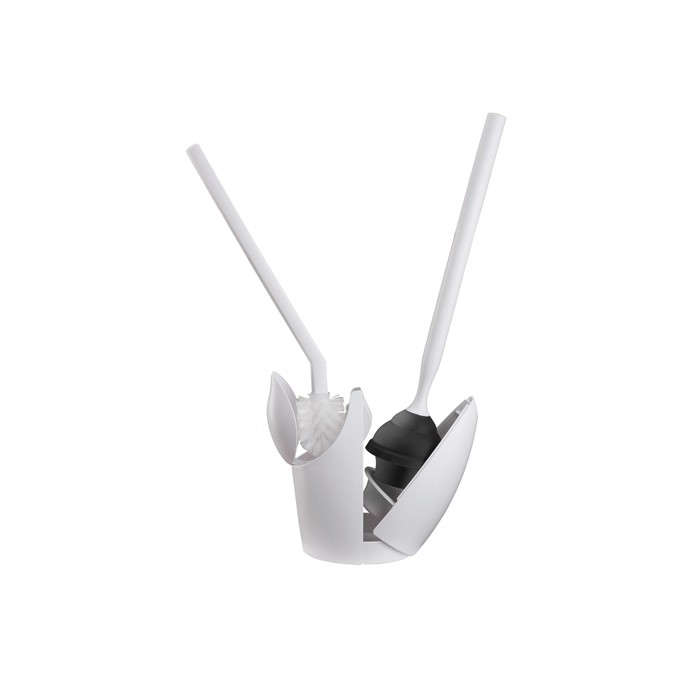
A toilet brush and plunger are the emergency responders of the bathroom. Nobody wants to look at them, nobody brags about owning them, but when trouble arrives, they suddenly become the most important tools in the house. The Two Fold Toilet Brush/Plunger Set was designed around that slightly awkward reality: keep both essentials close to the toilet while concealing them inside one neat, coordinated holder.
The original Two Fold set, associated with Umbra and an archived Ashton Green retail listing, has been discontinued. However, its two-tool storage concept remains highly relevant. Modern toilet brush and plunger combo sets continue to use the same basic formula: a compact caddy, separate tool compartments, discreet coverage, and enough accessibility to prevent a minor clog from becoming a household press conference.
This guide examines the Two Fold design, explains what makes a toilet brush and plunger set effective, and offers practical advice for choosing, using, cleaning, and storing a similar bathroom cleaning set.
What Is the Two Fold Toilet Brush/Plunger Set?
The Two Fold Toilet Brush/Plunger Set is an all-in-one bathroom accessory that combines three components:
- A toilet bowl brush for routine cleaning
- A toilet plunger for clearing common clogs
- A freestanding holder that conceals and organizes both tools
According to the archived product description, the Umbra holder was created to keep the brush and plunger out of sight while leaving them conveniently available. Both tools were included and sized to fit the holder rather than being sold as unrelated pieces.
The name “Two Fold” neatly describes the product’s dual purpose. One side handles cleaning; the other handles plumbing emergencies. It is not glamorous, but neither is standing ankle-deep in regret because nobody bought a plunger.
A Design-First Approach to Bathroom Cleaning
Traditional plungers often lean against walls or sit in open plastic dishes. Toilet brushes may be stored in lightweight cups that tip over when bumped. The Two Fold approach treats these tools as part of the bathroom environment rather than objects that should be hurriedly hidden whenever guests visit.
Its enclosed appearance offers visual calm, while the coordinated holder reduces clutter around the toilet. This concept is especially attractive in modern bathrooms, where exposed rubber plungers do not exactly complement stone tile, brushed brass faucets, or carefully folded towels.
Why a Toilet Brush and Plunger Combo Makes Sense
It Saves Floor Space
Combining both tools in one caddy creates a smaller, more organized footprint than storing two separate containers. That matters in powder rooms, apartments, dorm bathrooms, and narrow spaces where every inch beside the toilet is valuable.
A well-designed combo set keeps the tools upright and places them in predictable positions. You do not have to search under the sink during an overflowing-toilet emergency while questioning every storage decision you have ever made.
It Keeps Essential Tools Within Reach
A toilet plunger should be stored near the toilet it is intended to serve. Moving a recently used plunger through a hallway is both inconvenient and an excellent way to create a second cleaning project.
Keeping a brush and plunger beside each frequently used toilet also makes routine maintenance easier. The tools are visible enough to remember but concealed enough that they do not dominate the room.
It Creates a More Coordinated Appearance
A matching bathroom cleaning set looks more intentional than a collection of unrelated tools purchased during separate moments of panic. Neutral finishes such as black, white, gray, or stainless steel tend to blend easily with common bathroom fixtures.
The original Two Fold set focused on hiding both working ends. Many contemporary alternatives follow the same principle with domed covers, oval caddies, divided canisters, or partially enclosed compartments.
Important Design Features to Evaluate
A Stable, Easy-to-Clean Holder
The caddy is not merely decorative. It must support two long-handled tools without tipping, rocking, or sliding across the floor. A wider or weighted base generally offers better stability, particularly when the brush is pulled out at an angle.
Look for a holder with removable liners or a washable drip tray. Moisture and cleaning residue eventually reach the bottom of almost every caddy, regardless of how carefully the tools are shaken. A removable tray makes that buildup easier to address.
Ventilation and Drainage
Concealment is useful, but a completely sealed container can trap moisture. Modern premium caddies often include drainage holes, ventilation slots, raised interiors, or drip trays that encourage evaporation.
Drying performance matters because a damp brush stored in a dark compartment may develop stale odors. The best holder balances discretion with airflow rather than sealing the tool inside a tiny plastic sauna.
An Effective Brush Head
A good toilet brush needs firm enough bristles to loosen buildup without requiring excessive pressure. An angled, tapered, or crescent-shaped head can improve access beneath the rim, around the trap opening, and along curved portions of the bowl.
Handle length also affects comfort. A longer handle increases the distance between your hand and the bowl, while a textured or shaped grip helps maintain control when the brush is wet.
Replaceable heads are a valuable feature because they allow the most heavily used portion of the tool to be renewed without discarding the entire handle and holder.
A Toilet-Specific Plunger
Not every plunger is equally suitable for toilets. A flat-bottom cup plunger is primarily intended for level drains such as sinks and tubs. For a toilet, a flange-style plunger is usually the better choice.
A flange plunger has an extended rubber section beneath the main cup. This extension fits into the toilet outlet and helps create the seal needed to generate pressure. Without a strong seal, plunging becomes vigorous bathroom-themed exercise with disappointing results.
Before purchasing a combo set, inspect the plunger shape. A narrow flange may work better with some modern toilet outlets, while a flexible, full-size flange may adapt to a wider range of bowl designs.
How to Use the Toilet Brush Properly
- Put on cleaning gloves. Bathroom cleaning is one activity where bare-handed bravery earns no medals.
- Apply toilet bowl cleaner beneath the rim. Follow the product label for the correct quantity and required dwell time.
- Scrub beneath the rim first. This is where mineral deposits and residue often collect.
- Work around the sides of the bowl. Use firm, controlled strokes rather than aggressive movements that cause splashing.
- Clean toward the trap opening. Reach as far as the brush safely allows without forcing the handle against the porcelain.
- Rinse the brush in clean bowl water. Flush according to the cleaner instructions, then rinse away visible residue.
- Allow the brush to drain and dry. Do not immediately return a dripping brush to a closed holder.
Use the toilet brush only inside the bowl. Clean the seat, lid, tank, handle, and exterior surfaces with separate cloths, paper towels, or disposable wipes. This prevents the brush from carrying bowl residue across high-touch surfaces.
How to Use the Plunger Effectively
Before plunging, stop flushing. Repeatedly pressing the handle when the water level is rising does not encourage the clog to reconsider its choices.
- Protect yourself and the surrounding floor. Wear gloves and place old towels around the base if overflow is possible.
- Check the water level. The plunger cup should be covered by enough water to generate hydraulic pressure.
- Position the flange over the outlet. Center it carefully and press down slowly to release trapped air.
- Establish a tight seal. Keep the rubber cup in contact with the bowl throughout the plunging cycle.
- Use controlled up-and-down strokes. Begin steadily, then increase force while maintaining the seal.
- Repeat in short cycles. Several groups of plunges may be needed to loosen an ordinary paper or waste blockage.
- Test cautiously. Once the water begins draining normally, use a controlled flush to confirm that the clog is gone.
A plumber or toilet auger may be needed when repeated plunging does not improve drainage, the toilet backs up frequently, multiple fixtures drain slowly, or a solid object may be lodged in the trap. A plunger is powerful, but it cannot negotiate with a toy, toothbrush, or mysteriously missing set of car keys.
Cleaning and Maintaining the Set
Clean Before You Disinfect
Cleaning removes visible dirt and organic material. Disinfecting uses an appropriate chemical product to kill remaining germs on compatible surfaces. The first step matters because heavy soil can reduce a disinfectant’s effectiveness.
Follow the product label, including dilution directions, safety precautions, ventilation requirements, and contact time. Contact time is the period the surface must remain visibly wet for the disinfectant to work as intended.
Dry the Brush Before Storage
After rinsing, shake off excess water carefully inside the bowl. A practical drying method is to suspend the brush over the bowl temporarily, securing the handle beneath the lowered toilet seat so the head can drip without touching the floor. Return it to the caddy only after excess moisture has drained.
Rinse and Dry the Plunger
After the clog is cleared, rinse the plunger according to the material and manufacturer’s care instructions. Allow it to drain before placing it back in the holder. Clean any splashes from the handle, exterior caddy, and surrounding floor.
Wash the Drip Tray and Caddy
Inspect the holder regularly. Remove accumulated water, hair, dust, cleaner residue, or mineral deposits. Wash removable components with soap and water, rinse thoroughly, and allow them to dry before reassembly.
Never Mix Cleaning Chemicals
Do not combine bleach with ammonia, acids, vinegar, or other household cleaners. Mixing chemicals can produce dangerous fumes. Use one product at a time and follow its label rather than attempting bathroom chemistry experiments.
Potential Drawbacks of the Two Fold Design
Although a dual holder is convenient, the concept is not perfect for every bathroom.
- Limited ventilation: A highly enclosed version may retain moisture unless it includes drainage or airflow.
- Shared base maintenance: A dirty drip tray can affect both storage compartments if it is not cleaned regularly.
- Replacement compatibility: Generic brush heads or plungers may not fit the original caddy.
- Large combined footprint: One dual holder can be wider than two slim tools placed in separate corners.
- Plunger performance: A beautiful caddy cannot compensate for a shallow or poorly shaped plunger.
- Discontinued original: Buyers searching specifically for the Umbra Two Fold set may need to consider secondhand listings or modern alternatives.
The most important lesson is to evaluate the tools, not just the container. A stylish holder is useful, but the plunger still needs to seal and the brush still needs to reach beneath the rim.
Who Would Benefit Most From This Bathroom Cleaning Set?
A toilet brush and plunger combo is particularly suitable for:
- Apartment residents with limited storage
- Homeowners furnishing a guest bathroom
- Renters who cannot install wall-mounted storage
- People who prefer coordinated bathroom accessories
- Households that want a plunger beside every toilet
- Anyone tired of hiding cleaning tools in a bathtub before visitors arrive
It may be less suitable for households that prefer disposable brush heads, need a heavy-duty bellows plunger, or have enough cabinet space to store each tool separately.
What to Look for in a Modern Alternative
Because the original Two Fold model is no longer widely available, use the following checklist when comparing current toilet brush and plunger sets:
- A flange-style plunger designed for toilet outlets
- A brush head that reaches beneath the rim
- Long, comfortable, rust-resistant handles
- A stable holder that does not tip easily
- Separate compartments for the brush and plunger
- Ventilation holes or an open drying design
- A removable, washable drip tray
- Replaceable brush heads when available
- Enough clearance for removing each tool cleanly
- A finish that tolerates moisture and routine disinfecting
Measure the available floor area before ordering. Product photos can make a caddy look dainty, but dimensions have a habit of becoming surprisingly real when the package arrives.
Practical Experience With a Two-Tool Toilet Caddy
First Impression: The Bathroom Immediately Looks More Organized
In a realistic week-in-use evaluation, the biggest improvement is visual rather than mechanical. A loose plunger and an exposed brush create the impression that the bathroom is permanently waiting for a crisis. Once both tools are placed in a coordinated holder, the area beside the toilet looks intentional.
This change is especially noticeable in a small powder room. There may not be enough room for a storage cabinet, decorative basket, and separate cleaning-tool containers. A dual caddy uses one defined area and prevents the plunger from leaning against the wall like an uninvited guest.
Daily Use: Accessibility Matters More Than Expected
The set is most successful when each handle can be removed without touching the other tool. A holder with clearly separated openings feels cleaner and is easier to operate while wearing gloves. If both handles are packed too closely, removing the brush can jostle the plunger or drag moisture across the divider.
Handle height also matters. Taller handles are easier to grab without bending deeply, but they require enough clearance beneath shelves, toilet-paper cabinets, or window ledges. Before positioning the caddy, it helps to lift both tools straight upward and confirm that nothing blocks them.
Cleaning Performance: Brush Shape Wins Over Bristle Quantity
A very large, round brush may look powerful but can struggle beneath a narrow toilet rim. A moderately sized head with angled outer bristles often provides better control. It can scrub the waterline, reach under the rim, and move around the trap without banging repeatedly against the bowl.
Firm bristles are helpful for ordinary buildup, although an overly rigid head may flick water when it leaves the bowl. Slow removal and a brief pause above the water reduce splashing. The glamorous secret of bathroom cleaning is apparently patience.
Emergency Use: The Plunger Must Be Ready, Not Merely Present
The true test arrives when the water rises instead of draining. A toilet-specific flange makes positioning easier because it extends into the outlet and helps stabilize the cup. The first downward movement should be controlled so trapped air does not blast water around the bowl. Once the cup fills with water and a seal forms, several steady strokes can apply useful pressure to the clog.
A caddy earns extra credit when the plunger can be removed without gripping the rubber head or knocking over the brush. Afterward, the holder should provide enough room to return the rinsed plunger without smearing the handle against the opening.
The Main Maintenance Lesson: Hidden Does Not Mean Self-Cleaning
The most important experience-related discovery is that a concealed caddy must be inspected. Because the working ends are hidden, it is easy to forget about water collecting below them. A quick weekly check prevents the drip tray from becoming an unpleasant surprise.
Ventilation noticeably improves the design. Openings near the base or rear allow moisture to escape while keeping the tools visually concealed from normal viewing angles. A removable liner is even better because it can be carried to the sink, washed, rinsed, and dried separately.
Overall, the two-tool format works best as a storage system rather than a shortcut. It organizes the bathroom, keeps emergency equipment nearby, and makes the least decorative tools in the room easier to live with. It still requires drying and cleaning, but those small habits are easier than dealing with odors, standing water, or a plunger stored in a mystery bucket.
Final Verdict
The Two Fold Toilet Brush/Plunger Set is a smart example of functional bathroom design. Its core idea remains useful even though the original Umbra product has been discontinued: combine two necessary tools, conceal their working ends, and keep them within reach.
A modern alternative should offer more than attractive packaging. Prioritize a toilet-specific flange plunger, an effective under-rim brush, stable storage, drainage, ventilation, and removable components. Those features determine whether the set remains clean and convenient after the first week.
For small bathrooms, guest rooms, apartments, and design-conscious homes, a well-made toilet brush and plunger combo can reduce clutter without sacrificing preparedness. It will not become the centerpiece of your bathroom, which is precisely the point. The best version quietly waits in the corner, looking respectable and hoping it never receives an emergency call.