
Note: This article is written for web publication and synthesizes practical fall decorating, gardening, harvesting, and home-styling guidance from reputable American home, garden, craft, and extension resources.
Fall decor has a funny way of sneaking into the house. One minute you are buying one innocent little gourd at the farmers market, and the next minute your porch looks like a tiny harvest festival with strong opinions about plaid. That is the magic of gourds. They are affordable, naturally sculptural, surprisingly versatile, and charming enough to make a coffee table look intentional even when the rest of the room says, “Laundry is a lifestyle.”
Using gourds to make fall decor is one of the easiest ways to bring autumn warmth into your home without relying on plastic decorations or overcomplicated craft projects. Gourds come in bumpy, smooth, striped, speckled, pear-shaped, bottle-shaped, crooked-necked, and delightfully odd forms. Some look elegant. Some look like they were designed by a committee of squirrels. Together, they create texture, color, and seasonal personality that feels cozy rather than staged.
Whether you are decorating a front porch, Thanksgiving table, mantel, entryway bench, bookshelf, kitchen island, or office desk, gourds offer a natural foundation for fall style. This guide covers how to choose them, prepare them, arrange them, preserve them, and use them in creative DIY projects that look beautiful without requiring a professional florist, a craft-room inheritance, or a glue gun with trust issues.
Why Gourds Are Perfect for Fall Decor
Gourds belong to the same general seasonal family as pumpkins and squash, but they have a personality all their own. Unlike a standard orange pumpkin, ornamental gourds bring instant variety. Their irregular shapes and colors make displays feel collected rather than manufactured. A bowl filled with mixed gourds can look rustic, modern, farmhouse, cottagecore, minimalist, or festive depending on what you pair with it.
They also work in nearly every space. A few small gourds on a tray can warm up a coffee table. Tall bottle gourds can add height to a porch arrangement. Mini gourds can be tied into garlands or tucked into wreaths. Dried hard-shell gourds can even be painted, carved, drilled, or turned into long-lasting seasonal pieces. In other words, gourds are the overachievers of autumn decor, but in a humble little vest.
Types of Gourds to Use for Decorating
Before you start arranging, it helps to understand what kind of gourds you are working with. Not every gourd behaves the same way, especially when it comes to drying, painting, and long-term storage.
Ornamental Gourds
These are the small, colorful gourds commonly sold in grocery stores, garden centers, farm stands, and pumpkin patches during fall. They often have warty skin, stripes, curves, and two-tone coloring. They are perfect for bowls, tablescapes, wreath accents, mantel displays, and porch styling. Most ornamental gourds are used for decoration rather than eating.
Hard-Shell Gourds
Hard-shell gourds, sometimes called bottle gourds or birdhouse gourds, dry into a durable shell. Once cured, they can be painted, cut, drilled, or sealed. These are excellent for DIY fall decor projects such as lanterns, vases, hanging ornaments, rustic garlands, and sculptural centerpieces. They take longer to dry than small ornamental gourds, but the payoff is decor you can reuse year after year.
Luffa Gourds
Luffa gourds are best known for becoming natural sponges when dried, but they can also be used decoratively. Their long shape makes them useful for rustic arrangements, especially when mixed with dried grasses, wheat stalks, seed pods, and natural branches.
Pumpkins and Squash as Companion Pieces
Strictly speaking, pumpkins and winter squash are not always labeled as gourds at the store, but visually they play well together. White pumpkins, mini pumpkins, acorn squash, delicata squash, and heirloom pumpkins can add color and fullness to a gourd-based display. Think of gourds as the character actors and pumpkins as the supporting cast with very round faces.
How to Choose the Best Gourds for Fall Decorating
Good fall decor starts with choosing gourds that will last. Pick gourds that feel firm, dry, and heavy for their size. Avoid any with soft spots, cracks, wet areas, deep bruises, or a sour smell. If the stem is intact, that is a bonus. A strong stem helps the gourd look more natural and may reduce the chance of quick decay.
For the most interesting display, choose a mix of sizes, colors, and textures. Combine smooth white mini pumpkins with bumpy orange gourds, striped green gourds, creamy squash, and a few darker pieces for contrast. If everything is the same size, your display can look flat. If everything is wild and warty, it may look like a vegetable rebellion. Balance is the secret.
For porch decor, look for larger pieces that can hold their own visually from the street. For table decor, choose smaller gourds that will not block conversation. Nobody wants to make eye contact with Aunt Linda through a barricade of squash.
How to Clean and Prepare Gourds Before Decorating
Fresh gourds often come with dirt, field dust, and the occasional hitchhiking bit of nature. Before bringing them indoors, wipe them with a dry cloth or soft brush. If they are muddy, use a slightly damp cloth and dry them thoroughly. The goal is to remove dirt without soaking the skin.
If you plan to keep fresh gourds for several weeks, avoid carving, puncturing, or cutting them. Once the skin is opened, moisture loss and mold become much more likely. For long-lasting fall decor, whole gourds are the safest choice. Save heavy carving for short-term Halloween displays or use dried hard-shell gourds for projects that require cutting.
Fresh gourds also prefer airflow. Do not seal them inside airtight containers or pack them tightly into damp baskets. A pretty woven tray, shallow wooden bowl, or open crate works better than a closed glass jar. Gourds may be tough, but they are not fond of spa-level humidity.
Simple Gourd Decor Ideas for Every Room
1. The Classic Gourd Bowl
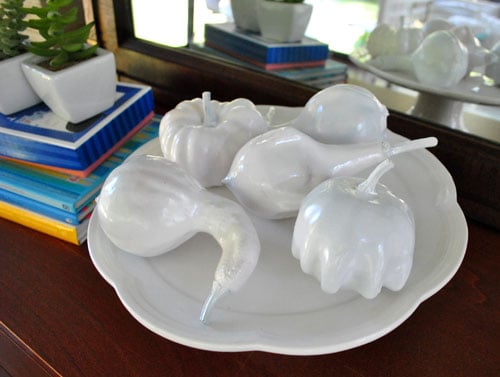
The easiest way to decorate with gourds is to pile them into a beautiful bowl. Use a wooden dough bowl for farmhouse style, a ceramic bowl for a clean modern look, or a brass bowl for a warmer, vintage feel. Add pinecones, acorns, dried leaves, or small apples for extra texture. This works well on coffee tables, kitchen islands, sideboards, and entryway consoles.
2. A Fall Mantel Display
For a mantel, start with an uneven number of larger elements. Place two or three medium gourds on one side, then balance them with candlesticks, framed art, dried branches, or a vase of wheat on the other. Let smaller gourds trail across the mantel in a relaxed line. The key is layering height and shape, not arranging everything like soldiers waiting for inspection.
3. Porch Steps With Gourds and Mums
Few things say “fall lives here” like gourds, pumpkins, and mums on the front steps. Use larger pumpkins or squash at the bottom, then tuck smaller gourds around planters. Keep one side of the steps clear if the staircase is narrow, especially near the handrail. A display should welcome guests, not turn your porch into an autumn obstacle course.
4. A Thanksgiving Table Runner
Instead of a formal floral centerpiece, create a natural runner with gourds. Lay eucalyptus, magnolia leaves, faux fall leaves, or dried grasses down the center of the table. Nestle mini gourds among the greenery, then add taper candles or small votives. Keep the arrangement low so guests can talk comfortably. The turkey already gets enough attention; the centerpiece does not need to compete.
5. Entryway Bench Vignette
An entryway bench can become a seasonal focal point with a plaid throw, a basket of gourds, a few branches, and a cozy pillow. This is a great option for small homes because it gives you a decorative moment without taking over the whole room. Add a pair of boots below the bench for a casual, lived-in look.
DIY Projects Using Gourds for Fall Decor
Painted Gourds
Painting gourds is one of the simplest ways to customize fall decor. White, cream, sage green, terracotta, copper, matte black, and soft gold are especially popular for a more elevated look. Wash and dry the gourds first, then use acrylic craft paint or spray paint in light coats. Let each coat dry fully before adding the next.
For a modern display, paint all your gourds in one color family. For a playful look, use polka dots, stripes, leaf patterns, or tiny hand-lettered words such as “gather,” “thankful,” or “home.” Metallic stems can make even humble gourds look dressed for a dinner party.
Gourd Garland
Mini gourds can be used to make a rustic garland, especially if they are dried or faux. For fresh gourds, it is better to tie twine around the stems rather than pierce the body. Mix gourds with dried orange slices, wooden beads, cinnamon sticks, faux leaves, or small pinecones. Hang the garland on a mantel, stair rail, buffet table, or window frame.
Gourd Wreath
A gourd wreath looks full, festive, and cheerful. Start with a grapevine wreath base, then attach mini gourds, leaves, moss, seed pods, and ribbon. If using fresh mini gourds, secure them with floral wire around the stems or use strong picks. For a wreath you want to reuse, dried or faux gourds are the better choice.
Succulent-Topped Gourds
Succulent-topped pumpkins and gourds are popular because they look fresh without feeling too Halloween-specific. Use a flat-topped gourd or small pumpkin, add moss on top, and attach small succulent cuttings with floral adhesive or hot glue. Because you do not cut into the gourd, the piece can last longer than a carved design. Mist lightly if needed, but avoid soaking the gourd itself.
Gourd Candle Displays
Gourds and candles look beautiful together, but safety matters. Instead of placing real flames directly inside fresh or dried gourds, use battery-operated candles. Arrange gourds around lanterns, hurricane glass, or LED votives for a warm glow. Dried gourds can be flammable, so treat them like dried flowers: pretty, natural, and not something you want snuggling up to fire.
Color Palettes for Decorating With Gourds
Traditional fall decor often leans orange, yellow, and red, but gourds allow more flexibility. For a classic harvest look, mix orange gourds with brown baskets, wheat, mums, and copper accents. For a modern neutral look, use white pumpkins, pale green gourds, beige linens, natural wood, and black candlesticks. For a moody autumn style, combine deep green, burgundy, plum, dark brown, and brass.
If your home already has bold colors, let gourds act as natural texture rather than bright color. White, tan, and sage gourds blend beautifully with blue, gray, black, cream, and wood tones. If your room is mostly neutral, add one or two orange gourds for seasonal warmth without making the space look like a pumpkin spice billboard.
How to Make Gourd Decor Look Expensive
The difference between charming gourd decor and cluttered gourd chaos often comes down to editing. Use fewer pieces, but choose better shapes. Give each display breathing room. Repeat colors intentionally. Pair rough textures with smooth surfaces. A few bumpy gourds on a marble tray look more sophisticated than thirty random gourds rolling across every flat surface in your home.
Containers also matter. Place gourds in vintage crates, ceramic bowls, woven baskets, footed compotes, glass cloches, or wooden trays. Add height with books, cake stands, lanterns, or pedestals. A gourd sitting alone on a shelf may look forgotten. A gourd sitting on a stack of old books next to a brass candlestick suddenly looks like it has a graduate degree in seasonal styling.
Outdoor Gourd Decorating Tips
Outdoor displays need to handle weather, sunlight, moisture, and curious wildlife. Place gourds in covered areas when possible, such as under a porch roof or awning. Rain and hot sun can shorten their decorative life. If you notice soft spots or mold, remove the affected gourd quickly so it does not spread moisture to nearby pieces.
For front porch displays, layer from largest to smallest. Put big pumpkins, planters, or baskets in the back, medium gourds in the middle, and small gourds in front. Add mums, ornamental cabbage, hay bales, cornstalks, lanterns, or a fall wreath for a complete look. Just be careful not to block walkways, steps, door swings, or delivery zones. Your mail carrier deserves a clear path and emotional peace.
Indoor Gourd Decorating Tips
Indoors, gourds last longer when kept dry and away from heat sources. Avoid placing fresh gourds directly on delicate wood surfaces without a tray or cloth underneath. Natural produce can sometimes leave moisture marks, especially as it ages. Use a charger, plate, linen runner, or shallow basket as a protective layer.
For dining tables, keep the centerpiece low and narrow. For bookshelves, group gourds in odd numbers. For side tables, place one small gourd beside a lamp, candle, or vase rather than crowding the surface. For kitchens, arrange gourds with cutting boards, copper mugs, dried herbs, or bowls of apples to create a warm harvest feeling.
How to Preserve Gourds for Longer-Lasting Decor
Fresh ornamental gourds are temporary, but you can help them last by choosing healthy ones, keeping them dry, and giving them airflow. Do not store them in damp basements or sealed bags. If you grow your own gourds, harvest them when the stems are dry and brown, cut them from the vine with a few inches of stem attached, and handle them gently to avoid bruising.
Hard-shell gourds need patience. They may take weeks or months to fully dry, depending on size and conditions. Place them in a dry, well-ventilated area, turn them occasionally, and allow the shell to harden naturally. Mold on the outside can happen during curing, but soft, collapsing, or foul-smelling gourds should be discarded. Once fully dried, hard-shell gourds can be cleaned, sanded, painted, sealed, and stored for future fall decorating.
Common Mistakes to Avoid
One common mistake is using too many gourds in too many places. A little repetition feels intentional; a gourd on every available surface feels like the vegetables have taken control of the household. Choose a few focal points: the porch, mantel, dining table, and entryway are usually enough.
Another mistake is ignoring scale. Tiny gourds disappear on a large porch, while giant gourds overwhelm a small table. Match the size of the gourd to the size of the space. Also, do not forget texture. Gourds look best when paired with softer or contrasting materials such as linen, wool, wood, glass, brass, wicker, leaves, moss, or dried flowers.
Finally, avoid carving every gourd too early. Carved gourds and pumpkins have a shorter life than whole ones. If you want decor to last from September through Thanksgiving, keep most pieces intact and use paint, ribbon, natural accents, or removable embellishments instead.
Budget-Friendly Ways to Decorate With Gourds
Gourd decor does not have to be expensive. Farmers markets, roadside stands, grocery stores, and pumpkin patches often sell mixed bags of small gourds at reasonable prices. Buy a small assortment and use them in multiple displays. A few can go in a bowl one week, then move to a Thanksgiving tablescape later.
You can also combine real gourds with items you already own. Use scarves as table runners, baskets as containers, old books as risers, jars as vases, and backyard branches as height. Foraged pinecones, acorns, dried leaves, and seed pods add seasonal detail for free. Just clean natural materials before bringing them inside, because nobody invited bugs to brunch.
Kid-Friendly Gourd Decorating Ideas
Gourds are great for family crafting because many projects do not require sharp tools. Kids can paint mini gourds, add stickers, tie ribbons around stems, draw faces with paint pens, or create little gourd animals with felt ears and googly eyes. For a classroom or family activity, let each child decorate one small gourd and group them together as a cheerful fall display.
To keep things manageable, cover the table, use washable paints, and choose gourds that sit flat. Crooked gourds are adorable, but they roll dramatically at the worst possible moment. If using hot glue, adults should handle that part. A low-mess alternative is removable glue dots or double-sided craft tape.
How to Transition Gourd Decor From Halloween to Thanksgiving
One of the best things about decorating with gourds is that they are not limited to Halloween. To make your display last into Thanksgiving, start with natural colors and avoid overly spooky elements. For Halloween, add black ribbon, bats, dark candles, or a few painted faces. After October 31, remove the spooky accents and add wheat, copper, cream linens, gratitude cards, or autumn flowers.
A porch display can shift easily too. Remove skeletons, cobwebs, and jack-o’-lanterns, then add lanterns, mums, and a harvest wreath. Indoors, swap black accents for brass, wood, or warm white. The gourds stay; the mood changes. It is seasonal decorating with fewer storage bins, and that deserves applause.
Personal Experience: What Actually Works When Decorating With Gourds
After trying many fall decorating ideas over the years, I have learned that gourds are most beautiful when they are allowed to look natural. The first time I decorated with them, I made the classic beginner mistake: I bought every shape, every color, and every strange little bumpy creature I could find. I placed them on the table, the shelf, the kitchen counter, the porch, and probably too close to the toaster. The result was festive, yes, but also slightly alarming. It looked less like “cozy autumn home” and more like “a gourd convention lost its hotel reservation.”
The next year, I took a calmer approach. I chose a tighter color palette: cream, sage green, muted orange, and warm brown. I placed most of the gourds in one large wooden bowl on the dining table and used only a few extras on the mantel. The difference was immediate. Instead of looking scattered, the decor felt intentional. The gourds became a design element rather than seasonal confetti.
One of my favorite tricks is to mix gourds with items that do not scream “fall” on their own. A brass candlestick, a linen napkin, a stack of old books, or a simple ceramic vase can make gourds feel more elevated. I also like placing small gourds under glass cloches or on cake stands. This gives them importance, as if the gourd has been promoted to management.
For porch decorating, I have learned that bigger is better. Tiny gourds look charming up close, but from the sidewalk they can disappear. I use larger pumpkins or planters as the anchor, then tuck the small gourds around them. I also avoid placing gourds directly where rainwater collects. A covered porch helps them last much longer, and it saves the unpleasant task of discovering a collapsed squash after a warm, wet week.
Another lesson: do not underestimate the power of restraint. A simple basket filled with mixed gourds beside the front door can be more attractive than a crowded display. Leaving some empty space lets each shape stand out. Fall decor should feel abundant, not suffocating. Your home is not auditioning to become the produce aisle.
When decorating a Thanksgiving table, I prefer low arrangements. Tall centerpieces are pretty in photos, but in real life people want to see each other, pass the rolls, and debate pie rankings without peering through decorative foliage. Mini gourds, a runner of greenery, and a few candles create atmosphere without blocking the conversation.
I have also found that painted gourds are best when the paint supports the shape rather than hides it. Soft white, muted green, matte black, and copper details can look beautiful. Heavy glitter, while fun, tends to travel across the house like it has unfinished business. If you want sparkle, use it sparingly on stems or small accent pieces.
At the end of the season, I compost fresh gourds that are no longer usable and store dried or faux pieces for next year. That is another reason I love decorating with gourds: they can be natural, affordable, and low-waste. They do not require perfection. In fact, the weird ones are often the best ones. A crooked stem, a bumpy surface, or an odd shape adds personality. Fall is the season of texture, warmth, and imperfection, and gourds understand the assignment beautifully.
Conclusion
Using gourds to make fall decor is simple, affordable, and endlessly adaptable. With their unusual shapes, earthy colors, and natural texture, gourds can make a home feel warm and seasonal without much effort. They work on porches, mantels, dining tables, entryways, bookshelves, and kitchen counters. They can be rustic or refined, playful or elegant, fresh or dried, natural or painted.
The best gourd decor starts with healthy gourds, a clear color palette, and thoughtful placement. Mix sizes and textures, protect surfaces, avoid excess moisture, and resist the urge to overcrowd every corner. Add candles, leaves, baskets, mums, pinecones, branches, or linens for a complete autumn look. Whether you are hosting Thanksgiving, welcoming trick-or-treaters, or simply trying to make your living room feel like it owns a cozy sweater, gourds are a reliable seasonal choice.
In the end, gourds prove that fall decorating does not have to be complicated. Sometimes all you need is a bowl, a few odd little harvest treasures, and the confidence to let nature do most of the styling. And if one gourd looks like a tiny goose with a neck problem, put it front and center. That is not a flaw. That is character.













