
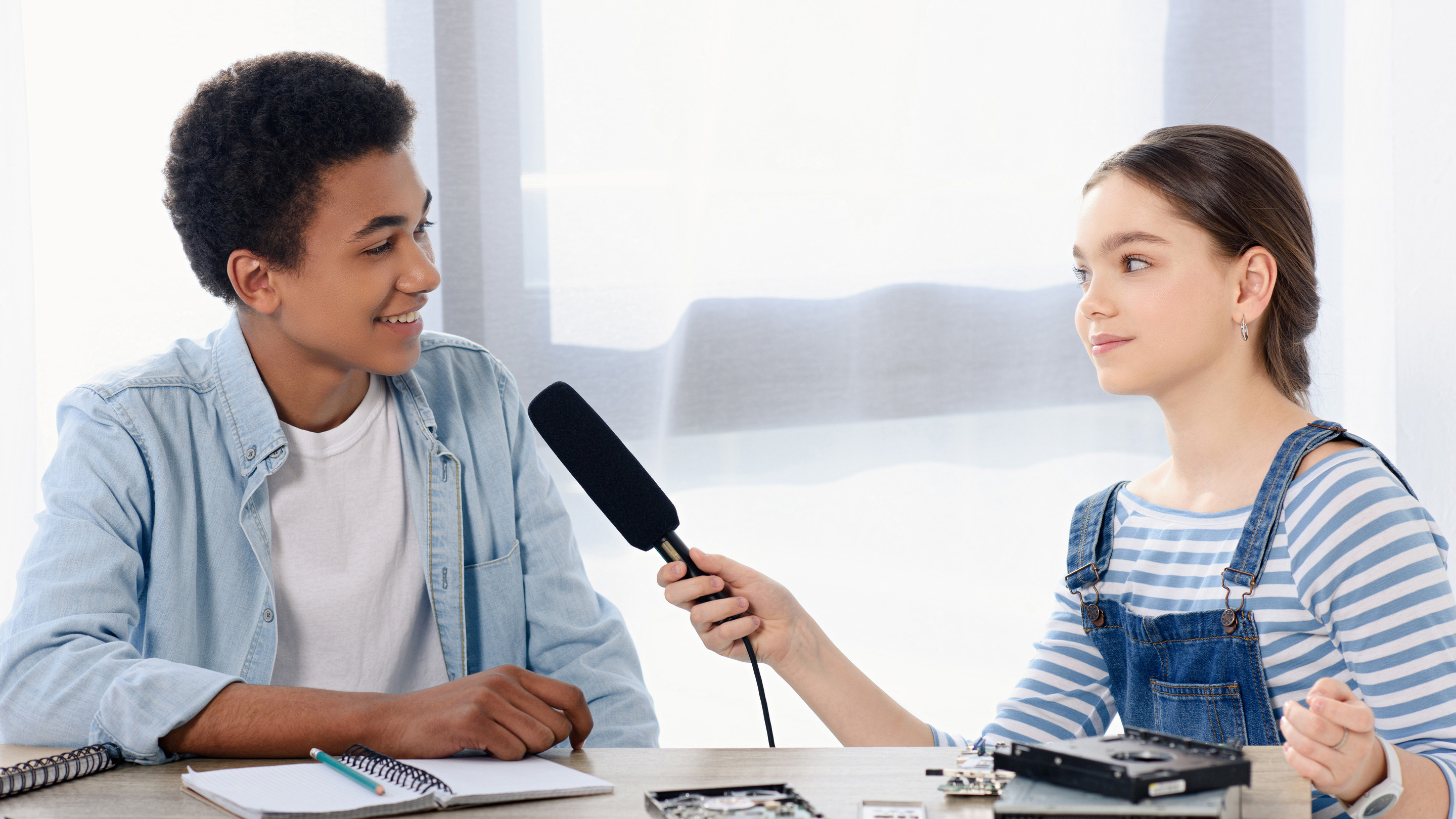
Project-based learning already asks students to investigate real problems, create meaningful products, and share their work with an audience beyond the teacher’s red pen. Add podcasts to the mix, and suddenly the classroom starts sounding less like a worksheet factory and more like a tiny public radio studio with better snacks.
Using podcasts in PBL gives students a practical way to research, write, speak, listen, revise, collaborate, and publish. Instead of simply turning in a report, students create an audio product that can inform, persuade, entertain, interview, document, or explain. The best part? A podcast can work in almost any subject: science, history, English language arts, social studies, world languages, career education, health, art, and even math if students are brave enough to make equations sound dramatic.
In a PBL classroom, podcasts are not “extra credit with a microphone.” They are a powerful project format that supports authentic learning, student voice, digital literacy, and public presentation. When planned well, podcasting can help students move from “I learned this because it was on the test” to “I learned this because I had something worth saying.”
What Does “Using Podcasts in PBL” Really Mean?
Using podcasts in PBL means students create audio episodes as the final product, a milestone product, or a reflection tool within a larger project-based learning experience. The podcast is connected to a driving question, sustained inquiry, research, collaboration, revision, and a real or realistic audience.
For example, instead of assigning a traditional essay on local water pollution, a teacher might launch a project with the driving question: “How can we help our community understand what is affecting our local water supply?” Students could research water quality, interview city officials or environmental experts, analyze data, and produce a podcast series for families, community members, or younger students.
That is the difference between a cute audio assignment and a strong PBL podcast. One says, “Record three facts.” The other says, “Investigate, make meaning, and communicate something useful.” The microphone is just the tool. The learning is the engine.
Why Podcasts Fit So Naturally With Project-Based Learning
Podcasting and PBL make a surprisingly good pair. They both value curiosity, storytelling, problem solving, and audience awareness. They also require students to do the kind of messy, human work that cannot be completed by copying the first paragraph of a search result and hoping nobody notices.
Podcasts Give Students an Authentic Audience
One of the strongest features of project-based learning is the public product. Students are more likely to care about quality when their work will be heard by classmates, families, community members, school leaders, or online listeners. A podcast creates a natural audience because audio is easy to share, easy to replay, and easy to connect with emotionally.
A student who mumbles through a presentation may suddenly care about pacing, tone, and clarity when they realize their episode will be played for a real audience. Nothing sharpens revision skills quite like hearing yourself say “um” thirty-seven times in four minutes. Painful? Slightly. Educational? Absolutely.
Podcasts Support Student Voice and Choice
Good PBL gives students meaningful decisions about what they investigate, how they work, and how they present their learning. Podcasting supports that beautifully. Students can choose episode formats, interview subjects, sound design, music style, segment structure, and storytelling angle.
One group might create an investigative episode. Another might produce a debate. A third might build a narrative story around a historical event. A fourth might create a “myth-busting” episode about climate change, nutrition, digital safety, or school rules. The core academic standards can remain the same while the creative pathway changes.
Podcasts Build Communication Skills
Podcast projects help students practice the full communication cycle: research, outlining, scripting, speaking, listening, questioning, editing, revising, and publishing. These are not soft skills in the “nice bonus” sense. They are survival skills for college, careers, civic life, and group projects where someone inevitably names the file “final_final_REALfinal.mp3.”
Students learn to organize ideas logically, support claims with evidence, speak clearly, listen actively, ask follow-up questions, and adapt language for a specific audience. A podcast also gives quieter students a structured way to contribute. Some students shine as hosts, while others excel as researchers, editors, sound designers, producers, or scriptwriters.
Benefits of Using Podcasts in PBL
1. Podcasts Make Research Feel Purposeful
Research becomes more meaningful when students need it to answer real questions. In a podcast project, students are not collecting facts just to decorate a paragraph. They need accurate information to build a story, guide an interview, explain a problem, or persuade listeners.
For example, in a health science project, students might ask: “How can teenagers make better sleep choices in a world designed to keep them scrolling?” Their podcast would require them to research sleep cycles, screen habits, mental health, school schedules, and expert recommendations. The final episode gives the research a reason to exist beyond the gradebook.
2. Podcasts Encourage Collaboration Without Forcing Everyone Into the Same Role
Podcasting is naturally collaborative, but it also allows flexible roles. A strong podcast team might include a host, co-host, researcher, script editor, fact-checker, audio editor, project manager, and promotional designer. This helps students contribute according to their strengths while still stretching into new skills.
In traditional group work, one student often becomes the unofficial CEO of Everything while another mysteriously specializes in “moral support.” A podcast project can reduce that problem by making roles visible, deadlines specific, and products easier to track.
3. Podcasts Make Revision Obvious
Students often think revision means changing a few commas and praying the teacher appreciates the effort. Audio changes that. When students listen to a rough cut, they can hear confusing transitions, weak evidence, awkward pauses, flat delivery, background noise, or questions that do not quite land.
Revision becomes practical and concrete. Students can improve the hook, cut repetition, add evidence, re-record unclear sections, adjust pacing, and strengthen the conclusion. This aligns beautifully with PBL’s emphasis on critique and revision, because students can use peer feedback to make a clearly better product.
4. Podcasts Support Universal Design for Learning
Podcasting offers another way for students to express what they know. For learners who struggle with long written assignments, audio can provide a powerful alternative. For learners who need structure, scripts and storyboards can provide support. For advanced learners, podcasting creates opportunities for deeper research, sophisticated interviews, and polished production.
This does not mean podcasts replace writing. In fact, good podcasts require writing. Students still plan, outline, script, summarize, cite evidence, and revise language. The difference is that writing serves a living communication purpose. Students write words that will be heard, not buried in a folder named “English Stuff.”
5. Podcasts Develop Digital Literacy
Students today need more than the ability to open apps quickly. They need to understand how digital media informs, persuades, entertains, and sometimes misleads. Podcast projects help students examine source credibility, copyright, fair use, editing ethics, audience impact, and responsible publishing.
Students can learn why background music should not overpower a speaker, why an interview clip needs context, why facts should be verified, and why editing someone’s words unfairly is not “creative storytelling.” It is just digital mischief wearing headphones.
How to Design a Strong Podcast PBL Unit
A successful podcast PBL unit needs more than microphones and enthusiasm. It needs a clear structure, academic purpose, manageable production steps, and assessment criteria that value both learning and communication.
Step 1: Start With a Driving Question
The driving question should be open-ended, meaningful, and connected to the real world. It should invite investigation rather than a simple yes-or-no answer.
Strong examples include:
- How can we help younger students understand online safety?
- What stories from our community deserve to be preserved?
- How does food waste affect our school, and what can we do about it?
- What can local history teach us about the future of our town?
- How can we explain a complex science concept to a general audience?
The podcast should become the vehicle for answering the question. If the project can be completed without inquiry, interviews, evidence, or revision, it is probably not PBL yet. It is just a recording assignment wearing a fancy hat.
Step 2: Choose the Podcast Format
Podcast formats should match the learning goal. Teachers can offer a menu of options or assign one format for the whole class.
- Interview podcast: Students interview experts, community members, authors, or peers.
- Investigative podcast: Students explore a problem, gather evidence, and explain findings.
- Narrative podcast: Students tell a story connected to history, literature, science, or personal experience.
- Debate podcast: Students present different viewpoints and evaluate evidence.
- Explainer podcast: Students break down a complex concept for a specific audience.
- Documentary podcast: Students combine narration, interviews, sound clips, and research.
Step 3: Build a Research and Planning Phase
Before recording, students need time to investigate. They should gather credible sources, take notes, identify key claims, create interview questions, and decide what listeners need to understand. Teachers can support this with research logs, source evaluation checklists, and mini-lessons on evidence.
For younger students, research may include teacher-curated articles, short videos, classroom books, or interviews with school staff. For older students, research can include academic sources, data sets, public records, surveys, and expert interviews.
Step 4: Teach Story Structure
A podcast is not just a spoken essay. It needs movement. Students should learn how to create a hook, introduce the problem, build curiosity, use evidence, include voices, transition between ideas, and end with a memorable takeaway.
A simple structure might look like this:
- Hook the listener with a question, sound, quote, or surprising fact.
- Introduce the topic and why it matters.
- Explain the investigation or story.
- Include evidence, examples, and interviews.
- Reflect on what was learned.
- End with a call to action or final insight.
Step 5: Record in Manageable Chunks
Students do not need a professional studio. A quiet corner, a basic microphone, a tablet, a laptop, or even a phone can work. What they do need is a plan. Recording in short sections makes editing easier and reduces the emotional damage of realizing someone coughed directly into the microphone during the best take.
Teachers can create recording stations, assign time slots, or let groups record in separate areas. Students should test audio levels, reduce background noise, speak at a steady pace, and save files with clear names. “Untitled audio 9” is not a workflow. It is a cry for help.
Step 6: Use Peer Critique Before Publishing
Peer critique helps students improve content and production. Give students a simple feedback protocol such as “Glow, Grow, Question.” A glow identifies what works. A grow suggests one improvement. A question points out something confusing or incomplete.
Students can review rough cuts for accuracy, clarity, pacing, evidence, transitions, and audience engagement. The goal is not to turn every student into a professional audio engineer. The goal is to help them make intentional choices and improve through revision.
Podcast PBL Ideas by Subject
English Language Arts
Students can create literary podcasts that analyze characters, themes, conflicts, or author choices. A class reading a novel might produce episodes such as “The Trial of the Main Character,” “Hidden Symbols You Missed,” or “What This Book Still Says About Us Today.” This encourages close reading, evidence-based discussion, and creative interpretation.
Social Studies
Students can produce oral history podcasts, local history documentaries, or “then versus now” episodes. They might interview veterans, community elders, local leaders, museum staff, or family members. This format helps students see history as lived experience rather than a parade of dates marching across a textbook.
Science
Science podcasts can explain phenomena, investigate environmental issues, or communicate public health information. Students might produce episodes on renewable energy, invasive species, nutrition myths, space exploration, weather patterns, or the science of sound itself. Bonus points if they explain sound waves using an actual podcast. That is educationally satisfying in a very nerdy way.
Math
Math podcasting works best when students connect concepts to real-world problems. They might explain how statistics can mislead people, how budgeting affects everyday choices, how probability works in games, or how geometry appears in architecture. The goal is to make mathematical thinking audible and understandable.
Career and Technical Education
Students can interview professionals, explain workplace skills, document a design challenge, or produce a “career spotlight” series. This connects classroom learning with real industries and helps students practice professional communication.
Assessment: What Should Teachers Grade?
A podcast PBL rubric should assess both the academic learning and the quality of communication. The prettiest intro music in the world cannot rescue weak research. Likewise, excellent research loses power if listeners cannot follow the episode.
Useful rubric categories include:
- Content accuracy: Information is correct, relevant, and supported by evidence.
- Inquiry: The episode shows thoughtful investigation and responds to the driving question.
- Organization: Ideas follow a clear structure with strong transitions.
- Voice and delivery: Speakers are clear, expressive, and appropriate for the audience.
- Collaboration: Team members fulfill roles and document contributions.
- Revision: The final product improves based on feedback.
- Technical quality: Audio is understandable, balanced, and edited with care.
- Reflection: Students can explain what they learned and how they learned it.
Common Challenges and How to Solve Them
Challenge: Students Focus Too Much on Sound Effects
Sound effects are fun. They are also dangerous. Give students a rule: content first, sparkle second. Music and sound should support meaning, not become the entire personality of the project.
Challenge: Recording Takes Too Long
Set time limits. A three- to six-minute episode is enough for many classroom projects. Shorter podcasts force students to prioritize ideas, write concisely, and avoid the classic student strategy of talking until the deadline gives up.
Challenge: Some Students Hate Hearing Their Own Voice
Almost everyone hates hearing their own recorded voice at first. Offer different roles and allow practice takes. Students can contribute as writers, editors, researchers, or producers while gradually building confidence as speakers.
Challenge: Technology Gets in the Way
Keep tools simple. Choose platforms students can learn quickly. Provide templates for scripts, episode outlines, file names, and editing steps. The technology should serve the project, not become a dragon guarding the learning.
Best Practices for Teachers
Start small. A full documentary series sounds exciting until you are managing twenty-seven audio files, three missing scripts, and one group that recorded inside a gym during dodgeball. Begin with a short episode, a clear rubric, and a simple workflow.
Model the process. Let students listen to age-appropriate examples and identify what works. Show them how a strong host introduces a guest, how an editor cuts dead air, and how a narrator guides the listener. Students need examples before they can create quality work.
Protect privacy. If podcasts will be shared publicly, teachers should follow school policies for student names, images, permissions, and publishing platforms. Students can use first names only, pseudonyms, or private classroom sharing when needed.
Celebrate the final product. Host a listening party, create QR codes for hallway displays, share episodes with families, or send them to community partners. A real audience turns the project into an event. Also, snacks help. This is not a formal research finding, but teachers know it is true.
Experiences Related to Using Podcasts in PBL
One of the most memorable experiences with using podcasts in PBL is watching students discover that their voices can carry authority. At the beginning of a project, many students treat the microphone like a suspicious vegetable. They lean away from it, laugh nervously, or read their scripts in the emotional style of a refrigerator manual. But after a few practice rounds, something changes. They begin to hear themselves as communicators.
In a middle school social studies project, for example, students might begin by researching local immigration stories. At first, the work feels like a standard research unit. Then students interview family members, neighbors, or community leaders. Suddenly, history is no longer trapped in a chapter. It has an accent, a memory, a pause, a laugh, and sometimes a difficult truth. When students edit those interviews into a podcast, they learn that storytelling requires respect. They must choose what to include, what to leave out, and how to represent another person fairly.
Another powerful experience comes from science classrooms. Imagine students investigating the question, “How can our school reduce food waste?” They collect cafeteria data, interview staff, research composting, and talk with classmates about lunch habits. Their podcast becomes part investigation, part public service announcement, and part student-led campaign. By the time the episode is finished, students have practiced data analysis, environmental science, persuasive writing, speaking, and civic action. Better yet, they can play the episode for the school community and invite real change.
Podcast PBL also reveals unexpected talent. The student who rarely speaks during class discussion may become the best audio editor. The student who struggles with essays may write sharp interview questions. The class comedian may become a brilliant host once they learn that humor works best when it serves the message. The highly organized student may become the producer who keeps everyone from naming files “audio thingy new new final.”
Teachers often notice that podcasting makes reflection more honest. When students listen to their first draft, they do not need a teacher to say, “This part is confusing.” They hear it. They notice when evidence is thin, when the energy drops, or when a transition sounds like the episode fell down the stairs. That self-awareness is valuable. It turns revision from teacher punishment into creator responsibility.
There are also real challenges. Podcast projects can get noisy, and not in the charming “active learning” way. Groups need norms for recording spaces, volume, equipment use, and deadlines. Students need help balancing creativity with accuracy. Some will want dramatic music under every sentence, as if explaining photosynthesis during a superhero trailer. Others will need coaching to speak naturally instead of reading like they are being held hostage by the script.
Still, the benefits are worth it. Podcasting gives PBL a human voice. It helps students slow down, listen closely, ask better questions, and communicate with purpose. It also gives teachers a window into student thinking that a multiple-choice quiz rarely provides. You can hear curiosity in a podcast. You can hear confusion turning into understanding. You can hear teamwork, revision, pride, and occasionally a chair squeak that should have been edited out.
The best experience, though, is the final listening moment. Students sit together and hear their finished work. They laugh at the intro, nod at the strong parts, cringe gently at the awkward bits, and realize they made something real. That is the promise of using podcasts in PBL: students do not just complete an assignment. They create a product with a voice, an audience, and a reason to exist.
Conclusion
Using podcasts in PBL is a practical, flexible, and engaging way to deepen learning. Podcasts help students research with purpose, collaborate in meaningful roles, practice speaking and listening, revise for quality, and publish work for an authentic audience. They also make room for creativity without losing academic rigor.
The key is intentional design. A strong podcast project begins with a meaningful driving question, includes sustained inquiry, supports student voice and choice, builds in critique and revision, and ends with a polished public product. When those pieces are in place, podcasting becomes much more than a tech activity. It becomes a way for students to think deeply and speak clearly about ideas that matter.
In the end, podcasts bring something refreshing to project-based learning: personality. They let students sound curious, serious, funny, passionate, uncertain, informed, and human. And in a world full of automated content and copy-paste answers, helping students develop a thoughtful human voice may be one of the most important projects of all.













