
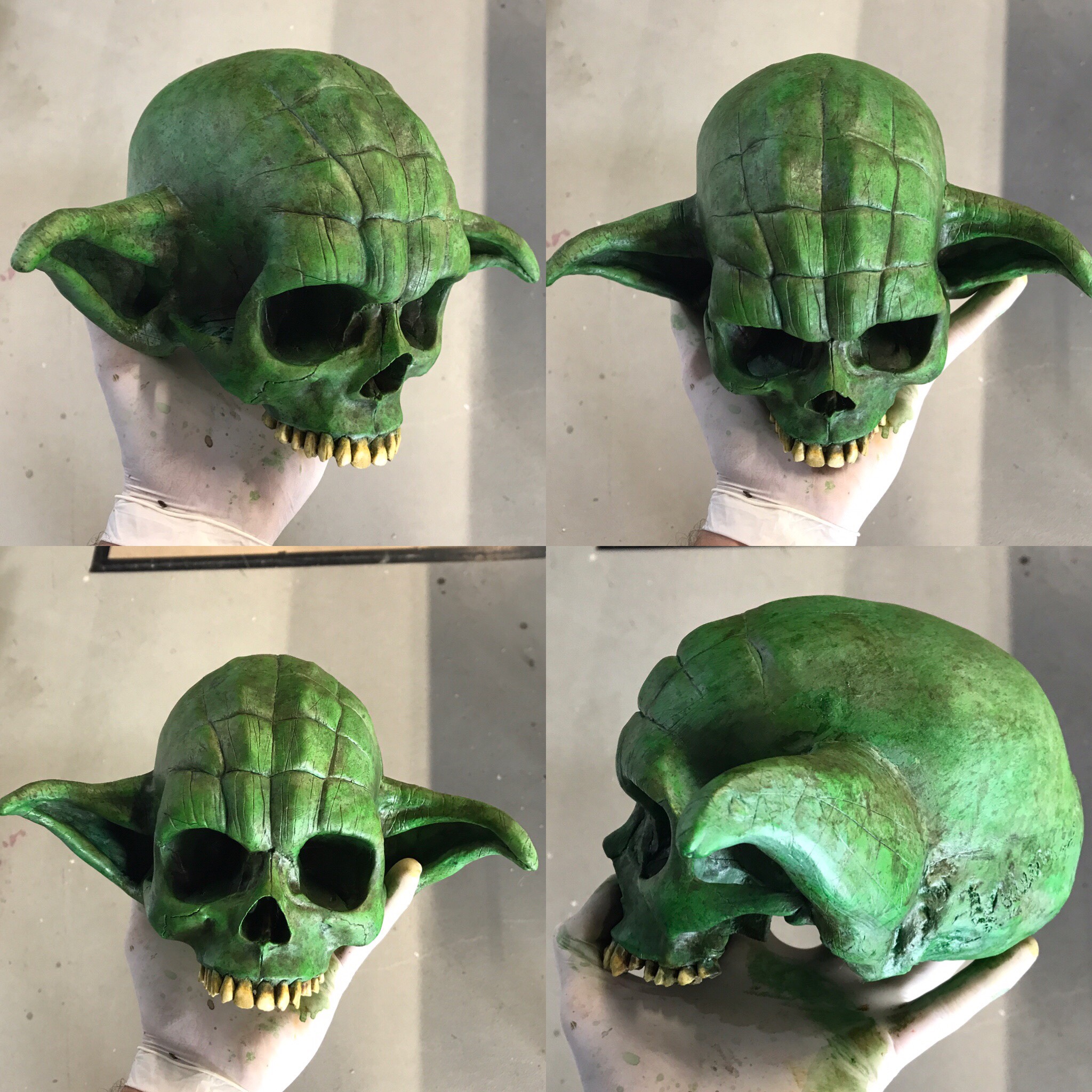
There are normal conversation starters, and then there is the sentence: “What do you guys think of my new Yoda skull??” It sounds like something shouted across a garage at 1:17 a.m. by a person holding a paintbrush, three sanding blocks, and a suspiciously powerful amount of confidence. It also sounds exactly like the kind of weird, wonderful fan-made object that makes the internet worth scrolling again.
A Yoda skull is not just a spooky Star Wars decoration. It is a strange little collision between pop culture, anatomy, sculpture, 3D printing, fan art, Halloween energy, and the universal human need to place something mildly unsettling on a shelf and wait for guests to notice. Whether it is a resin print, a clay sculpture, a kitbashed collectible, or a hand-painted desk ornament, the concept works because it asks a question nobody thought they needed answered: What would the ancient wisdom of the galaxy look like if it had cheekbones?
And honestly? Pretty cool, it might look.
Why a Yoda Skull Is Such a Weirdly Brilliant Idea
Yoda is one of the most recognizable characters in science fiction: tiny frame, huge ears, calm voice, swamp-retirement lifestyle, and the confidence of someone who has spent centuries being right. His official story presents him as a legendary Jedi Master with an unusually strong connection to the Force, a teacher for generations of Jedi, and a key figure in the larger Star Wars saga.
That is exactly why turning the idea of Yoda into a skull feels so visually powerful. The character is usually associated with wisdom, life, discipline, and spiritual endurance. A skull, on the other hand, represents mortality, mystery, archaeology, horror, and the “please do not leave that facing my bed” school of interior design. Put those ideas together and you get a piece that feels both funny and strangely thoughtful.
The best fan art often works because it transforms something familiar. A Yoda skull does not simply copy a character; it imagines an artifact. It makes viewers wonder whether they are looking at a museum specimen from a galaxy far, far away, a Sith temple relic, a lost prop from an alternate movie, or the result of a very productive weekend with a 3D printer.
The Design Challenge: Make It Yoda, But Make It Bone
The trickiest part of designing a Yoda skull is balance. Push it too far toward realism and the character becomes unrecognizable. Push it too far toward cartoon likeness and it stops feeling like a skull. The magic is in the middle.
The Ears Must Do the Heavy Lifting
Let’s be honest: without the ears, most alien skulls become “generic gremlin fossil.” Yoda’s long, horizontal ears are the strongest visual clue, so a good Yoda skull usually exaggerates the ear sockets, outer ridges, or skeletal ear structure. Even if real ears are mostly cartilage and soft tissue, fan sculpture gets to ask, “What if the skull had bony architecture that supported those legendary pointy sails?” That is where the fun begins.
The Brow Should Feel Ancient
Yoda’s face has a lot of age built into it: heavy eyelids, deep wrinkles, and a calm expression that says he has watched thousands of bad decisions happen in slow motion. A skull version can capture that feeling with a pronounced brow ridge, deep eye sockets, and subtle cracks or weathering. The goal is not gore. The goal is ancient artifact energy.
The Mouth Needs Personality
A Yoda skull with a perfectly ordinary jaw may feel too human. A compressed mouth area, smaller jaw, or slightly exaggerated dental structure can help preserve the alien quality. Done well, the skull looks like it might whisper, “Dust me, you must,” every time the shelf gets neglected.
3D Printing, Resin, Clay, or Foam: Which Medium Works Best?
A Yoda skull can be made in several ways, and each method creates a different finish. 3D printing is popular because it allows complex shapes, precise symmetry, and repeatable detail. Resin printing can capture fine cracks, teeth, and surface texture, while FDM printing is often more accessible and affordable for larger objects. The trade-off is that FDM prints usually show layer lines, which need sanding, filler primer, and patience. Lots of patience. The kind of patience Jedi training probably should have included.
Clay gives the piece a handmade, organic feel. It is excellent for sculptors who want asymmetry, fingerprints, and expressive details. Polymer clay works well for smaller desktop pieces, while air-dry clay can be easier for beginners. Foam is lighter and great for oversized wall displays or Halloween builds, though it usually needs sealing and careful painting to avoid looking like a school project that became sentient.
If the goal is a polished collectible, resin or a carefully finished 3D print is hard to beat. If the goal is “I made this with my hands and possibly frightened my cat,” clay is wonderfully satisfying.
How to Finish a Yoda Skull So It Looks Display-Worthy
The difference between “cool fan art” and “cursed potato from space” is usually the finishing process. A raw print or rough sculpt can look promising, but sanding, priming, and painting are what make the piece feel intentional.
Step 1: Smooth the Surface Without Erasing the Character
For 3D printed pieces, start by removing support marks and sanding obvious ridges. The goal is not to erase every tiny line if you want an aged fossil texture. In fact, a few imperfections can help the skull feel excavated rather than manufactured. Still, large print lines on the forehead or cheekbones will pull attention away from the design.
Step 2: Use Primer Like a Responsible Wizard
Primer reveals mistakes. It also unifies the surface so paint behaves consistently. Filler primer is especially useful for FDM prints because it can soften visible layer lines after repeated sanding and reapplication. This stage is where many props go from “plastic thing” to “wait, did you buy that?”
Step 3: Build a Bone Color in Layers
A believable skull is rarely plain white. Realistic bone tones include ivory, beige, tan, gray, brown, and even hints of green depending on the mood. For a Yoda-inspired skull, a subtle green-gray undertone can be a clever nod without turning it into a neon alien melon. Dry brushing lighter colors over raised areas and washing darker paint into cracks can add depth fast.
Step 4: Add Weathering, But Do Not Start a Mud Festival
Weathering should support the story. A few dark washes in the eye sockets, tiny scratches near the jaw, and dusty highlights around the ear ridges can make the skull look ancient. Too much black paint, however, can make it look like it survived a barbecue accident. Restraint is the true path to the Force.
Where Would a Yoda Skull Belong?
The obvious answer is “on a shelf where it can silently judge everyone,” but display matters. A Yoda skull can work as part of a Star Wars collection, a Halloween setup, a sci-fi office, a maker-space trophy wall, or a conversation piece beside books and plants. The surrounding environment changes the tone.
Place it under warm light with old books and it becomes a mysterious artifact. Put it beside action figures and it becomes a fan collectible. Add a tiny museum-style label and suddenly it looks like something recovered from the Dagobah Institute of Questionable Archaeology.
For long-term display, keep it away from strong direct sunlight and high humidity, especially if it is painted plastic, resin, or clay. Dust is also the natural enemy of detailed props. A small display case, glass cabinet, or acrylic cover can help preserve the finish while making the skull look more important than it has any right to be.
Fan Art, Inspiration, and the “Can I Sell This?” Question
Fan-made Star Wars objects live in a complicated space. Personal projects, gifts, display pieces, cosplay props, and one-off experiments are common parts of fan culture. Selling items that use recognizable protected characters, names, logos, or designs can raise copyright and trademark concerns. In the United States, fair use is a legal defense evaluated case by case, not a magic shield that automatically protects every fan-made product.
That does not mean fans should stop making creative things. It means artists should understand the difference between personal expression and commercial merchandise. A handmade Yoda-inspired skull posted online as a fun project is one thing. Mass-producing it, branding it with official names, or marketing it as licensed merchandise is another. When in doubt, create for fun, credit your inspiration, avoid implying official approval, and be cautious about sales.
In other words: admire the Force, but do not poke the legal rancor with a stick.
What Makes a Yoda Skull Shareable Online?
The title itself“What do you guys think of my new Yoda skull??”already has viral flavor. It is casual, oddly specific, and just chaotic enough to make people click. Online audiences love objects that produce an instant reaction. A Yoda skull does that because it is recognizable, funny, creepy, and skill-based all at once.
Good photos help. Natural side lighting can emphasize the brow, jaw, and ear structure. A dark background makes the silhouette pop. A plain tabletop shot is fine, but a staged photo with tools, paint jars, or a fake archaeological tag tells a stronger story. Short captions also work well: “Found on Dagobah,” “Judge me, it does,” or “Forbidden Jedi relic, $0, emotional damage included.”
People do not just respond to the finished object. They respond to the process. Show the print before sanding. Show the primer stage. Show the terrifying moment when the first wash makes it look ruined, followed by the final dry-brushed version that saves the day. Makers love proof that the ugly middle stage is normal.
Specific Examples of Creative Directions
The Ancient Temple Relic
This version looks like it was found in a Jedi ruin. Use muted bone colors, sandy weathering, small cracks, and a simple stone-like base. Add a bronze plaque or handwritten label for a museum effect.
The Sith Trophy Version
Darker, more dramatic, and probably not welcome at a children’s birthday party. Use deeper shadows, red lighting, and a black pedestal. The skull should feel ominous without becoming messy.
The Cute-Creepy Desk Buddy
Keep the proportions a little softer and less realistic. This version is more “spooky collectible” than “intergalactic forensic evidence.” It works well for office shelves and gaming setups.
The Fossil Specimen
Add mineral staining, cracks, and a matte finish. Mount it like a paleontology display. A small card reading “Unknown Force-sensitive species” would make any Star Wars fan grin.
Why the Idea Works Beyond the Joke
A Yoda skull is funny at first glance, but it also taps into a bigger artistic idea: taking a beloved character and imagining the unseen biology behind the design. Star Wars has always invited that kind of curiosity. Fans wonder about planets, species, helmets, ships, languages, and tiny background aliens who appear for three seconds and somehow receive a 4,000-word lore page.
Yoda’s species remains intentionally mysterious in official storytelling. That mystery gives fan artists room to imagine. What would the skeleton look like? How would the ears attach? Would the skull be fragile or dense? Would the eye sockets be huge? Would archaeologists argue over whether the species drank soup? These questions are silly, but they are also the fuel of creative world-building.
The piece becomes more than a skull. It becomes a little design essay. It says: here is what happens when fandom, anatomy, humor, and craft all walk into the same workshop.
of Experience: Living With a Yoda Skull on the Shelf
The experience of owning or making a Yoda skull is not quite like owning a normal collectible. A normal collectible sits there and says, “I am a tasteful representation of a beloved franchise.” A Yoda skull sits there and says, “A question, your guests now have.” That difference matters.
The first experience is the build anxiety. If you are printing it, the ears are the drama queens. They need support, they take up space, and they make you question every slicer setting you have ever trusted. If you are sculpting it, the ears are still the drama queens, because symmetry suddenly becomes a personal attack. One ear looks wise and ancient; the other looks like it overheard bad news. You adjust, step back, adjust again, and eventually decide that alien biology is allowed to be weird.
The second experience is the sanding stage, also known as the part where enthusiasm goes to be tested. You start with optimism. You end covered in dust, holding the skull under a lamp like a detective in a crime show. Every ridge becomes visible. Every little support scar mocks you. But then primer goes on, and suddenly the object becomes real. It stops being a project and starts being a prop.
The third experience is painting, which is where the skull develops personality. A plain ivory base coat looks clean but boring. Add a brown wash and it looks ancient. Add a green-gray tint and it becomes unmistakably alien. Dry brush the brow and cheekbones and the whole face wakes up. This is the moment when you realize the skull is no longer just “Yoda, but dead.” It is an artifact with a mood.
The fourth experience is showing it to people. Reactions usually arrive in stages. First: silence. Second: recognition. Third: “Is that…?” Fourth: laughter, concern, or a request to hold it. Star Wars fans tend to appreciate the concept quickly because they understand the visual language. Non-fans still understand the weirdness. Either way, it becomes a conversation machine.
The fifth experience is display placement. Put it in a bright, cheerful room and it becomes comic relief. Put it under moody light and it becomes powerful. Put it near a plant and it looks like it crawled out of the swamp. Put it near your work desk and it may silently encourage better decisions, although results may vary.
Most importantly, a Yoda skull reminds makers why strange projects are worth doing. Not every creative object needs to be practical, normal, or approved by people who think beige is a personality. Sometimes the best project is the one that makes you laugh halfway through sanding it. Sometimes the best shelf piece is the one that makes visitors stop, squint, and say, “I have several questions.”
Conclusion: Judge It by Its Weirdness, You Should
So, what do we think of your new Yoda skull? If it has strong ears, expressive eye sockets, believable bone texture, and just enough ancient swamp goblin energy, then the verdict is clear: excellent, it is.
A Yoda skull works because it blends fan art with craftsmanship, humor with atmosphere, and familiar character design with eerie imagination. It can be a 3D printed prop, a clay sculpture, a Halloween decoration, or a collectible display piece. What matters most is that it feels intentional. Smooth the rough spots, keep the silhouette recognizable, paint in layers, and display it like it belongs in a tiny galactic museum.
The internet does not need another ordinary shelf ornament. It needs more beautifully strange objects made by people who looked at a beloved Jedi Master and thought, “But what if archaeology?”













