
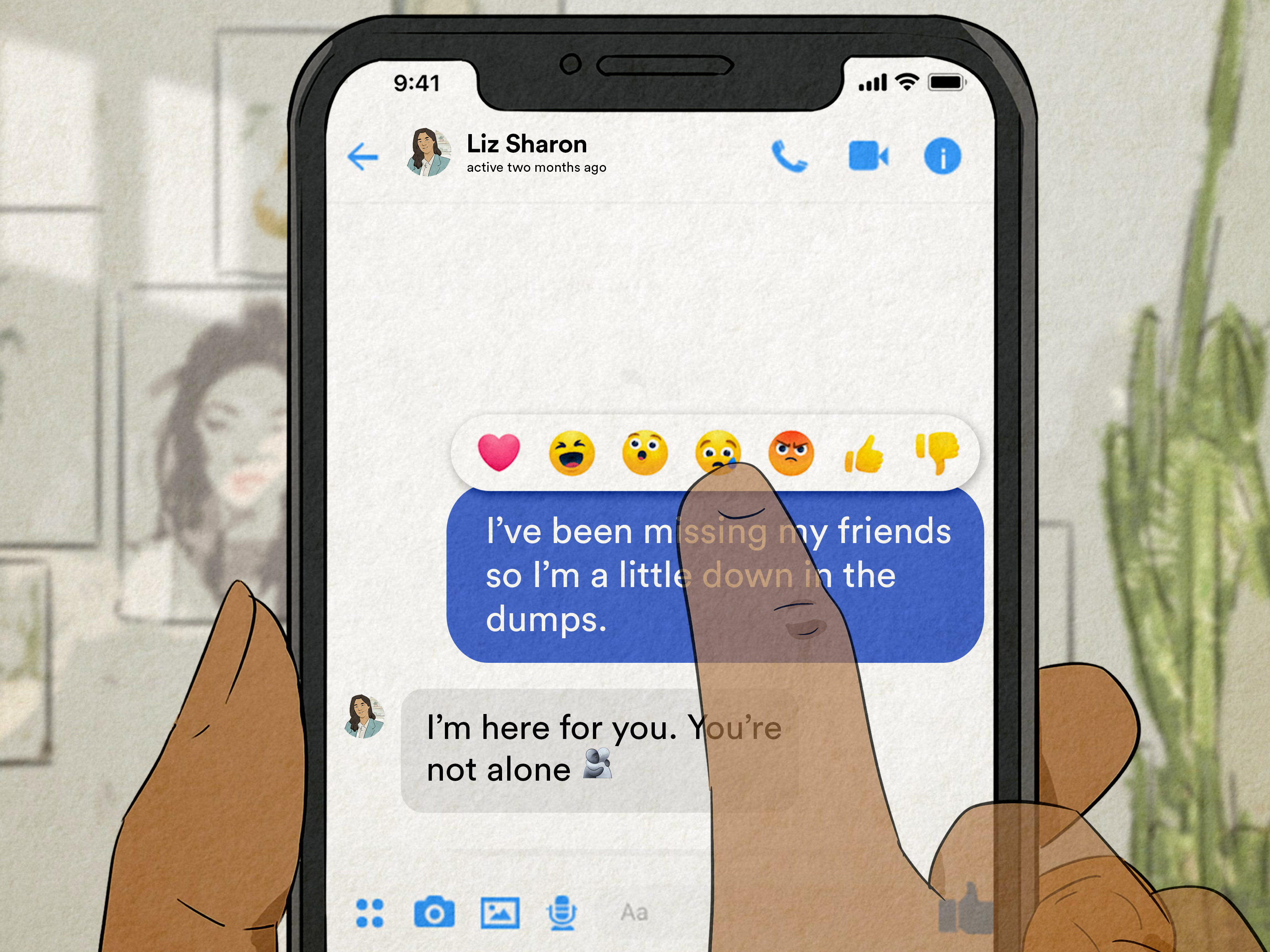
The Facebook Care emoji is that sweet little yellow face hugging a red heartthe digital equivalent of saying, “I’m here for you,” without typing a paragraph, sending a voice note, or accidentally writing something that sounds like it came from a greeting card aisle at 11 p.m. Officially known as Facebook’s Care Reaction, it was introduced in 2020 as an extra way for users to show support, empathy, comfort, and emotional warmth on posts and comments.
In simple terms, the Care emoji means “I care,” “I support you,” “sending love,” “virtual hug,” or “I feel for you.” It is softer than the Love reaction, warmer than the Like button, and less dramatic than Sad. It lives in that emotional middle zone where words can feel too heavy, but a thumbs-up feels wildly inappropriate. Nobody wants to “like” a post about someone having a rough week. That is where the Care reaction comes in, wearing its tiny emotional superhero cape.
Facebook originally rolled out the Care Reaction during the COVID-19 pandemic, when people were separated from friends, family, coworkers, classmates, and communities. A hug was suddenly complicated. A quick reaction became a small but meaningful way to say, “I see you.” Today, the Care emoji is still widely used for sympathy posts, recovery updates, encouraging announcements, memories, vulnerable confessions, and even wholesome everyday moments.
What Is the Facebook Care Emoji?
The Facebook Care emoji is a reaction icon showing a smiling yellow face hugging a red heart. It appears alongside the familiar Facebook Reactions: Like, Love, Haha, Wow, Sad, and Angry. Instead of simply approving, laughing, reacting with surprise, or showing sadness, Care communicates emotional support.
The design is intentionally simple: a face, a heart, and a hug-like gesture. That combination makes the meaning easy to understand even across different languages and cultures. A heart suggests affection or compassion. The face suggests friendliness. The hugging pose turns it into something more personal than a standard heart reaction.
On Facebook, the Care Reaction is used on posts, comments, photos, videos, and updates. In Messenger, Facebook also introduced a related pulsing heart reaction, which carries a similar meaning of extra love, warmth, and support. Think of the Facebook version as “a hug with a heart,” and the Messenger version as “my heart is doing emotional jumping jacks for you.”
What Does the Care Emoji Mean on Facebook?
The Care emoji usually means one of the following:
- Support: “I’m with you.”
- Empathy: “I understand this matters.”
- Comfort: “I hope you feel better.”
- Encouragement: “You’ve got this.”
- Affection: “Sending love, but not in a romantic way.”
- Solidarity: “You are not alone.”
Context matters. On a sad post, Care often means sympathy. On a health update, it means support. On a post about stress, grief, or burnout, it can mean comfort. On a happy but emotional postlike a graduation, adoption, family reunion, or recovery milestoneit may mean “this touched my heart.”
The Care emoji is especially useful when a Like reaction feels too casual. For example, if someone posts, “My dog is having surgery today,” clicking Like may feel like you are applauding the surgery. Clicking Sad may feel too gloomy. Clicking Care says, “I hope everything goes well,” without forcing you to compose a perfect comment.
Why Did Facebook Add the Care Reaction?
Facebook added the Care Reaction in April 2020, during a period when millions of people were using social media to stay emotionally connected while physically separated. The world was dealing with fear, uncertainty, isolation, and major changes to daily life. Facebook already had reactions for love, laughter, surprise, sadness, and anger, but none of them quite captured the feeling of “I want to comfort you.”
The Care emoji filled that emotional gap. It gave people a quick way to express support during a time when many users were posting about illness, distance, anxiety, canceled plans, family worries, and community needs. It was a tiny icon, but it arrived at a moment when tiny gestures mattered.
Facebook’s broader Reactions system had already been created because the Like button was too limited. Not every post is “likable.” A friend losing a job, sharing bad news, or admitting they are overwhelmed does not exactly call for a cheerful thumbs-up. Reactions allowed users to respond with more nuance, and Care added another layer: compassion.
Care Emoji vs. Love Emoji: What’s the Difference?
The Care emoji and Love emoji are close cousins, but they are not identical. Love is a red heart. It often means affection, admiration, excitement, or strong approval. Care is a face hugging a heart, which makes it feel more comforting and supportive.
Use Love when:
- You adore a photo, memory, achievement, or happy announcement.
- You want to show enthusiasm or affection.
- The post feels joyful, sweet, or inspiring.
Use Care when:
- Someone is going through a hard time.
- The post is emotional, vulnerable, or sensitive.
- You want to send comfort without overexplaining.
For example, if your friend posts wedding photos, Love is probably perfect. If your friend posts that they are recovering after a difficult week, Care feels more appropriate. If your friend posts wedding photos after surviving a difficult week, congratulationsyou may use both in spirit, though Facebook will still make you pick one. Social media: advanced emotional math with tiny icons.
Care Emoji vs. Sad Reaction: When Should You Use Each?
The Sad reaction shows that something is unfortunate, painful, or upsetting. The Care reaction shows that you are emotionally present for the person. Sad focuses on the situation. Care focuses on the person.
Imagine someone posts, “My grandmother passed away.” The Sad reaction says, “That is heartbreaking.” The Care reaction says, “I’m sending support to you.” Both can be appropriate, but Care often feels warmer because it centers compassion rather than only sadness.
For serious posts, a reaction alone may not always be enough. If you are close to the person, a kind comment or private message can mean much more. The Care emoji is helpful, but it is not a replacement for real human connection. It is a doorbell, not the whole visit.
How to Use the Care Reaction on Facebook
Using the Care Reaction is simple:
- Find the Facebook post or comment you want to react to.
- Tap and hold the Like button on mobile, or hover over Like on desktop.
- Select the Care emojithe yellow face hugging a red heart.
If you accidentally choose the wrong reaction, you can usually change it by opening the reaction menu again and selecting a different one. This is useful if your thumb betrays you and clicks Haha on a serious post. We do not talk enough about thumb-based social disasters.
What Does It Mean If Someone Sends You the Care Emoji?
If someone reacts to your post with the Care emoji, they are probably trying to show kindness, support, or emotional attention. It does not automatically mean romantic interest. In most cases, it means they care about what you shared.
For example, if you post about feeling exhausted, the Care reaction means they hope you are okay. If you post about a family challenge, it means they are sending sympathy. If you post a nostalgic photo, it may mean the memory feels touching. If you post a picture of your cat looking dramatically out a window like a Victorian poet, Care may mean, “This is adorable and I am emotionally invested.”
The safest way to interpret the Care emoji is through context. Who sent it? What was the post about? Is this person usually warm and supportive online? A Care reaction from a close friend may feel personal. A Care reaction from a distant acquaintance may simply be a polite gesture of empathy.
Is the Care Emoji Flirty?
Usually, no. The Care emoji is not mainly a flirt emoji. It is more about comfort than romance. However, like all emojis, meaning can shift depending on the relationship and situation. If someone frequently reacts with Care to your personal posts, sends sweet messages, and behaves warmly in other ways, it could be part of a bigger pattern. But by itself, the Care emoji is not a love confession wearing a yellow face.
In most Facebook situations, Care is safer and less intense than Love. That is why people use it for friends, relatives, coworkers, classmates, neighbors, and community members. It says, “I care about your feelings,” not necessarily “I am secretly writing our names in a notebook.”
Why People Use the Care Emoji So Much
The Care Reaction became popular because it solves a real communication problem. Online life moves quickly, but emotions are messy. People often want to acknowledge a post without writing a full comment. The Care emoji gives users a quick, gentle option.
It saves time without feeling cold
A Like can feel too plain. A comment can feel like too much work. Care sits comfortably between the two. It lets people respond in one second while still sounding emotionally aware.
It works for mixed emotions
Many posts are not purely happy or sad. A person may share that they finished treatment, moved away from home, remembered a loved one, or finally made a hard decision. The Care emoji fits complicated moments better than a simple thumbs-up.
It feels human
The hugging-heart design has a softer emotional texture than most reaction buttons. It feels less like rating content and more like reaching out. That is why many users describe it as a “virtual hug.”
Examples of When to Use the Facebook Care Reaction
Here are some common examples where the Care emoji works well:
- A friend posts about being sick or recovering from surgery.
- A family member shares a memory of someone who passed away.
- A coworker writes about stress, burnout, or a difficult week.
- A neighbor asks for community support after an emergency.
- A friend posts about mental exhaustion or needing encouragement.
- Someone shares a touching anniversary, tribute, or life milestone.
- A parent posts an emotional update about their child’s achievement.
The Care emoji is not limited to sad situations. It can also be used on posts that are wholesome, emotional, or deeply meaningful. If a post makes you say “aww” in your head, Care may be the right reaction.
When Not to Use the Care Emoji
The Care emoji is versatile, but it is not perfect for every situation. On a funny meme, Haha is probably better. On a major celebration, Love may feel more enthusiastic. On a heated political argument, Care can look sarcastic, even if you did not mean it that way. The internet has a talent for turning innocent buttons into tiny chaos machines.
Also, be careful using Care as a substitute for meaningful communication when someone close to you is going through something serious. A reaction is kind, but a message such as “Thinking of you” or “I’m here if you need anything” can feel much more personal.
Does the Care Reaction Affect the Facebook Algorithm?
Many users wonder whether the Care reaction boosts a post more than a Like. Facebook has changed its ranking systems many times over the years, and the exact weight of each reaction is not something ordinary users can fully see. In general, reactions are engagement signals, meaning they can help Facebook understand that people are interacting with a post. However, it is not wise to assume that Care has a magical boost button hidden inside it.
For everyday users, the better question is not “Will this hack the algorithm?” but “Does this reaction match what I mean?” If your goal is genuine connection, use the Care emoji when you actually want to show care. If your goal is to become the grand wizard of News Feed mechanics, you may need a lab coat, a spreadsheet, and fewer conspiracy posts.
What the Care Emoji Says About Online Communication
The Care Reaction shows how much digital communication has evolved. Early social media was built around simple approval: like, favorite, upvote, share. But human feelings do not fit neatly into one button. People needed a way to react to grief, anxiety, support, tenderness, and complicated life updates.
Emoji reactions are not just decorations. They are social signals. They help people acknowledge one another, reduce the pressure to write, and participate in conversations quickly. At the same time, they can be ambiguous. A heart can mean love, approval, gratitude, or habit. A Care emoji can mean deep sympathy or casual support. That is why context remains king.
The Care emoji works best when it supports real communication rather than replacing it entirely. It is a useful emotional shortcut, but it should not become the only way we respond to people we care about. Sometimes the right reaction is a button. Sometimes it is a comment. Sometimes it is a phone call, a meal, or showing up in real life with snacks, tissues, and the good kind of silence.
Experiences Related to the Facebook Care Reaction
The Care emoji has become one of those small online gestures that people understand almost instantly. Many Facebook users first noticed it during a strange and stressful time, when timelines were full of health updates, canceled events, family separation, and community worries. At first, some people were confused by the new icon. Was the little face holding a heart? Hugging it? Protecting it? Trying to smuggle it through airport security? But after a few uses, the meaning became clear: this is the reaction for tenderness.
One common experience is using the Care emoji when words feel awkward. Suppose a friend posts, “Today has been really hard.” You might not know the full story. You might not want to ask publicly. You might worry that a comment sounds too dramatic or too casual. The Care reaction lets you acknowledge the feeling without demanding details. It says, “I noticed. I care. I’m not scrolling past you like you’re an ad for socks.”
Another experience is receiving the Care emoji on a vulnerable post. A person may write about stress, grief, illness, loneliness, or a difficult decision. When Care reactions appear, they can create a feeling of being seen. Of course, a reaction does not solve the problem. It does not cook dinner, finish paperwork, or magically fold laundry. But it can soften the loneliness of sharing something personal online.
Parents often use the Care reaction on emotional family posts. A child’s first day of school, a graduation, a recovery update, or a memory of a loved one can attract Care reactions because the moment feels bigger than ordinary happiness. It is not just “nice photo.” It is “this matters.” That emotional difference is exactly where Care shines.
Community groups also use the Care emoji heavily. In neighborhood groups, school groups, support groups, and local pages, people often share requests for help, updates after storms, lost pet notices, medical fundraisers, or family emergencies. The Care reaction becomes a quick sign of solidarity. It may not be as useful as volunteering or donating, but it helps create a warmer atmosphere around the post.
There is also a funny side to Care. Sometimes people use it on overly dramatic posts, like someone announcing they ran out of coffee, missed a sale, or had to restart their router. In those moments, the Care emoji becomes gently playful: “I recognize your suffering, brave soldier.” This flexible use is part of why the reaction stuck around. It can be sincere, tender, supportive, or lightly humorous, depending on the moment.
The best experience with the Care Reaction is when it opens the door to something more. A Care emoji can be the first step before a private message, a check-in, or a real conversation. It reminds us that even tiny digital gestures can carry emotional weight when used thoughtfully. In a noisy feed full of opinions, memes, ads, birthdays, and someone’s suspiciously perfect vacation photos, the Care emoji is a small pause. It says: behind this screen, a person is paying attention.
Conclusion
The Facebook Care emoji means support, empathy, comfort, and emotional warmth. It is best understood as a virtual huga quick way to say “I care about this” or “I’m here for you.” Introduced during the COVID-19 pandemic, the Care Reaction gave users a softer alternative to Like, Love, Sad, and other Facebook Reactions. It remains useful because online life is full of moments that require more than approval but less than a long speech.
Use the Care emoji when someone shares difficult news, emotional memories, health updates, personal struggles, or touching life moments. Do not overthink it too much. If the post makes you want to send kindness through the screen, the Care Reaction is probably doing its job.











