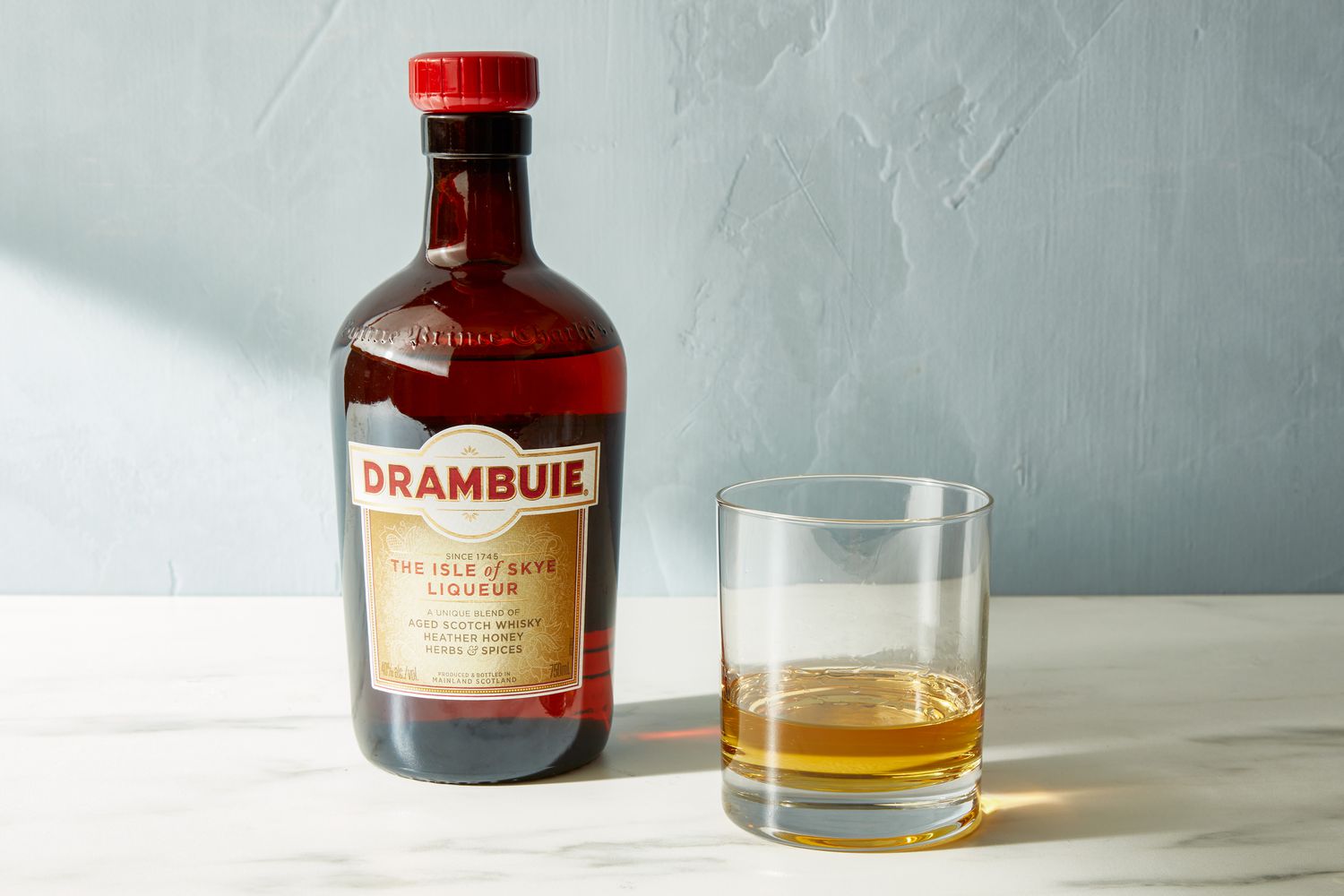
If you’ve ever ordered a cocktail and spotted a mysterious golden bottle called
Drambuie liqueur behind the bar, you’re not alone. Drambuie sounds exotic,
looks luxurious, and tastes like something your Scottish great-uncle would keep on a high shelf
“for special occasions only.” But what exactly is this famous Scotch-based liqueur, and why do
bartenders and whisky fans still rave about it?
In this guide, we’ll break down what Drambuie is, how it’s made, what it tastes like, and the
best ways to drink it. We’ll also dig into the wild Jacobite legend behind the recipe, walk
through classic cocktails like the Rusty Nail, and share real-world ideas for enjoying Drambuie
at home. By the time you’re done, you’ll know whether this honeyed whisky liqueur deserves a
permanent spot on your bar cart.
Drambuie in a Nutshell
A Scotch Whisky–Based Liqueur
At its core, Drambuie is a Scotch whisky liqueur. It’s made
by blending aged Scotch whisky with heather honey, plus a secret mix of herbs
and spices. The exact formula is famously guarded and reportedly known to only a few people at
a time, which adds to its mystique.
Technically, Drambuie clocks in at 40% ABV (80 proof), which makes it as strong
as many straight whiskies. That means it’s not a light, low-alcohol cordialit’s a full-strength
spirit that just happens to be sweet, smooth, and dangerously easy to sip.
Flavor Profile: Honey, Herbs, and Highland Drama
So what does Drambuie taste like? Imagine a mellow, blended Scotch whisky that’s been wrapped in:
- Rich, floral heather honey
- Warm, subtle spice notes (think clove, anise, nutmeg, saffron–style vibes)
- A gentle herbal complexity that lingers on the finish
The result is a golden, syrupy liqueur that’s sweet but not sticky, with a
smooth, whisky-forward backbone. You’ll get honey first, then the herbs and spices, then a soft
Scotch finish that feels like a cozy blanket for your taste buds.
The Legendary History of Drambuie
Born from a Jacobite Escape Story
Like any self-respecting old-school spirit, Drambuie comes with a legend attached. According to
tradition, the recipe dates back to the mid-18th century and the dramatic life of
Prince Charles Edward Stuart, better known as Bonnie Prince Charlie.
After the failed Jacobite uprising and the Battle of Culloden in 1746, the Prince fled through
the Scottish Highlands. While hiding on the Isle of Skye, he was taken in by
Captain John MacKinnon of Clan MacKinnon. As thanks for the clan’s loyalty, the
Prince supposedly gifted his personal “royal” liqueur recipe to the MacKinnon family.
That recipeScotch whisky plus honey, herbs, and spicesstayed in the family for generations.
Eventually, in the late 19th and early 20th centuries, it became commercialized,
bottled under the name we know today: Drambuie.
What Does “Drambuie” Mean?
The name Drambuie is believed to come from the Scots Gaelic phrase
an dram buidheach, often translated as “the drink that satisfies.”
Considering how many people happily sip it neat or in cocktails, that feels pretty accurate.
Over time, Drambuie became a staple in British officers’ mess halls and later in
American cocktail culture, especially in the mid-20th century. Today, the
brand is blended in Scotland and owned by William Grant & Sons, but it still leans heavily
into its Highland roots and Jacobite story.
What Is Drambuie Made From?
While the official recipe is secret, the broad strokes are well known:
- Base: Aged Scotch whisky (the backbone of the flavor and the alcohol).
- Sweetener: Scottish heather honey, which adds floral sweetness.
- Flavoring: A blend of aromatic herbs and spices.
Enthusiastic home bartenders and DIY liqueur makers have tried to reverse-engineer Drambuie,
and many clone recipes suggest a mix that can include ingredients like cloves, fennel seed,
star anise, rosemary, orange peel, saffron, and vanillaall steeped in Scotch and sweetened
with honey. While none of these copies are officially endorsed, they give a good idea of the
kind of warm, spiced, herbal profile the original aims for.
What you won’t find is a detailed ingredient label spelling it all out. Part of Drambuie’s appeal
is that it feels a bit mysteriousalmost like a grown-up potion that somehow made its way from
the 1700s into your cocktail glass.
Strength, Calories, and How “Heavy” It Really Is
Because Drambuie is a full-strength liqueur at about 40% ABV, you should treat
it more like whisky than like a light dessert cordial. A standard 1.5-ounce (44 ml) pour contains
roughly:
- 80 proof alcohol strength
- About 100–110 calories, largely from the sugar and alcohol
That means a Rusty Nail or a generous pour of Drambuie on the rocks is absolutely a
“sip slowly and enjoy the moment” kind of drink. It’s smooth enough to feel gentle but strong
enough to sneak up on you if you’re not paying attention.
How to Drink Drambuie
Neat or on the Rocks
The simplest way to enjoy Drambuie is also one of the best:
- Neat: Pour a small measure into a tulip or rocks glass and let it warm slightly in your hand. Sip slowly.
- On the Rocks: Serve over a large ice cube. The melting ice opens up the honeyed and herbal notes.
This style of serving lets you experience the full character of the liqueurperfect for a
nightcap or a quiet evening when you want something flavorful but smooth.
In Coffee, Tea, and Cozy Drinks
Drambuie is a natural match for hot, comforting drinks. A splash in:
- Hot coffee, topped with whipped or lightly frothed cream, turns into a dessert in a mug.
- Black tea adds a honeyed, herbal kick that feels very “curl up with a blanket and a book.”
- Hot chocolate transforms into a grown-up treat with a whisky twist.
Use a light handyou want to complement the drink, not overpower itbut once you get the ratio
right, Drambuie becomes a winter staple.
As a Cocktail Ingredient
While Drambuie is delicious on its own, it really shines in cocktails that use its
sweet, spiced complexity to balance stronger, drier spirits. The most famous
example is the Rusty Nail, but bartenders have created plenty of modern twists using Drambuie
with citrus, bitters, soda, and even beer.
Classic Cocktails with Drambuie
The Rusty Nail
The Rusty Nail cocktail is the undisputed classic when it comes to Drambuie.
It’s wonderfully simple:
- 2 parts Scotch whisky
- 1 part Drambuie
- Stirred over ice, strained (or served) in a rocks glass
- Optional: Lemon twist garnish
This drink became especially popular in mid-20th-century New York and is associated with the
Rat Pack era and lounge culture. It’s rich, slightly sweet, and very much a
“slow sipping while listening to jazz” cocktail.
Drambuie on the Modern Bar Menu
Beyond the Rusty Nail, Drambuie appears in:
- Drambuie & Soda: A lighter highball with sparkling water and a wedge of citrus.
- Drambuie Spritz: Mixed with sparkling wine and a citrus twist for a fun aperitif.
- Coffee cocktails: Shaken or stirred with espresso and cream for a dessert-style drink.
- Signature house cocktails: Many bars use Drambuie as a secret ingredient to add spice and depth.
Even if you don’t see it on the menu, most well-stocked bars have a bottle somewhere. If you
like whisky drinks with a touch of sweetness, asking for something “Drambuie-based” is a smart move.
Buying, Storing, and Serving Drambuie
Where You’ll Find It
Drambuie is widely available at major liquor stores, online retailers, and many supermarket
chains with a decent spirits selection. It’s usually shelved:
- Near the liqueurs and cordials section, or
- Alongside Scotch whiskies, because of its base spirit
Bottles typically come in the familiar short, rounded shape with a rich amber-gold liquid inside
and a red or gold label.
How to Store Drambuie
The good news: Drambuie is low-maintenance.
- Store it at room temperature, away from direct sunlight.
- Keep the cap sealed tightly to preserve aroma and flavor.
- Once opened, it will stay good for a long timeoften yearsthough the flavors are brightest within the first year or two.
You don’t need to refrigerate it, but if you prefer it chilled, you can store it in the fridge
or simply pour it over a large ice cube.
Drambuie vs. Other Whisky Liqueurs
Drambuie isn’t the only whisky liqueur in town, but it does have a distinct personality.
-
Compared to honey whiskies: Many modern honey-flavored whiskies are lighter,
sweeter, and less complex. Drambuie is richer and more herbal. -
Compared to Irish Mist or similar liqueurs: These may share a whiskey-and-honey concept,
but Drambuie’s specific combination of heather honey and spices gives it a deeper, more
old-world profile. -
Compared to simple whisky + honey at home: You can mix whisky and honey yourself, but
you’ll miss the layered herbal and spice notes that make Drambuie unique.
In short, if you like the idea of a luxurious, honeyed whisky liqueur with a little
complexity and history, Drambuie is the benchmark.
Who Will Love Drambuie (and Who Might Not)
You’ll probably love Drambuie if:
- You enjoy Scotch whisky but wouldn’t mind it a bit softer and sweeter.
- You like dessert-style drinks that still feel grown-up and sophisticated.
- You’re into classic cocktails or vintage bar culture.
- You want a versatile bottle that works neat, in coffee, and in mixed drinks.
You might not be a fan if:
- You prefer bone-dry spirits and zero sweetness.
- You’re not into herbal flavors or spiced liqueurs at all.
- Honey is not your thing in drinks or desserts.
Still, even die-hard whisky purists often appreciate a small glass of Drambuie as a change of
paceespecially on a cold night.
Real-World Experiences with Drambuie: How People Actually Enjoy It
Reading about Drambuie is one thing. Actually opening a bottle and working it into your life is
another. So let’s talk about how people really use Drambuie at home and in casual gatherings.
The “New Bottle” Ritual
Picture this: You bring home your first bottle of Drambuie, set it on the counter, and there’s
that moment of “OK, now what?” A good first move is to taste it neat. Pour a
small amount into a rocks glass, take a sniff, and you’ll catch the honeyed, herbal aroma before
the whisky comes through. Take a tiny sipno need to be braveand notice how the sweetness
arrives first, followed by spice and a gentle Scotch finish.
A lot of people report being surprised at how smooth and approachable it is,
even if they’re not huge whisky drinkers. That first sip often turns skeptics into fans.
Hosting a Small “Drambuie Night”
Drambuie actually makes a fun centerpiece for a casual get-together. You don’t need a full bar
programjust a couple of simple options:
- Rusty Nails for the whisky lovers.
- Drambuie on the rocks for those who like it simple.
- Coffee with a Drambuie splash for dessert drinkers.
Set out lemons for twists, some ice, and a decent blended Scotch to pair with the Drambuie for
Rusty Nails. Guests can try it different ways and decide which they like best. Suddenly you’ve
got an easy, themed evening that feels intentional without requiring bartender-level skills.
Seasonal Traditions: Winter Cozy and Holiday Treats
Many people find that Drambuie gradually becomes a seasonal tradition. In the
colder months, a tiny pour before bed or a Drambuie-laced coffee becomes a comforting ritual.
It’s the kind of bottle you might not touch every week in summer, but when the weather cools
down, it somehow moves to the front of the shelf.
Around the holidays, it fits naturally into dessert time. Instead of just serving pie and coffee,
you can offer:
- Coffee with a spoonful of Drambuie and whipped cream.
- Vanilla ice cream drizzled with a little chilled Drambuie.
- A small glass of Drambuie on the side of a rich chocolate dessert.
None of this requires a recipe cardjust a bit of curiosity and a willingness to experiment.
Winning Over Whisky Skeptics
One of the more interesting “real world” uses for Drambuie is as a bridge for people who think
they don’t like whisky. Neat Scotch can feel intense for newcomers, but Drambuie softens the
edges with honey and herbs while still keeping that whisky character.
A common pattern goes like this: someone insists they “hate whisky,” reluctantly sips a Drambuie
on the rocks, pauses, and then says something like, “Oh, OK, I could drink that.” From there,
they might graduate to a Rusty Nail with a bit more Scotch, or use Drambuie to experiment with
other whisky-based cocktails.
Experimenting in the Kitchen
Beyond cocktails, home cooks sometimes sneak Drambuie into recipes. A few ideas you’ll see people
try:
- A splash of Drambuie in a pan sauce for roast duck or pork.
- Stirring a spoonful into whipped cream for topping cakes or puddings.
- Adding a bit to baked desserts, like bread pudding or fruit crumbles.
You don’t need a formal recipejust think of Drambuie as a cross between whisky and liquid
spiced honey. If that sounds good in the dish you’re making, it’s probably worth trying a small
test batch.
Is Drambuie Worth Keeping Around?
For many people, Drambuie becomes one of those “quietly essential” bottles. You may not reach
for it every weekend, but when you want:
- A simple, elegant nightcap,
- A cozy winter drink, or
- A classic cocktail with history,
Drambuie steps up beautifully. It’s an easy way to add a little Highland drama to your bar
without having to memorize complicated recipes.
In the end, what Drambuie is can be summed up pretty simply: it’s a
Scotch whisky liqueur with honey, herbs, and a lot of history, designed to be
sipped, savored, and shared. Whether you enjoy it neat, in coffee, or in a Rusty Nail, it’s the
kind of bottle that turns an ordinary evening into something just a little more special.