
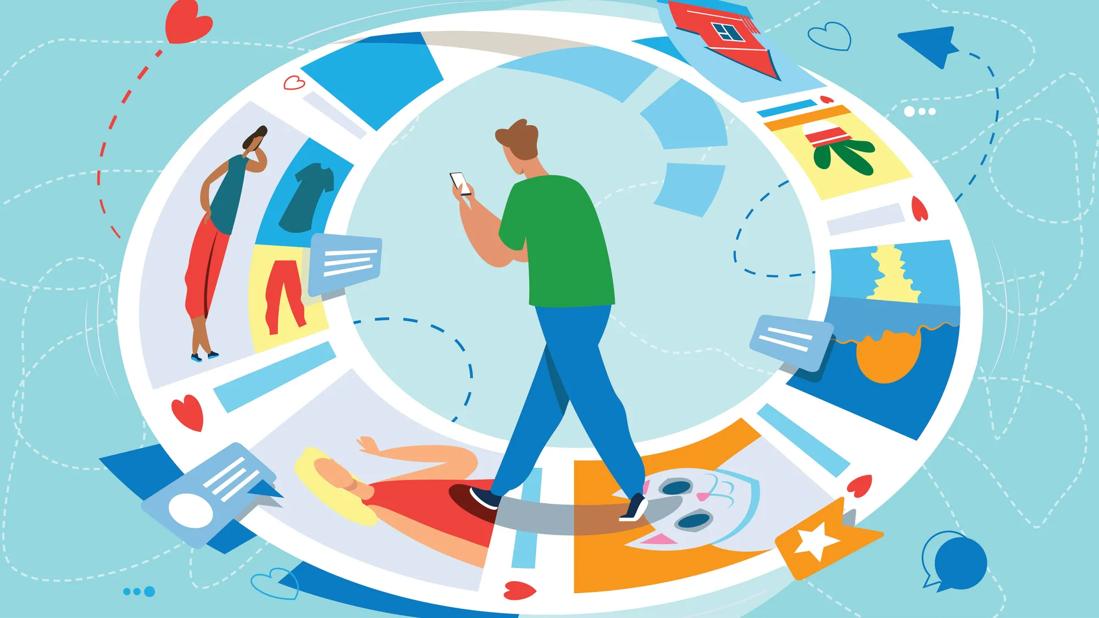
Social media is supposed to be a quick check-in. You open one app to answer a message, watch one video, or “just see what’s new,” and suddenly your thumb has worked a double shift while the rest of your life sits in the waiting room. If that sounds familiar, welcome to the modern attention economy, where every buzz, badge, and endless scroll is competing for a starring role in your day.
That does not automatically mean you are addicted. But it may mean your relationship with social media has become a little too clingy. The phrase social media addiction is widely used in everyday language, though many clinicians describe the problem more carefully as compulsive or problematic social media use. In plain English, it becomes a problem when social media stops being a tool and starts acting like your boss, your bedtime, your mood ring, and your main source of stimulation all at once.
This article breaks down what social media addiction really is, why it can feel so hard to stop, the warning signs to watch for, and practical ways to build healthier habits without moving to a cabin in the woods and communicating only by carrier pigeon.
What Is Social Media Addiction, Really?
Social media addiction is not simply “using Instagram a lot” or “liking TikTok too much.” It is a pattern of use that feels increasingly hard to control, even when it is clearly interfering with your sleep, focus, work, school, relationships, or mental health. The key issue is not just time. It is loss of control.
Someone dealing with problematic social media use may know their habits are hurting them and still feel pulled back in. They may plan to check one notification and end up scrolling for an hour. They may feel restless, irritable, or weirdly empty when they try to cut back. They may keep reaching for their phone during meals, conversations, work tasks, or even while watching a show they were supposedly excited to watch. At that point, social media is no longer just entertainment. It is a reflex.
That is why this issue often resembles other compulsive behaviors. The platform delivers novelty, social feedback, and unpredictable rewards. Some posts get ignored. Some explode. Some notifications are boring. Some are thrilling. And the brain, being the curious little raccoon that it is, loves checking again “just in case something good happened.”
Why Social Media Can Be So Hard To Put Down
1. It runs on unpredictable rewards
One of the stickiest features of social media is that you never know what is waiting for you. A funny video, a flattering comment, breaking news, a text from a crush, a work message you wish had never been born, or a stranger arguing about sourdough. That unpredictability keeps you checking. Your brain starts associating the app with possible reward, which makes the urge feel stronger over time.
2. It is designed to remove stopping points
Books have chapters. Movies have credits. Social media has infinite scroll. Platforms are built to reduce friction and increase time spent. Auto-play, personalized feeds, notifications, badges, and algorithmic recommendations all make it easier to stay than to leave. When there is no natural ending, your brain has to create one. That is harder than it sounds when you are tired, stressed, lonely, bored, or avoiding a spreadsheet.
3. It taps into social comparison
Human beings are wired to notice where they stand socially. Social media turns that ancient instinct into a 24/7 highlight reel. You are not comparing your whole life to someone else’s whole life. You are comparing your messy Tuesday afternoon to their curated best moments, filtered vacation sunset, gym selfie, promotion announcement, and suspiciously photogenic salad. That can leave you feeling behind even when nothing is actually wrong.
4. It can soothe discomfort fast
Social media is a powerful escape hatch. Feeling awkward? Scroll. Feeling stressed? Scroll. Feeling lonely? Scroll. Feeling bored in the grocery line behind someone buying forty-seven cans of beans? Definitely scroll. The problem is that when scrolling becomes your default response to discomfort, you stop practicing other ways to regulate emotions. Over time, the habit grows stronger because it works in the short term, even if it makes you feel worse later.
Signs You May Be Dealing With Social Media Addiction
Not every heavy user has an addiction problem. But these signs can suggest your social media use is becoming unhealthy:
- You check social media first thing in the morning and last thing at night.
- You lose track of time almost every time you open an app.
- You feel anxious, edgy, or unusually restless when you cannot check your feeds.
- You reach for your phone during conversations, meals, work, or driving-related pauses.
- Your sleep is suffering because you keep scrolling in bed.
- You compare yourself to others online and feel worse about your life afterward.
- You tell yourself you will cut back, but do not follow through.
- Your productivity, grades, mood, or relationships are taking a hit.
- You keep using social media heavily even when you know it is making you feel drained, distracted, or depressed.
A useful test is this: When social media leaves you feeling worse, do you still keep returning to it automatically? If the answer is yes, the habit may be running the show.
How Social Media Addiction Can Affect Your Life
Sleep takes the first punch
Late-night scrolling is one of the biggest culprits. You mean to check one thing before bed, but the app hands you an all-you-can-eat buffet of stimulation. Suddenly it is 12:47 a.m., your brain is wide awake, and tomorrow morning already looks rude. Over time, poor sleep can worsen stress, irritability, focus, and mood.
Mental health can get shakier
For some people, heavy or compulsive social media use is linked with more anxiety, lower mood, social comparison, fear of missing out, and a constant sense of emotional overstimulation. That does not mean social media causes every mental health problem. Life is more complicated than that. But if your feeds regularly leave you feeling inadequate, angry, isolated, or overwhelmed, the pattern matters.
Attention gets sliced into confetti
When you are constantly interrupting yourself to check notifications, deep focus becomes harder. Tasks take longer. Reading feels slower. Boring-but-important work becomes almost physically annoying. Even when you are not actively on social media, your mind may stay half-ready for the next ping.
Real-life relationships can thin out
Social media can help people connect, but it can also create the illusion of connection without the depth of it. Watching people is not the same as talking to them. Reacting is not the same as relating. If online activity starts replacing face-to-face time, meaningful rest, hobbies, movement, or time outdoors, the cost adds up.
How To Stop Social Media Addiction
Here is the good news: you do not need a dramatic digital exorcism. Most people do better with steady, realistic changes than with grand declarations followed by a secret midnight relapse with Reels. The goal is not perfection. The goal is control.
1. Track your real use before changing it
Most of us are hilariously bad at estimating how much time we spend on our phones. Check your screen time data for a week. Notice which apps dominate, what times of day you use them most, and how you feel before and after. Are you scrolling when you are bored? Lonely? Avoiding work? Looking for a reward after stress? You cannot change a habit clearly until you see its pattern.
2. Identify your triggers
Triggers are the moments that launch you into autopilot. Common ones include boredom, awkwardness, fatigue, stress, loneliness, procrastination, and notifications. Once you know your triggers, you can build alternatives. If you always scroll when a task feels difficult, try setting a five-minute timer and starting before you check your phone. If you scroll when lonely, text a real friend instead of visiting the museum of other people’s lives.
3. Make the apps harder to reach
Convenience fuels compulsion. Small barriers matter. Remove apps from your home screen. Turn off nonessential notifications. Log out after each use. Move tempting apps into a folder with a name like “Do You Actually Need This?” Delete one app for a week and see what changes. You are not weak for needing friction. You are being strategic.
4. Set limits that are specific and boring
Vague goals are where good intentions go to die. “Use my phone less” sounds nice, but it is not a plan. Better examples include:
- No social media before breakfast.
- No phone in bed.
- Thirty minutes total per day on one specific app.
- Check social apps only at lunch and after dinner.
- Keep the phone out of the bathroom, because let us all try to reclaim some dignity.
Start smaller than your ego wants. Tiny wins are easier to repeat than heroic failures.
5. Replace the habit instead of creating a vacuum
If social media has become your go-to source of stimulation, comfort, or escape, simply removing it can leave you feeling twitchy and bored. That is normal. The answer is not just subtraction. It is replacement. Create a list of substitutes for the moments you usually scroll:
- Take a ten-minute walk.
- Read a few pages of a book.
- Stretch.
- Text one person you actually care about.
- Do a puzzle, journal, cook, or listen to a podcast.
- Keep a “boredom menu” on your phone so your brain has options besides opening an app out of habit.
6. Protect your sleep like it is expensive jewelry
If you do only one thing, do this. Keep your phone out of bed or at least out of arm’s reach. Use an actual alarm clock if needed. Set a digital sunset, such as no social media after 9:30 p.m. Nighttime use is especially sticky because you are tired, less self-controlled, and more likely to drift. A simple charging station outside the bedroom can be weirdly life-changing.
7. Curate your feed ruthlessly
Not all content affects you the same way. Some accounts educate, inspire, or genuinely connect you to other people. Others make you feel inadequate, furious, numb, or strangely invested in the skincare routine of a seventeen-year-old millionaire. Unfollow, mute, or restrict accounts that consistently tank your mood. You do not owe your attention to content that harms you.
8. Use social media with a purpose
Open the app with a job. Maybe you are posting an update, replying to messages, or checking a specific page. Once the task is done, leave. Wandering into social media with no intention is like entering a supermarket hungry with no list and no adult supervision. You will leave with nonsense.
9. Try a short reset
A full detox is not necessary for everyone, but a brief reset can help you see how dependent the habit has become. Try a weekend off, a 24-hour break, or deleting one app for seven days. Pay attention to what happens. Do you feel relieved? Restless? Bored? More present? The reaction tells you a lot.
10. Get support if the habit is tied to your mental health
If your social media use is tangled up with anxiety, depression, loneliness, body image concerns, panic, insomnia, or relationship conflict, it may be time to talk with a mental health professional. Therapy can help you work on emotion regulation, compulsive behavior patterns, boundaries, and the needs that scrolling is currently trying to meet. Needing help does not mean you failed. It means the problem got bigger than a productivity hack.
What Parents Can Do for Teens
When teens struggle with social media overuse, the answer is rarely a dramatic lecture followed by a total ban and a household uprising. A more effective approach is structure plus conversation. Parents can model healthier phone habits, create device-free times and spaces, talk openly about algorithms and comparison, and make a family media plan that everyone follows.
It also helps to ask better questions. Instead of “Why are you always on your phone?” try “How do you feel after being on that app?” That shifts the conversation from blame to awareness. If a teen’s sleep, mood, schoolwork, or self-esteem is slipping, treat the pattern seriously. Sometimes the phone is not the whole problem, but it can make an existing struggle louder.
Experiences Related to Social Media Addiction: What It Can Feel Like in Real Life
The experiences below are composite examples based on common patterns many people describe when social media use starts to feel compulsive.
Experience #1: The “I Work Online, So It Doesn’t Count” Trap. Marcus, a remote marketing coordinator, told himself he had to be online all day for work. That was partly true. But somewhere between checking campaign metrics and “just seeing what people were saying,” his workday became a patchwork of tabs, feeds, short videos, and half-finished tasks. He felt busy from morning to evening and still ended each day wondering what he had actually accomplished. The weirdest part was how tired he felt. Not physically tired. Mentally frayed. Once he started setting work-only browser windows and social-only time blocks, he realized how much of his stress had been coming from constant switching, not from the workload itself.
Experience #2: The Bedtime Scroll Spiral. Nina did not think of herself as someone with a problem because she rarely used social media during the day. Her issue started at night. She would get into bed, open one app to relax, and then bounce from videos to comments to shopping links to random celebrity news until one in the morning. She was sleeping less, waking up groggy, and feeling more anxious during the day, which made her even more likely to seek “mindless” distraction at night. Her turning point was embarrassingly simple: she bought a cheap alarm clock, charged her phone across the room, and replaced the last twenty minutes of scrolling with reading fiction. It did not fix everything instantly, but it broke the automatic loop.
Experience #3: The Comparison Hangover. Alina loved fitness and healthy eating, but her feed slowly turned from motivation into punishment. She followed dozens of creators who seemed endlessly disciplined, photogenic, productive, and suspiciously free of laundry. After scrolling, she felt lazy and behind, even on days when she had actually done well. She did not need to quit social media entirely. She needed to stop consuming content that made her feel like a failed extra in someone else’s highlight reel. Once she unfollowed accounts that triggered comparison and followed more realistic voices, her mood improved fast.
Experience #4: The Teen Who Felt “Off” Without a Phone. One high school student described feeling actual panic when his phone battery dropped below ten percent. He checked notifications in class, at meals, while walking, and during homework. What finally got his attention was not a lecture from adults. It was noticing that he could not sit through a movie with friends without checking his phone every few minutes. He said, “It felt like my brain forgot how to be bored.” That sentence says a lot. Part of recovery was relearning boredom, quiet, and attention span. At first that felt uncomfortable. Later it felt like freedom.
These stories have different details, but the pattern is similar: social media use became automatic, emotionally loaded, and harder to control than the person expected. The solution was also similar. Not shame. Not perfection. Awareness, limits, replacements, and some honest reflection about what the scrolling was doing for them in the first place.
Final Thoughts
Social media addiction is not about lacking willpower or being “bad with your phone.” These platforms are designed to be persuasive, sticky, and hard to leave. But design is not destiny. Once you understand what keeps pulling you in, you can start changing the environment, the routine, and the reward that keep the habit alive.
You do not have to quit the internet and become a mysterious woodland philosopher. You just need to get your attention back. When social media becomes something you use on purpose instead of something that uses you, that is when real change begins.












