
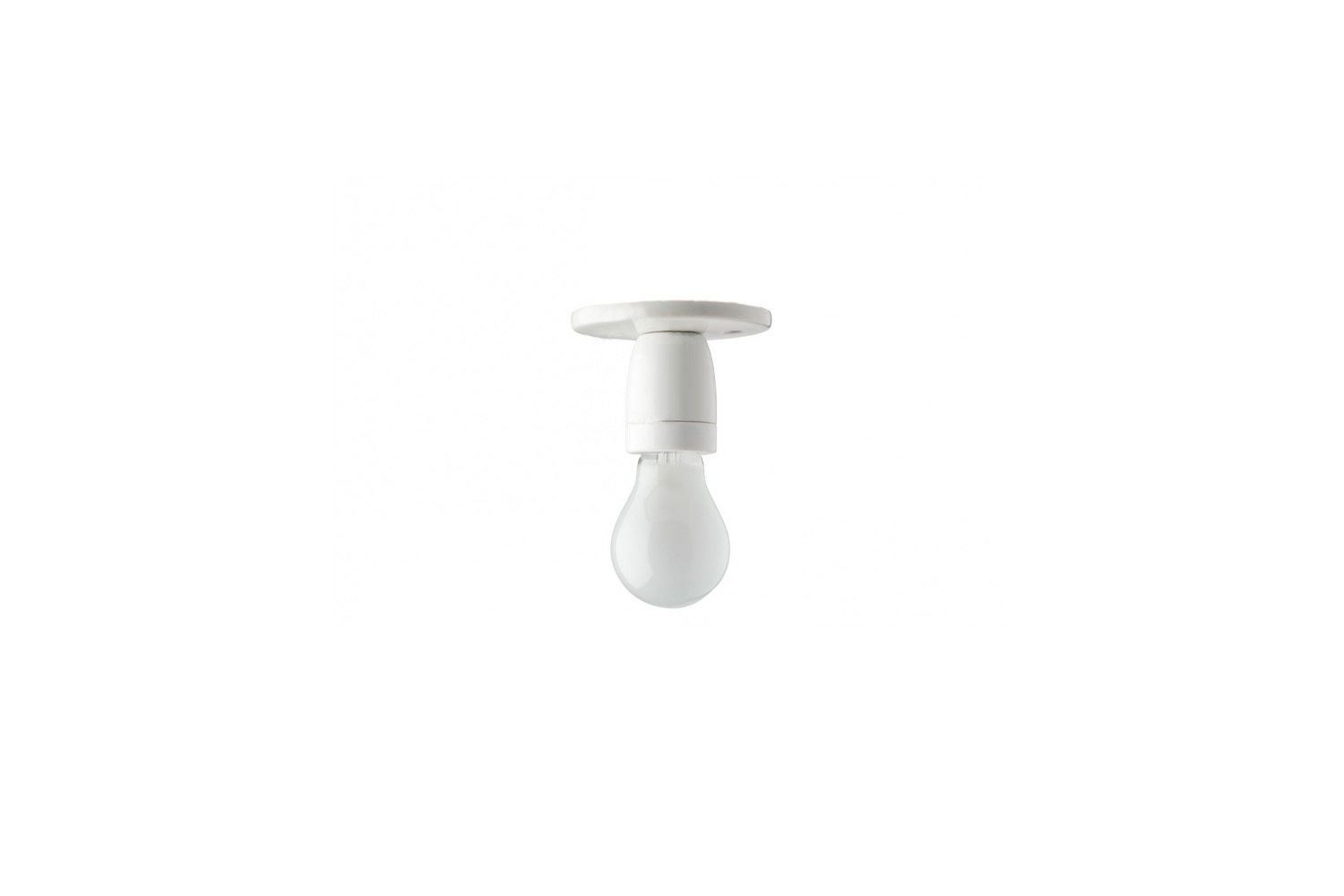
The Zangra Pure Porcelain Lamp White is proof that a light fixture does not need a dramatic brass arm, a cloud-shaped shade, or enough crystals to intimidate a chandelier clll piece of white porcelain and a carefully chosen bulb can make a room feel more intentional than a fixture ten times its size.
Designed for people who appreciate minimalist lighting, retro European details, and materials that age gracefully, this compact porcelain lampholder sits somewhere between industrial utility and quiet sophistication. Its exposed-bulb format puts the emphasis on proportion, surface, and light quality rather than decorative excess. In other words, it is visually simple, but it is not visually lazy.
An archived product listing describes the fixture as a porcelain lampholder designed and developed by Zangra. The bulb is sold separately, while screws and a round junction box measuring approximately 70 millimeters in diameter by 60 millimeters are included. Because product specifications and regional versions may change, buyers should confirm socket type, voltage, certification, and availability with the current retailer before ordering.
What Is the Zangra Pure Porcelain Lamp White?
At its core, the Zangra Pure Porcelain Lamp White is a pared-back wall or surface-mounted lighting component built around a white porcelain body. Instead of hiding the light source behind a fabric shade or metal dome, the design allows the bulb to become part of the composition.
Zangra is a Belgian design brand known for lighting, switches, hardware, enamelware, and home accessories with a functional European character. The company says its Pure Porcelain collection grew from collaborations with porcelain factories and research in historic porcelain centers, including Limoges, France, and Jingdezhen, China. Related fixtures in the collection combine minimalist shapes with retro references and are designed to fit both traditional and contemporary interiors.
The lamp’s appeal comes from what has been removed. There is no decorative shade to dominate the wall, no oversized canopy, and no complicated silhouette competing with nearby cabinets or artwork. What remains is the material, the bulb, and the quality of the light.
A Small Fixture With Architectural Presence
Minimal fixtures can be especially effective in compact interiors because they occupy little visual space. A white porcelain lampholder nearly disappears against a white wall, creating the impression that the bulb is floating. Against navy, forest green, charcoal, terracotta, or patterned wallpaper, the same fixture becomes a crisp graphic accent.
Remodelista previously featured the lamp in a dark blue Shaker-style kitchen, where its simple white body provided contrast without distracting from painted cabinetry, marble surfaces, and traditional details. That pairing demonstrates one of the product’s strongest qualities: it can support a room’s design without demanding to be the room’s entire personality.
Why Porcelain Works So Well in Lighting
Porcelain is a specialized ceramic material generally produced from refined mineral ingredients and fired at high temperatures. This process creates a hard, dense surface with a distinctive smoothness. Compared with rougher pottery, porcelain often looks cleaner and more precise, which makes it particularly suitable for switches, sockets, bathroom accessories, and compact architectural lighting.
A Surface That Feels Both Vintage and Modern
White porcelain carries an interesting design contradiction. It can recall early electrical fittings in old European apartments, workshops, schools, and utility rooms, yet it also looks completely at home in a modern minimalist interior.
That dual identity gives the Zangra porcelain lamp unusual flexibility. In a farmhouse kitchen, it feels honest and practical. In a modern bedroom, it looks sculptural. In an industrial loft, it softens concrete and metal. In a traditional hallway, it appears as though it may have been installed decades ago, only without decades of mysterious paint splatters.
A Neutral Finish With Real Texture
White fixtures are sometimes dismissed as basic, but porcelain has more visual depth than ordinary white plastic. Its glazed or finely finished surface catches highlights gently, while the molded form creates subtle shadows around edges and curves.
This texture is particularly valuable in neutral interiors. A white-on-white room can become sterile when every surface is flat and identical. Porcelain introduces a material variation that keeps the palette calm while preventing the space from looking like a laboratory waiting for a clipboard.
Where the Lamp Can Work Best
The Zangra Pure Porcelain Lamp White is most successful when its small scale and exposed-bulb design are treated as intentional features. It can function as ambient lighting, accent lighting, bedside illumination, or a decorative focal point depending on placement and bulb selection.
Kitchen Walls and Work Areas
In a kitchen, the lamp can be installed above open shelving, beside a pantry entrance, or on a wall that needs a small pool of warm light. Its porcelain body works naturally with ceramic tile, marble, painted cabinetry, butcher-block counters, and stainless-steel appliances.
A single fixture can punctuate a narrow wall, while a carefully spaced row can create rhythm above a long counter or built-in cabinet. However, an exposed bulb should not be treated as the only source of task lighting. Food preparation areas generally benefit from layered illumination, including ceiling light and focused undercabinet lighting.
Hallways and Entryways
Wall lights are useful in hallways because they create light at eye level and reduce reliance on one harsh overhead fixture. Lighting designers commonly recommend combining multiple sources at different heights to create depth and comfortable ambient illumination.
The Zangra lamp is particularly well suited to a narrow passage because its restrained profile does not visually crowd the space. Install one as a destination light at the end of a hallway, use a pair around a doorway, or repeat several fixtures along a long corridor. Always consider head clearance and traffic flow before positioning any projecting wall fixture.
Bedrooms and Bedside Walls
A pair of porcelain wall lamps can replace bedside table lamps, freeing up valuable space for books, glasses, and the phone you promised yourself would remain outside the bedroom.
For bedside use, choose bulbs that limit glare. Frosted, opal, or low-output decorative LEDs are usually more comfortable than clear high-lumen bulbs positioned near eye level. A dimmer can improve flexibility, provided both the bulb and electrical control are designed for dimming.
Living Rooms, Reading Corners, and Shelving
In a living room, the lamp can illuminate artwork, a small console, a bookcase, or an architectural niche. White porcelain pairs well with natural oak, walnut, painted millwork, linen, plaster, and limewash.
For a dramatic effect, place the fixture against a dark wall. The contrast emphasizes its silhouette during the day, while the warm bulb creates a soft halo in the evening. Houzz design guidance similarly notes that wall lights can add depth and intimacy when contrasted against darker surfaces.
Bathrooms and Other Damp Spaces
Porcelain itself may tolerate humid conditions well, but the material alone does not make an electrical fixture suitable for a bathroom, shower area, covered porch, or other damp location. The entire fixture must carry the appropriate environmental rating for its installation zone.
UL guidance states that only luminaires specifically marked for damp or wet locations should be installed in those conditions. Zangra offers separate bathroom models with stated IP ratings, which should not be confused with an ordinary indoor porcelain lampholder. When the exact lamp lacks a suitable damp-location or wet-location rating, keep it in a dry interior space.
Choosing the Right Bulb
Because the bulb remains visible, choosing one is not a final technical detail. It is half the design.
Bulb Shape
A small globe bulb creates a compact, contemporary appearance. A traditional pear-shaped bulb feels familiar and utilitarian. An elongated tubular bulb emphasizes the lamp’s vertical form, while a large globe creates a bolder statement.
Decorative filament-style LEDs are particularly popular in exposed-bulb fixtures because they imitate the appearance of historic incandescent filaments while using modern LED technology. Architectural Digest recommends treating the bulb’s shape, brightness, and color as part of the fixture when working with exposed designs.
Brightness and Lumens
Shop by lumens rather than relying only on wattage. Lumens indicate the amount of visible light produced, while watts describe energy use. For an atmospheric bedside or hallway fixture, a lower-output bulb may be enough. A kitchen or work area may require greater output, although the exposed position can make a bulb feel brighter than the same lamp hidden behind a shade.
The U.S. Department of Energy notes that LEDs use substantially less energy and can last much longer than traditional incandescent bulbs. ENERGY STAR also reports that LED products can produce light far more efficiently because electrical energy is converted through semiconductor technology rather than by heating a filament.
Color Temperature
For cozy residential spaces, a color temperature around 2700K usually creates a warm, familiar glow. A 3000K bulb feels slightly cleaner while remaining welcoming. Higher color temperatures can look crisp and practical, but they may make an exposed bulb feel harsh in a bedroom or living room.
Federal lighting guidance characterizes 2700K as friendly and personal, 3000K as warm and pleasing, and cooler temperatures as increasingly clean or task-oriented. The right choice depends on wall color, natural light, room function, and personal preference.
Color Rendering
Color rendering matters in kitchens, dressing areas, bedrooms, and rooms with artwork or richly colored finishes. A bulb with a high color rendering index can make wood, food, fabric, paint, and skin tones appear more natural. For most living spaces, look for a CRI of at least 80; a rating of 90 or above is preferable where color quality is important.
Installation and U.S. Compatibility
The archived listing indicates that the lamp was supplied with screws and a round junction box. That does not automatically guarantee compatibility with every wall box, voltage system, building code, or electrical standard in the United States.
Before installation, verify the fixture’s voltage, frequency, socket type, mounting dimensions, grounding or insulation class, maximum permitted bulb wattage, and recognized safety certification. European CE marking and European wiring specifications do not necessarily replace certifications or installation requirements expected by local U.S. authorities.
Use a Qualified Electrician When Appropriate
Installing a hardwired light involves shutting off the correct circuit, confirming that power is absent, evaluating the electrical box, making secure connections, and supporting the fixture properly. This Old House installation guidance emphasizes turning power off at the breaker and ensuring that an appropriate electrical box is present before mounting a wall light.
Electrical work should be completed by a licensed electrician when local rules require it, when wiring is old or unfamiliar, or when the mounting system does not match the existing box. The lamp may look simple, but electricity remains stubbornly unimpressed by aesthetic confidence.
Respect Bulb and Heat Limits
Never exceed the fixture’s stated maximum wattage. The U.S. Consumer Product Safety Commission warns that bulbs with excessive wattage can overheat fixtures, wiring, and nearby materials. LED bulbs reduce energy use and heat compared with conventional incandescent lamps, but they still must match the fixture’s specifications.
Styling Ideas for Different Interiors
Modern Minimalist
Mount the lamp on a white or pale gray wall and use a frosted globe bulb. Keep nearby hardware simple and limit competing decorative objects. The fixture will read as a small architectural detail rather than an accessory.
Vintage Industrial
Pair the porcelain body with a clear filament-style bulb, dark painted walls, exposed brick, or blackened steel. Add textile-covered electrical cable only when it is part of an approved installation system. The result feels workshop-inspired without turning the room into a stage set for a very serious blacksmith.
Farmhouse or Shaker Kitchen
Use the lamp with painted wood cabinetry, peg rails, open shelves, stone counters, and traditional bin pulls. White porcelain echoes sinks, dishes, and tile, helping the fixture feel integrated rather than added at the last moment.
Colorful Contemporary
Install the light on a saturated wall in cobalt, burgundy, ocher, or deep green. The white porcelain becomes a clean visual pause, while a round bulb adds a playful geometric note.
Quiet Luxury
Combine the lamp with limewashed walls, natural stone, linen curtains, unlacquered brass, and warm wood. Choose a high-quality frosted bulb with excellent color rendering. Quiet luxury, after all, is mostly ordinary materials behaving exceptionally well.
Advantages and Possible Drawbacks
Reasons to Consider It
- Timeless material: White porcelain works with modern, traditional, rustic, and industrial interiors.
- Compact scale: The small form suits hallways, bedside walls, kitchens, and narrow spaces.
- Customizable appearance: Changing the bulb shape can significantly alter the fixture’s character.
- Easy visual coordination: White porcelain pairs naturally with tile, stone, wood, plaster, and painted surfaces.
- Minimal visual clutter: The fixture adds light without introducing a bulky shade or decorative arm.
Points to Consider
- The bulb is exposed: A bulb that is too bright or poorly positioned may produce uncomfortable glare.
- It is not automatically bathroom-safe: Confirm an appropriate damp- or wet-location rating before installation.
- Regional compatibility matters: Verify voltage, socket, certification, and junction-box fit for U.S. use.
- Porcelain can chip: Although hard and durable in normal use, it should be handled carefully during mounting.
- It is not a complete lighting plan: Most rooms still need additional ambient or task lighting.
Cleaning and Long-Term Care
Turn off the power and allow the bulb to cool before cleaning. Remove loose dust with a dry microfiber cloth or a soft brush. For stubborn marks on the porcelain, use a barely damp cloth with mild soap, avoiding excessive moisture around the socket, wiring, and wall opening.
Do not use abrasive pads, harsh powders, or tools that may scratch the surface. Tighten a loose bulb only after power has been switched off. If the fixture moves, flickers, produces unusual heat, or shows damaged wiring, stop using it and have the installation inspected.
Real-World Experience: Living With a White Porcelain Lamp
The first surprise when using a fixture like the Zangra Pure Porcelain Lamp White is how much influence the bulb has on the entire room. With a clear, oversized globe, the lamp looks graphic and slightly theatrical. Replace that globe with a small frosted bulb, and the same porcelain holder becomes quieter, softer, and more architectural. It is essentially the lighting equivalent of changing shoes: same outfit, completely different attitude.
In a narrow hallway, the compact design can feel especially effective. A bulky sconce may project too far or visually shrink the passage, while the porcelain lamp keeps the wall clean. Mounted against a deep green or navy surface, its white body remains visible during the day, functioning almost like a ceramic wall ornament. At night, the bulb creates a pool of light that breaks up the corridor and makes the route feel less like a tunnel.
Placement, however, deserves more attention than the fixture’s simplicity suggests. An exposed bulb installed directly at eye level can become annoying, particularly when viewed from a bed, sofa, or staircase. Moving it slightly higher, reducing lumen output, or using an opal bulb usually creates a more comfortable result. A dimmer is even better because the lamp can provide useful light early in the evening and a low glow later at night.
In a kitchen, white porcelain has an easy relationship with practical materials. It looks convincing near subway tile, fireclay sinks, ceramic dishes, painted cabinets, and stainless-steel appliances. Unlike a strongly decorative fixture, it does not force every handle and faucet to match. Brass, chrome, black steel, and nickel can all work nearby because the porcelain behaves as a neutral rather than another competing metal finish.
The fixture is also refreshingly easy to restyle. A warm filament bulb can support a vintage mood. A frosted globe makes it feel contemporary. A compact bulb allows the porcelain form to attract more attention, while an elongated lamp makes the bulb the star. This flexibility is useful for people who like changing accessories without replacing permanent electrical fittings.
Cleaning is uncomplicated as long as the power is off and moisture stays away from electrical components. The white finish does reveal dust faster than a dark fixture, but it also makes cleaning easier because dirt cannot hide and begin its quiet campaign for household ownership. A quick wipe keeps the porcelain bright.
The most satisfying part of living with this style of lamp is that it rarely feels trendy. Decorative lighting can date a room quickly when its shape, finish, or scale is strongly tied to a particular moment. A simple white porcelain socket is harder to place on a timeline. It could belong to a 1930s utility room, a 1970s European apartment, or a newly renovated minimalist home.
Its limitations become part of the experience too. It does not diffuse light as thoroughly as a shaded sconce, and it may not provide enough illumination on its own. It demands a well-chosen bulb, thoughtful height, and safe installation. But when those details are handled correctly, the lamp offers a rare combination: it is noticeable without being loud, nostalgic without looking theatrical, and practical without appearing generic.
Is the Zangra Pure Porcelain Lamp White Worth Considering?
The Zangra Pure Porcelain Lamp White is best suited to homeowners, designers, and renovators who value honest materials and compact architectural details. It is not designed to dominate a room. Instead, it improves the room through proportion, texture, contrast, and carefully controlled light.
Its white porcelain body can bridge multiple styles, from Shaker kitchens and vintage bathrooms to modern bedrooms and colorful hallways. The exposed-bulb format offers creative freedom, but it also makes bulb selection, glare control, and installation quality especially important.
Before purchasing, confirm the current product specifications, particularly for installation in the United States. Check the socket, voltage, mounting dimensions, location rating, maximum wattage, and applicable safety certification. Once compatibility has been established, the fixture can become one of those small design choices that quietly makes everything around it look better.
The Zangra lamp does not perform visual gymnastics. It simply combines white porcelain, a clean silhouette, and an exposed light source with unusual confidence. Sometimes that is enough. The room already has furniture, art, books, tile, and possibly one chair covered in clothes. The lamp does not need to add another argument.













