
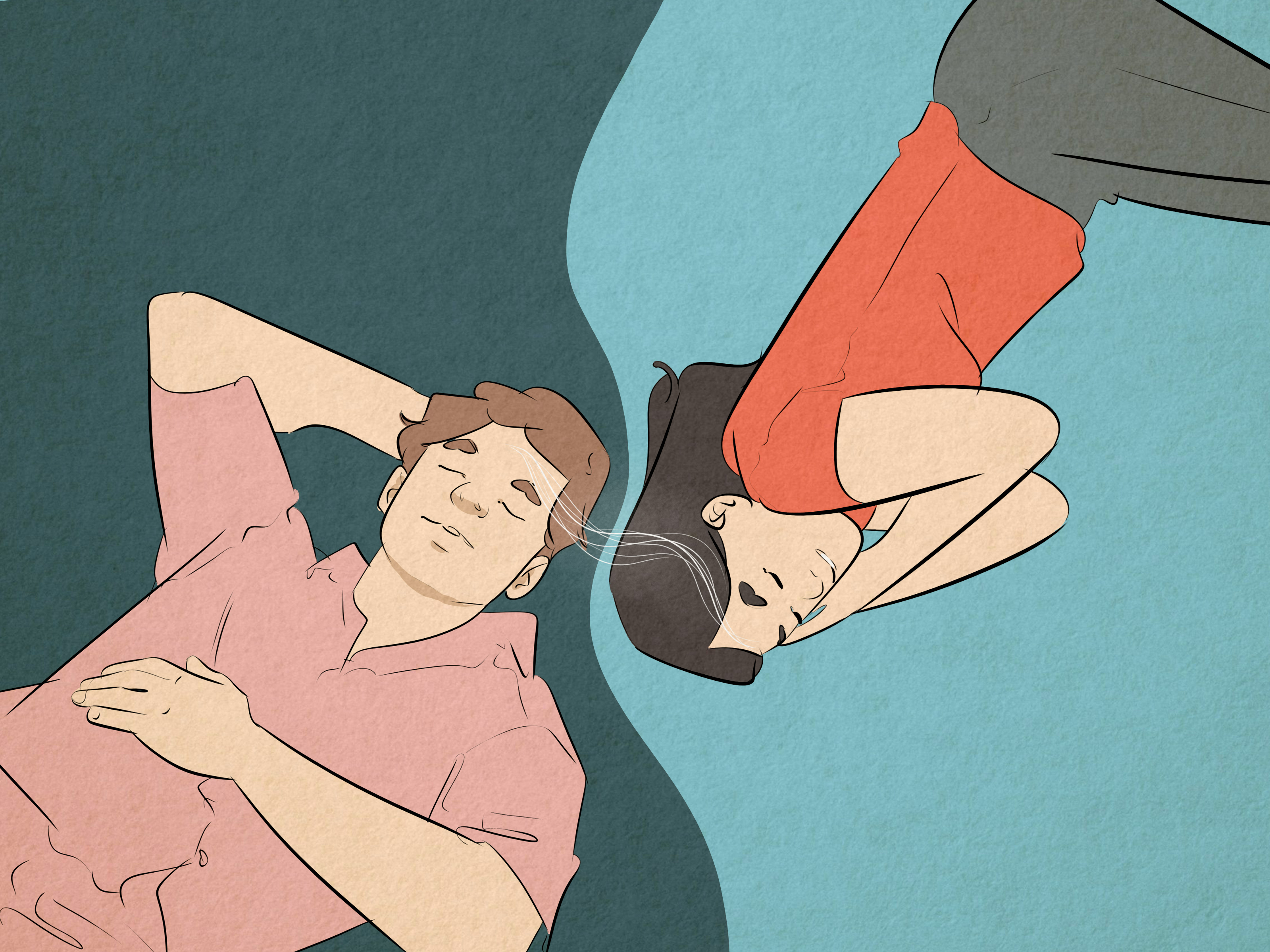
Dreams are strange little movies directed by the most dramatic part of the brain. One minute you are flying over New York in pajamas, the next you are arguing with a talking sandwich about taxes. Most dreams disappear by breakfast. But every so often, a dream refuses to leave. It becomes a song, an invention, a scientific breakthrough, a warning, a business idea, or a story that outlives the dreamer.
That is why stories about dreams famous people had that came true continue to fascinate readers, historians, psychologists, and anyone who has ever woken up thinking, “That was weirdly important.” Some famous dreams sound supernatural. Others are better understood as the sleeping mind arranging unfinished thoughts into a new pattern. Either way, the results are hard to ignore.
Before we dive in, one sensible disclaimer: “came true” does not always mean a crystal-ball prophecy. In some cases, the dream predicted an event, or at least seemed to. In others, it revealed a solution that later became real through work, testing, writing, recording, patenting, and a great deal of caffeine. So keep your curiosity open and your skepticism nearby, preferably in a comfortable chair.
1. Abraham Lincoln’s Dream of a Death in the White House
One of the most famous prophetic dreams in American history belongs to President Abraham Lincoln. According to an account later published by his friend and bodyguard Ward Hill Lamon, Lincoln described a disturbing dream shortly before his assassination in April 1865. In the dream, he walked through the White House and heard mourners. When he reached the East Room, he saw a covered body surrounded by soldiers. Asked who had died, a soldier reportedly answered that it was the president, killed by an assassin.
Days later, Lincoln was shot by John Wilkes Booth at Ford’s Theatre and died on April 15, 1865. The connection between the dream and the assassination is chilling, which explains why the story has been repeated for generations.
However, this one needs careful handling. Historians have noted that Lamon’s account was published years after Lincoln’s death and contains inconsistencies. There is no known contemporary record from the immediate aftermath of the assassination confirming that others discussed the dream at the time. Still, even as a disputed account, it shows how strongly dreams can attach themselves to national memory. Lincoln’s dream became part of the mythology surrounding a president already wrapped in tragedy.
2. Mark Twain’s Dream About His Brother’s Funeral
Mark Twain, born Samuel Clemens, was not exactly a man who lacked imagination. The creator of Tom Sawyer and Huckleberry Finn had a mind so lively it probably needed its own riverboat license. But one dream from his youth haunted him for decades.
Twain later wrote that he dreamed of his younger brother Henry lying dead in a metallic burial case, dressed in one of Twain’s suits, with a bouquet of white flowers and a single red rose on his chest. Soon afterward, Henry Clemens was badly injured in the explosion of the steamboat Pennsylvania and died in Memphis in 1858.
According to Twain’s later account, when he saw Henry’s body, many details matched the dream: the metal coffin, the clothing, the flowers. Whether every detail was remembered perfectly or shaped by grief over time, the story reveals something emotionally powerful. Twain felt the dream had touched reality, and the experience reportedly deepened his lifelong interest in unexplained mental phenomena. Even America’s great humorist had dreams he could not laugh away.
3. Madam C.J. Walker’s Dream Formula
Madam C.J. Walker, born Sarah Breedlove, built one of the most inspiring business stories in American history. She rose from poverty to become a pioneering entrepreneur in Black hair care, creating products, training sales agents, and opening opportunities for thousands of women. Her success was not magic; it was strategy, work, sales skill, and relentless vision.
Yet one famous part of her story involves a dream. According to accounts connected to her biography, Walker said she received the formula for her hair grower in a dream. In that dream, a figure reportedly told her what ingredients to use. She then developed and marketed products that addressed real scalp and hair concerns for Black women at a time when mainstream beauty companies ignored them.
Did the dream alone build the empire? Absolutely not. A dream cannot manage inventory, train agents, or negotiate business expansion. But it may have given Walker confidence, direction, and a memorable origin story. The dream became part of a larger truth: she saw a need, trusted her insight, and turned an idea into a company that changed lives.
4. Larry Page’s Dream That Helped Create Google
Not all famous dreams involve ghosts, coffins, or mysterious formulas. Some involve search engines, which may be less spooky but are much better for finding pizza at midnight.
Larry Page, co-founder of Google, has described a vivid dream he had as a young Stanford graduate student. He woke up thinking about what would happen if someone could download the entire web and keep track of the links between pages. He grabbed a pen and started writing. That idea eventually helped lead to PageRank, the algorithmic concept that powered Google’s early search success.
The dream did not instantly create Google. Page and Sergey Brin still had to research, code, test, build infrastructure, raise money, and turn a university project into one of the most influential technology companies in the world. But the dream mattered because it supplied a framing image: the web as a connected structure that could be ranked by relationships. In this case, the sleeping brain did what innovators love most. It took a giant mess and whispered, “What if there is a pattern here?”
5. Paul McCartney’s Dream Melody for “Yesterday”
Paul McCartney’s “Yesterday” is one of the most famous songs ever recorded, and its origin story sounds almost unfair to every songwriter who has ever stared at a blank page for six hours and produced only “moon, June, spoon.”
McCartney said the melody came to him in a dream while he was staying at the London home of Jane Asher’s family. When he woke up, he went to the piano and played it so he would not forget. At first, he worried that he might have unconsciously copied someone else’s tune. For a while, the working title was the delightfully unromantic “Scrambled Eggs.” Eventually, the song became “Yesterday,” released by the Beatles in 1965.
The dream came true in the most public way possible. The melody became a global standard, covered by thousands of artists and cherished across generations. The lesson is not that every sleepy hum is a masterpiece. Most are probably not. But sometimes the mind composes when the ego is off duty, and if you are smart enough to write it down, breakfast can wait.
6. Mary Shelley’s Nightmare That Became Frankenstein
In 1816, Mary Shelley was staying near Lake Geneva with Percy Bysshe Shelley, Lord Byron, and others during a gloomy summer famous for bad weather and excellent literary consequences. The group challenged each other to write ghost stories. Shelley struggled at first, then experienced what she later described as a waking dream or nightmare: a young scientist kneeling beside the thing he had assembled, watching it stir to life.
That image became Frankenstein; or, The Modern Prometheus, first published in 1818. The book is now considered a foundational work of science fiction and Gothic literature. Its themes still feel modern: scientific ambition, responsibility, isolation, parenthood, ethics, and the horror of creating something you cannot control.
Shelley’s dream “came true” not because reanimated corpse-men began politely knocking on doors, thankfully, but because the dream became a cultural reality. Frankenstein’s creature walked out of one woman’s nightmare and into world literature, film, theater, philosophy, Halloween decorations, and every conversation about technology getting ahead of morality.
7. Robert Louis Stevenson’s Dream of Jekyll and Hyde
Robert Louis Stevenson’s Strange Case of Dr. Jekyll and Mr. Hyde is another classic born from dream material. Stevenson had long been interested in the idea of human duality: the respectable self and the hidden self, the polished public face and the messy basement nobody shows guests.
According to Stevenson’s own essay and later family accounts, he dreamed key scenes involving transformation. His wife reportedly woke him during the nightmare, and Stevenson complained that she had interrupted a fine “bogey tale.” That phrase alone deserves a small literary trophy.
The dream became a novella published in 1886, and “Jekyll and Hyde” became shorthand for a person with radically different sides. The idea was so strong that it escaped the book and entered everyday language. Stevenson’s dream came true as a psychological metaphor that people still use more than a century later. Not bad for a nightmare interrupted by a concerned spouse.
8. Elias Howe’s Dream of Spears and the Sewing Machine Needle
Elias Howe was working on the difficult problem of creating a practical sewing machine. One major challenge involved the needle. A hand-sewing needle has the eye near the end opposite the point, but a machine needed a different design to make the stitch work efficiently.
According to a popular account, Howe dreamed he was captured by warriors carrying spears. In the dream, he noticed something odd: the spears had holes near their tips. When he woke and thought about it, the image suggested the solution. Put the eye of the sewing-machine needle near the point.
Howe received a U.S. patent in 1846, and the sewing machine went on to transform clothing production, household labor, and industry. Like many invention stories, Howe’s dream should be seen as part of a larger process rather than a lightning bolt from nowhere. He had already been wrestling with the problem. The dream simply staged the answer in a way he could see. Apparently, the unconscious mind is very good at product design, though its presentation methods are a little intense.
9. Dmitri Mendeleev’s Dream of the Periodic Table
Dmitri Mendeleev, the Russian chemist often called the father of the periodic table, spent years studying how chemical elements related to one another. The famous story says that after intense work, he dreamed of a table in which the elements fell into place. When he woke, he wrote down the arrangement.
The dream story is widely repeated, though some historians argue that it has been simplified or exaggerated. Mendeleev did not pull the periodic law out of thin air while snoring. He had been studying atomic weights, chemical properties, and patterns in the known elements. His genius was recognizing periodicity and leaving gaps for elements that had not yet been discovered.
That is where the dream truly “came true.” Mendeleev’s system predicted properties of elements later found, including gallium, scandium, and germanium. Whether the dream was the spark, the summary, or the legend that grew around the breakthrough, the achievement itself was real. The periodic table remains one of the most important organizing tools in science. Also, it has rescued generations of students from the chaos of chemistry, which deserves applause.
10. Otto Loewi’s Dream Experiment and the Discovery of Chemical Neurotransmission
Otto Loewi’s dream may be the best example of sleep handing science a workable experiment. Loewi had long considered whether nerve signals were transmitted chemically rather than purely electrically. One night around Easter, he dreamed of an experiment, woke up, wrote notes, and went back to sleep. In the morning, the notes were unreadable. A tragic moment for science and penmanship.
The next night, the idea returned. This time Loewi went to the lab. He used frog hearts to test whether stimulating the vagus nerve released a substance that could slow another heart when transferred through fluid. The experiment helped demonstrate chemical transmission of nerve impulses. The substance later became associated with acetylcholine.
Loewi shared the 1936 Nobel Prize in Physiology or Medicine with Henry Dale for discoveries related to chemical transmission of nerve impulses. His dream did not replace scientific training; it unlocked a way to test an idea he already understood deeply. That is the pattern in many famous dream breakthroughs: the sleeping mind helps most when the waking mind has done its homework.
What These Famous Dreams Have in Common
The most interesting thing about these stories is not that famous people had dreams. Everyone dreams. The interesting part is what they did afterward. McCartney played the melody. Page wrote the idea down. Loewi ran the experiment. Shelley wrote the novel. Walker built the company. Howe tested the design. In every case, the dream was not the finish line. It was the doorbell.
Another pattern is immersion. These dreamers were already absorbed in a problem, fear, ambition, or creative challenge. Mendeleev was not randomly dreaming of chemistry after spending his life as a professional juggler. Howe was not visited by sewing-machine needles while trying to invent soup. Their dreams drew from waking concerns and rearranged them with dramatic flair.
That makes these accounts useful even for people who do not expect prophetic dreams. Dreams can combine memory, emotion, image, and unfinished work. They can exaggerate, symbolize, and connect ideas that waking logic keeps in separate boxes. Sometimes the result is nonsense. Sometimes it is “Yesterday.” The trick is knowing which is which, and that usually requires testing the dream after you wake up.
Experiences Related to Dreams That Come True
Many people have had smaller versions of these famous dream experiences. You may dream about a friend you have not contacted in months, then receive a message from them the next day. You may fall asleep frustrated about a work problem and wake up with a solution so obvious you feel personally insulted by your own brain. You may dream of an old memory and realize it explains why a current situation feels so emotionally loaded. These moments may not become Nobel Prizes, but they still feel meaningful.
The most practical experience is the “sleep on it” effect. Writers, designers, students, musicians, and business owners often report that stepping away from a problem overnight gives the mind room to reorganize it. The key is not magical thinking. It is mental incubation. When you stop forcing an answer, the brain keeps sorting material in the background. Sleep may reduce the pressure of linear thinking and allow unusual associations to surface. That is why a dream can feel like a message, even when it is really your own mind handing you a file it finally organized.
Dreams can also help with emotional truth. A person may dream they are lost in a giant airport, then realize they feel directionless in a new job. Someone may dream their childhood home is under renovation, then recognize they are changing old beliefs. The dream does not predict the future; it reveals the present in costume. The costume may be ridiculous, but the emotion is often honest.
For anyone hoping to learn from dreams, the first step is simple: write them down immediately. Do not trust morning memory. Morning memory is a charming liar. Keep a notebook or phone nearby and record images, phrases, people, colors, and feelings. Do not worry about making the dream sound polished. “Blue hallway, angry cat, missed train, felt guilty” is enough. Later, patterns may appear.
The second step is to test dream ideas in waking life. If a dream gives you a business concept, research it. If it offers a melody, record it. If it suggests a solution, try it safely. If it warns you about a relationship, reflect before reacting. Dreams deserve attention, not blind obedience. They are creative collaborators, not certified life coaches.
The third step is to notice what you were thinking about before sleep. Many famous dreams came after intense focus. If you want your mind to work on a problem, feed it good material. Read, study, sketch, practice, ask a clear question, then rest. You may not wake up with the next Google, but you might wake up with the missing paragraph, the better headline, the kinder decision, or the courage to begin.
Conclusion
The stories of 10 dreams famous people have had that actually came true remind us that dreams sit at the strange intersection of memory, emotion, creativity, and mystery. Some accounts, like Lincoln’s, remain historically debated. Others, like Loewi’s dream experiment or McCartney’s melody, are powerful examples of the mind solving problems while the conscious self takes a nap.
What matters most is not whether every dream is prophetic. Most are not. What matters is that dreams can reveal patterns we miss while awake. They can hand us images, melodies, warnings, inventions, and questions. The dream is only the beginning. The real magic happens when someone wakes up, grabs the idea, and turns it into something the world can see, hear, read, use, or remember.
Note: These stories are best read as reported historical accounts, not proof that dreams can reliably predict the future. Their real value is in showing how sleep, memory, creativity, and focused effort can sometimes meet in astonishing ways.














