
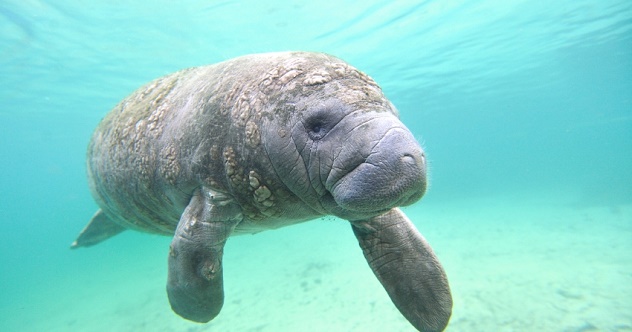
Manatees have the kind of face that makes people forget every other item on the day’s agenda. One minute you are thinking about rent, email, or whether you left the oven on; the next, a giant gray marshmallow with whiskers is floating past you like it owns the river. These gentle aquatic mammals are commonly called sea cows, but they are far more interesting than their nickname suggests. They are not fish, not whales, and definitely not oversized potatoes with flippersalthough the potato comparison has a certain visual logic.
Found in warm coastal waters, rivers, springs, estuaries, and lagoons, manatees are some of the most recognizable marine mammals in the Americas. The Florida manatee, a subspecies of the West Indian manatee, is especially famous for its winter gatherings in warm-water Florida habitats. Yet behind the sleepy expression and slow-motion swimming is a creature built with unusual anatomy, surprising family ties, and a serious ecological role.
This guide explores ten fascinating facts about manatees, from their elephant relatives to their conveyor-belt teeth. Along the way, you will also discover why protecting seagrass, respecting boat-speed zones, and giving wildlife plenty of personal space matters so much.
Quick Manatee Snapshot
- Common name: Sea cow
- Scientific group: Sirenia
- Diet: Mostly aquatic plants, seagrass, algae, and shoreline vegetation
- Typical adult size: Around 9 to 10 feet long and roughly 1,000 pounds
- Biggest everyday challenge: Avoiding humans who move through the water much faster than they do
1. Manatees Are Not Related to CowsThey Are Closer to Elephants
The family reunion would be confusing, but scientifically correct
The phrase “sea cow” comes from a manatee’s grazing habits, not its family tree. Manatees spend much of their day nibbling aquatic vegetation, which looks a little like a cow wandering through a field. However, their closest living relatives are elephants and hyraxes, not cattle. That family connection may seem bizarre until you notice certain clues: broad bodies, tough skin, unusual teeth, and a general talent for looking ancient and deeply unbothered by everything.
Manatees belong to the order Sirenia, which also includes dugongs. There are three living manatee species: the West Indian manatee, the Amazonian manatee, and the West African manatee. The Florida manatee is a West Indian manatee subspecies and is the one most often seen in the southeastern United States.
2. A Full-Grown Manatee Can Be Larger Than Your Car
Gentle giant is not an exaggeration
An adult manatee commonly measures about 9 to 10 feet long and weighs around 1,000 pounds. Larger individuals can exceed 13 feet and weigh several thousand pounds. In other words, the animal drifting quietly below the water may be about as heavy as a compact car, but with a better attitude and fewer cup holders.
Despite their size, manatees are graceful swimmers. Their broad, paddle-shaped tails provide power, while their flippers help them steer, balance, hold plants, and occasionally move along the bottom. They usually cruise at an easy pace, but they can produce a short burst of speed when necessary. Still, a manatee is not built to outrun a fast boat. That mismatch is one reason watercraft collisions remain a serious threat.
3. They Eat Like It Is Their Full-Time JobBecause It Basically Is
Breakfast, second breakfast, lunch, and “just one more leaf”
Manatees are primarily herbivores. Their menu can include seagrasses, freshwater plants, algae, floating vegetation, and occasionally shoreline plants. Depending on the animal and food availability, a manatee may consume a remarkable amount of vegetation in a daysometimes close to 10 percent of its body weight.
That enormous appetite is why the “sea cow” label actually makes sense. Manatees are grazing specialists, and their feeding helps shape underwater plant communities. In healthy seagrass habitats, grazing can help maintain the structure of aquatic meadows. Those meadows also shelter fish, stabilize sediments, and support a much larger web of life. A manatee may look like it is merely enjoying an endless salad bar, but it is participating in a complicated ecosystem.
4. Their Lips Work Like Two Tiny, Extremely Determined Hands
The upper lip deserves its own documentary
One of the coolest manatee facts is hiding right on its face. A manatee has a split upper lip, and each side can move somewhat independently. This flexible, muscular arrangement helps the animal grasp, tear, sort, and guide plants into its mouth.
Think of it as a pair of built-in salad tongs. A manatee can use its flippers to hold vegetation and its lips to maneuver the food with impressive control. Add the stiff whiskers around the muzzlecalled vibrissaeand you have a highly effective plant-finding system. Those facial bristles help manatees explore their surroundings and locate food in water that may be murky rather than crystal clear.
5. Manatee Teeth Move Forward Like a Conveyor Belt
Nature invented tooth replacement long before the dentist did
Most mammals get one adult set of teeth and then spend the rest of life hoping they do not meet a popcorn kernel at the wrong angle. Manatees have a different system. Their grinding teeth gradually wear down from chewing abrasive plants and sediment-covered vegetation. When the front teeth become too worn, they fall out.
New molars grow in at the back of the jaw and slowly shift forward to replace the worn teeth. It is like a conveyor belt made of molars, which sounds like something invented for a dental-themed amusement park but is actually an elegant biological adaptation. Elephants have a similar tooth-replacement strategy, another small hint that the sea cow and the land elephant are distant relatives.
6. Manatees Are Mammals, So They Must Surface to Breathe
Underwater life, air-breathing rules
Manatees live entirely in the water, but they are mammals, not fish. That means they breathe air through nostrils located near the top of the snout. When resting, a manatee can remain underwater for extended periods, then rise quietly to the surface for a breath before sinking back down.
Their body is designed for this watery lifestyle. Specialized lungs and separate hemi-diaphragms help support buoyancy control, allowing manatees to adjust their position in the water column without wasting energy. They can rest underwater for long stretches, surfacing periodically in a way that often looks almost lazy. It is not laziness, though. It is efficiency. Manatees have perfected the art of doing only the movement necessary, which is a lesson many office workers would happily adopt.
7. They Can Sleep Underwater Without Waking Up in a Panic
A nap schedule worthy of admiration
Manatees spend a substantial part of the day resting or sleeping. During rest periods, they may lie on the bottom, hover just below the surface, or tuck themselves into calm water. They do not sleep through the need for oxygen; instead, they surface for air and return to resting with very little drama.
NOAA educational materials describe manatees as spending many hours resting and several more hours feeding each day. That rhythm makes sense for a large herbivore whose food is widespread but not especially calorie-dense. If your entire diet were watery plants, you would probably schedule a lot of eating and napping, too.
8. Manatee Babies Are Born Underwater and Need Mom Right Away
The first breath is a team effort
Manatee mothers usually give birth to a single calf after a gestation of roughly 13 months. Newborn calves are surprisingly large, often measuring around 4 feet long and weighing roughly 60 to 70 pounds. They are born underwater, so the mother helps guide the calf to the surface for its first breath.
The bond between a mother and calf can last for up to two years. During that time, the calf learns where to travel, where to rest, how to find food, and how to navigate the complicated world of springs, rivers, estuaries, and boat traffic. Adult males generally do not participate in raising the young. In other words, the calf’s education is mostly a one-parent program, and Mom is both the transportation department and the cafeteria.
9. They Communicate With Squeaks, Touch, and Body Language
Not loud, but not silent either
Manatees are often described as quiet animals, but quiet does not mean mute. They make squeaks, chirps, and other vocal sounds, especially when mothers and calves are communicating. Touch also matters. Manatees may nudge, brush against, or investigate one another in social encounters.
They are generally not known for permanent, tightly organized herds like some dolphins or whales. Still, manatees may gather when food, warm water, mating opportunities, or safe resting habitat brings them together. Winter springs in Florida can become especially crowded, creating what looks like a very calm underwater convention with almost no networking and plenty of floating.
10. Cold Weather Is a Serious Problem for These Warm-Water Mammals
They are built for Florida, not for frosty mornings
Manatees cannot handle prolonged exposure to cold water. In winter, Florida manatees seek warm-water refuges, including natural springs and certain warm-water outfalls. This seasonal movement is not a vacation plan. It is a survival strategy.
Cold stress, habitat loss, harmful algal blooms, seagrass decline, fishing-gear entanglement, and vessel strikes all pose risks. A manatee can carry scars from previous propeller injuries, a visible reminder that even a slow-moving animal needs room to move safely. Federal protections and conservation programs matter, but daily human choices matter too: obeying speed zones, never feeding wildlife, keeping waterways clean, and giving manatees enough space to behave naturally.
Why the “Cows of the Sea” Matter
Manatees are more than adorable ambassadors for Florida springs and tropical waterways. They are indicators of habitat quality. When seagrass beds disappear, freshwater flows change, warm-water refuges shrink, or boat traffic becomes more dangerous, manatees feel the effects quickly. Their survival is tied to the health of rivers, estuaries, wetlands, and coastal ecosystems that people depend on as well.
Protecting manatees does not require turning every waterfront into a silent museum. It requires practical respect: slower boating in marked zones, better water quality, responsible fishing practices, protected seagrass habitat, and wildlife viewing that does not become harassment. The goal is simple. Let manatees be manateeslarge, leafy, wrinkly, magnificently weird mammals doing their best to enjoy lunch without being interrupted by a propeller.
Experience the Cows of the Sea: A Responsible Manatee-Watching Guide
Seeing a manatee in the wild is one of those travel experiences that feels almost unreal. You may be standing on a boardwalk near a spring, looking into clear water, when a pale gray shape rises from below. At first it can look like a boulder that has changed its mind about being a boulder. Then a round snout breaks the surface, nostrils open for one calm breath, and suddenly you are face-to-face with a giant aquatic vegetarian.
The best manatee encounters are usually the quiet ones. You do not need loud music, a crowded boat, or a dramatic splash. In fact, the more quietly you observe, the more likely you are to notice the small details: whiskers moving around the muzzle, a calf tucked close to its mother, a tail gently paddling through clear water, or the slow rotation of a manatee settling near the bottom.
Start With the Right Mindset
A manatee encounter should feel like visiting someone else’s home, because that is exactly what you are doing. The spring, river, estuary, or lagoon belongs to the wildlife that depends on it every day. Your job is not to collect the most dramatic selfie or force an animal to approach. Your job is to watch carefully, stay calm, and leave the habitat in better shape than you found it.
That mindset changes the whole experience. Instead of asking, “How close can I get?” ask, “How can I avoid changing this animal’s behavior?” That one question leads to better decisions: do not chase, corner, feed, ride, grab, or block a manatee’s path to open water. Let the animal choose where to go. A manatee that approaches on its own is still a wild animal, not a floating photo booth.
Choose Low-Impact Ways to Watch
Boardwalks, observation platforms, guided eco-tours, and designated viewing areas are excellent options because they reduce disturbance. Kayaking or paddling can also be memorable when permitted and done gently. Keep your paddle movements slow, avoid cutting across a manatee’s path, and pay attention to posted local rules. In shallow water, a manatee may be difficult to spot until you are almost on top of it, so patience is more useful than speed.
Boaters have an especially important role. Obeying manatee speed zones is not just about avoiding a ticket. It gives people behind the wheel more time to spot an animal and gives the animal a better chance to move safely. Manatees may be close to the surface, especially when resting or traveling through shallow areas, and their dark gray bodies can be difficult to see in murky water.
Notice the Habitat, Not Just the Animal
A great manatee experience includes the world around the animal. Look for seagrass beds, mangrove roots, freshwater springs, wading birds, fish, turtles, and changing water color where fresh and salt water meet. These are not background decorations. They are the systems that support manatees.
When you notice a manatee grazing, pause before calling it “cute.” It is cute, obviously, but it is also performing an ecological function. When you see a mother and calf, remember that the calf is learning a map of safe places, feeding grounds, and warm-water refuges. When you see scars on an adult’s back, recognize that the marks may tell a harder story about boat traffic and survival.
Leave With More Respect Than You Arrived With
The most meaningful manatee experience is not necessarily the closest one. It is the one that makes you understand why these animals need clean water, protected habitat, and patient humans. A brief sighting can become a lasting memory precisely because you did not interfere. You watched. You learned. You let a wild creature continue its dayprobably by eating another enormous mouthful of underwater salad.
Note: Wildlife-viewing rules, seasonal access restrictions, and boating regulations vary by location. Always follow posted guidance from local wildlife agencies, refuge managers, and licensed tour operators. This article is intended for general education and responsible nature appreciation.
Conclusion
Manatees may be called sea cows, but they are truly one-of-a-kind mammals. They are elephant relatives with conveyor-belt teeth, flexible lips, underwater nap skills, and a lifelong commitment to leafy meals. Their peaceful appearance hides a sophisticated set of adaptations for life in warm rivers and coastal habitats.
The next time you see a manatee drifting through a spring or grazing in a seagrass meadow, remember that you are looking at far more than a lovable aquatic giant. You are seeing a species shaped by evolution, dependent on healthy waterways, and deserving of the space to keep floating, breathing, eating, and occasionally looking like the world’s most relaxed underwater potato.














