
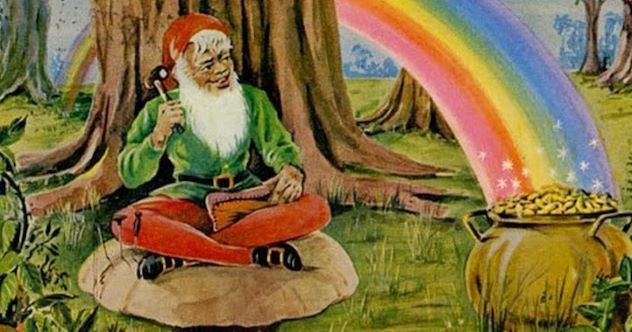
Leprechauns may be tiny, but their cultural footprint is wearing boots three sizes too big. These mischievous figures from Irish folklore have been painted as shoemakers, treasure guardians, tricksters, loners, symbols of luck, St. Patrick’s Day mascots, cereal-box celebrities, and occasionally the sort of fellow who would absolutely hide your car keys just to watch you blame yourself.
But the real story of leprechauns is far richer than a green hat and a pot of gold. In older Irish folklore, leprechauns were not always cheerful little mascots. They were elusive, clever, cranky, solitary fairy beings who lived outside ordinary human society and served as reminders that greed, impatience, and overconfidence usually end with someone staring at an empty field and wondering where the treasure went.
This guide explores 10 interesting aspects of leprechauns, from their mysterious name and red-clad origins to their role in Irish folklore, pop culture, and modern holiday traditions.
1. Leprechauns Come From Irish Folklore, Not Just St. Patrick’s Day Decorations
Today, leprechauns are almost inseparable from St. Patrick’s Day. You see them on greeting cards, parade floats, novelty socks, party cups, and seasonal cupcakes that turn everyone’s tongue a suspicious shade of green. Yet leprechauns existed in Irish folklore long before they became holiday mascots.
In traditional stories, a leprechaun is usually described as a small supernatural male figure, often connected with the fairy world. He is not a grand god or heroic warrior. Instead, he belongs to the smaller, stranger, more local side of folklore: the beings who might live near a hill, field, cave, woodland, or lonely road and who should not be underestimated simply because they are short.
Older tales often place leprechauns in rural settings, away from crowds. They appear as private, hard-to-catch creatures with secret knowledge, hidden wealth, and a sharp talent for slipping out of trouble. In other words, the leprechaun is less “cute mascot” and more “tiny supernatural accountant with excellent escape skills.”
2. The Word “Leprechaun” Has a Mysterious History
The word “leprechaun” has several proposed origins, which is fitting for a creature that seems allergic to being pinned down. Some explanations connect it to older Irish forms such as luchorpán, often interpreted as meaning “small body.” Another traditional explanation links it to leith bhrógan, sometimes translated as “one-shoemaker,” because leprechauns are so strongly associated with making or mending shoes.
Modern scholarship has complicated the story even further. Some linguistic research suggests that the word may have connections beyond Ireland, possibly reaching back to Latin roots associated with ancient Roman terms. That does not make the leprechaun “not Irish” in a cultural sense. Folklore is rarely that neat. Words travel, stories change costumes, and myths borrow from neighbors like someone taking sugar from the cottage next door.
The important point is this: the leprechaun’s name, like the creature himself, has layers. It carries traces of language, oral tradition, regional variation, and scholarly debate. A simple word opens the door to centuries of storytelling.
3. Leprechauns Were Traditionally Solitary Fairies
One of the most interesting aspects of leprechauns is that they are typically described as solitary fairies. In Irish folklore, not all fairy beings behave the same way. Some are imagined as “trooping” fairies who gather in groups, travel together, dance, feast, and occasionally cause large-scale supernatural drama. Leprechauns, by contrast, usually work alone.
This solitary nature makes them feel more mysterious. You do not generally stumble into a village of leprechauns having a town hall meeting about rainbow security. Instead, a person in a folktale might hear the tapping of a tiny hammer, spot a small figure working on a shoe, and realize that fortune is close at handif only they can keep their eyes on him.
The leprechaun’s loneliness also gives him a distinct personality. He is not portrayed as a warm, community-loving sprite. He is independent, guarded, and suspicious of humans. Honestly, if strangers were always trying to kidnap you for treasure coordinates, you might develop trust issues too.
4. The Famous Green Outfit Is Mostly a Modern Image
Ask most people to picture a leprechaun, and they will imagine a little man in green: green coat, green hat, maybe green pants, and possibly green energy strong enough to power a small parade. But older folklore often described leprechauns quite differently.
In many traditional accounts, leprechauns were associated with red clothing rather than green. Some descriptions mention red coats, pointed hats, buckled shoes, and regional differences in dress. Over time, as the leprechaun became tied more closely to Irish identity, St. Patrick’s Day, shamrocks, and the color green, his wardrobe received a major rebrand.
This shift shows how folklore adapts. The modern green leprechaun is not exactly false; he is a later cultural version. Think of him as the marketing department’s makeover of an older, crankier, red-coated character who probably would have objected strongly to being turned into a cupcake topper.
5. Leprechauns Are Shoemakers With a Suspiciously Specific Career Path
Why are leprechauns so often shoemakers? In folklore, the sound of a leprechaun is sometimes the tap-tap-tap of a tiny hammer as he works on a shoe. This detail is oddly practical and wonderfully memorable. Many supernatural beings fly, curse, transform, or haunt castles. The leprechaun repairs footwear.
One explanation is connected to fairy dancing. If fairies spend their nights dancing in rings, their shoes would wear out quickly, and somebody has to handle the repairs. Enter the leprechaun: cobbler of the fairy world, sole proprietor in every sense of the word.
The shoemaker role also makes him easier to locate in stories. A traveler hears hammering, follows the sound, and finds the leprechaun. But catching him is another matter. The workbench may be visible, the little shoe may be in progress, and the gold may be nearby, but the leprechaun’s greatest craft is not leatherwork. It is escape.
6. The Pot of Gold Is About Greed as Much as Luck
The pot of gold is the leprechaun’s most famous accessory, beating out the hat, the beard, and the “I know something you don’t” smirk. According to popular tradition, a leprechaun hides treasure, sometimes said to be buried underground or located at the end of a rainbow. If captured, he may reveal where the treasure is hidden or grant wishes in exchange for freedom.
But leprechaun gold stories are rarely just about getting rich. They often work as cautionary tales. A human catches a leprechaun, thinks victory is guaranteed, gets distracted for one second, and loses everything. The message is clear: greed makes people careless. Also, never trust a magical cobbler with a legal loophole.
In many stories, the treasure remains out of reach because the human cannot outwit the leprechaun. The gold represents desire, but the leprechaun represents the universe saying, “Are you sure you deserve this?” Usually, the answer is no, followed by a puff of fairy dust and deep embarrassment.
7. Rainbows Made Leprechauns Even More Magical
The phrase “pot of gold at the end of the rainbow” has become one of the most recognizable ideas connected to leprechauns. It is also delightfully impossible, because a rainbow does not have a fixed physical endpoint. It moves depending on where the viewer stands. That makes it a perfect hiding place for folklore treasure: always visible, always promising, always just out of reach.
The rainbow connection adds a poetic layer to leprechaun mythology. It turns the hunt for treasure into a chase after illusion. You can see the colors. You can imagine the gold. You can start walking. But the closer you try to get, the more the destination shifts.
As a symbol, that is powerful. Leprechaun treasure is not merely hidden; it is protected by wonder, trickery, and the limits of human perception. It is a magical way of saying that some rewards cannot be grabbed directly. Some must remain stories, dreams, or excuses to take a lovely walk after the rain.
8. Leprechauns Are Tricksters, Not Harmless Little Decorations
The modern leprechaun is often cheerful, lucky, and cute. Traditional leprechauns could be much more difficult. They were tricksters who enjoyed practical jokes, verbal games, misdirection, and escape. Their mischief was not always evil, but it was rarely convenient.
Trickster figures appear in many cultures. They expose human weakness, mock arrogance, punish greed, and scramble the rules. The leprechaun fits neatly into this role. He is small, but he has knowledge. He seems vulnerable, but he controls the situation. He may be captured physically, but mentally he is already three steps ahead and possibly halfway under a hedge.
This is why leprechaun stories remain entertaining. The human character usually believes he has found an easy shortcut to wealth. The leprechaun knows better. The joke is not just that the treasure disappears; it is that the human was fooled by his own confidence.
9. Leprechauns Became Irish-American Cultural Icons
Leprechauns became especially prominent in American popular culture through St. Patrick’s Day celebrations, advertising, movies, sports mascots, and holiday merchandise. In the United States, Irish immigrant communities helped transform St. Patrick’s Day into a public celebration of heritage, pride, and identity. Over time, symbols such as shamrocks, green clothing, parades, and leprechauns became part of the holiday’s visual language.
This American transformation made the leprechaun more visible but also more simplified. A complicated folklore figure became a quick symbol of Irishness, luck, mischief, and festive cheer. That is why you can find leprechauns on cereal boxes, basketball logos, classroom crafts, and inflatable lawn decorations.
There is charm in that popularity, but there is also a risk. When a folklore figure becomes a commercial mascot, some of the older cultural meaning gets flattened. The best way to enjoy leprechauns today is to appreciate both versions: the playful green holiday character and the older, stranger fairy cobbler with a red coat, hidden gold, and absolutely no interest in being your party theme.
10. Leprechauns Still Teach Timeless Lessons
At first glance, leprechaun stories seem like whimsical entertainment. Look closer, and they offer surprisingly sturdy life lessons. Do not be greedy. Do not assume small means weak. Do not trust appearances. Pay attention. Keep your promises. And if a supernatural being tells you not to look away, maybe blink strategically.
The leprechaun’s enduring appeal comes from this mix of humor and wisdom. He is funny because he is slippery, dramatic, and oddly professional about shoes. He is meaningful because he reminds us that shortcuts to wealth often come with traps. He turns human impatience into comedy.
In a modern world obsessed with quick wins, viral luck, overnight success, and “one simple trick” solutions, the leprechaun still feels relevant. He is the tiny guardian of a big truth: fortune is not the same thing as wisdom, and chasing treasure without judgment can leave you with nothing but muddy shoes.
Experiences Related to Leprechauns: Why the Legend Still Feels Alive
One reason leprechauns remain so popular is that people experience the legend long before they study it. For many Americans, the first encounter comes in childhood: a classroom decorated with shamrocks, a teacher setting up a “leprechaun trap,” or a parent leaving tiny green footprints across the kitchen floor. The evidence is suspicious, the glitter is everywhere, and the family dog looks guilty despite having no known connection to Irish folklore.
These playful experiences matter because they turn an old legend into a living tradition. Children may not know about medieval Irish tales, solitary fairies, or the historical shift from red clothing to green outfits, but they understand the thrill of trying to catch something clever. The leprechaun becomes a doorway into storytelling. He invites questions: Where did he go? Why did he leave gold coins? Why is the furniture upside down? Why does Dad suddenly own green food coloring?
Adults experience leprechaun lore differently. On St. Patrick’s Day, the figure appears in parades, pub decorations, social media posts, greeting cards, and themed desserts. Sometimes the symbol is silly, sometimes sentimental, and sometimes overused enough to make an actual leprechaun file a complaint. Yet even the most commercial version carries a small spark of folklore. The idea of luck, hidden reward, and mischievous surprise still feels attractive.
Travel experiences can make the legend feel deeper. Walking through green countryside, visiting old stone sites, hearing Irish music in a cozy pub, or listening to a storyteller describe fairy forts and hidden beings can shift the leprechaun from cartoon to cultural memory. Suddenly, he is not just a mascot. He belongs to a larger world of oral tradition, rural imagination, local warnings, and respect for places that feel slightly enchanted.
There is also a personal lesson in the leprechaun experience. Everyone has chased a “pot of gold” at some point: the perfect job, the easy solution, the lucky break, the thing that seems as if it will fix everything. Leprechaun stories gently laugh at that impulse. They remind us that desire can make us gullible, and that the treasure we think we want may not be the treasure we actually need.
That is why the leprechaun survives. He works as a children’s game, a holiday symbol, a folklore figure, and a metaphor for human ambition. Whether he is imagined in red, green, or a tiny pair of overworked cobbler’s shoes, he keeps asking the same question: Are you chasing real fortune, or just running after the rainbow?
Conclusion
Leprechauns are far more interesting than their modern image suggests. Behind the green hat and pot of gold is a complex folklore figure shaped by Irish storytelling, language, moral lessons, regional tradition, and modern pop culture. The leprechaun is a shoemaker, trickster, treasure guardian, loner, escape artist, and symbol of luck all at once.
His story has changed over time, but that is exactly why he remains fascinating. Folklore survives by adapting. The red-coated cobbler of older tales became the green-clad icon of St. Patrick’s Day, yet the heart of the legend remains the same: magic is slippery, greed is foolish, and the smallest figure in the story may be the smartest one in the room.














