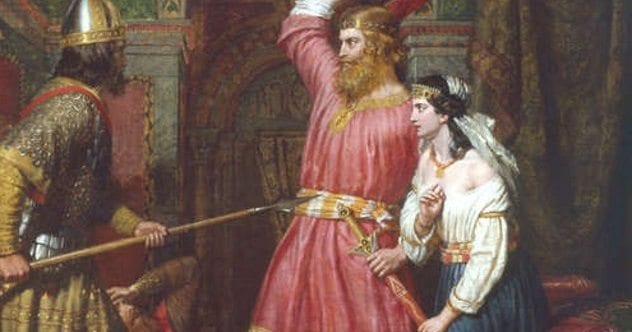
Medieval kings and princes liked to present themselves as God’s chosen rulers. Unfortunately, divine approval did not make castle doors harder to break down, hunting lodges safer, or ambitious relatives less ambitious. Across medieval Europe, royal courts were places of ceremony, diplomacy, arranged marriagesand occasionally very sharp knives.
The most shocking medieval royal murders were rarely random acts of violence. They grew from succession disputes, noble rebellions, family feuds, military failures, and the dangerous belief that removing one person could solve an entire kingdom’s problems. It usually did not. A dead monarch often produced civil war, foreign intervention, disputed heirs, and enough political chaos to keep chroniclers busy for generations.
Some cases remain unresolved because medieval evidence is incomplete or politically biased. Chroniclers wrote for patrons, rumors traveled faster than royal messengers, and later dynasties had excellent reasons to make former rulers look wicked. With those cautions in mind, here are 10 royal murders that shocked medieval Europe and changed the course of its history.
Why Royal Murder Was So Dangerous in the Middle Ages
A medieval monarchy depended heavily on the physical presence of the ruler. The king distributed offices, confirmed land rights, led armies, settled disputes, arranged marriages, and represented lawful authority. Killing him did not simply remove a politician. It could leave the entire government without an accepted center.
Royal blood also carried symbolic power. Even when an assassination succeeded, the victim’s children, siblings, cousins, and in-laws could claim the crown or demand revenge. That made regicide a particularly unreliable form of political problem-solving. Medieval conspirators repeatedly discovered that murdering a king was much easier than controlling what happened next.
1. Edward the Martyr: A Teenage King Killed at Corfe
England, 978
Edward became king of England in 975 following the death of his father, Edgar. His accession was disputed because powerful factions supported his younger half-brother, Æthelred. Edward was still a teenager when he visited the royal estate at Corfe in Dorset on March 18, 978.
There, supporters of his half-brother killed him. Later traditions transformed the event into a dramatic scene in which Edward was attacked while accepting a drink on horseback, but the earliest evidence provides fewer cinematic details. It does establish that the young king’s death was violent and closely connected to the succession struggle.
Æthelred inherited the throne, but Edward’s posthumous reputation grew. He became known as Edward the Martyr and was treated as an innocent royal victim whose blood exposed the corruption surrounding the crown. The assassination was an early lesson in the awkwardness of medieval regicide: killing a rival could remove his body while making his memory politically immortal.
2. Arthur of Brittany: The Prince Who Vanished in King John’s Custody
Normandy, around 1203
Arthur of Brittany was the son of Geoffrey, one of Henry II of England’s sons. After Richard I died in 1199, Arthur possessed a serious hereditary claim to the Angevin territories. His uncle John took the English crown, but many nobles in Brittany, Anjou, and France regarded Arthur as the preferable heir.
John captured the teenage prince at Mirebeau in 1202. Arthur was eventually imprisoned at Rouen and disappeared in 1203. Medieval accounts accused John of killing his nephew personally or ordering the murder and disposing of the body in the Seine. No body was publicly identified, and historians cannot reconstruct the crime with certainty.
Politically, the disappearance was disastrous for John. His enemies treated Arthur’s presumed murder as proof that the king was both unlawful and dangerously cruel. The scandal helped weaken John’s position in France, where King Philip II steadily dismantled the Angevin Empire. This royal cold case demonstrates that a missing prince can be nearly as damaging as a confirmed corpse.
3. Philip of Swabia: Assassinated at a Wedding Celebration
Bamberg, 1208
Philip of Swabia, a member of the Hohenstaufen dynasty, was elected German king in 1198 during a bitter struggle against his rival Otto of Brunswick. After years of war and diplomacy, Philip appeared close to securing broad recognition. Then, during a wedding celebration in Bamberg on June 21, 1208, politics took an abrupt turn toward homicide.
Count Otto VIII of Wittelsbach entered Philip’s private rooms and killed him. The attack appears to have grown from a personal and political grievance rather than a carefully organized national conspiracy. That did not make the consequences any smaller. Philip was the first reigning German king in centuries to be assassinated.
His death immediately transformed the balance of power. The Hohenstaufen cause temporarily collapsed, while Otto of Brunswick gained recognition as king and later became Holy Roman emperor. Philip’s assassination illustrates one of medieval politics’ stranger hazards: a ruler could survive armies, papal hostility, and rival elections, only to be killed by one furious noble during a family wedding.
4. Eric V of Denmark: Murdered in a Rural Barn
Finderup, 1286
Eric V, commonly called Eric Klipping, spent much of his reign struggling with Denmark’s church and aristocracy. In 1282, noble pressure forced him to accept a charter that limited royal authority. Tension remained high, and opposition to the king did not politely disappear after everyone signed the paperwork.
On the night of November 22, 1286, Eric was killed at Finderup Lade near Viborg. Later stories claimed that masked attackers inflicted dozens of wounds, but the exact number, identities, and motives remain uncertain. Several prominent nobles were convicted and outlawed, although historians have questioned whether the trial established their guilt.
The murder became the last regicide in Danish history. It also intensified conflict between the monarchy and exiled nobles, some of whom found support in Norway. Eric’s death was shocking not because kings were unfamiliar with danger, but because an anointed ruler had been attacked in a humble rural shelter rather than on a battlefield. Apparently, even medieval barns required better security.
5. Wenceslaus III: The Murder That Ended a Dynasty
Olomouc, 1306
Wenceslaus III inherited an impressive collection of royal claims. At different points he was recognized as king of Hungary, Bohemia, and Poland. Yet his authority was fragile, particularly in Poland, where Władysław the Short challenged Přemyslid control.
In 1306, the 16-year-old king prepared a military campaign to defend his Polish crown. While staying in Olomouc on August 4, an unidentified attacker murdered him. The assassin’s identity and employer remain unknown, making the killing one of Central Europe’s enduring medieval mysteries.
Wenceslaus died without a legitimate male heir, ending the male line of the Přemyslid dynasty after centuries of rule. Bohemia entered a succession crisis that eventually helped bring the Luxembourg dynasty to power. Few royal murders altered the political map so efficiently. One teenager’s death did not merely change the occupant of a throne; it closed an entire dynastic era.
6. Edward II: A Deposed King and a Suspicious Death
Berkeley Castle, 1327
Edward II of England faced military defeats, baronial rebellion, and intense resentment toward his royal favorites. In 1326, his estranged wife, Queen Isabella, invaded England with her ally Roger Mortimer. Edward was captured and forced to surrender the crown to his young son, Edward III, in January 1327.
The former king was imprisoned at Berkeley Castle and reported dead on September 21. Most historians consider murder probable, since Edward remained a potential focus for rescue attempts and rebellion. The famous tale that he was killed with a red-hot iron appeared in later accounts and should not be treated as established fact. Suffocation or another less theatrical method is often considered more plausible.
Edward’s death benefited Isabella and Mortimer temporarily, but their control did not last. Edward III overthrew Mortimer in 1330 and executed him for treason. The mystery surrounding Edward II remains popular because it combines deposition, imprisonment, rumored escape, political murder, and one extremely persistent horror story.
7. Peter I of Cyprus: A Crusader King Killed by His Own Nobles
Nicosia, 1369
Peter I of Cyprus cultivated the image of a crusading warrior king. He traveled through Europe seeking support for military campaigns and led the expedition that captured and plundered Alexandria in 1365. His reputation abroad was filled with chivalric glamour. His domestic relationships were considerably less glamorous.
Peter’s rule became increasingly confrontational. His treatment of nobles, interference with established rights, imprisonments, and personal vendettas created a dangerous coalition of enemies. In January 1369, a group of his vassals entered the royal palace in Nicosia and killed him.
Scholarly analysis of the assassination emphasizes accumulated political and legal grievances rather than one simple bedroom scandal. Peter’s murder exposed the difference between heroic reputation and effective government. A king might receive applause in European courts for crusading ambition while alienating nearly everyone responsible for keeping his island kingdom functioning.
8. Louis, Duke of Orléans: Murder in the Streets of Paris
Paris, 1407
Louis, Duke of Orléans, was the younger brother of King Charles VI of France. Because Charles experienced recurring periods of severe illness, rival princes competed to control the government. Louis became the principal opponent of John the Fearless, Duke of Burgundy.
On November 23, 1407, armed men ambushed Louis in a Paris street and killed him. The attackers acted on John’s orders. Remarkably, the Duke of Burgundy did not maintain an elaborate performance of innocence. He acknowledged responsibility and promoted a public argument that the killing had been justified as an act against tyranny.
The assassination deepened the conflict between the Burgundian and Armagnac factions. France descended into civil war while simultaneously confronting England during the Hundred Years’ War. Louis’s murder therefore achieved the opposite of political stabilization. It weakened the French monarchy at precisely the moment when national unity was most desperately needed.
9. James I of Scotland: Trapped Beneath a Monastery
Perth, 1437
James I spent approximately 18 years as a prisoner in England before returning to Scotland in 1424. Once restored, he attempted to strengthen royal government, regulate powerful nobles, and recover lands and revenues claimed by the crown. His policies created order for some subjects and intense resentment among aristocratic families.
On the night of February 20–21, 1437, conspirators attacked the Dominican friary in Perth where James and Queen Joan were staying. The king attempted to escape through an opening beneath the floor but became trapped. The assassins found and killed him, while Joan was wounded but survived.
The conspiracy involved Walter Stewart, Earl of Atholl, who possessed his own dynastic ambitions. Yet the plotters failed to seize lasting control. Queen Joan protected the succession of the young James II, and the conspirators were captured and executed. The murder proved that even a successful assassination could be a spectacularly unsuccessful coup.
10. The Princes in the Tower: Medieval Europe’s Greatest Royal Cold Case
London, 1483
After Edward IV of England died in April 1483, his 12-year-old son became Edward V. The boy and his younger brother, Richard, were lodged in the Tower of London while preparations were supposedly made for the coronation. Their uncle, Richard, Duke of Gloucester, then declared the brothers illegitimate and took the crown as Richard III.
The princes gradually disappeared from public view. No universally accepted evidence proves exactly when, how, or by whose order they died. Richard III has traditionally been blamed because he controlled the Tower and benefited from their removal. Other suspects and survival theories have also been proposed.
Contemporary and later evidence remains contested. Research has strengthened arguments both for murder and for alternative interpretations, but no theory has achieved universal acceptance. What is certain is that the boys’ disappearance damaged Richard’s legitimacy and became one of the defining stories of the Wars of the Roses.
The mystery endures because it contains everything historical audiences find irresistible: child kings, a usurping uncle, a fortress prison, missing bodies, political propaganda, disputed documents, and enough uncertainty to support arguments for another five centuries.
What These Medieval Royal Murders Had in Common
Although the victims came from different kingdoms, several patterns repeatedly appear. Many murders occurred during succession crises or after rulers challenged powerful aristocrats. Young kings were especially vulnerable because rival factions could claim to be protecting the kingdom while quietly protecting their own estates.
Imprisoned rulers were also in exceptional danger. Arthur of Brittany, Edward II, and the Princes in the Tower all became political threats simply by remaining alive. A captive prince could escape, inspire rebellion, attract foreign support, or become the center of a restoration movement.
Another recurring feature was the failure of assassins to control the aftermath. Philip of Swabia’s death changed an imperial election, Wenceslaus III’s murder ended a dynasty, Louis of Orléans’ assassination accelerated civil war, and James I’s killers failed to capture the Scottish crown. Medieval political violence often produced consequences far larger than its planners expected.
Conclusion: A Crown Offered Power, Not Protection
These royal murders reveal the fragile reality behind medieval monarchy. Kings surrounded themselves with guards, castles, sacred rituals, and claims of divine authority, yet many depended on nobles who possessed private armies, regional power, and competing family interests.
The most shocking medieval assassinations were not isolated crimes. They were turning points that destroyed dynasties, triggered wars, weakened governments, and reshaped national memory. Some victims became saints or martyrs. Others became historical mysteries. Their suspected killers were alternately punished, rewarded, defeated, or protected by the political confusion they helped create.
For medieval rulers, the crown was the ultimate symbol of authority. It was also an unusually expensive invitation to a family argument in which several relatives brought swords.
Experiencing the History of Medieval Royal Murder Today
Reading about medieval royal murders is compelling, but encountering the places connected to them creates a different kind of historical experience. Castles, cathedrals, monasteries, and old city streets reveal how physically close rulers lived to both supporters and enemies. Corfe Castle’s dramatic ruins, for example, help visitors understand why Edward the Martyr’s killing became embedded in local memory. The landscape is beautiful, which feels almost rude considering what happened there.
The Tower of London offers an even stronger lesson in historical atmosphere. Modern visitors see stone walls, narrow staircases, royal apartments, and defensive towers that served many purposes over the centuries. Standing inside the complex makes the disappearance of Edward V and Richard feel less like an abstract puzzle and more like a human tragedy. Yet responsible historical tourism should resist treating every dark room as a confirmed crime scene. The strongest experience comes from separating surviving evidence from later storytelling.
Travelers can apply the same method in Paris, Perth, Olomouc, Bamberg, or Nicosia. First, learn what contemporary sources actually say. Next, identify which details appeared decades or centuries later. Finally, consider who benefited from each version. A chronicler serving a victorious dynasty might portray a defeated king as a monster. A monastery promoting a royal saint might emphasize innocence, miracles, and martyrdom. Political storytelling was not invented by modern social media; medieval writers simply had slower Wi-Fi.
Museums and historic sites also demonstrate how later generations visualized these crimes. Nineteenth-century paintings frequently transformed uncertain events into highly detailed scenes filled with masked assassins, frightened princes, dramatic moonlight, and perfectly arranged furniture. Such images are valuable cultural artifacts, but they are interpretations rather than photographs. Experiencing them critically can be more rewarding than accepting them literally.
For readers unable to visit Europe, translated chronicles, scholarly biographies, digital museum collections, historical maps, and virtual castle tours provide useful alternatives. Comparing two accounts of the same death is particularly revealing. Edward II’s end can appear as a brutal secret murder, a natural death, or even a staged disappearance depending on the historian and evidence selected. The disagreement is not a flaw in historical study. It is part of the experience of working with incomplete records.
These stories also encourage a more thoughtful understanding of medieval politics. The period was violent, but it was not populated by irrational people randomly stabbing one another between banquets. Conspirators calculated inheritance rights, noble alliances, military resources, church support, and public legitimacy. Their decisions followed political logic, even when the results were catastrophic.
The best experience of this topic therefore combines curiosity with caution. Enjoy the mysteries, the castles, the betrayals, and the occasional absurdity of royal family politics. At the same time, recognize the victims as real people rather than characters in a medieval crime drama. Historical uncertainty should make the stories more interestingnot become an excuse to turn every rumor into a fact.