Editor’s note: This article is based on current public guidance from M·A·C Cosmetics, The Estée Lauder Companies, the FDA, FTC, and personal-care industry safety resources. M·A·C says authentic products should be purchased through M·A·C stores, MACCosmetics.com, MACPRO.com, or authorized retailers such as Nordstrom, Macy’s, Bloomingdale’s, and Dillard’s; the brand also warns that it does not sell through street vendors, flea markets, internet auctions, individuals, independent boutiques, unauthorized online retailers, or wholesale internet offers. Counterfeit cosmetics can lack legitimate quality testing and may contain unsafe ingredients or contaminants, so spotting a fake MAC lipstick is not just a “beauty detective” hobbyit is a face-saving, wallet-saving, lip-saving skill.
MAC lipstick has earned its place in makeup bags for a reason. Shades like Ruby Woo, Velvet Teddy, Chili, Mehr, Diva, and Lady Danger have become beauty shorthand for “I tried, but in a cool way.” The problem? Popular products attract counterfeiters the way free samples attract everyone at the mall. Fake MAC lipstick can look convincing online, especially when the seller uses glossy photos, vague “authentic overstock” language, and a price that whispers, “Don’t ask too many questions.”
The good news is that counterfeiters often make mistakes. Sometimes the box feels flimsy. Sometimes the logo looks slightly off. Sometimes the lipstick smells like a craft-store candle got into a fight with a crayon. And sometimes the biggest clue is not the product at allit is the seller, the price, or the return policy. Below are 15 easy ways to spot fake MAC lipstick before it touches your lips, your vanity, or your hard-earned money.
Why Fake MAC Lipstick Is a Bigger Deal Than a Bad Dupe
A dupe is a product that openly tries to mimic a color, finish, or vibe. A counterfeit pretends to be the real brand. That difference matters. A legitimate dupe is sold under its own name and should follow cosmetic labeling and safety rules. A fake MAC lipstick illegally imitates M·A·C branding and may be made without the same quality control, ingredient sourcing, manufacturing standards, or storage conditions.
The FDA explains that cosmetics sold in the United States are regulated under laws covering adulteration and misbranding, including issues such as unsafe ingredients, unsanitary preparation, misleading labels, and missing required information. Industry safety groups also warn that counterfeit cosmetics have been linked to skin irritation, allergic reactions, eye infections, chemical burns, bacteria, and hazardous contaminants. Translation: the risk is not merely that your “Ruby Woo” looks more like “Ruby Who?” The bigger issue is that you may not know what is actually in the tube.
15 Easy Ways to Spot Fake MAC Lipstick
1. Buy From Authorized Sellers First
The easiest way to avoid fake MAC lipstick is also the least mysterious: buy from official or authorized retailers. M·A·C states that genuine products are available through MACCosmetics.com, M·A·C stores, MACPRO.com for eligible members, and authorized retailers including Bloomingdale’s, Nordstrom, Dillard’s, and Macy’s.
Be cautious with listings from street vendors, flea markets, individual sellers, unauthorized boutiques, auction-style marketplaces, and “wholesale” beauty sellers. M·A·C specifically says it does not offer products through those channels. If a seller claims to have 200 brand-new MAC lipsticks because their “cousin works at the factory,” congratulations: you have just met a red flag wearing lip liner.
2. Question Prices That Are Too Good to Be True
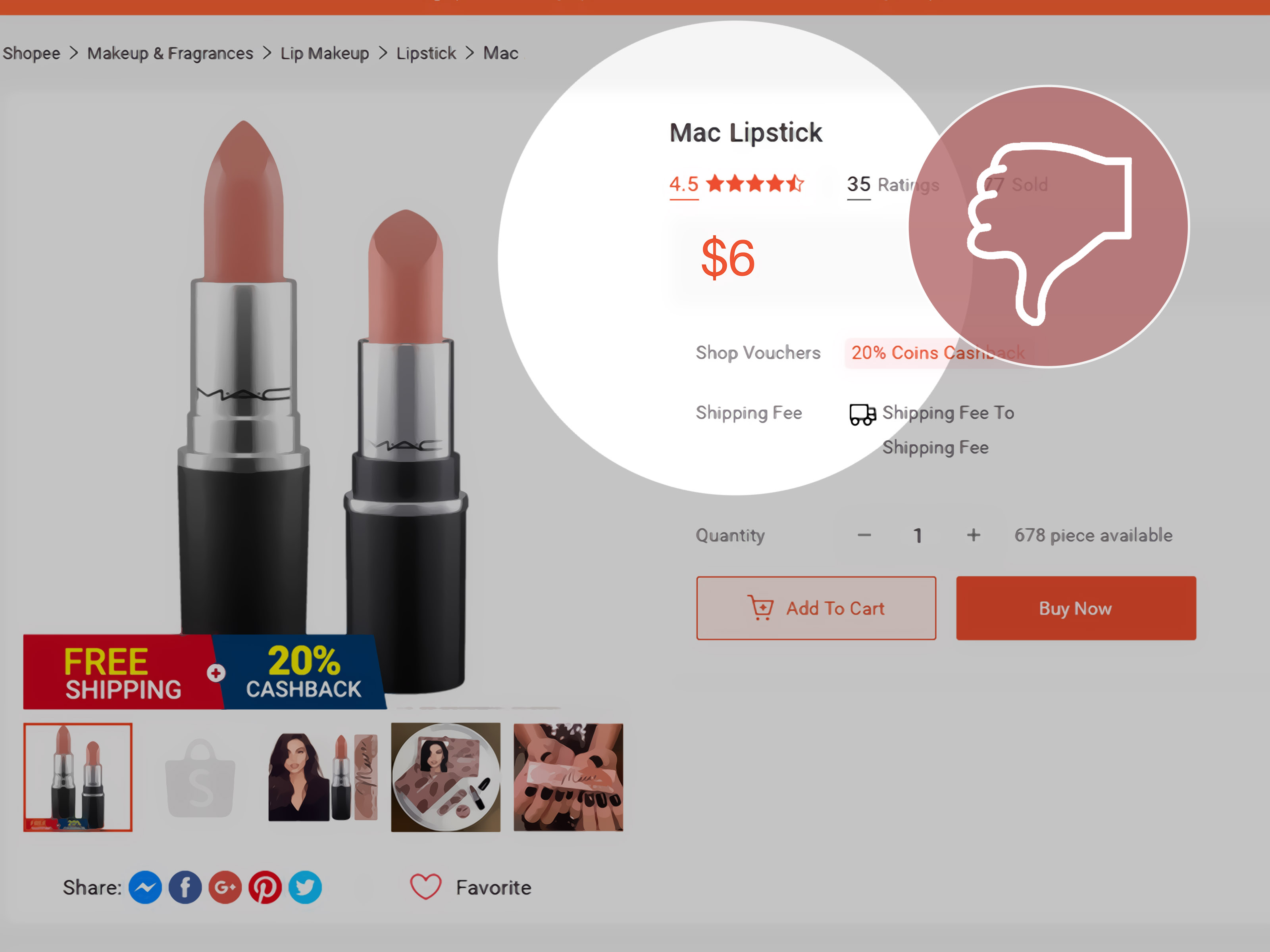
Authentic MAC lipstick is a prestige beauty product, not a mystery prize from a cereal box. For example, M·A·C lists its M·A·Cximal Silky Matte Lipstick at $25 for 3.5 g on its U.S. site. Legitimate sales happen, especially around beauty events or retailer promotions, but a brand-new full-size MAC lipstick listed for $5, $7, or bundled as “six for $20” should make your eyebrows rise before your credit card does.
The FTC advises shoppers to read product descriptions carefully and warns that expensive brand-name items offered at bargain prices could be counterfeit or stolen. A discount is not automatically suspicious, but a shocking discount from an unknown seller deserves extra scrutiny.
3. Inspect the Seller’s Details, Not Just the Product Photo
Counterfeit listings often rely on attractive photos while hiding weak seller information. Look for a complete business name, clear return policy, verifiable address, long-term seller history, and consistent reviews. Read the negative reviews first. Search for words like “fake,” “counterfeit,” “smells weird,” “different shade,” “poor packaging,” or “not like my old one.”
Be careful with generic five-star reviews that sound copied and pasted: “Great item good quality fast shipping love it.” That could describe lipstick, a toaster, or a potato. Specific reviews are more useful, especially when buyers mention shade names, texture, packaging, delivery condition, and whether the item matched products purchased directly from MAC.
4. Compare the Outer Box Quality
Authentic MAC lipstick boxes typically feel sturdy, cleanly cut, and professionally printed. A fake box may feel thin, overly glossy, faded, blurry, or oddly textured. Look closely at the edges. Are they crisp or slightly crushed? Does the box close neatly? Are the printed letters sharp? Is the black color rich and even?
Counterfeit packaging often looks “almost right,” which is exactly why comparing it with a known authentic product helps. If you own a genuine MAC lipstick box, place them side by side under good lighting. A fake may show uneven spacing, off-center text, poor alignment, smeared ink, or a barcode sticker that looks like it was printed during a printer’s emotional breakdown.
5. Check the MAC Logo Carefully
The M·A·C logo is one of the easiest places for counterfeiters to slip. On authentic products, the letters and dot marks should look balanced, clean, and consistent with official branding. Watch for letters that are too thick, too thin, too close together, or slightly stretched. The dots between M, A, and C should not look random, oversized, or misplaced.
Do not rely on memory alone. Open the official MAC website and compare the logo against current product images. Counterfeiters sometimes copy old packaging, regional packaging, or outdated promotional designs, then sell them as current stock. If the logo looks like MAC after drinking three espressos, pause.
6. Verify the Shade Name and Collection
Fake MAC lipsticks often use real shade names, but they may pair them with the wrong formula, wrong box, wrong finish, or a shade that was never released in that product line. If a listing says “MAC Ruby Woo Satin Gloss Matte Cream Velvet Edition,” that is not a product title; that is a beauty word salad.
Search the shade on the official MAC website or an authorized retailer. Confirm the exact product line, shade description, finish, size, and packaging. MAC’s M·A·Cximal Silky Matte Lipstick, for example, is promoted as a 3.5 g lipstick with full-coverage color, a silky matte finish, and shades such as Velvet Teddy. If the seller’s item does not match the official product details, walk away with your lips unbothered.
7. Look for Batch Codes and Lot Information
Authentic cosmetics usually include batch or lot information that helps identify production details. With MAC lipstick, codes may appear on the box, label, or product base depending on the item and region. A missing code is not always absolute proof of a fake, especially if packaging has changed, but it is a warning sign when combined with other issues.
Look for codes that are cleanly printed, stamped, or labelednot crooked, blurry, scratched, or suspiciously generic. Be careful with sellers who refuse to show the bottom label or claim “all batch codes are removed because it is wholesale.” That explanation is less convincing than a waterproof mascara at a crying wedding.
8. Compare the Product Weight and Size
Product size is a simple but powerful clue. The official M·A·Cximal Silky Matte Lipstick is listed as 3.5 g on MAC’s site. If a full-size listing shows a strange weight, inconsistent unit, or no size at all, check twice. Some older or limited products may vary, but the item should still match official brand information for that specific formula.
When you have the lipstick in hand, compare it to a genuine MAC tube. Does it feel unusually light? Is the cap loose? Does the tube height look off? Counterfeit products may use cheaper plastic or different internal molds, which can change the weight and balance. Authentic packaging usually feels solid and controlled, not flimsy or toy-like.
9. Examine the Tube Finish and Shape
MAC’s classic lipstick tube has a recognizable bullet-shaped silhouette. Authentic tubes generally have a smooth, polished feel and a cap that clicks securely. A fake may look too shiny, too dull, too gray, too black, or slightly misshapen. The cap may wobble, scrape, or feel loose.
Run your fingers over the tube. Authentic packaging usually feels consistent, while counterfeit packaging may have rough seams, uneven plastic, odd texture, or sloppy molding. If the tube feels like it came from a party favor bag, it probably should not be invited to your face.
10. Inspect the Lipstick Bullet
Open the tube and look at the lipstick itself. Authentic MAC lipstick should appear smooth, evenly molded, and professionally finished. Many current MAC lipsticks also feature a clean M·A·C embossing or design detail depending on the formula and product line; for example, MAC describes M·A·Cximal as having a M·A·C-embossed bullet.
Warning signs include a crooked bullet, melted-looking edges, air bubbles, dents, sweating, cracks, grainy texture, or a slanted shape that does not match official product photos. Some damage can happen during heat exposure in shipping, but poor molding plus suspicious packaging plus a questionable seller equals a strong “no thanks.”
11. Notice the Scent
MAC lipsticks are widely known for a soft vanilla-like scent. A fake may smell strongly chemical, waxy, plastic-like, sour, perfumey, or stale. If the scent is sharp enough to make you reconsider all your life choices, do not apply it.
Smell alone cannot prove authenticity because products can change with age, storage, and formula updates. Still, scent is a useful clue when compared with a genuine MAC lipstick. A real lipstick should not smell like gasoline, crayons, old oil, or a dollar-store candle named “Vanilla Regret.”
12. Test the Texture on Your Hand First
Before putting any questionable lipstick on your lips, swatch it on your hand or arm. Authentic MAC lipstick should apply evenly according to its formula: matte shades may feel velvety or firm, satin shades creamier, and powdery formulas softer or blurred. MAC describes M·A·Cximal Silky Matte Lipstick as full-coverage, pigment-rich, comfortable, and smooth-gliding.
A fake may drag, crumble, feel greasy, separate, skip, stain oddly, or leave patchy color. If the swatch looks streaky and smells strange, do not convince yourself that “maybe it works better on lips.” Your lips are not a testing laboratory.
13. Compare the Color to Official Swatches
Popular MAC shades have recognizable personalities. Ruby Woo is famous for its vivid blue-red look. Velvet Teddy is a deep-tone beige. Chili is known for a warm brick-red feel. Diva leans deep burgundy. A fake may use the right shade name but deliver a noticeably wrong color.
That said, lighting, skin tone, camera settings, formula updates, and age can change how a lipstick appears. Use official swatches as a guide, not a courtroom verdict. If your “Velvet Teddy” looks neon orange, though, the jury does not need to deliberate for long.
14. Read the Ingredient Label and Fine Print
Cosmetic labeling matters. The FDA notes that cosmetics marketed to consumers generally require ingredient labeling, and products may be considered misbranded if labels are false, misleading, incomplete, or not presented properly. Authentic MAC packaging should have professional, readable ingredient information and product details appropriate to the item.
Look for misspellings, odd grammar, missing manufacturer information, strange ingredient formatting, blurry labels, incorrect net weight, or nonsense claims like “FDA approved lipstick.” The FDA does not require premarket approval for cosmetic products and ingredients, except for color additives, so “FDA approved MAC lipstick” language should raise suspicion.
15. Be Skeptical of “Wholesale,” “Factory Direct,” and Giant Bundles
One of the most common counterfeit tricks is the “wholesale” story. A seller claims the lipsticks are factory extras, warehouse leftovers, staff stock, or overseas surplus. M·A·C directly states that it does not sell products at wholesale over the internet.
Large bundles of “brand-new MAC lipstick” in mixed famous shades should be approached carefully. Counterfeiters love bundles because they make the deal feel exciting and urgent. But if every shade is a bestseller, every box is perfect, every price is tiny, and every explanation is vague, you are not looking at a bargainyou are looking at a beauty trap wearing a bow.
What to Do If You Think You Bought a Fake MAC Lipstick
First, stop using it. Do not “just finish the tube” because it was cheap. If a product may be counterfeit, unknown ingredients and poor storage conditions are not worth the risk. Keep the packaging, order confirmation, seller messages, photos, and shipping label. These details can help with refund requests and counterfeit reports.
Next, contact the seller or platform and request a refund. Use calm, specific language: “The product packaging, batch information, scent, and shade do not match the authentic MAC lipstick purchased from an authorized retailer.” If you paid by credit card and the seller refuses to help, the FTC notes that credit card payments offer stronger protections in some disputed purchase situations.
You can also report suspected counterfeit activity to M·A·C. The brand asks consumers to provide details such as the location name and address, type of location, product being sold, and trademark details. If you experience irritation or another reaction after using a cosmetic product, consider seeking medical advice and reporting the issue through the appropriate consumer safety channels.
Real MAC vs Fake MAC Lipstick: Quick Comparison
| Feature | Authentic MAC Lipstick | Possible Fake MAC Lipstick |
|---|---|---|
| Seller | Official MAC store, MAC website, or authorized retailer | Unknown seller, flea market, auction listing, unauthorized boutique |
| Price | Consistent with official or retailer pricing, with realistic promotions | Extremely low, bundled heavily, or described as “wholesale” |
| Packaging | Clean print, sturdy box, correct logo, precise details | Blurry print, odd spacing, weak cardboard, misspellings |
| Tube | Solid feel, secure cap, smooth finish | Loose cap, rough seams, strange color or plastic feel |
| Scent | Soft vanilla-like scent typical of MAC lipsticks | Chemical, sour, plastic-like, waxy, or overpowering |
| Formula | Smooth, even, consistent with the product line | Patchy, gritty, greasy, crumbly, or unusually dry |
Extra Experience: Lessons From Real-Life MAC Lipstick Shopping
After comparing many buyer experiences, the biggest lesson is surprisingly simple: fake MAC lipstick usually reveals itself through a pattern, not one single clue. A slightly different box alone may not mean disaster because brands update packaging, formulas evolve, and regional labels can vary. But when the box feels cheap, the seller is unknown, the price is weirdly low, the scent is off, and the shade does not match official photos, the evidence starts lining up like suspects in a beauty-themed detective show.
One common experience involves famous shades like Ruby Woo or Velvet Teddy. A shopper buys a replacement online because the price looks amazing. When it arrives, the tube looks close enough at first glance. Then the small differences begin to appear: the cap does not click the same way, the bottom label is slightly crooked, the lipstick bullet looks too shiny, and the scent is more “plastic cupcake” than soft vanilla. The color may even look close in photos but swatch differently in natural light. This is why comparing with a lipstick you already trust is one of the most useful steps.
Another practical lesson: marketplace photos can be misleading. Some counterfeit sellers use official brand images or stolen photos from real customers. The item you receive may not be the item in the listing. Before buying, ask for real photos of the box, bottom label, tube, bullet, and batch code. A trustworthy seller should not act offended by basic questions. If they respond with “Dear, 100% authentic, no need photo,” that is not reassurance; that is a fog machine.
Shoppers also learn that “new without box” can be risky. Sometimes it is legitimatepeople receive gifts, lose packaging, or declutter unused makeup. But lipstick is a personal product, and missing packaging removes several authenticity clues. Without a box, you lose ingredient information, barcode details, shade labeling, and batch context. For a collectible or discontinued MAC lipstick, missing packaging may be especially tempting, but it also makes verification harder.
Storage is another overlooked issue. Even if a lipstick is authentic, poor storage can ruin it. Heat, sunlight, age, and humidity can change texture, scent, and performance. That is why authorized retailers matter: they do not only reduce counterfeit risk; they also reduce the chance that the product has been sitting in a hot car trunk since the last solar eclipse.
A smart habit is to keep one box from an authentic MAC lipstick as your comparison tool. Use it to check print quality, logo spacing, cardboard feel, shade label style, and general proportions. You do not need to become a forensic packaging expert. You just need a reliable reference. Think of it as your tiny beauty passport control desk.
Finally, trust your hesitation. If you find yourself saying, “It is probably fine,” five times in a row, it may not be fine. Good makeup should make you feel confident, not suspicious. There are plenty of legitimate sales from authorized retailers, and there are plenty of beautiful lip products at every price point. No lipstick shade, not even a legendary red, is worth gambling with unknown ingredients.
Conclusion
Learning how to spot fake MAC lipstick is part beauty knowledge, part shopping common sense, and part detective work with better lighting. Start with the seller, then check the price, packaging, logo, shade name, batch details, tube quality, bullet shape, scent, texture, and label information. One small difference may not prove a product is counterfeit, but several warning signs together should make you step away from the checkout button.
The safest move is always to buy from M·A·C directly or from authorized retailers. Authentic MAC lipstick is known for its color payoff, recognizable shades, and polished packaging; fake MAC lipstick is known for pretending very hard. When in doubt, compare with official product information, ask questions, keep receipts, and do not apply suspicious cosmetics to your lips. Your makeup bag deserves real products, your skin deserves safe products, and your wallet deserves better than a counterfeit in a little black tube.