If your kitchen cabinets currently look like a cookware avalanche waiting for one brave spatula to make a move, welcome. You are among friends. Kitchen cabinets have a special talent for turning neat stacks of bowls, food containers, pans, lids, spices, mugs, cleaning supplies, and mystery packets into a small domestic obstacle course. The good news? You do not need a full remodel, a celebrity organizer, or a second mortgage disguised as “custom cabinetry” to fix it.
The right kitchen cabinet organizers can completely change how your kitchen works. They help you use vertical space, reach items hiding in the back, separate awkward pieces, and stop buying your fourth jar of cumin because the first three are buried behind the lentils. Whether you have a tiny apartment kitchen, a deep pantry cabinet, a chaotic under-sink zone, or a corner cabinet where appliances go to retire, there is an organizer designed to make daily cooking easier.
Below are 15 cabinet organizers that can make your kitchen feel bigger, calmer, and much less like a game show where the prize is finding the colander before the pasta overcooks.
Why Kitchen Cabinet Organization Matters More Than You Think
A well-organized kitchen is not just prettier. It is faster, safer, and easier to maintain. When every item has a logical home, you spend less time digging, stacking, restacking, and muttering things about “who put this here?” Cabinet organizers also protect cookware, reduce food waste, and make small kitchens work harder without looking crowded.
The best systems usually follow three simple rules: keep everyday items easy to reach, group similar items together, and avoid hiding things behind other things. That sounds obvious, but most cabinet chaos starts when deep shelves, tall stacks, and awkward corners make visibility impossible. A cabinet organizer fixes the space problem by changing how the cabinet functionsnot by asking you to become a new person who magically loves tidying every Tuesday.
Before You Buy: Measure, Declutter, and Create Zones
Before adding any organizer, measure the cabinet width, depth, height, and door clearance. Also check hinges, plumbing, shelf lips, and any odd interior trim. This is especially important for pull-out cabinet organizers, under-sink shelves, and door-mounted racks.
Next, remove everything from the cabinet. Yes, everything. This is the part where you discover six water bottles, a fondue fork, and a lid that belongs to no container currently known to science. Toss expired food, donate duplicates, and move rarely used items to less valuable storage areas. Prime cabinet real estate should belong to daily dishes, cooking tools, spices, pots, pans, food storage, and cleaning supplies you actually use.
Finally, organize by zone. Baking pans near mixing bowls. Spices near the stove or prep area. Coffee mugs near the coffee maker. Cleaning supplies under the sink. The goal is not perfection; the goal is making your kitchen stop arguing with you.
15 Kitchen Cabinet Organizers That Will Change Your Life
1. Pull-Out Cabinet Drawers
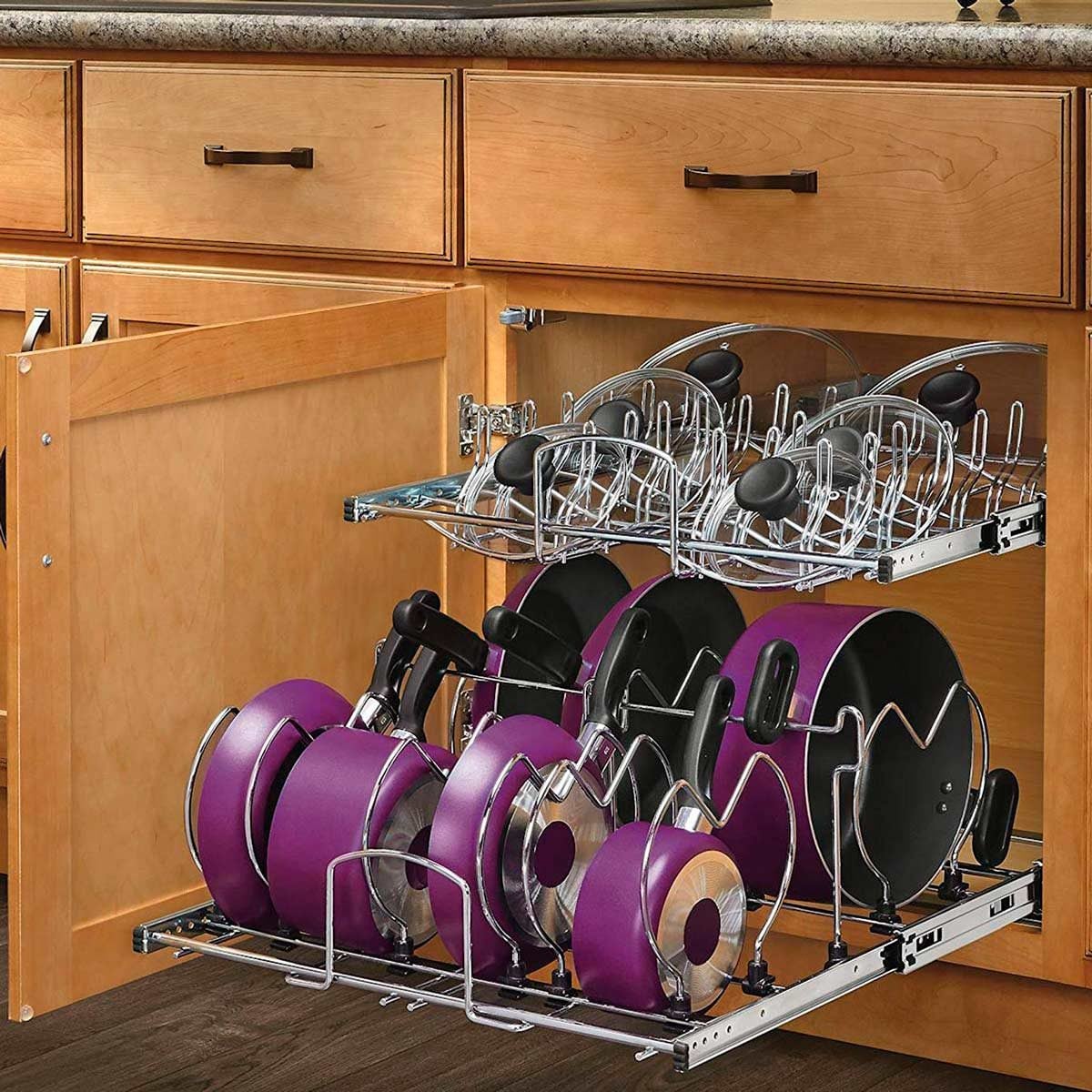
If deep lower cabinets are where your cookware disappears, pull-out cabinet drawers are the upgrade that feels instantly luxurious. Instead of crawling halfway into a cabinet to retrieve a saucepan, you slide the shelf forward and everything comes to you like a tiny kitchen parade.
Pull-out drawers are excellent for pots, pans, small appliances, mixing bowls, pantry goods, and cleaning products. They are especially useful for people with limited mobility because they reduce bending, reaching, and rummaging. Choose sturdy metal or wood models with smooth glides, and make sure the organizer can support the weight of what you plan to store. A drawer full of cast iron is not the moment to test the emotional strength of bargain hardware.
2. Lazy Susans and Cabinet Turntables
A lazy Susan is the hero of awkward cabinet corners, deep shelves, and condiment collections. Instead of pushing bottles around until something falls over, you spin the turntable and grab what you need. Simple? Yes. Life-changing? Also yes.
Use turntables for oils, vinegars, sauces, nut butters, baking extracts, vitamins, spices, and cleaning sprays. Two-tier versions work well in tall cabinets, while divided turntables help separate categories. Clear or low-rim styles are best when visibility matters. For corner cabinets, larger kidney-shaped or pie-cut lazy Susans can turn dead space into practical storage.
3. Two-Tier Under-Sink Organizers
The under-sink cabinet is famous for being the kitchen’s swampy little secret. Plumbing pipes, garbage disposal units, trash bags, dishwasher pods, sponges, and cleaning sprays all compete for space. A two-tier under-sink organizer brings order to that chaos by using vertical space around the plumbing.
Look for pull-out drawers, adjustable shelves, removable trays, and moisture-resistant materials. L-shaped designs are especially useful because they work around pipes. Use the upper tier for small items such as scrub brushes and dishwasher tablets, and the lower tier for spray bottles or refill containers. Add a waterproof liner to catch drips. Your future self will be grateful, and your cabinet floor will stop looking like it survived a soap opera.
4. Shelf Risers
Shelf risers are inexpensive, renter-friendly, and surprisingly powerful. They create a second level inside a cabinet so plates, bowls, mugs, and pantry items do not have to be stacked into leaning towers of danger.
Use shelf risers for dinner plates, salad plates, mugs, canned goods, glassware, bowls, and food containers. They are perfect for cabinets with tall empty space above short items. Choose sturdy risers with flat surfaces so dishes sit evenly. Expandable versions are useful if you want a custom fit without installing anything permanent.
5. Vertical Dividers for Baking Sheets and Cutting Boards
Baking sheets, muffin tins, cutting boards, cooling racks, serving trays, and pizza pans are terrible when stacked flat. You need the bottom one, naturally, because kitchen law enjoys drama. Vertical cabinet dividers solve the problem by storing these flat items upright like files.
Install dividers in a lower cabinet, above the refrigerator, or inside a narrow pantry cabinet. Adjustable dividers are best because not all pans are the same thickness. This organizer also protects nonstick surfaces and keeps boards from sliding around. Once you store sheet pans vertically, going back to the old pile method feels like returning to dial-up internet.
6. Door-Mounted Cabinet Racks
Cabinet doors are often wasted space. A door-mounted rack turns that empty surface into storage for wraps, foil, plastic bags, spices, pot lids, cutting boards, measuring spoons, or cleaning supplies.
Before installing one, check that the shelves inside the cabinet do not block the rack when the door closes. Also measure carefully so screws do not poke through the cabinet front. For renters, over-the-door styles can work, though they may need felt pads to prevent rattling. Door racks are especially helpful in small kitchens where every inch needs to earn its keep.
7. Tiered Spice Racks
Spices are small, but they create big cabinet drama. A tiered spice rack lets you see labels at a glance instead of playing “guess the seasoning” while dinner sizzles impatiently.
There are three main options: stair-step risers for cabinets, pull-out spice racks for narrow spaces, and drawer inserts that angle jars upward. If you cook often, drawer spice organizers are wonderfully efficient. If you have a cabinet near the stove, a tiered shelf works well. Alphabetizing is optional. Grouping by cuisine or frequency of use is often more realistic, especially if your cooking style is “garlic, paprika, and vibes.”
8. Pull-Out Spice Organizers
A pull-out spice organizer is ideal for narrow base cabinets or slim gaps near the range. Instead of digging through rows of jars, you slide out the rack and see everything from the side.
These organizers are especially useful for serious home cooks with a growing spice collection. Some models mount to the cabinet floor; others attach to the cabinet door. Choose one with guardrails to keep bottles from tipping and full-extension slides so the back jars are easy to reach. This is one of those upgrades that makes you feel like your kitchen suddenly got promoted.
9. Pot Lid Organizers
Pot lids are awkward little cymbals that refuse to stack nicely. A pot lid organizer keeps them upright, visible, and separated. You can use a rack inside a cabinet, a door-mounted lid holder, or an adjustable divider in a deep drawer.
Store lids near their matching pots whenever possible. If you use glass lids, choose a rack with enough spacing to avoid clanking and chipping. If you have many lids in different sizes, adjustable dividers are the most flexible choice. The reward is immediate: no more loud lid landslide every time you make soup.
10. Pots and Pans Organizers
A pots and pans organizer can turn a chaotic lower cabinet into a neat cookware station. Options include vertical pan racks, horizontal tiered racks, pull-out cookware shelves, and adjustable systems with removable dividers.
For nonstick pans, vertical storage helps prevent scratching. For heavy cookware, a pull-out drawer with strong weight capacity is often better. Nesting pots can work if you add pan protectors, but avoid stacking too high. A good cookware organizer makes it easy to grab one pan without reorganizing the entire cabinet like you are solving a metallic puzzle.
11. Clear Storage Bins
Clear storage bins are cabinet organization classics because they make categories visible. Use them for snacks, baking supplies, tea bags, coffee pods, kids’ lunch items, packets, seasoning mixes, and small pantry goods.
The secret is not to buy random bins and hope for enlightenment. Measure the cabinet, choose bins that fit the shelf depth, and assign each bin a purpose. Add labels if multiple people use the kitchen. Clear bins are especially helpful in upper cabinets because you can pull down a whole category instead of knocking over six items to reach one bag of chocolate chips.
12. Stackable Airtight Food Containers
For dry goods like flour, sugar, rice, pasta, cereal, oats, and beans, stackable airtight containers can make cabinets look cleaner and food easier to manage. They also reduce flimsy bag chaos, which is the official cause of many pantry avalanches.
Choose containers with airtight seals, wide openings, and shapes that stack efficiently. Square or rectangular containers use space better than round ones. Label the contents and expiration date, especially for baking ingredients that look suspiciously similar. Powdered sugar and cornstarch are not interchangeable, no matter how confident you feel before coffee.
13. Under-Shelf Baskets
Under-shelf baskets slide onto an existing shelf and create storage underneath it. They are perfect for lightweight items such as dish towels, food wraps, napkins, paper plates, coffee filters, and small snacks.
This organizer is great for renters because it usually requires no drilling. However, check the shelf thickness before buying. Also avoid overloading the basket, since it depends on the shelf for support. Under-shelf baskets are best for capturing unused vertical space, especially in cabinets where shorter items leave a gap above them.
14. Drawer Dividers and Peg Systems
Cabinet drawers can become black holes for utensils, gadgets, towels, lids, and random “important” rubber bands. Drawer dividers create boundaries so items stay where they belong. Expandable bamboo dividers work well for utensils and towels, while pegboard drawer systems are excellent for plates, bowls, and food storage containers.
If you store dishes in deep drawers, adjustable pegs can hold stacks securely and make unloading the dishwasher easier. For utensil drawers, use compartments based on how you cook: everyday tools in front, specialty tools in back. This keeps the avocado slicer from acting like it pays rent in the prime spoon section.
15. Pull-Out Trash and Recycling Bins
A pull-out trash and recycling organizer hides bins inside a cabinet while keeping them easy to access. This is especially useful in kitchens where freestanding trash cans interrupt traffic flow or ruin the clean look of the room.
Choose a system that fits your cabinet width and allows the bin to slide fully out. Dual-bin models are practical for separating trash and recycling. Soft-close slides are a nice bonus, particularly if your household includes enthusiastic cabinet users. This organizer does not just save space; it makes cleanup faster during cooking.
How to Choose the Right Kitchen Cabinet Organizers
Not every organizer belongs in every kitchen. The smartest choice depends on what frustrates you most. If you cannot reach items in the back, choose pull-out drawers. If spices disappear, choose a tiered rack or drawer insert. If pans are stacked dangerously, choose vertical dividers. If under-sink supplies are a mess, use a two-tier organizer that works around plumbing.
Also consider material. Bamboo and wood look warm and polished, but they may not be ideal under the sink where moisture is common. Metal organizers are strong and durable, especially for cookware. Clear plastic bins are easy to wipe clean and make pantry items visible. For heavy items, check weight capacity and installation requirements before buying.
Most importantly, choose flexible organizers over overly specific ones unless you are certain your needs will not change. A bin can move from snacks to baking supplies. A turntable can hold oils today and vitamins tomorrow. Adjustable dividers can shift as your cookware collection changes. The best kitchen storage solutions adapt to real life, including that phase where you decide to become a person who makes sourdough every weekend.
Common Kitchen Cabinet Organization Mistakes
The first mistake is buying organizers before decluttering. Organizing items you do not use is just clutter wearing a nicer outfit. Start by editing. Keep what you use, love, or truly need. Donate duplicates and remove anything broken, expired, or mysterious.
The second mistake is ignoring cabinet depth. Deep cabinets need pull-outs, bins, or turntables. Without them, the back of the shelf becomes a storage cave. The third mistake is stacking too much. Stacks look neat for about seven minutes, then one rushed breakfast ruins everything. Use risers and dividers to reduce vertical chaos.
The fourth mistake is storing rarely used items in the best spots. Holiday platters, specialty appliances, and giant serving bowls should not occupy the cabinet closest to the stove unless you use them constantly. Daily items deserve the easiest access. Your turkey platter can survive a less glamorous address.
Real-Life Experience: What Actually Changes After You Organize Your Cabinets
The biggest surprise about kitchen cabinet organizers is not how tidy everything looks on day one. It is how much calmer the kitchen feels after two weeks of real use. A pretty cabinet is nice, but a cabinet that still works after Monday leftovers, Tuesday grocery shopping, and Wednesday “why are we out of clean forks?” is the true victory.
In real kitchens, the organizers that make the most noticeable difference are usually the simplest ones. Shelf risers instantly double usable space in dish cabinets. A turntable makes oils and sauces easier to grab. Clear bins stop snacks from spreading across three shelves like they are colonizing new territory. A vertical divider turns sheet pans from a clanging stack into an orderly row. These are not dramatic changes, but they remove tiny daily annoyances. And tiny daily annoyances are how a kitchen slowly becomes a place where joy goes to find the missing measuring cup.
One practical experience many people share is that pull-out drawers feel like a mini renovation without the dust, delays, or contractor coffee cups. Deep lower cabinets often hold the most useful items and the most frustration. Once those items slide forward, cooking becomes faster. You can see the pot you want, grab the mixing bowl without moving five things, and stop pretending you know what is stored in the back left corner.
Another real-life lesson: labels help, but only when they are honest. A bin labeled “healthy snacks” will not magically stay healthy if everyone keeps putting cookies in it. Labels should describe what naturally belongs there, not what an optimistic version of the household might do. “Lunch snacks,” “baking,” “coffee,” “pasta,” and “cleaning refills” are practical labels because they match behavior. Organization works best when it follows habits instead of fighting them.
Maintenance also matters. Cabinet organizers reduce mess, but they do not eliminate decision-making forever. A quick five-minute reset once a week keeps everything functioning. Put lids back in the lid rack. Toss empty boxes. Return spices to the rack. Wipe under the sink if something leaked. The goal is not a showroom kitchen. The goal is a kitchen where you can make dinner without feeling personally betrayed by your cabinets.
Small kitchens benefit even more from this approach. When cabinet space is limited, every shelf needs a clear job. A door rack might hold wraps and bags. A turntable might manage sauces. A narrow pull-out might store spices. Under-shelf baskets might hold towels or coffee filters. These small upgrades create the feeling of more room because they remove wasted space.
The most satisfying change is psychological. When cabinets are organized, cooking feels easier before you even start. You know where things are. You can unload groceries quickly. You are less likely to buy duplicates. You can invite someone to help in the kitchen without giving them a treasure map. And yes, you may open a cabinet just to admire it. That is normal. That is healing. That is what happens when your food storage containers finally stop living in a lawless society.
Conclusion: Your Cabinets Can Be Better Without a Full Remodel
Kitchen cabinet organizers may not technically change your entire life, but they can absolutely change the part of your life where you cook, clean, snack, pack lunches, unload groceries, and search for the one pan that always vanishes. That is a pretty important part.
Start with the cabinet that annoys you most. Add one smart solution: a pull-out drawer, lazy Susan, spice rack, shelf riser, clear bin, or vertical divider. Then build from there. The best kitchen cabinet organization ideas are practical, flexible, and easy to maintain. They do not require perfection. They simply make your kitchen easier to use every day.
And if your cabinets currently look like chaos wearing hinges, do not panic. A few well-chosen organizers can turn that mess into a system that works. Your pans will behave. Your spices will reveal themselves. Your lids will stop staging rebellions. Life may not become perfect, but dinner will get a lot less dramatic.
Note: This article was developed from current kitchen organization guidance, product-category research, and practical home-storage recommendations from reputable U.S. home, lifestyle, cooking, and retail sources. Source links are intentionally omitted for clean publication formatting.