
Historical fiction is the closest thing readers have to a time machine that does not require a suspicious basement, a lightning storm, or a scientist with wild hair. The best historical fiction books do more than dress modern characters in corsets, armor, uniforms, or dusty boots. They rebuild entire worlds: the smells of a wartime kitchen, the politics of a royal court, the danger of a border crossing, the hush of a library during occupation, and the tiny private choices that shape public history.
This list of the 25 best historical fiction books gathers beloved classics, modern award winners, book club favorites, and novels inspired by real historical events. Some titles follow famous figures; others focus on fictional characters living through real upheaval. Together, they show why historical fiction remains one of the most addictive genres in literature: it lets us learn without feeling like we accidentally enrolled in a 7:30 a.m. history class.
Whether you love World War II historical fiction, Tudor drama, ancient mythology, Civil War stories, immigrant sagas, or literary novels based on overlooked lives, these books offer unforgettable journeys into the past.
Why Historical Fiction Books Still Matter
Great historical fiction does not simply ask, “What happened?” It asks, “What did it feel like to live through it?” That emotional angle is what makes the genre so powerful. A history textbook can tell us when a war started, who ruled a kingdom, or which law changed society. A novel can place us beside a frightened child, an ambitious adviser, a young nurse, a secret courier, or a mother trying to protect her family when the world tilts sideways.
The best novels inspired by history also challenge the idea that the past is neat and settled. History is messy. People contradict themselves. Heroes make mistakes. Villains have excellent tailoring. Historical fiction gives writers room to explore the gray areas that official records often miss, especially the lives of women, enslaved people, immigrants, artists, workers, and communities pushed to the margins.
25 Best Historical Fiction Books to Read Now
1. All the Light We Cannot See by Anthony Doerr
Set largely during World War II, this luminous novel follows a blind French girl and a German boy whose paths slowly move toward each other. Doerr’s prose is elegant without becoming stiff, and the short chapters make the book feel almost cinematic. It is ideal for readers who want literary historical fiction with emotional force, moral complexity, and a strong sense of place.
2. The Book Thief by Markus Zusak
Narrated by Death and set in Nazi Germany, The Book Thief is one of the most widely loved historical novels of the modern era. Its central character, Liesel, discovers the power of words during a time when language itself is being twisted into propaganda. The result is moving, unusual, and surprisingly warm despite its dark historical setting.
3. The Nightingale by Kristin Hannah
This bestselling World War II novel focuses on two sisters in occupied France, each resisting in her own way. One sister’s courage is public and dangerous; the other’s is quieter, rooted in survival and protection. The Nightingale works especially well for book clubs because it raises big questions about bravery, sacrifice, family, and how women’s wartime experiences are remembered.
4. Wolf Hall by Hilary Mantel
If Tudor England had office politics, Wolf Hall would be the sharpest workplace drama ever written. Hilary Mantel reimagines the rise of Thomas Cromwell in the court of Henry VIII with psychological depth and razor-edged intelligence. The novel is dense, brilliant, and rewarding, perfect for readers who enjoy political strategy, court intrigue, and dialogue that can cut glass.
5. The Pillars of the Earth by Ken Follett
This sweeping medieval epic centers on the building of a cathedral, but do not let the architecture fool you. The Pillars of the Earth is packed with ambition, betrayal, romance, religious tension, and power struggles. Follett turns stone, timber, and faith into a grand historical saga that feels both massive and deeply human.
6. Homegoing by Yaa Gyasi
Beginning in 18th-century Ghana and moving across generations, Homegoing follows two branches of one family divided by the transatlantic slave trade. Each chapter reads almost like a complete story, yet together they form a devastating and beautiful portrait of inherited history. It is one of the most powerful modern historical fiction books about ancestry, memory, and identity.
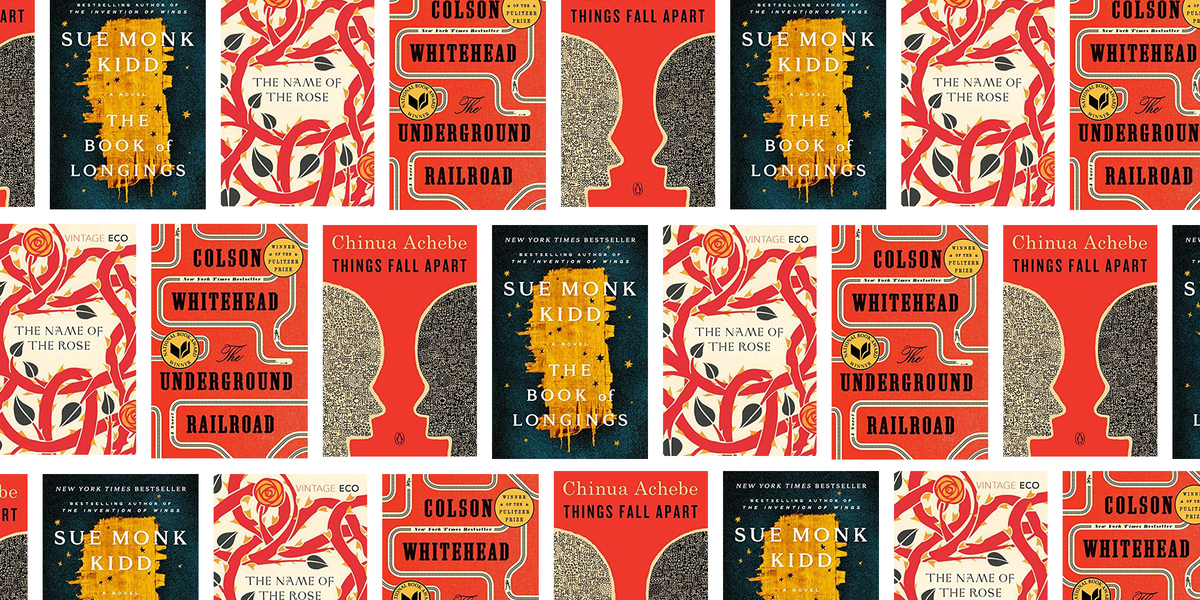
7. The Underground Railroad by Colson Whitehead
Colson Whitehead transforms the historical Underground Railroad into a literal train system running beneath the American South. That bold imaginative choice allows the novel to blend realism, allegory, and suspense. The story of Cora’s escape from slavery is intense and unforgettable, offering a fresh literary approach to one of America’s defining historical wounds.
8. Beloved by Toni Morrison
Beloved is historical fiction, ghost story, family tragedy, and moral reckoning all at once. Set after the Civil War, the novel explores the lasting trauma of slavery through Morrison’s extraordinary language. It is not always an easy read, but it is an essential one. Few novels show so clearly how history can live inside a home, a body, and a memory.
9. Pachinko by Min Jin Lee
This multigenerational saga follows a Korean family living in Japan across the 20th century. Pachinko is intimate and expansive, showing how political history shapes ordinary decisions about work, love, shame, and survival. The novel is especially strong at showing how discrimination can echo across generations while family loyalty remains stubbornly alive.
10. A Gentleman in Moscow by Amor Towles
Count Alexander Rostov is sentenced to house arrest in a grand Moscow hotel after the Russian Revolution. That premise sounds limiting, but Towles turns the hotel into a whole universe of friendships, secrets, meals, manners, and changing politics. A Gentleman in Moscow is witty, charming, and quietly profound, like a perfectly tailored coat hiding a philosophical notebook in the pocket.
11. The Name of the Rose by Umberto Eco
A medieval monastery, a mysterious death, forbidden books, and a brilliant monk-detective: The Name of the Rose is basically catnip for readers who love historical mysteries. Eco combines theology, philosophy, literary puzzles, and suspense into a novel that feels both scholarly and entertaining. It is proof that a book can be intellectual and still have the pulse of a thriller.
12. Circe by Madeline Miller
Inspired by Greek mythology, Circe retells the story of the famous enchantress from her own perspective. While mythological fiction is not always classified as traditional historical fiction, Miller’s novel earns a place here because it revives the ancient world with emotional realism. Circe becomes more than a footnote in a hero’s journey; she becomes the center of her own life.
13. The Song of Achilles by Madeline Miller
This lyrical retelling of the Trojan War focuses on Achilles and Patroclus. Miller brings tenderness and tragedy to an ancient story often remembered for warriors and battlefields. The novel is a strong choice for readers who enjoy historical fiction with mythic atmosphere, emotional intimacy, and prose that occasionally makes you stare at the wall in silence.
14. Hamnet by Maggie O’Farrell
Hamnet imagines the family life of William Shakespeare, especially the grief surrounding the death of his young son. Rather than making Shakespeare the loudest person in the room, O’Farrell gives rich attention to Agnes, his wife. The result is a beautifully textured novel about marriage, motherhood, illness, art, and the strange ways private sorrow becomes public masterpiece.
15. The Alice Network by Kate Quinn
Kate Quinn’s The Alice Network connects the stories of female spies during World War I with a post-World War II search for truth. It is fast-paced, dramatic, and full of characters who are angry for excellent reasons. Readers who like historical fiction with espionage, friendship, and strong women refusing to behave politely will find plenty to enjoy here.
16. The Rose Code by Kate Quinn
Set around the codebreakers of Bletchley Park, The Rose Code mixes friendship, secrecy, intelligence work, and wartime pressure. Quinn makes the technical world of codebreaking accessible without draining it of tension. The novel also highlights how women’s brilliance was often essential to history even when official credit arrived late, if it arrived at all.
17. Memoirs of a Geisha by Arthur Golden
This widely read novel follows Sayuri, a young girl sold into a geisha house in Kyoto before World War II. The book is immersive, atmospheric, and full of details about performance, beauty, rivalry, and survival. Readers should approach it as fiction rather than cultural authority, but its storytelling power has made it one of the most recognizable historical novels of the last few decades.
18. The Other Boleyn Girl by Philippa Gregory
Philippa Gregory helped make Tudor historical fiction wildly popular, and The Other Boleyn Girl remains one of her signature books. Told through Mary Boleyn’s perspective, the novel turns the court of Henry VIII into a place of ambition, danger, and family pressure. It is juicy, dramatic, and historically inspired rather than academically cautious. In other words: bring snacks.
19. Girl with a Pearl Earring by Tracy Chevalier
Inspired by Johannes Vermeer’s famous painting, this elegant novel imagines the life of the girl behind the portrait. Chevalier builds tension through quiet observation: light, color, class, desire, and silence. It is a slim book compared with many historical epics, but it proves that historical fiction does not need a battlefield to feel dramatic.
20. The Red Tent by Anita Diamant
The Red Tent reimagines the biblical story of Dinah, giving voice to women whose lives are often treated as background in ancient narratives. The novel focuses on community, storytelling, birth, family, and female memory. It is a favorite among readers who enjoy historical fiction that re-centers women in stories traditionally told through men.
21. Things Fall Apart by Chinua Achebe
Set in pre-colonial Igbo society and during the arrival of European colonial influence, Things Fall Apart is a compact novel with enormous impact. Achebe’s portrait of Okonkwo and his community remains one of the most important works of historical fiction in world literature. It challenges simplistic stories about colonial history and shows a society with its own complexity long before outsiders arrive.
22. The Poisonwood Bible by Barbara Kingsolver
This ambitious novel follows an American missionary family in the Belgian Congo during a period of political upheaval. Told through multiple voices, The Poisonwood Bible explores faith, arrogance, colonialism, family damage, and cultural misunderstanding. Kingsolver’s storytelling is fierce and layered, making the novel both a family saga and a historical critique.
23. Cold Mountain by Charles Frazier
Set during the American Civil War, Cold Mountain follows a wounded Confederate deserter traveling home and the woman struggling to survive in his absence. The novel is rugged, poetic, and deeply rooted in landscape. It is less interested in grand battlefield glory than in exhaustion, endurance, and the stubborn hope of returning to a changed home.
24. James by Percival Everett
Percival Everett’s James revisits Adventures of Huckleberry Finn from the perspective of Jim, transforming a familiar American text into something urgent, funny, painful, and startlingly new. It belongs on any modern list of the best historical fiction books because it shows how revisiting the past can change the stories we thought we already knew.
25. The Women by Kristin Hannah
Set during the Vietnam War era, The Women focuses on a young nurse who serves in Vietnam and returns to a country not ready to acknowledge women veterans. The novel blends wartime experience with homecoming, friendship, trauma, and resilience. It is a strong contemporary example of historical fiction recovering overlooked perspectives from relatively recent history.
How to Choose the Right Historical Fiction Book for You
If you are new to historical fiction, start with the type of story you already enjoy. Love suspense? Try The Name of the Rose or The Alice Network. Prefer emotional book club fiction? Choose The Nightingale, Hamnet, or Pachinko. Want literary award winners? Reach for Beloved, Wolf Hall, The Underground Railroad, or James. If ancient worlds fascinate you, Madeline Miller’s novels are an inviting doorway.
It also helps to think about scale. Some historical novels are panoramic, covering decades or generations. Others zoom in on a single household, journey, painting, or hotel room. Neither approach is better. A massive historical saga can make you feel as if you have moved into another century and need mail forwarding. A shorter, focused novel can deliver the emotional punch of a sealed letter discovered in an attic.
Common Themes in the Best Novels Inspired by History
Forgotten Voices
Many of the strongest historical fiction books give center stage to people left out of official narratives. The Women, The Red Tent, Homegoing, and James all ask readers to reconsider whose stories are preserved and whose are pushed aside.
Power and Survival
Historical fiction often shows how power works: in palaces, plantations, empires, churches, governments, and families. But the genre is equally interested in survival. Characters endure by reading, cooking, hiding, translating, nursing, remembering, resisting, or simply waking up again the next morning.
The Past as a Mirror
The best historical novels never feel trapped in the past. They reflect modern concerns: inequality, migration, censorship, war, gender roles, racism, nationalism, faith, and the cost of ambition. That is why a novel set centuries ago can still feel uncomfortably current, like history tapping on the window and saying, “We need to talk.”
Reading Experiences: What Historical Fiction Teaches Us Beyond the Page
Reading historical fiction is a different experience from reading a straight history book. A nonfiction history may give you names, dates, policies, and carefully footnoted arguments. Historical fiction gives you the sound of a door closing before bad news arrives. It gives you the awkward dinner conversation after politics has entered the room. It gives you the private fear behind a public event. That is why readers often remember historical novels so vividly: they attach information to feeling.
One of the richest experiences historical fiction offers is empathy without simplification. A good novel does not ask us to pretend the past was charming just because the clothes were dramatic. Yes, there may be candlelight, handwritten letters, and excellent hats. There may also be disease, injustice, war, hunger, censorship, and social rules that make everyone’s life harder than necessary. The best historical fiction books let readers admire beauty while still seeing the cost of the world that produced it.
Another pleasure is discovery. Many readers come to a historical novel knowing almost nothing about its setting. After finishing, they suddenly want documentaries, museum exhibits, maps, biographies, recipes, and possibly a very expensive notebook for “research.” A novel like Pachinko may open a door into Korean Japanese history. The Rose Code may spark curiosity about Bletchley Park. Girl with a Pearl Earring may make a reader look at Dutch paintings differently. This is the secret educational power of the genre: it makes curiosity feel like entertainment.
Historical fiction also reminds us that ordinary people live inside extraordinary events. Wars are not only fought by generals. Revolutions are not only made by famous leaders. A family, a nurse, a translator, a servant, a child, a farmer, a spy, or a painter’s assistant can reveal history from angles that official summaries miss. This is why novels inspired by history are so valuable for modern readers. They return scale to human size.
There is also comfort in the genre, even when the subject matter is serious. Historical fiction shows that people before us faced uncertainty and still cooked meals, wrote letters, fell in love, made jokes, protected friends, changed plans, and kept going. The past was not one long museum corridor. It was full of people improvising their way through the day, just as we do now, except with fewer phone chargers and much worse dental care.
For writers, bloggers, students, and book club members, historical fiction is especially useful because it creates conversation. Was the main character brave or reckless? How much should a novelist invent when working with real events? Can a fictional story tell emotional truth even when it changes factual details? These questions make historical fiction more than a genre; they make it a meeting place between imagination and memory.
Ultimately, the best experience of reading historical fiction is the moment when the distance between then and now collapses. You are no longer simply reading about 16th-century England, occupied France, ancient Greece, postwar Japan, or the American South. You are watching people make choices under pressure. You are asking what you might have done. That quiet question is what keeps historical fiction alive, book after book, century after century.
Conclusion
The best historical fiction books do not merely decorate the past; they interrogate it, humanize it, and sometimes argue with it in the most entertaining way possible. From Wolf Hall and The Pillars of the Earth to Homegoing, Pachinko, James, and The Women, these novels prove that history is not a dusty shelf. It is a crowded, noisy, complicated room full of people whose choices still echo.
If you want a reading list that blends emotional storytelling, real historical inspiration, unforgettable characters, and serious page-turning energy, these 25 historical fiction novels are excellent places to begin. Pick one era, pack your imagination, and prepare to lose track of the present for a while.














