
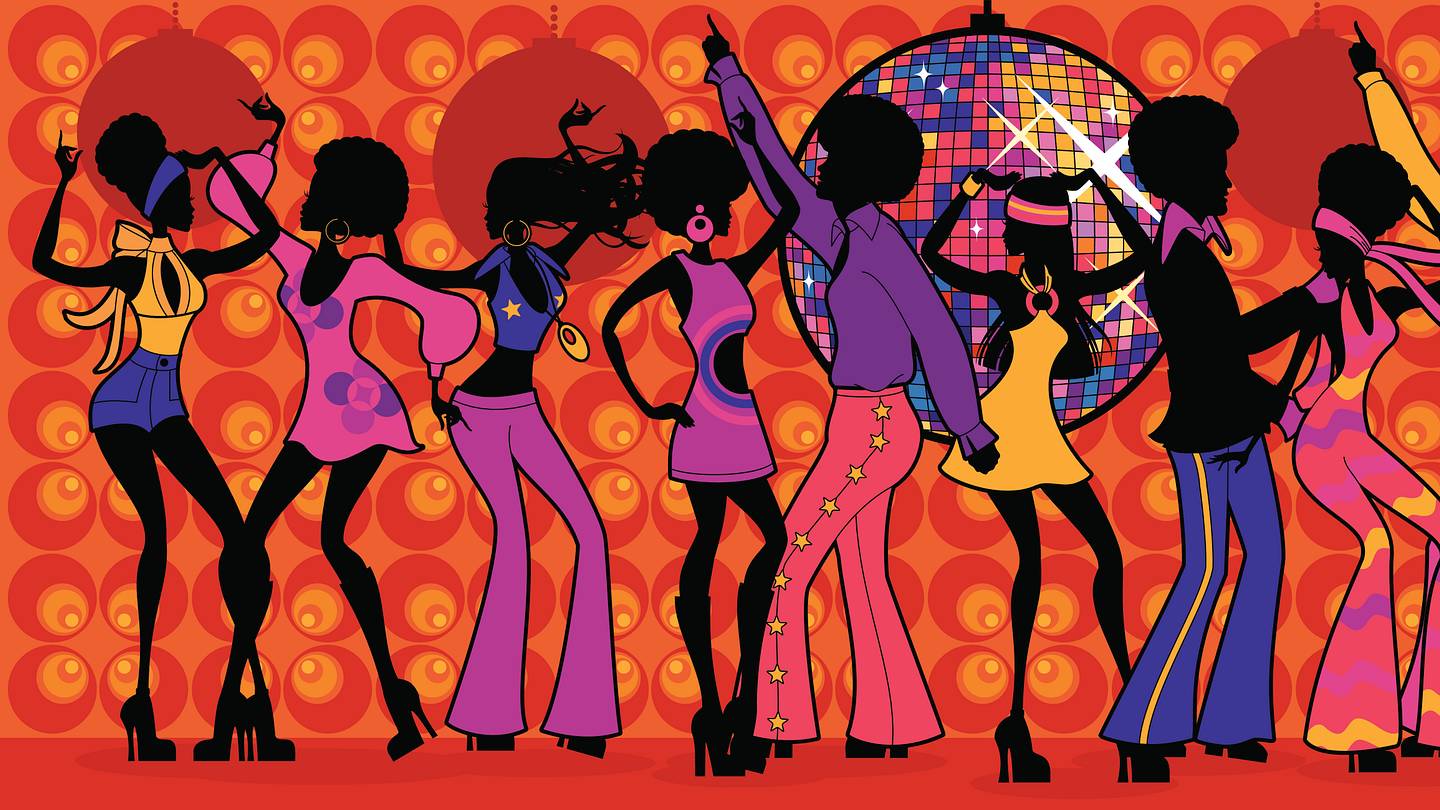
The 1970s have a branding problem. Mention the decade and most people picture disco balls, lava lamps, orange kitchens, polyester that could probably survive a tornado, and someone confidently saying “far out” without a hint of irony. Pop culture has turned the era into a costume closet with a soundtrack. That version is fun, sure. It is also wildly incomplete.
Real 1970s history was far messier, more anxious, more inventive, and more politically explosive than the tidy nostalgia package suggests. This was the decade of Watergate, oil shocks, inflation panic, major social change, early personal computing, and an American public that was learning to distrust institutions in a way that still feels familiar today. In other words, the decade was not just groovy. It was complicated, restless, and occasionally held together with duct tape and hope.
If you want to understand myths about the 1970s, you have to look past the bell-bottom caricature. The real story is not that the decade was weird. It is that it was weird in more important ways than people usually remember. Here are four of the biggest misconceptions about the 1970s, debunked.
Misconception #1: The 1970s Were Basically One Long Disco Party
This is probably the most stubborn fantasy about the decade. The simplified version goes something like this: America danced under mirror balls, wore impossible collars, drove giant cars, and generally vibed its way through the decade until the 1980s arrived with shoulder pads and corporate ambition.
That memory survives because it is visually irresistible. Disco was real. So was glam rock. So were platform shoes that looked like workplace safety violations. But the idea that the entire decade can be summarized by nightlife and novelty is like describing a thunderstorm as “a slightly damp afternoon.”
The 1970s were packed with national stress. The Watergate scandal shattered public trust in the presidency and ended with Richard Nixon resigning in 1974. The Vietnam era was winding down, but the political and emotional aftershocks were still everywhere. Then came the 1973 oil embargo, followed by gas shortages, long lines at service stations, and a national mood that felt less “Stayin’ Alive” and more “Please let there be fuel in this station.”
Even the everyday feel of the decade was more uneasy than the nostalgia machine admits. Americans were arguing about energy, inflation, crime, government credibility, and whether the country’s best days were slipping away. The era produced flashy entertainment partly because people needed escape. Saturday night sparkle coexisted with weekday dread. That contradiction is the real 1970s vibe.
What people forget
Cultural memory often grabs the loudest symbols and ignores the background noise. In the case of 1970s culture, that means people remember disco and forget distrust. They remember fashion and forget fuel lines. They remember roller skates and forget that this was also a decade of political scandal, economic pressure, and a public that was becoming dramatically more skeptical of authority.
So yes, disco happened. But it did not float above history in a glitter bubble. It lived inside a decade that felt unstable, argumentative, and often exhausted. That is a very different picture from “everyone was just having a blast in sequins.”
Misconception #2: The 1970s Economy Was Just “Bad” in the Normal Way
People often talk about the 1970s economy as if it was simply another rough patch. Prices were up, jobs were shaky, and everybody complained. End of story. But that description misses what made the decade economically so strange and so historically important.
The real issue was not just that the economy was weak. It was that it broke the old rules. Policymakers were used to thinking inflation and unemployment moved in a more manageable relationship. In the 1970s, the United States got hit with something much nastier: stagflation, the miserable combination of high inflation and weak growth with stubborn unemployment. It was the economic version of getting both a flat tire and food poisoning on the same day.
The numbers explain why the decade left such a scar. Inflation accelerated sharply during the oil crises. Annual CPI inflation hit double digits in 1974 and again in 1979. Meanwhile, unemployment remained a serious problem instead of politely stepping aside while inflation took the stage. That is one reason the decade still looms large in economic memory: it showed that an economy could be squeezed from multiple directions at once.
Energy shocks played a huge role. The 1973–74 oil embargo disrupted supply and drove costs upward. Then another oil shock hit at the end of the decade. Energy was not a side note; it was part of the machinery driving price pressure through transportation, manufacturing, household budgets, and consumer psychology. When people felt like everything was getting more expensive, they were not imagining it.
The political response also mattered. Leaders tried price controls, public campaigns against inflation, and shifting monetary strategies. None of it felt especially elegant from the perspective of ordinary households. Families saw grocery bills climb, gas prices spike, and paychecks lose purchasing power. The frustration was not theoretical. It was lived in kitchen budgets, commutes, and dinner-table arguments.
Why this misconception matters
Calling the decade’s economy merely “bad” makes it sound familiar, even routine. It was not. The 1970s forced economists, politicians, and the public to rethink what inflation meant, what the Federal Reserve should do, and how vulnerable modern life was to supply shocks. In many ways, the decade became a long lesson in economic humility.
That is why the era still gets referenced whenever inflation surges or energy markets wobble. The 1970s were not just a bad economy. They were a warning label.
Misconception #3: The 1970s Were a Technological Dead Zone
This one is especially unfair. Because the decade came after the moon landing and before the shiny consumer-tech explosion of the 1980s and 1990s, people sometimes treat it like a drab hallway between better rooms. The stereotype says the 1970s were all wood paneling and analog boredom, with innovation apparently taking the decade off.
Absolutely not.
The 1970s were a foundational decade for modern technology. The first commercially available microprocessor appeared in 1971. That was not a minor gadget milestone; it was one of the building blocks of modern computing. By the middle of the decade, machines like the Altair 8800 helped launch the U.S. personal computer industry. By 1977, a growing market of microcomputers was already reshaping how people imagined technology in homes, schools, and offices.
Networking also took major steps forward. ARPANET, the precursor to the modern internet, had a major public demonstration in 1972. Nobody in that moment could open a social media app and waste forty minutes arguing with strangers about sandwiches, but the architecture of networked computing was advancing fast. The decade was laying pipes for the digital future.
Space and science were hardly asleep either. NASA’s 1970s work included the approval and early development of the Space Shuttle program, the Viking missions to Mars, and the broader wave of planetary exploration that defined the late decade. This was not the silence after Apollo. It was a transition from one style of ambition to another.
Part of the confusion comes from aesthetics. The gadgets of the 1970s were not sleek. They looked like office equipment and had the charisma of beige filing cabinets. Early computers did not scream “the future” to everyone because, frankly, some of them looked like they had been assembled in a garage during a tax audit. But appearance is not the same thing as historical importance.
The hidden truth
A lot of the technology that defines daily life now was either born, demonstrated, miniaturized, or popularized during the 1970s. The decade was not a dead zone. It was a workshop. The future was under construction, even if it was wearing square glasses and humming loudly in the corner.
Misconception #4: Social Progress More or Less Stopped After the 1960s
The 1960s get remembered as the decade of movement and change, while the 1970s are often treated like the hangover. In this version of history, the big struggles were basically over, the cultural revolution had already happened, and the rest was just mop-up work plus bad wallpaper.
That is a deeply misleading way to read the decade.
The 1970s were a major period of social transformation, especially in education, politics, and work. Title IX became law in 1972, prohibiting sex discrimination in federally funded education programs. That was not symbolic window dressing. It helped reshape access to sports, academic programs, and professional training for generations of women and girls.
The decade also saw women’s participation in the workforce continue to rise in meaningful ways. Census data from the period showed especially strong labor-force gains among younger and prime-working-age women. This was part of a broad reshaping of American work and family life, not a minor demographic footnote. The old breadwinner model was being challenged by lived reality.
Politics reflected that change too, even when institutions lagged behind. Shirley Chisholm’s 1972 presidential campaign did not end with her in the White House, but it mattered enormously. She forced the country to confront who was seen as a “serious” candidate and who was not. Social progress in the 1970s was not neat, linear, or universally welcomed. It involved backlash, frustration, unfinished fights, and structural limits. But it absolutely did not stop.
That is the key point. The 1970s were not post-movement. They were movement under pressure. Gains made in earlier decades were being tested, expanded, institutionalized, and contested. A lot of the fights that shaped later American life did not pause in the 1970s. They intensified.
Why people miss this
The decade’s visual clichés crowd out its structural changes. Bell-bottoms are easier to remember than policy. Pop songs are easier to package than legal transformation. But if you want to understand the real 1970s history, you have to look beyond style and follow the shifts in education, work, rights, and political representation. That is where the decade’s long-term impact becomes impossible to ignore.
Why These Myths About the 1970s Keep Surviving
Nostalgia is selective. It behaves like an editor with a sugar addiction. It keeps the catchy parts, trims the uncomfortable parts, and leaves us with a version of the past that is more marketable than accurate.
The 1970s are especially vulnerable to this treatment because the decade had such strong visual branding. Very few eras can be identified by a lamp, a haircut, and a font. But style can hide substance. Once a decade becomes an aesthetic, its politics, economics, and social tensions start fading into the wallpaper.
Another reason these misconceptions stick is that the 1970s were full of contradictions. It was a decade of both cynicism and creativity, both economic pain and technological groundwork, both backlash and breakthrough. Contradictory periods are harder to summarize, so people flatten them. It is easier to say “disco decade” than “an era of institutional distrust, inflation shocks, rights struggles, and early digital transformation.” Admittedly, the second version is harder to fit on a novelty T-shirt.
Experiences the Stereotypes Miss
The reflection below is a historically grounded composite portrait, written to capture the lived feel of the decade rather than present a single person’s memoir.
To understand the 1970s, imagine waking up in a country that looked modern but did not feel fully confident anymore. The television was still a shared family altar, but what came through it was not always reassuring. One night you saw entertainment, variety shows, and jokes. The next night you saw hearings, scandal, war’s aftermath, rising prices, and experts explaining why ordinary life suddenly cost more than it used to. The future had arrived, but it was arguing with itself.
Imagine stopping for gas and wondering whether the station would still be open by the time you reached the pump. Imagine adults clipping coupons with the seriousness of battlefield planning because groceries had become another source of stress. Imagine hearing the phrase “inflation” so often that it stopped sounding like economics and started sounding like weather: always present, always annoying, and somehow everyone’s problem at once.
At school, the old rules were shifting, even if nobody always said so out loud. More girls pushed into spaces that had long treated them like guests instead of equals. More women entered workplaces that were still catching up to the fact that change was already happening. That did not mean barriers vanished. It meant everyday life contained more friction, more ambition, and more moments where people realized the old script no longer fit.
Technology was changing too, but not in the clean, glamorous way later decades would advertise it. It arrived in pieces: calculators, terminals, odd-looking machines, and news about computers that still sounded slightly mysterious. The future did not descend from the heavens with smooth design and friendly marketing. It clunked into view one expensive, humming box at a time. But if you were paying attention, you could tell something big was forming.
And culturally, the decade had an odd emotional rhythm. Fun was real. Music mattered. Fashion was ridiculous in the best and worst ways. People danced, collected records, redecorated living rooms, and leaned hard into self-expression. But that fun often existed alongside tension, not instead of it. The sparkle was not proof that everything was fine. Sometimes it was a response to the feeling that everything was not.
That is why the stereotypes do not fully work. The lived experience of the 1970s was not one note. It was the sensation of standing in transition: old institutions losing credibility, new identities pressing forward, technology changing shape, and families adapting in real time to pressures they could not always control. It could feel exciting, frustrating, unstable, liberating, tacky, inventive, and exhausting all in the same week.
So when people reduce the era to jokes about shag carpet and disco, they miss the deeper human story. The 1970s were not memorable because they were silly. They were memorable because they felt unsettled. The decade asked Americans to live through change without a neat promise that change would be comfortable. That is a harder memory to package, but it is much closer to the truth.
Conclusion
The biggest misconceptions about the 1970s all come from the same mistake: confusing the decade’s style with its substance. Yes, the era gave us disco, daring fashion, and enough earth tones to repaint a canyon. But it also gave us political scandal, economic upheaval, social restructuring, and technological seeds that would shape modern life.
If you really want to understand the 1970s, do not ask what people were wearing. Ask what they were worrying about, building, debating, and changing. That is where the decade becomes much more interesting. Also much less flattering to polyester, which frankly had an overconfident run.












