Before the Marvel Cinematic Universe became the world’s most expensive group chat, many of its now-famous heroes were not exactly household names. Sure, comic-book fans knew them. Collectors had opinions. Someone, somewhere, could explain the entire history of Pym Particles using three whiteboards and a frightening amount of confidence. But for the average moviegoer, characters like Iron Man, Ant-Man, Doctor Strange, and Rocket Raccoon were not names that made people sprint to the theater.
That is what makes Marvel’s rise so fascinating. The studio did not begin with Spider-Man, the X-Men, or the Fantastic Four as its main cinematic weapons. Many of those characters were tied up in film-rights deals elsewhere. Instead, Marvel Studios built an empire out of heroes who, to casual audiences, looked like second-stringers, oddballs, or punchlines. A billionaire in a metal suit? A wizard surgeon? A shrinking thief? A talking raccoon with weapons issues? On paper, it sounded like a garage sale of superhero concepts.
Then the movies happened. Smart casting, sharp writing, emotional arcs, and a surprising amount of confidence turned overlooked Marvel characters into global icons. The lesson is simple: audiences may not care about a character yet, but give that character the right story and suddenly everyone wants the T-shirt, the Funko Pop, the Halloween costume, and possibly the emotional support raccoon.
Why Marvel’s “B-List” Became the A-List
The phrase “no one cared” is obviously an exaggeration. Comic readers cared. Longtime Marvel fans cared. The characters had decades of publication history, memorable storylines, and loyal followers. But popularity inside comic shops is not the same as mainstream cultural power. Before the movies, many of these heroes had nowhere near the instant recognition of Superman, Batman, Spider-Man, or Wolverine.
Marvel’s genius was not pretending these characters were already giants. It was treating them as if they could become giants. The films simplified complicated comic histories, emphasized personality, and gave viewers emotional entry points. Instead of asking audiences to memorize continuity, Marvel asked them to enjoy Tony Stark’s ego, T’Challa’s responsibility, Scott Lang’s awkward charm, Stephen Strange’s arrogance, Peter Quill’s mixtape, and Rocket’s wounded sarcasm.
Here are six Marvel characters who went from “Wait, who?” to “Please take my money.”
1. Iron Man: From B-List Armored Guy to the Face of Marvel
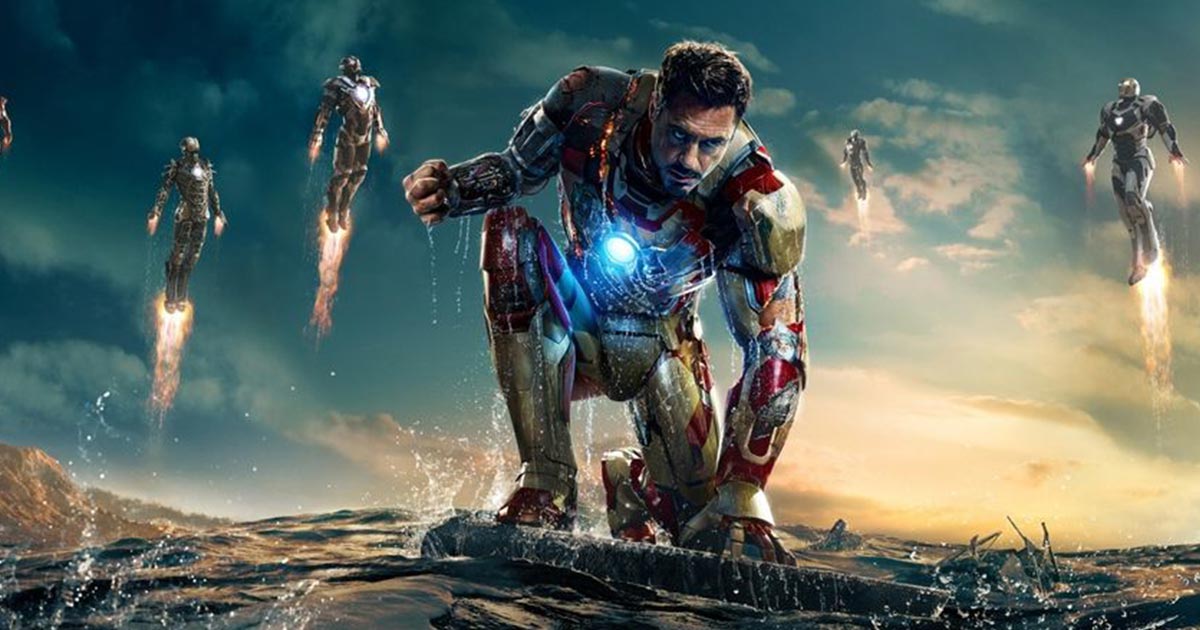
Today, Iron Man feels inevitable. Robert Downey Jr.’s Tony Stark became the soul of the MCU, the spark that lit the franchise, and the man who made “genius, billionaire, playboy, philanthropist” sound like a résumé and a diagnosis at the same time. But before 2008, Iron Man was not the obvious choice to launch a cinematic universe.
In comics, Tony Stark had history. He first appeared in the 1960s, had solo titles, served with the Avengers, and played major roles in Marvel events. But outside comic fandom, he was not Spider-Man. He was not the Hulk. Many casual fans thought Iron Man was a robot, which is a little rude but understandable if all you saw was a shiny helmet.
Why people underestimated Iron Man
Iron Man’s biggest problem was that his concept sounded corporate before it sounded heroic. He was a weapons manufacturer in a metal suit, which is not exactly the same emotional shortcut as “bitten by radioactive spider” or “angry green giant.” Tony Stark needed a movie that could turn guilt, technology, charm, and redemption into something thrilling.
The 2008 film did exactly that. Robert Downey Jr. made Stark funny, wounded, brilliant, selfish, generous, and deeply human. The suit became cool, but the man inside the suit became essential. By the time Tony escaped the cave, built the Mark II armor, and announced “I am Iron Man,” Marvel had transformed a respected comic hero into the centerpiece of modern blockbuster culture.
Iron Man proved that the right actor can change a character’s destiny. Before the film, Tony Stark was known. After the film, he was Marvel’s crown jewel.
2. Black Panther: A Comic Legend Who Became a Global Cultural Event
Black Panther was never unimportant in Marvel Comics. T’Challa was the king of Wakanda, one of the smartest people in the Marvel Universe, and a historic superhero who debuted in the 1960s. Comic readers understood his significance. But mainstream audiences did not fully recognize the power of the character until the movies put Wakanda on the big screen.
Chadwick Boseman’s first appearance as T’Challa in Captain America: Civil War immediately changed the conversation. He was calm, precise, regal, and dangerous without needing to shout about it. Then Black Panther arrived in 2018 and turned a solo superhero film into a cultural milestone.
Why the movie changed everything
The film did more than introduce a hero. It introduced a world. Wakanda was not just a setting; it was a vision of technology, tradition, political debate, fashion, family, and identity. T’Challa’s conflict with Erik Killmonger gave the movie emotional and ideological weight. Suddenly, Black Panther was not merely “another Marvel character.” He was the center of one of the most discussed superhero films ever released.
For many viewers, the movie created a rare feeling: this superhero story mattered beyond explosions. It mattered culturally, visually, and emotionally. Black Panther went from respected comic icon to global symbol, and “Wakanda Forever” became a phrase people said with their whole chest.
Before the movie, many casual audiences could not tell you where Wakanda was. After the movie, they wished their passport could get stamped there.
3. Doctor Strange: The Weird Magic Guy Who Became Essential
Doctor Strange had one of the strangest pre-movie reputations in Marvel. Comic readers knew him as the Sorcerer Supreme, a master of mystical threats, alternate dimensions, and dramatic cape behavior. Casual audiences, however, often saw him as “that magic guy with the mustache.” Not exactly blockbuster shorthand.
Stephen Strange’s comic-book world is full of spells, relics, demons, cosmic entities, and psychedelic imagery. That material could have looked ridiculous on screen if handled poorly. A floating cloak? A glowing necklace? Hand choreography that looks like a very intense invisible piano recital? Risky stuff.
How Doctor Strange found his audience
The 2016 movie made smart choices. It gave Strange a familiar human flaw: arrogance. He was a brilliant surgeon who believed skill could solve everything until his hands were injured and his life collapsed. That personal crisis made the magical world easier to accept. The film did not begin by asking viewers to care about the multiverse. It asked them to care about a man who could not accept being broken.
Then the visuals did the rest. Folding cities, mirror dimensions, astral projection, time loops, and reality-bending action gave Doctor Strange a cinematic identity unlike Iron Man’s technology or Captain America’s soldier drama. He became the MCU’s doorway into magic, mysticism, and eventually the multiverse.
Before the movies, Doctor Strange was niche. After the movies, he became the guy everyone expected to explain reality whenever reality started acting like it had eaten expired nachos.
4. Ant-Man: The Shrinking Hero Everyone Thought Was a Joke
Ant-Man may be the easiest character on this list to underestimate. His power is shrinking. His allies are ants. His name sounds like something a child invents five minutes after learning what ants are. Even in a universe with thunder gods and rage monsters, Ant-Man sounded like a tough sell.
Marvel could have leaned into pure absurdity, but the 2015 film found the perfect angle: make Ant-Man funny, small-scale, and emotionally grounded. Instead of trying to convince audiences that Scott Lang was the most powerful hero in the world, the movie made him one of the most likable.
Why Scott Lang worked
Paul Rudd’s Scott Lang was not a billionaire, king, god, or cosmic warrior. He was a divorced dad with a criminal record, a good heart, and the energy of a man who accidentally walked into a superhero franchise while looking for a taco truck. That made him refreshing.
The movie also used size as comedy and spectacle. A fight on a toy train became hilariously dramatic. A tiny hero running through a bathtub became an action sequence. Ants became partners instead of pests. The film understood that Ant-Man’s weirdness was not a weakness. It was the whole charm.
Over time, Scott Lang became one of the MCU’s most approachable heroes. He was funny, nervous, sincere, and deeply devoted to his daughter. Before the movies, many people laughed at the idea of Ant-Man. After the movies, they laughed with him.
5. Star-Lord: The Space Hero Nobody Asked For
Before Guardians of the Galaxy, Peter Quill was not exactly a mainstream superstar. Even many Marvel fans knew the cosmic side of the comics as a strange neighborhood full of wars, planets, helmets, alien empires, and characters with names that sound like rejected heavy-metal bands. Star-Lord was part of that world, but he was not the kind of character casual audiences were begging to see.
Then James Gunn’s Guardians of the Galaxy arrived in 2014 and turned obscurity into personality. Peter Quill was not presented as a flawless cosmic champion. He was introduced dancing through ancient ruins to a pop song, using sarcasm as armor, and insisting people call him Star-Lord even though almost nobody wanted to.
The power of humor and music
Chris Pratt’s performance made Quill feel like a kid who had grown up with trauma, pop culture, and a cassette player as his emotional support system. The “Awesome Mix” soundtrack was not just a gimmick. It gave the movie a heartbeat. It connected space adventure to Earth nostalgia, making alien planets feel oddly personal.
Star-Lord became famous because the movie understood that audiences did not need him to be cool from the start. They needed him to try to be cool and fail just enough to be lovable. His insecurity, grief, ego, and loyalty made him human, even while he was flying through space with criminals, assassins, and one very judgmental raccoon.
Before the movies, Star-Lord was a deep-cut cosmic Marvel name. After the movies, he was the reason millions of people suddenly cared about a mixtape in outer space.
6. Rocket Raccoon: The Character That Should Not Have Worked
Rocket Raccoon may be Marvel’s greatest “this should have been a disaster” success story. Try explaining him without sounding ridiculous: he is a talking raccoon who loves giant guns, pilots spaceships, insults everyone, and has deep emotional trauma. That is either a brilliant character or the result of someone losing a bet at a comic-book office party.
Before the Guardians films, Rocket was obscure to the general public. His comic history was unusual, and his visual concept seemed dangerously close to cartoon territory. In a lesser movie, Rocket could have become annoying fast. Instead, he became one of the most emotionally complex characters in the MCU.
Why Rocket became beloved
The secret was pain. Rocket was funny because he was defensive. He was loud because he was wounded. He pushed people away because he had been treated like an experiment instead of a person. Bradley Cooper’s voice performance and the character’s animation gave Rocket sarcasm, rage, humor, and vulnerability.
His bond with Groot also helped. Groot’s limited vocabulary and gentle nature balanced Rocket’s sharp edges. Together, they became the emotional odd couple of the MCU: one says almost nothing, the other says too much, and somehow they communicate better than most humans with unlimited data plans.
Rocket proved that audiences will care about almost any character if the writing respects the emotions underneath the gimmick. A talking raccoon became a fan favorite not because he was strange, but because his strangeness protected a broken heart.
What These Marvel Transformations Teach Us
The rise of these characters shows that popularity is not fixed. A hero can be overlooked for decades and then become iconic almost overnight. The difference is often adaptation. Movies have the power to focus a character, streamline confusing backstory, and emphasize universal emotions.
Iron Man became a redemption story. Black Panther became a cultural epic. Doctor Strange became a journey from ego to surrender. Ant-Man became a father-daughter comedy with superhero stakes. Star-Lord became a lonely boy hiding behind jokes and music. Rocket became a wounded survivor disguised as a furry insult machine.
Marvel’s biggest achievement was not simply making obscure characters famous. It was making them feel obvious after the fact. Now it is hard to imagine a world where Iron Man was not central, Wakanda was not iconic, Doctor Strange was not essential to the multiverse, Ant-Man was not lovable, Star-Lord was not dancing through space, and Rocket was not breaking hearts between punchlines.
Experiences Fans Recognize: Discovering Marvel’s Underdogs After the Movies
One of the funniest experiences connected to these characters is remembering how skeptical people were before the movies came out. Many fans did not walk into Iron Man expecting the birth of a cinematic universe. They expected a decent superhero movie with a cool suit. Some viewers only bought a ticket because the trailer looked fun. Others went because superhero movies were becoming weekend comfort food. Very few people sat down in 2008 thinking, “Ah yes, this will change Hollywood for the next two decades.”
That surprise became part of the magic. People left the theater talking about Tony Stark as if he had always been famous. Suddenly, Iron Man was not a backup Avenger; he was the guy. The same experience repeated with Guardians of the Galaxy. Many moviegoers had no emotional attachment to Star-Lord, Rocket, Groot, Gamora, or Drax before buying a ticket. Some probably thought the trailer looked too weird. A raccoon with a machine gun? A tree who says one sentence? A blue villain? A green assassin? A guy with a Walkman in space? It sounded like Marvel had finally cleaned out the attic and decided to film whatever fell out.
Then the movie won people over. Viewers laughed, then cared, then somehow found themselves emotionally devastated by a tree saying three words. That is the Marvel underdog effect at its best. The audience arrives with low expectations and leaves with new favorites.
Ant-Man created a similar experience, especially for people who assumed the character was too silly to work. The pleasure of that film was not watching Marvel pretend shrinking was the coolest power ever. It was watching Marvel admit shrinking was ridiculous and then build inventive comedy and action around it. Fans who expected a minor side adventure found a surprisingly warm story about failure, second chances, and fatherhood.
Doctor Strange offered a different kind of discovery. Some viewers were not sure whether magic belonged in the same world as Iron Man’s technology and Captain America’s military drama. But once the film visualized spellcasting as architecture, geometry, discipline, and imagination, the mystical side of Marvel felt less like a detour and more like an expansion.
Black Panther was perhaps the most powerful communal experience. For many audiences, it was not just another Marvel release; it felt like an event. People dressed up, brought families, discussed costumes, music, themes, and representation. T’Challa’s rise showed how a character can move from comic-book importance to cultural importance when given the right cinematic platform.
That is why these characters remain so interesting. Their success reminds fans that the next beloved icon may be someone the public currently ignores. Today’s “Who cares?” can become tomorrow’s billion-dollar franchise. In superhero storytelling, the bench is deeper than it looks, and sometimes the weirdest character in the room is the one audiences remember most.
Conclusion
The story of these six Marvel characters is really the story of modern franchise storytelling. Audiences do not need every hero to arrive with decades of mainstream fame. They need a clear personality, emotional stakes, memorable visuals, and a reason to care. Marvel took characters who seemed too niche, too strange, too small, or too risky and turned them into global favorites.
Iron Man became the foundation. Black Panther became a cultural landmark. Doctor Strange opened the door to mystical storytelling. Ant-Man made small stakes feel big. Star-Lord made space weirdly human. Rocket Raccoon proved that even the most absurd concept can carry real emotional weight.
Before the movies, these characters were not all ignored, but they were definitely underestimated by the broader public. After the movies, they became proof that superheroes are not born famous. Sometimes they need the right actor, the right director, the right soundtrack, the right joke, or the right heartbreaking raccoon trauma. Hollywood is strange. Marvel made strange profitable.