Note: This guide is for general home-care use. Always check the stuffed animal’s care label first, especially if the toy has electronics, glued-on decorations, leather accents, delicate vintage fabric, or sentimental value greater than a small kingdom.
Stuffed animals live dramatic lives. They attend tea parties, survive blanket forts, ride in backpacks, fall asleep under beds, and occasionally take a mysterious swim in applesauce. Sooner or later, even the most beloved teddy bear starts to look less “cuddly companion” and more “archaeological discovery from the couch cushions.”
The good news: you can often handwash a stuffed animal safely without turning it into a lumpy, soggy tragedy. Handwashing is usually gentler than machine washing, making it a smart option for older plush toys, soft toys with delicate stitching, sentimental keepsakes, or stuffed animals that are not labeled machine-washable. The trick is knowing which method fits the toy’s condition.
Below are six practical ways to handwash a stuffed animal, from quick spot cleaning to a deeper sink bath. You will also learn how to dry plush toys properly, how to avoid common mistakes, and how to keep your child’s favorite furry friend soft, clean, and ready for another round of heroic bedtime duty.
Before You Begin: Check the Stuffed Animal Like a Tiny Laundry Detective
Before water touches the plush, inspect it carefully. Look for a care tag, loose seams, worn fabric, glued-on eyes, sequins, bows, battery packs, music boxes, beans, foam beads, or any suspicious “crunchy” stuffing that suggests the toy may not enjoy a bath.
If the label says “surface wash only,” do not fully submerge the toy. If it has batteries, mechanical parts, lights, sounds, or metal pieces inside, stick with surface cleaning. Water and electronics have never been close friends, and they should not become roommates inside a teddy bear.
For washable plush toys, gather a basin or clean sink, cool or lukewarm water, mild detergent or gentle dish soap, white towels, a soft cloth, an old toothbrush, and a drying rack. Avoid harsh scrubbing, chlorine bleach, heavy fragrance, and hot water unless the care label specifically allows it. Heat can shrink fabric, loosen glue, fade colors, and make synthetic fur look like it had a bad salon appointment.
1. Spot Clean Small Stains First
Spot cleaning is the best first move when the stuffed animal has one visible stain but does not need a full bath. It is especially useful for food marks, dirt smudges, drool spots, and mystery stains that nobody in the house will confess to creating.
How to Do It
Mix a small amount of mild detergent with cool water. Dip a clean white cloth into the solution, wring it out well, and gently dab the stained area. Do not soak the toy. For stubborn marks, use a soft toothbrush and brush lightly in the direction of the fabric. After the stain lifts, wipe the area with a second cloth dampened with plain water to remove soap residue.
Blot the cleaned area with a dry towel, then let the stuffed animal air-dry completely. A fan can help speed things up, but avoid direct heat. If the fur dries flat, gently fluff it with your fingers or a soft brush.
Best For
This method is ideal for plush toys with small stains, delicate features, attached ribbons, embroidered details, or uncertain washability. It is also the safest approach for electronic stuffed animals, as long as you keep moisture on the surface only.
2. Give It a Gentle Sink Bath
When the entire stuffed animal smells musty, feels sticky, or looks generally tired, a gentle sink bath can refresh it without the rough movement of a washing machine. This is the classic handwashing method and works well for many modern plush toys labeled as washable.
How to Do It
Fill a clean sink, bucket, or basin with cool water. Add a very small amount of mild detergent and swirl the water before adding the toy. The goal is lightly soapy water, not a bubble mountain. Too much detergent makes rinsing difficult and can leave the plush stiff.
Place the stuffed animal in the water and gently press it down so the water moves through the fabric and stuffing. Avoid twisting, wringing, or aggressive squeezing. Let it soak for about 10 to 15 minutes if it is washable and not fragile. Then massage the fabric gently, paying attention to high-contact areas like paws, ears, and the face.
Drain the soapy water and refill the basin with clean cool water. Press the toy gently to release soap. Repeat until the water runs clear and the plush no longer feels slippery. Rinsing is not the glamorous part, but it is the difference between a soft stuffed animal and one that dries with a crunchy detergent crust.
Best For
This works best for sturdy plush toys without electronics, glued parts, delicate vintage fabric, or loose seams. It is a good method for stuffed animals that sleep in bed every night and need a full refresh.
3. Use a No-Soak Surface Wash for Delicate Plush
Some stuffed animals are too fragile for submersion but too dirty for a simple dab. That is when a no-soak surface wash saves the day. Think of it as a spa wipe-down instead of a full swimming lesson.
How to Do It
Mix cool water with a few drops of mild detergent. Dip a microfiber cloth into the solution and wring it until it is damp, not dripping. Wipe the toy in sections, working slowly over the body, arms, legs, ears, and face. Use a cotton swab for tight areas around embroidered eyes, noses, seams, or accessories.
Next, wipe the entire toy again with a cloth dampened only with clean water. This second pass removes leftover soap. Finish by blotting with a dry towel and letting the toy air-dry in a well-ventilated space.
Best For
Use this method for older stuffed animals, collector plushies, handmade toys, toys with glued-on decorations, or stuffed animals filled with pellets or materials that may not dry evenly after soaking. It is also a smart choice when you are not completely sure what the stuffing is made of.
4. Handwash With Baby Shampoo for Extra Softness
Baby shampoo can be a gentle option for plush toys that need cleaning but have soft fur you want to protect. It is not magic, and it will not reverse twenty years of attic storage, but it can help clean lightly soiled fabric without leaving it harsh.
How to Do It
Add a small squeeze of baby shampoo to a basin of cool or lukewarm water. Mix it thoroughly before placing the stuffed animal in the water. Gently press the toy so the solution moves through the fabric. Focus on areas touched most often, such as paws, belly, and snout.
Rinse carefully with cool water until all shampoo is gone. This may take several rounds. Do not rush. Soap trapped in plush fabric can attract more dirt later, which is rude behavior from soap, but unfortunately common.
After rinsing, place the stuffed animal on a clean towel. Roll the towel around it and press gently to remove excess water. Never twist the toy like a dishcloth. Reshape the body, smooth the fur, and let it air-dry flat.
Best For
This method is great for soft plush animals with synthetic fur, baby-safe toys that need a mild wash, and cuddly stuffed animals that feel a little grimy but are still structurally sound.
5. Use a Toothbrush Detail Clean for Faces, Paws, and Seams
Stuffed animals collect grime in the same places people notice first: around the face, paws, ears, and seams. A detail clean lets you target those areas without washing the whole toy.
How to Do It
Prepare a mild cleaning solution with cool water and a tiny amount of gentle detergent. Dip a soft toothbrush into the solution, tap off excess liquid, and brush lightly over dirty areas. Use small movements and avoid pressing too hard. If the fabric pills, frays, or sheds, stop immediately and switch to a damp cloth.
After cleaning, wipe the area with a clean damp cloth to remove soap. Blot with a dry towel. For fur that looks matted, wait until the toy is fully dry, then gently brush the fibers back into place.
Best For
This is perfect for plush toys with stained paws, dusty seams, or faces that look like they have been through a snack-based adventure. It is also useful before a full handwash, because treating stains first often gives a better result.
6. Freshen With Baking Soda Before or After Handwashing
Baking soda is useful for odor control, especially when a stuffed animal smells stale but does not need a full wash. It does not replace proper cleaning for heavy grime, but it can help absorb mild odors from storage, travel, or everyday cuddling.
How to Do It
Place the dry stuffed animal in a large sealable bag. Add a few tablespoons of baking soda, seal the bag, and gently shake it so the powder spreads across the surface. Let it sit for 15 to 30 minutes. Remove the toy and brush or vacuum the baking soda away using a low-suction handheld vacuum or upholstery attachment.
If you plan to handwash the toy afterward, this step can help loosen odor before the sink bath. If you use baking soda after handwashing, make absolutely sure the toy is fully dry first. Baking soda plus damp stuffing equals clumps, and nobody wants their teddy bear developing internal dumplings.
Best For
This method works well for plush toys that smell a little stale, toys pulled from storage, or stuffed animals that cannot be soaked. It is not the right method for wet toys, delicate fur that sheds easily, or toys with open seams where powder could get trapped inside.
How to Dry a Handwashed Stuffed Animal Properly
Drying matters just as much as washing. A poorly dried stuffed animal can develop odors, clumped stuffing, or mildew. After rinsing, place the toy on a clean white towel and roll it up gently to absorb water. Press, do not wring. Replace the towel if it becomes soaked.
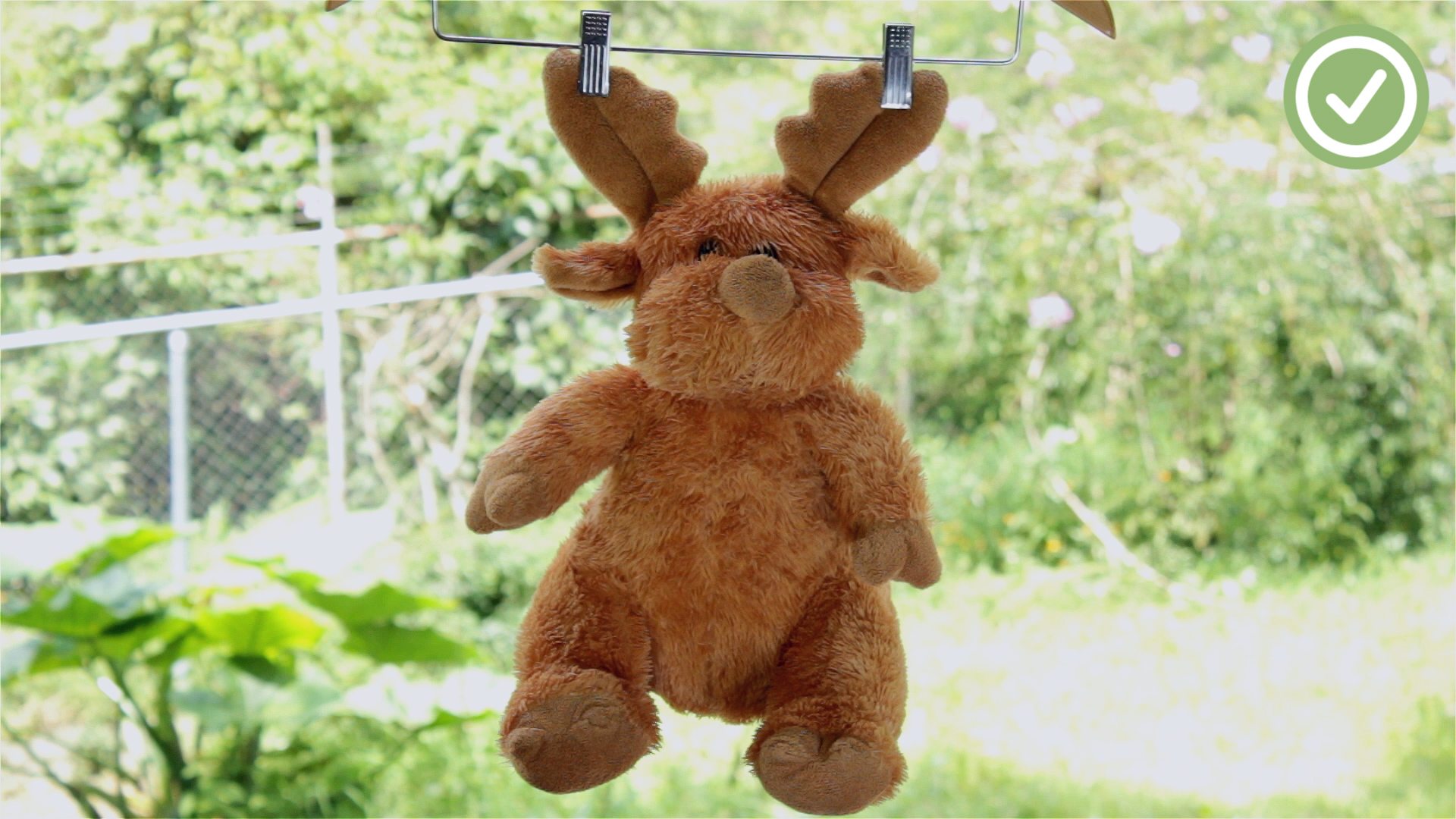
Lay the stuffed animal flat on a drying rack or towel in a room with good airflow. Turn it every few hours so all sides dry evenly. A fan can help, but keep the toy away from high heat, direct sunlight, radiators, and hair dryers on hot settings. Heat may damage synthetic fibers, melt glue, or warp plastic details.
For thick stuffed animals, drying can take a full day or longer. Before returning the toy to a child’s bed, squeeze the thickest part gently. If it feels cool, damp, or heavy, it needs more time. A stuffed animal should be completely dry inside and out before it goes back to snuggle duty.
Common Mistakes to Avoid
The biggest mistake is using too much detergent. More soap does not mean more clean; it usually means more rinsing. Another common problem is soaking toys that should only be surface cleaned. Stuffed animals with batteries, sound boxes, or mechanical parts should not be submerged.
Avoid bleach unless a care label or specific expert instruction says it is safe for that toy. Bleach can discolor fabric, weaken fibers, and leave residues if not handled correctly. Also avoid fabric softener, which can coat plush fibers and reduce softness over time.
Do not scrub aggressively. Stuffed animals are not frying pans. Gentle pressure is enough. If the fabric is old, thin, or sentimental, choose the mildest method and test in a hidden spot first.
How Often Should You Clean Stuffed Animals?
How often you clean stuffed animals depends on how they are used. A display plush on a shelf may only need occasional dusting. A bedtime stuffed animal that gets hugged nightly, dragged through the car, and invited to breakfast should be cleaned more often.
As a practical rule, spot clean when stains appear, freshen when odors show up, and handwash when the toy feels dirty or has been through illness, travel, or heavy use. For children with allergies, asthma, or sensitive skin, keeping plush toys dust-free and fully dry is especially important.
Extra Experience: What Actually Works When Washing Stuffed Animals at Home
After cleaning many stuffed animals, one lesson becomes obvious: the gentlest method that solves the problem is usually the best method. Not every plush toy needs a full bath. Sometimes the teddy bear only has a jam stain on one paw, and treating the paw is smarter than soaking the whole bear like it owes you money.
One helpful habit is to start with a “dry inspection.” Shake the toy gently outside or over a towel. Dust and crumbs often fall out, especially around stitched clothing, ears, and paws. Then check seams. If you see a small opening, sew it closed before washing. Even a tiny tear can become a dramatic stuffing escape once the toy gets wet.
Another real-world tip: use less soap than you think. A few drops can clean a basin of water. When people complain that a stuffed animal dried stiff, the cause is often leftover detergent. Plush fabric holds suds like it is keeping a secret. Rinse patiently, pressing clean water through the toy until the water looks clear and the fabric feels normal.
For toys with long fur, brushing after drying makes a big difference. Wait until the plush is fully dry, then use a soft baby brush or clean pet slicker brush with very gentle pressure. Brush in the direction of the fur. This can bring back fluffiness and reduce the “wet raccoon” look that sometimes appears after washing.
For stuffed animals with sentimental value, take photos before cleaning. This may sound silly, but it helps you remember the original shape, bow position, ear angle, or expression. Some older plush toys shift slightly when damp. Reshaping while the toy is still moist can help it dry closer to its original form.
Airflow is the secret hero. A drying rack near a fan works better than leaving a damp plush on a towel in a closed room. If one side stays pressed against a wet towel for hours, drying slows down. Rotate the toy regularly and change towels when they become damp.
For baby toys and toddler favorites, timing matters. Do not begin a deep handwash right before bedtime unless you enjoy explaining to a sleepy child why Mr. Bunny is “still at the spa.” Wash early in the day, and have a backup comfort item ready if possible. Some families even make cleaning part of the routine: “Bear is taking a bath today so he can smell nice for story time tomorrow.” It sounds simple, but it helps avoid bedtime negotiations worthy of a courtroom drama.
Finally, know when not to wash. If the stuffed animal is antique, handmade, filled with straw or unknown material, decorated with fragile pieces, or extremely valuable, surface cleaning or professional textile cleaning may be safer. A clean toy is wonderful, but preserving the toy matters too. The goal is not to make every stuffed animal look factory-new. The goal is to make it clean, safe, dry, and still recognizable as the loyal little friend your child loves.
Conclusion
Handwashing a stuffed animal is not complicated, but it does require patience. Check the care label, choose the right cleaning method, use mild soap, rinse thoroughly, and let the toy air-dry completely. Whether you spot clean a single stain, give a gentle sink bath, detail-clean the paws, or freshen with baking soda, the safest approach is always the one that matches the toy’s fabric, age, and construction.
With a little care, a beloved stuffed animal can come out cleaner, softer, and ready for many more hugs. And honestly, after everything plush toys endure, they deserve the spa treatment.