
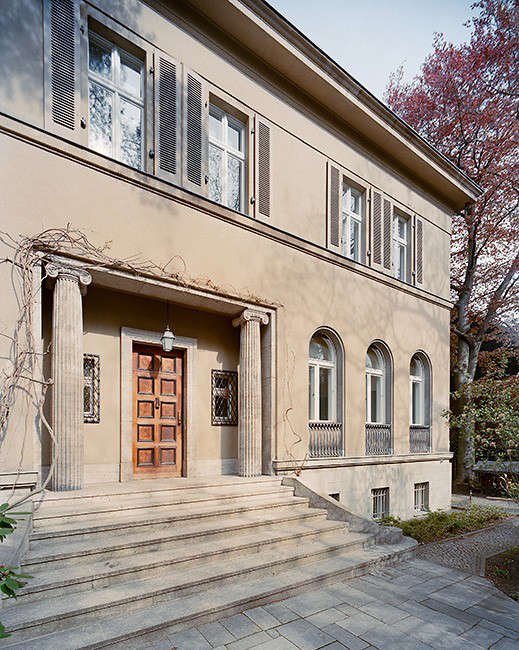
Some homes whisper. This one enters the room like it pays property taxes in a velvet cape.
A grand residence reimagined in Berlin by Thomas Kröger is the kind of project that makes you stop scrolling, lean in, and mutter, “Well, that escalated beautifully.” Set inside a historic Berlin apartment with the bones of a once-grand bourgeois interior, the home feels neither trapped in the past nor desperate to look trendy. Instead, it performs a much harder trick: it restores dignity, injects personality, and makes old-world scale feel shockingly livable.
That balancing act is what makes this Berlin residence so compelling from both a design and architecture perspective. Kröger does not flatten history into a museum display, nor does he bulldoze the past in favor of fashionable minimalism. He treats the apartment like a conversation between eras. Original grandeur remains visible in the proportions, circulation, and presence of the rooms. At the same time, the redesign rethinks how people actually live now: how they move, gather, display art, work, retreat, and occasionally hide from the world with a very good book and an even better light fixture.
Why This Berlin Residence Stands Out
The power of this project begins with the shell. The residence is associated with a turn-of-the-century apartment in Berlin-Charlottenburg, described by the architect’s studio as a fragment of a once-grand bourgeois home. That phrase matters. “Fragment” suggests loss, alteration, and time doing what time does best: messing with floor plans. Rather than pretending the apartment had remained untouched through the decades, Kröger embraces that layered reality and turns it into a design asset.
This is where the project gets clever. Many historic renovations swing into one of two ditches. The first is over-restoration, where every room is polished until it looks like it now charges admission. The second is aggressive modernization, where original character is stripped out in the name of clean living, and the result feels like a luxury showroom with commitment issues. Kröger steers around both mistakes.
The residence instead behaves like a curated sequence of rooms. Corridors lead into chambers. Perspective is heightened with mirrors. Art is allowed to breathe. Functions are exchanged and repurposed for modern life. The main rooms remain relatively restrained, which gives the interior a quiet confidence. It is not begging you to admire it. It assumes you will catch up eventually.
The Thomas Kröger Approach: Respect the Past, Then Make It Useful
Thomas Kröger founded his Berlin studio after working with Norman Foster and Max Dudler, and that background helps explain the discipline here. The project does not rely on decorative noise. It relies on structure, sequence, and material intelligence. The apartment’s former representative character is re-established through full restoration, but that restoration is not nostalgic cosplay. Walls are removed to create larger spaces. Uses are reassigned. The home becomes fit for contemporary living without losing its ceremonial gravity.
That idea matters in today’s conversation around adaptive reuse and historic renovation. Across architecture and interiors, designers increasingly understand that old buildings do not need to be frozen in amber to be respected. They need to be intelligently edited. The best interventions keep what gives a space its soul while updating what gives the owner a functional life. This Berlin residence is a strong case study in exactly that kind of thoughtful reinvention.
And let us be honest: making an old apartment both grand and comfortable is harder than buying new marble and hoping for the best. Grandeur can become stiff. Comfort can become sloppy. Kröger threads the needle by treating elegance as spatial discipline rather than decoration alone.
Color, Mood, and the Very Persuasive Use of Blue
If the floor plan provides the architecture’s backbone, the color palette provides its mood. One of the most memorable aspects of the residence is its use of blue. Not one-note, paint-chip panic-room blue. Not coastal-grandma blue either. This is a layered, atmospheric, intelligent blue that moves from the entry to the cabinetry and beyond, establishing rhythm without turning the home into a crayon box.
The grand entryway is especially striking, with its original coffered ceiling set above walls painted an oceanic blue. That move is smart for several reasons. First, it honors the scale of the entrance. Grand spaces need visual weight or they start to feel hollow. Second, blue has the rare ability to feel both dramatic and calm. It adds personality without screaming. Third, it acts as a bridge between the apartment’s historic shell and its art-driven modern life.
Blue reappears throughout the interiors, including the kitchen area, where painted cabinetry and partial wall color keep the space connected to the larger palette. The result is cohesion, not monotony. That is an important distinction. Great homes repeat ideas with enough variation to feel deliberate. Weak homes repeat themselves like they forgot what they already said.
In design terms, the color strategy also helps control scale. Historic Berlin apartments can be generous, tall, and full of formal rooms that threaten to drift into visual coldness. Color gives those spaces emotional temperature. Here, blue makes grandeur feel inhabited.
Art, Furniture, and the Luxury of Restraint
This residence was designed for an art collector, and that fact changes everything. In homes where art matters, interiors cannot compete too loudly with the collection. They have to frame it, support it, and occasionally flatter it the way a good host flatters a brilliant guest. Kröger understands that. The main rooms are intentionally restrained so that art and twentieth-century furniture remain the stars.
That does not mean the residence is plain. Far from it. It means the design knows where to hold back. Hallways and transitional spaces become active parts of the composition rather than dead zones. Mirrors exaggerate perspective. Corridors adorned with books lead to smaller, richer rooms. The home unfolds like a narrative instead of presenting everything in one breathless reveal.
This strategy aligns with a broader design truth seen in many successful art-focused homes: circulation is not just circulation. A hallway can function as a gallery wall. An entry can stage anticipation. A corridor can become the drumroll before the main event. In this Berlin home, movement is part of the design language. You do not just look at the apartment. You travel through it.
Materiality That Knows How to Dress Up Without Showing Off
Where the public rooms stay edited, the more private spaces become richer in material expression. Here the project shifts gears beautifully. Persian travertine, bronze, cedar cabinetry, recessed lighting, and rounded stone elements give the private rooms a quieter sort of opulence. Not flashy luxury. Lasting luxury. The kind that understands texture, patina, shadow, and touch.
This is one of the reasons the residence feels memorable rather than merely photogenic. It is not built on superficial contrast. It is built on material hierarchy. Public rooms provide calm. Private rooms reward closeness. The apartment reveals more of itself the further in you go.
The bathrooms deserve special mention. Remodelista’s coverage points to a monumentally scaled primary bath, and the studio’s own project description emphasizes stone, bronze, and Roman-bath drama in the more intimate spaces. That combination tells you a lot about the project’s ambition. Kröger is not simply modernizing utilities. He is turning daily rituals into spatial experiences.
Even the carved fireplace in the living room plays a vital role. It acts as a historical anchor, a reminder that the apartment’s dignity predates the renovation. Instead of erasing these older focal points, the design lets them continue doing their job. That choice gives the project depth. New interventions feel more convincing when they are not trying to win a shouting match with the building’s best inherited features.
The Kitchen, the Stair, and Other Small Decisions That Matter a Lot
One of the easiest ways to tell whether a renovation is actually good is to look at the “secondary” moments. Anyone can spend money on a dramatic living room. The real test is whether the kitchen, stairwell, storage, and in-between spaces are handled with equal intelligence.
This residence passes that test. The kitchen is described as modest, but that is part of its charm. It does not attempt to become a giant performance island for seventeen people who are absolutely not helping cook. Instead, it remains integrated into the life of the house, with seating, painted cabinetry, and a visual relationship to the larger palette. It feels used, not staged.
Then there is the yellow-tiled stairwell, which is exactly the sort of move that gives a home wit. In a project full of poise and restraint, a yellow stair moment adds a flash of energy. It says the designers understand seriousness is not the same thing as joylessness. Great interiors need a pulse.
The built-in closets in the primary bedroom are another quiet success. Storage is often where historic apartments lose the battle with modern life. Here, storage is integrated rather than apologetic. The house remains elegant because daily life has somewhere to go.
What This Project Says About Berlin Style
Berlin design has long thrived on tension: old and new, refinement and roughness, restraint and eccentricity. This residence captures that spirit without resorting to stereotype. It is not industrial chic cosplay. It is not all-white austerity pretending to be intellectual. It is urbane, historical, art-aware, and materially grounded.
In that sense, the home feels deeply Berlin. It acknowledges the city’s layered past while embracing contemporary life with confidence. The apartment does not deny age; it edits age. It does not fetishize imperfection; it gives character room to coexist with precision. And it understands that elegance in a city like Berlin is often less about luxury signaling and more about cultural intelligence.
Lessons Homeowners and Designers Can Borrow
1. Let old architecture keep its authority.
Historic scale, original fireplaces, coffered ceilings, and strong circulation patterns do not need to be neutralized. They need to be understood.
2. Use color as structure, not decoration.
The blue palette works because it organizes mood and movement across rooms. It is not random flair. It is visual architecture.
3. Design for art without turning the home into a gallery that forgot humans exist.
The best art-centered interiors still support comfort, conversation, privacy, and real life.
4. Save the drama for material moments.
Travertine, bronze, cedar, and sculptural stone details land harder when everything is not shouting at once.
5. Do not ignore transitional spaces.
Entries, hallways, and stairs shape the emotional pacing of a home. They are not filler. They are narrative.
Experiences Inspired by a Grand Residence Reimagined in Berlin
What makes this project linger in the mind is not just how it looks in photographs, but how it likely feels in motion. Imagine arriving at the facade first. There is already a sense of expectation before the door opens. Then the entryway delivers that oceanic blue, the coffered ceiling overhead, and the unmistakable signal that this home intends to be both grand and personal. It is the kind of arrival that slows you down without asking permission.
From there, the experience becomes increasingly cinematic. You do not get the whole story at once. The corridors pull you forward. Mirrors stretch perspective. Books, art, and controlled glimpses into adjoining rooms create curiosity. This is not accidental. It is spatial storytelling. In a world where so many homes reveal everything from the front door like a plot spoiler, this residence understands suspense.
The living room likely feels especially grounding because of the carved fireplace. Even in a thoroughly updated interior, a historic hearth creates emotional gravity. It tells you where to settle, where conversations begin, where winter evenings probably become longer than intended. There is a deep comfort in spaces that retain an anchor like that. The room may be elegant, but it is not fragile. It feels lived with, not merely looked at.
The shift into more intimate rooms probably changes the emotional register again. This is where materiality does the heavy lifting. Bronze, travertine, cedar, softened light, and stone details turn proximity into luxury. These are not spaces that impress from twenty feet away; they reward being close. That is an important experience in residential design. Some homes are all first impression and no second conversation. This one appears to improve as you move deeper inside it.
The kitchen experience is also worth noting. Because it remains visually connected to the rest of the home rather than operating as a disconnected showpiece, it likely feels social and integrated. Someone can cook while still participating in the life of the apartment. That matters more than oversized islands and appliance bragging rights. The best kitchens are not monuments to quartz. They are stages for daily rituals.
And then there is the yellow-tiled stairwell, which probably delivers a little jolt of delight every single time. That is the sort of detail people remember years later. Not because it is expensive, but because it is specific. Personality in a home often arrives through these smaller, braver decisions.
Ultimately, the experience of a residence like this is one of layered discovery. It offers dignity without stiffness, beauty without sterility, and historical character without lifestyle inconvenience. It feels like the kind of home that can host a serious conversation about art, a slightly chaotic family breakfast, and a quiet Sunday afternoon with equal grace. That may be the project’s greatest achievement. It does not just preserve architecture. It restores the idea that grandeur can still be warm, witty, and fully alive.
Conclusion
A grand residence reimagined in Berlin by Thomas Kröger succeeds because it understands a simple truth that many renovations miss: history is not a problem to solve. It is a resource to work with. By restoring the apartment’s representative power, refining its spatial sequence, introducing a confident blue palette, and balancing restraint with material richness, Kröger turns a historic shell into a deeply contemporary home.
The result is more than a beautiful Berlin apartment renovation. It is a lesson in how to modernize without flattening character, how to design for art without losing comfort, and how to make grandeur feel human again. In an era of disposable trends and copy-paste luxury, that feels refreshingly substantial.














