
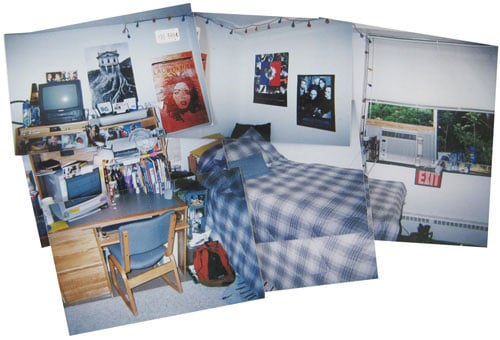
Every college dorm room begins with the same dramatic ingredients: one bed, one desk, one chair, suspicious overhead lighting, and a room so small it makes a shoebox look like an open-concept loft. Then someone like John walks in, drops two duffel bags on the floor, stares at the cinderblock walls, and decides, “Yes, this can be a home.” That is where dorm design gets interesting.
John’s college dorm design style was not about luxury. There were no marble counters, designer sofas, or dramatic staircase moments. The most dramatic staircase was the climb to the top bunk after midnight snacks. But his room had something many polished interiors miss: personality, problem-solving, and a strong refusal to let beige walls win.
Looking back at John’s dorm room style gives us a surprisingly useful design lesson. Great dorm decor is not simply about making a room look cute for move-in photos. It is about building a small-space system that supports sleep, study, snacks, laundry, friendship, and the occasional panic-search for a missing charger five minutes before class. In other words, a dorm room has to work harder than a group project member the night before the deadline.
What Made John’s Dorm Design Style Memorable?
John’s style could best be described as practical casual with a tiny hint of “I found this on sale and made it look intentional.” He did not chase a perfect showroom look. Instead, he created a dorm room that felt collected, flexible, and lived-in without turning into a storage unit with a pillow.
The foundation of his design was simple: everything needed a job. His storage ottoman was not just seating; it hid extra bedding. His rolling cart was not just decoration; it held snacks, notebooks, a water bottle, and the mysterious cables every college student owns but cannot identify. His desk lamp handled late-night study sessions, but it also softened the room when the overhead light felt like an interrogation scene.
That balance between function and warmth is what made John’s college dorm design style age well. The room looked personal, but it still worked. It was not a museum of hobbies. It was not a laundry avalanche. It was a compact little headquarters for college life.
The Small-Space Strategy Behind the Style
Vertical Storage Was the Secret Weapon
John quickly learned that the floor was precious real estate. In a college dorm, the floor is not just the floor; it is the walking path, laundry zone, workout area, guest seating, and emergency pizza box landing strip. So he designed upward.
He used over-the-door organizers, stackable bins, hanging closet shelves, and wall-safe hooks where allowed. The idea was not to cram every inch with stuff. It was to move lightweight, frequently used items into easy reach while keeping bulky things out of the way. Shoes went low. Jackets went vertical. Desk supplies lived in containers instead of roaming free like tiny academic wildlife.
This vertical approach gave the room more breathing room. Even when the room was full, it did not feel swallowed by clutter. That is one of the smartest dorm room design ideas for any student: before buying more furniture, use the height you already have.
Under-Bed Storage Did the Heavy Lifting
John’s bed was more than a place to sleep. It was basically a storage facility with a mattress on top. Under-bed bins held off-season clothes, spare towels, and backup supplies. This kept bulky items hidden, which helped the visible parts of the room feel calmer.
The trick was using containers that were easy to slide out. A bin that requires wrestling, sweating, and three emotional support texts is not a storage solution; it is furniture with attitude. John kept the items he rarely needed farther back and placed everyday items closer to the front.
That simple system made the room easier to maintain. The best dorm organization ideas are not the fanciest ones. They are the ones a tired student will actually use on a Tuesday night.
John’s Color Palette: Calm, Not Boring
Many dorm rooms become chaotic because every item arrives from a different universe: neon laundry basket, gray comforter, red storage bin, blue rug, six posters, and a blanket that looks like it lost a fight with a rainbow. John avoided that trap by choosing a simple color palette.
His main colors were navy, warm gray, white, and a few natural wood tones. The result felt calm but not cold. He added personality through smaller accents: a framed print, a patterned pillow, a team pennant, and a small rug that made the tile floor less tragic.
A cohesive color palette is one of the easiest ways to make a small dorm room feel bigger and more intentional. It does not mean everything has to match perfectly. In fact, perfect matching can make a dorm feel like a catalog page. John’s room worked because the colors repeated gently across the bedding, desk area, and storage pieces.
The Bed Became the Visual Anchor
In a dorm room, the bed is usually the largest object, which means it automatically becomes the main design feature. John treated it that way. Instead of leaving it as a sad rectangle of sheets, he layered the bed with a comforter, two pillows, a backrest pillow, and a throw blanket.
This was not just about aesthetics. A layered bed turned the room into a flexible living space. During the day, the bed worked like a sofa. Friends could sit there, John could read there, and the room instantly felt more relaxed. At night, it still functioned as a real bed, assuming he remembered to remove the laptop first.
The key was restraint. Too many pillows in a dorm can become a nightly relocation project. John used enough layers to create comfort, but not so many that bedtime required project management software.
Lighting Changed Everything
If there is one villain in the college dorm design story, it is the overhead light. Harsh ceiling lighting can make even a tidy room feel cold and institutional. John solved this with layered lighting.
He used a desk lamp for focused work, a small bedside lamp for reading, and soft decorative lighting where his housing rules allowed it. The room instantly felt warmer. More importantly, lighting helped define zones. The desk became the study zone. The bed became the unwind zone. The little corner near the cart became the snack-and-conversation zone, which is a very real zone in college design.
Good dorm lighting does not have to be complicated. A warm bulb, a compact lamp, and careful placement can make a small room feel more comfortable. The goal is to avoid relying on one bright ceiling light for every activity, because studying, relaxing, and eating noodles from a mug should not all have the same lighting mood.
The Desk Was Designed for Focus
John’s desk had a simple rule: if it did not help him study, charge something, or remember something important, it did not belong there. That rule saved him from the classic dorm desk disaster, where textbooks, cups, receipts, headphones, and old granola bar wrappers form a tiny civilization.
He kept a lamp, laptop stand, pen cup, notebook tray, and a small calendar. Above the desk, he used a corkboard for reminders, photos, and one inspirational quote that was probably more optimistic than his midterm schedule. The board gave the desk personality without burying the work surface.
This study-friendly setup is a major part of John’s college dorm design style. He understood that a dorm room is not just a bedroom. It is also an office, lounge, dining nook, and sometimes a quiet retreat from campus noise. A clear desk made the room feel more capable.
Personal Decor Made the Room Feel Like John
John did not cover every wall. He chose a few pieces that actually meant something: photos with friends, a print from his favorite movie, a small flag, and a postcard from home. The room felt personal because the decor had a story, not because every inch shouted for attention.
This is where many dorm rooms go wrong. Students often bring too many decorative items because they are trying to create instant personality. But personality does not come from quantity. It comes from selection. A few meaningful pieces can do more than twenty random posters fighting for wall space.
John’s best move was leaving some blank space. In a small room, blank space is not wasted. It gives the eye somewhere to rest. It also makes the chosen decor stand out more. The result was a room that felt expressive but not overwhelming.
Smart Dorm Storage Ideas John Got Right
The Rolling Cart
The rolling cart was the MVP of John’s room. It worked as a nightstand, snack station, school supply hub, and occasional coffee corner. Because it had wheels, he could move it around depending on the day. That flexibility is exactly what small dorm rooms need.
The Storage Ottoman
A storage ottoman gave John extra seating without wasting space. Inside, he stored blankets and items he did not need every day. Outside, it looked neat and made the room feel more like a tiny lounge.
Matching Hangers
This sounds small, but matching hangers made John’s closet look instantly cleaner. Dorm closets are often exposed or only partly hidden, so visual order matters. Matching hangers turned random clothing chaos into something that looked almost mature. Almost.
Clear Bins and Labels
John used clear bins for supplies so he could find things quickly. Labels helped even more. The goal was not to become a professional organizer. The goal was to stop buying tape, batteries, and phone chargers he already owned but could not find.
What John Would Change Today
Looking back, John would probably simplify even more. Like many college students, he brought a few items that sounded useful during shopping but became decorative guilt by October. Extra dishes? Too many. Big bulky chair? Nice idea, terrible footprint. Duplicate school supplies? Somehow everywhere and nowhere.
If he redesigned the room today, he would start with measurements, check housing rules earlier, and coordinate more with his roommate. That last part matters. A dorm room is shared territory, and two design styles can collide quickly. One person wants cozy minimalism; the other brings a neon sign, three gaming posters, and a beanbag chair large enough to have its own zip code.
John’s best advice would be to move in with less, then add what the room actually needs. Dorm life reveals your habits quickly. You may discover that you need more laundry storage, better lighting, or a stronger desk setup. You may also discover that the decorative ladder you bought has no purpose except judging you from the corner.
Dorm Design Rules John Learned the Practical Way
A stylish dorm room still has to follow campus rules. John learned to avoid open flames, prohibited appliances, unsafe cords, and wall-damaging decor. That meant no candles, no random extension cord jungle, no drilling, and no heavy furniture that would make move-out feel like a punishment.
Instead, he used safer, dorm-friendly alternatives: flameless candles where allowed, plug-in lamps that followed housing guidelines, removable hooks approved by the residence hall, and lightweight furniture that could be moved without recruiting the entire floor.
This is an important part of modern college dorm room decor. A good design is not just attractive. It is safe, removable, roommate-friendly, and realistic for a temporary space. Dorm rooms are borrowed rooms. The best style leaves personality behind in photos, not damage charges on a student account.
How to Recreate John’s College Dorm Design Style
To recreate John’s look, start with a simple base. Choose bedding in one main color, then add two supporting colors through pillows, storage, and small decor. Keep the floor open by using under-bed bins, closet organizers, and a rolling cart. Add a rug if the room allows it, because cold tile floors have never inspired anyone to become their best self.
Next, create zones. Use the desk only for work and essentials. Make the bed comfortable enough for lounging. Give snacks and small supplies their own storage area. Keep laundry contained. This sounds basic, but basic is powerful in a small room.
Finally, personalize with intention. Choose photos, prints, or objects that tell your story. A dorm room should not look like every trend at once. It should look like you, edited slightly so your roommate can still open the door.
Why John’s Dorm Style Still Works
John’s dorm design style still works because it respected the reality of student life. It did not pretend a dorm was a luxury apartment. It embraced the small size, the limited rules, the shared space, and the need for flexibility. The result was a room that felt warm, organized, and honest.
That is the real lesson. Dorm design is not about perfection. It is about making a temporary space support a major life transition. A well-designed dorm room can help a student sleep better, study more comfortably, host friends more easily, and feel less homesick on weirdly quiet Sunday nights.
Extra Experiences: What John’s Dorm Room Taught About Living Small
The longer John lived in his dorm, the more he realized that design was not a one-day move-in project. It was an ongoing experiment. The room that looked perfect on the first weekend did not automatically work by midterms. Books multiplied. Laundry gained confidence. Snacks disappeared, then reappeared as crumbs in places science cannot explain.
One of John’s biggest experiences was learning that convenience beats beauty when the two are forced to fight. At first, he arranged his desk supplies in a way that looked great. Pens in a cup, notebooks stacked by color, sticky notes placed just so. Within two weeks, the system failed because the items he used most were not the easiest to reach. So he changed it. The most-used notebook moved to the front. Chargers stayed plugged into one safe charging area. The calendar became more visible. Suddenly, the desk worked better, and because it worked better, it stayed cleaner.
He also learned that comfort matters more than students expect. A dorm room is where you recover after long classes, awkward introductions, hard exams, and cafeteria meals that raise philosophical questions. John’s soft blanket, small rug, and warm lighting were not just decorative extras. They made the room feel emotionally softer. After a stressful day, that mattered.
Another lesson came from hosting friends. John’s room was not large, but it became a comfortable hangout because people knew where to sit and where to put things. The storage ottoman became a seat. The bed worked as a sofa. The rolling cart held snacks. Nothing fancy, but it felt welcoming. Good design often looks effortless because the planning is invisible.
John also discovered the value of editing. Each month, he removed items he was not using. Old papers went out. Duplicate supplies were consolidated. Clothes he never wore went home during break. This habit kept the room from shrinking emotionally. Clutter has a way of making a small room feel even smaller, while editing gives the space back to you.
Perhaps the most memorable experience was how the room changed with John. At the beginning of the year, it looked like a careful attempt to be prepared. By spring, it looked more confident. The photos had grown. The desk setup had improved. The storage system made sense. The room had become a record of the year: late nights, new friends, difficult classes, small victories, and a lot of coffee.
That is why looking back at John’s college dorm design style feels meaningful. It was not only about bedding, bins, and wall decor. It was about learning how to live independently in a small space. It was about turning limits into choices. It was about discovering that home is not always large, permanent, or perfectly styled. Sometimes home is a twin XL bed, a lamp, a rolling cart, and the first place where you learn how to build a life that feels like your own.
Conclusion
A look back at John’s college dorm design style shows that the best dorm rooms are not the most expensive or the most trend-heavy. They are the rooms that understand real student life. John’s space worked because it was organized, personal, flexible, and comfortable without becoming crowded. He used smart storage, layered lighting, practical furniture, and meaningful decor to turn a plain dorm room into a small but memorable home.
For students designing their own dorms, the takeaway is simple: measure first, pack lightly, check the rules, use vertical space, soften the lighting, and choose decor that actually means something. A dorm room may be temporary, but the experience of making it yours can last long after the posters come down.
Note: John is used as a composite storytelling example to explore realistic college dorm design choices, small-space strategies, and student living experiences.












