Note: This article is written for web publishing in standard American English and is based on synthesized real-world closet organization, garment care, and hanger design information.
Why Arch Shaped Clothes Hangers Are Having a Closet Moment
At first glance, a clothes hanger seems like the least dramatic object in the home. It does not beep, blend smoothies, or claim to “transform your lifestyle” in twelve seconds. Yet the humble hanger has one powerful job: keeping your clothes looking good when you are not wearing them. That is where arch shaped clothes hangers enter the chat.
Arch shaped clothes hangers are designed with a smooth, curved shoulder line instead of a sharp, flat, or angular frame. The arch follows the natural slope of a garment’s shoulders, helping shirts, blouses, dresses, jackets, and lightweight coats hang more naturally. In plain English, they help your clothes avoid those weird shoulder bumps that make a nice sweater look like it has been training for a superhero role.
These hangers are especially popular in modern closets because they combine form and function. They look clean, feel intentional, and work well with today’s most common organizing goals: saving space, protecting clothes, reducing clutter, and making the closet look less like a laundry avalanche. Whether made from velvet-coated plastic, smooth wood, metal, acrylic, or a hybrid material, the best arched hangers support garments without stretching, slipping, or crowding.
What Are Arch Shaped Clothes Hangers?
An arch shaped clothes hanger is a hanger with a curved top structure that mimics the rounded contour of human shoulders. Instead of forcing garments onto a rigid straight line, the hanger supports the fabric along a gentler slope. This shape can be subtle, like a slightly rounded velvet hanger, or more pronounced, like a wooden suit hanger with broad, curved shoulders.
The term “arch shaped” may also describe decorative hangers with a rounded frame, no-trace hangers with smooth curved ends, or specialty hangers designed to prevent shoulder marks. In many online stores, you may see similar products called curved hangers, rounded shoulder hangers, no bump hangers, no trace clothes hangers, or ergonomic clothes hangers.
Common Materials Used in Arch Shaped Hangers
The material matters almost as much as the shape. A beautiful arch is nice, but if the hanger bends under a winter coat, it has officially failed the assignment.
Velvet arch shaped hangers are slim, non-slip, and great for maximizing closet space. Their soft flocked surface helps keep silky blouses, wide-neck tops, and lightweight dresses from sliding onto the closet floor like they are making a dramatic escape.
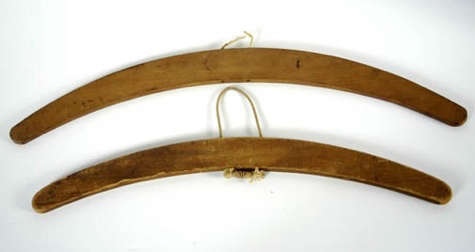
Wooden arch shaped hangers are sturdier and more structured. They are excellent for jackets, blazers, coats, button-down shirts, and garments that need shoulder support. Wood hangers usually take up more space, but they provide a polished, boutique-style look.
Plastic arch shaped hangers are lightweight, budget-friendly, and widely available. Higher-quality plastic hangers can work well for everyday shirts and casual pieces, but thin or flimsy versions may warp or leave marks over time.
Metal or acrylic curved hangers are usually chosen for style and durability. Metal can be strong and sleek, while acrylic gives closets a clean, modern look. However, smooth surfaces may need notches or grips to keep slippery garments in place.
Benefits of Arch Shaped Clothes Hangers
1. They Help Prevent Shoulder Bumps
One of the biggest reasons people switch to arch shaped clothes hangers is to avoid shoulder bumps. Standard wire hangers and thin plastic hangers can press into fabric at sharp points. Over time, especially with knits, sweaters, and soft tops, those pressure points can create awkward peaks at the shoulders.
Curved hangers distribute weight more evenly across the garment. This makes them useful for T-shirts, cardigans, blouses, lightweight sweaters, and dresses. For heavier knits, folding is still often the safer choice, but an arched hanger can reduce the risk of distortion when hanging is necessary.
2. They Protect the Shape of Clothing
A good hanger should support a garment the way a good chair supports your back: quietly, consistently, and without making things worse. Arch shaped hangers help preserve the natural drape of clothing. Shirts hang straighter, jackets keep their shoulder structure, and dresses remain easier to grab without needing emergency steaming.
This is especially helpful for clothes made from delicate or slippery fabrics such as satin, rayon, silk blends, chiffon, and lightweight polyester. When paired with a non-slip surface or shoulder notches, arched hangers can keep these pieces securely in place.
3. They Make Closets Look More Organized
Uniform hangers are one of the fastest ways to make a closet look intentional. Even if your closet contains gym clothes, office shirts, formalwear, and that one “maybe someday” outfit, matching arch shaped hangers create visual consistency. The closet instantly feels calmer, cleaner, and more expensive than it probably was.
This is why professional organizers often recommend replacing mismatched hangers with a consistent set. The effect is simple but powerful: same shape, same height, same spacing, less visual chaos.
4. They Can Save Space
Many velvet arch shaped clothes hangers are designed with a slim profile. Compared with bulky plastic or thick wooden hangers, slim arched hangers can help fit more garments on a closet rod without crushing everything together. That does not mean your closet magically doubles in sizesadly, hangers are not real estate developersbut it can make a noticeable difference.
For small closets, dorm rooms, apartments, shared wardrobes, and seasonal storage, slim arch shaped hangers are a practical choice. They work best when paired with a decluttering system, grouped clothing categories, and smart use of vertical space.
How to Choose the Best Arch Shaped Clothes Hangers
Match the Hanger to the Garment
The best hanger depends on what you are hanging. Lightweight tops do not need the same support as a wool coat. A silk blouse needs grip. A blazer needs shape. A pair of pants may need a bar, clips, or a separate trouser hanger.
For blouses, dresses, and thin shirts, choose slim velvet arch shaped hangers with notches. For suits, jackets, and coats, choose wide wooden curved hangers. For T-shirts and casual tops, plastic or velvet arched hangers usually work well. For pants, look for hangers with a flocked bar, clips, or open-ended design.
Consider Shoulder Width
Shoulder width is important. A hanger that is too narrow can make sleeves droop and wrinkle. A hanger that is too wide can stretch the shoulder seams. Ideally, the hanger should end close to the edge of the garment’s shoulder seam without pushing beyond it.
Adult hangers often range around 16 to 18 inches wide, while petite, children’s, or specialty hangers may be smaller. If you are organizing a mixed wardrobe, it may be worth buying different sizes instead of forcing every garment onto the same hanger.
Look for Non-Slip Features
Non-slip features are especially useful for arch shaped hangers. Velvet coating, rubber grips, shoulder notches, textured bars, and curved ends can all help keep garments from sliding. This matters if you own camisoles, tank tops, wrap dresses, silky shirts, or anything with a wide neckline.
If your clothes often end up on the closet floor, your hangers are either too smooth, too narrow, or quietly plotting against you. Non-slip arch shaped hangers solve that problem with very little effort.
Check Weight Capacity
Not every arched hanger is built for heavy garments. Slim velvet hangers are excellent for space saving, but some may bend under thick coats or heavy suits. Wooden hangers generally offer better strength and support for structured clothing.
Use lightweight hangers for everyday tops and sturdy hangers for outerwear. This simple rule helps extend the life of both your clothes and your hangers.
Best Uses for Arch Shaped Clothes Hangers
For Shirts and Blouses
Arch shaped clothes hangers are excellent for button-down shirts, blouses, tunics, and lightweight tops. The smooth shoulder curve helps the garment hang naturally, while non-slip textures can prevent sliding. For office shirts, matching arched hangers also make it easier to scan your closet quickly in the morning.
For Dresses
Dresses often benefit from hanging, especially structured, formal, or wrinkle-prone styles. Arch shaped hangers with notches are useful for dresses with straps. For heavier dresses, choose a strong wooden or reinforced hanger to prevent stretching.
For Jackets and Blazers
Structured jackets and blazers need more support than thin shirts. A curved wooden hanger with wider shoulders is usually the best option. It helps preserve the shoulder line, reduce creasing, and keep the jacket looking tailored between wears.
For Sweaters
Sweaters require caution. Lightweight cardigans may do well on smooth, rounded hangers, but heavy knits are usually better folded. Hanging a heavy sweater can stretch the fabric downward. If you must hang a sweater, use a padded or broad arch shaped hanger and avoid sharp edges.
Arch Shaped Hangers vs. Standard Hangers
Standard wire hangers are thin and convenient, but they are not ideal for long-term clothing care. They can bend, rust, snag, and create shoulder marks. Cheap plastic hangers are better, but thin versions may still cause bumps or break under pressure.
Arch shaped clothes hangers are designed to be gentler. Their curved profile reduces harsh contact points, while upgraded materials provide better grip and structure. They are not always the cheapest option, but they often deliver better value because they help clothes last longer and make closets easier to use.
Think of it this way: if you spend money on clothes you like, storing them on bad hangers is like parking a nice car under a tree full of birds. Technically possible, emotionally questionable.
Closet Organization Tips Using Arch Shaped Clothes Hangers
Use One Hanger Style Per Section
You do not have to use the same hanger for every single item, but each section should look consistent. Use slim velvet arch hangers for tops, wooden curved hangers for jackets, and clip hangers for skirts or pants. This keeps the closet functional without looking mismatched.
Group Clothes by Category
Arrange clothing by type: shirts together, dresses together, jackets together, pants together. Within each category, sort by color or frequency of use. This makes the closet easier to navigate and helps you notice what you actually wear.
Try the Reverse Hanger Method
The reverse hanger method is a simple decluttering trick. Turn all your hangers backward at the start of a season. After wearing an item, return it with the hanger facing forward. After a few months, you can clearly see what has not been worn. It is honest, visual, and slightly ruthlessin the best way.
Do Not Overcrowd the Closet Rod
Even the best arch shaped clothes hangers cannot protect garments if everything is jammed together like commuters on a Monday morning train. Leave enough space for clothes to breathe. If garments are crushed, they wrinkle faster and become harder to find.
Care and Maintenance Tips
Arch shaped hangers do not require complicated maintenance, but a little care helps them last. Dust wooden and acrylic hangers regularly. Keep velvet hangers dry because moisture can affect the flocked surface. Avoid overloading slim hangers with heavy coats. If a hanger bends, cracks, snags fabric, or loses its grip, replace it.
Also, check metal hooks occasionally. A rough hook can scratch closet rods or snag nearby fabric. Smooth rotation is helpful, especially in tight closets where hangers are moved often.
Buying Guide: What to Look For Before You Purchase
Before buying arch shaped clothes hangers, consider your wardrobe, closet size, and budget. For a small closet with many lightweight items, slim velvet arched hangers may be the best choice. For a professional wardrobe with blazers and coats, invest in curved wooden hangers. For a children’s closet, choose smaller hangers that match garment size.
Look for durable construction, smooth edges, a strong hook, and a shape that supports your most common garments. If buying online, read product details carefully. Terms like “no trace,” “non-slip,” “wide shoulder,” “space saving,” and “heavy duty” can be helpful, but the actual dimensions and materials matter more than marketing sparkle.
Personal Experience: Living With Arch Shaped Clothes Hangers
After switching from random hangers to arch shaped clothes hangers, the first thing you notice is not the clothing protection. It is the visual calm. A closet with matching curved hangers suddenly looks like it belongs to a person who has a morning routine, a skincare shelf, and possibly a label maker. Even if none of those things are true, the closet gives a strong performance.
The biggest practical improvement is how shirts and blouses sit on the hanger. With cheap wire hangers, soft tops often develop little peaks at the shoulders. Those peaks are tiny, but they are surprisingly annoying when you are trying to look polished. Curved hangers reduce that problem because the fabric rests along a smoother line. For lightweight cardigans, the difference is especially noticeable.
Velvet arch shaped hangers are excellent for slippery garments. Satin camisoles, wrap dresses, and wide-neck tops stay in place instead of sliding off one side. The downside is that velvet hangers are not always quick for removing clothes. Fabric can cling slightly, which is useful for storage but mildly inconvenient when you are rushing. Still, that grip is usually worth it.
Wooden arch shaped hangers feel more luxurious and are better for structured pieces. A blazer on a proper curved wooden hanger simply looks better. The shoulder keeps its shape, the front hangs evenly, and the garment does not collapse into itself. The trade-off is space. Wooden hangers are thicker, so they are not ideal if your closet rod is already crowded.
One helpful strategy is mixing materials by category. Use slim velvet arched hangers for shirts and dresses, wooden curved hangers for jackets and coats, and specialty hangers for pants or skirts. This gives the closet a consistent look while still matching each hanger to the garment’s needs.
Another lesson: do not buy too many hangers before testing them. A hanger may look perfect online but feel wrong in your closet. The hook may be too short, the shoulder may be too wide, or the velvet may shed slightly. Buying one small set first can save money and frustration.
Arch shaped hangers also make decluttering easier because they create a clear limit. When every hanger is full, it becomes obvious that the closet has reached capacity. Instead of buying more hangers forever, you can remove clothes that no longer fit, flatter, or serve your current life. The hanger becomes a quiet organizing tool, not just a place to park fabric.
Overall, arch shaped clothes hangers are a small upgrade with a big daily payoff. They protect clothes, improve visibility, reduce slipping, and make the closet feel more orderly. They will not do your laundry, choose your outfit, or stop you from buying another black shirt that looks suspiciously like the five you already own. But they will make your wardrobe easier to manage, and honestly, that is a pretty solid achievement for something shaped like a curved triangle.
Conclusion
Arch shaped clothes hangers are more than a stylish closet accessory. They are a practical storage solution for protecting garment shape, preventing shoulder bumps, reducing slipping, and creating a cleaner, more organized wardrobe. The best choice depends on your clothing: velvet for slim, non-slip storage; wood for structure and strength; plastic for affordability; and specialty designs for pants, skirts, or delicate items.
If your closet feels messy, crowded, or oddly stressful, upgrading your hangers is one of the simplest places to start. Choose curved hangers that match your garments, keep the style consistent, and avoid overloading the rod. Your clothes will look better, your closet will feel calmer, and your morning routine may become slightly less dramatic. No promises about finding the missing sock, though.