
If you ever feel like modern life is moving too fast, too loud, and with far too many passwords, a 90s sitcom is the perfect escape hatch. This was the era of oversized couches, unforgettable catchphrases, apartment doors that were somehow never locked, and theme songs that did not believe in subtlety. The best 90s sitcoms were funny, yes, but they were also masters of comfort. They gave viewers characters who felt familiar enough to argue with, quote, and miss long after the final episode rolled.
What makes the decade so special is variety. The 90s did not just hand us one style of comedy and call it a day. It gave us sharp observational humor, family chaos, workplace banter, romantic ensemble comedy, and coming-of-age laughs with surprising emotional weight. Some shows were sleek and neurotic, others were warm and messy, and a few were both at the same time, which is usually how the best comedy works anyway.
This list is not just about the biggest titles. It is about the 90s sitcoms that still deliver quality entertainment today because they have strong writing, memorable casts, rewatch value, and enough charm to survive changing trends. In other words, these are the shows you can put on after a long day and trust to do their job. They will make you laugh, they will remind you why network TV used to rule Thursday nights and Friday evenings, and they might also make you wonder why every sitcom apartment once looked larger than a suburban home.
Why 90s sitcoms still hold up so well
The best sitcoms from the 1990s understood a simple truth: comedy ages better when it is built on character, not gimmicks. Fashion changes. Technology becomes ancient. Hairstyles commit crimes. But a perfectly timed reaction shot, a running joke that pays off three scenes later, or a family argument that feels just a little too real can still land decades later.
That is why the decade remains such a gold mine for viewers looking for quality entertainment. Seinfeld turned tiny daily annoyances into epic comic events. Friends made young adulthood feel both glamorous and ridiculous. Frasier elevated sitcom banter into something that almost felt orchestral. The Fresh Prince of Bel-Air balanced bright comedy with episodes that could suddenly punch you in the feelings. Everybody Loves Raymond weaponized family dinner discomfort in the most entertaining possible way.
Even better, 90s sitcoms were usually designed for repeat viewing. They had episodic stories, recognizable patterns, and casts with chemistry strong enough to carry even the weirdest plot twists. That means they still work whether you watch one episode at random or sink into a weekend binge like a person heroically avoiding chores.
The best 90s sitcoms to watch for pure entertainment
1. Seinfeld
If your idea of quality entertainment is watching human beings overreact to absolutely nothing, Seinfeld remains undefeated. The genius of the show is that it took the smallest social frictions imaginable and treated them like matters of global importance. Waiting for a table, returning a jacket, double-dipping a chip, losing a car in a parking garage: somehow, every minor inconvenience became an all-out comic event.
The series works because Jerry, George, Elaine, and Kramer are not trying to be role models. They are trying to survive the daily nonsense of city life with their dignity mostly intact, and usually failing. George Costanza alone feels like a graduate-level study in comic panic. Elaine made physical comedy look cool. Kramer turned entrances into athletic achievements.
What keeps Seinfeld fresh is its structure. The show’s story lines often weave together with mathematical precision, so a joke that looks random in minute three becomes glorious chaos by minute twenty-two. It is smart without being preachy, absurd without becoming cartoonish, and endlessly quotable without feeling like it is trying too hard. That is a hard trick. The show makes it look annoyingly easy.
2. Friends
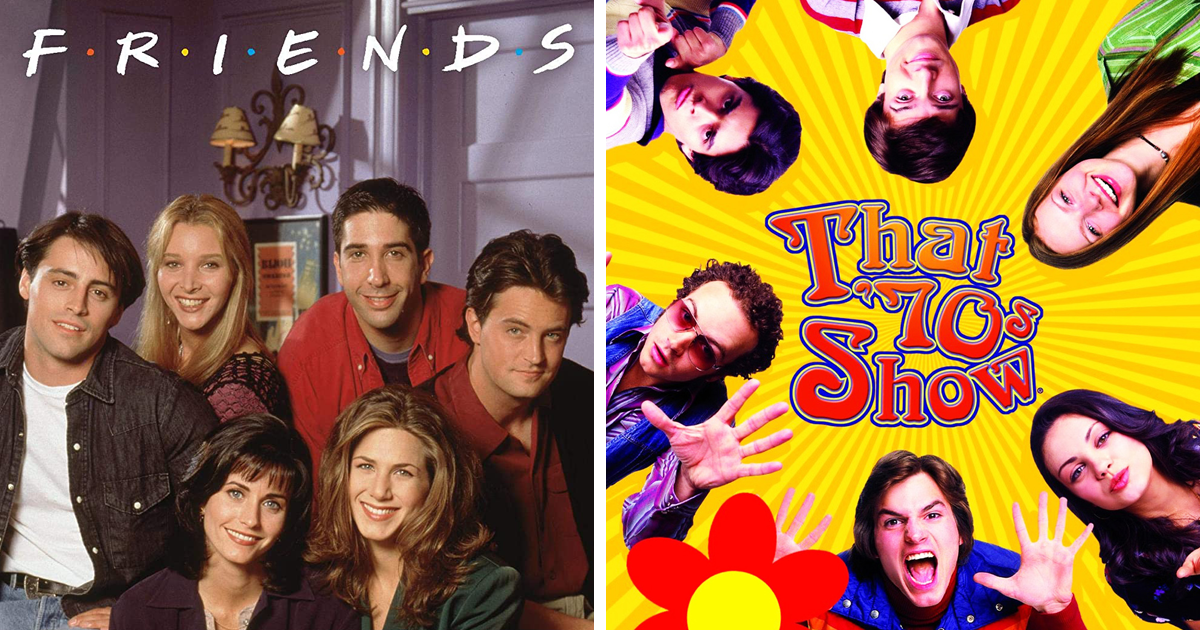
Friends is the comfort-food king of 90s sitcoms. It is warm, funny, easy to revisit, and so culturally dominant that it practically became a second language. The premise is simple: six young adults in New York figuring out love, work, identity, and rent-adjacent panic. But the magic is in the cast chemistry. The six leads do not just seem like a group of friends. They feel like a comedic machine built for timing, teasing, and emotional payoff.
The show shines in bottle episodes and ensemble chaos. Episodes like the one with the embryos or the one where no one is ready show how good the writers were at trapping characters together and letting their personalities explode. Chandler’s sarcasm, Monica’s intensity, Ross’s meltdown energy, Rachel’s growth, Joey’s lovable confidence, and Phoebe’s delightful unpredictability all lock together beautifully.
Critics sometimes debate whether Friends is the best sitcom of the decade, but there is no debate about its rewatchability. It is easy to start one episode and suddenly realize the sun has gone down, your plans are canceled, and you are somehow emotionally invested in a couch pivot again.
3. Frasier
Frasier is what happens when a sitcom decides to wear a blazer and still be hilarious. Spun off from Cheers, the series follows Dr. Frasier Crane as he returns to Seattle, hosts a radio advice show, and collides daily with his equally sharp family and friends. On paper, a show about psychiatrists, opera, and fine wine sounds like homework. In practice, it is one of the funniest farces ever made for television.
The brilliance of Frasier lies in contrast. Frasier and Niles think they are sophisticated men of impeccable taste, which is exactly why the show loves humiliating them. Their romantic disasters, social pretensions, and elaborate misunderstandings are comedy gold. Martin grounds the series with a down-to-earth energy that constantly punctures their self-importance, while Daphne and Roz add warmth, wit, and balance.
Few 90s sitcoms were as consistently elegant. The dialogue is sharp, the performances are immaculate, and the farce episodes are timed like precision instruments. If Seinfeld is the king of modern irritation, Frasier is the king of refined collapse. Watching Frasier attempt to maintain dignity while everything goes wrong is one of life’s simpler pleasures.
4. The Fresh Prince of Bel-Air
Some sitcoms make you laugh. The Fresh Prince of Bel-Air makes you laugh, dance a little, and then unexpectedly sit with your feelings. That balance is why it remains one of the most beloved comedies of the decade. The setup is perfect: street-smart West Philadelphia teen Will moves in with his wealthy relatives in Bel-Air, and culture clash does the rest.
Will Smith’s charisma powers the whole series, but the supporting cast is just as important. James Avery gave Uncle Phil authority and heart. Alfonso Ribeiro’s Carlton was far more than a joke machine. Hilary, Ashley, Geoffrey, and Aunt Viv each contributed their own comic energy to the house. The result is a family sitcom that never feels bland.
What sets the show apart is range. Yes, it gives you iconic comedy, dance moves, and sharp one-liners. But it also delivers some genuinely emotional episodes about fathers, race, class, and identity. That blend of humor and heart makes it one of the most rewarding rewatches on this list. It is entertaining in the broadest sense of the word.
5. Everybody Loves Raymond
If you have ever had an awkward family dinner where one relative says too much, another says too little, and everyone leaves slightly annoyed, congratulations: you already understand Everybody Loves Raymond. The show takes the everyday tension of married life and extended family closeness and turns it into comedy with almost painful accuracy.
Ray Romano’s low-key style works perfectly because the real fireworks come from the ensemble around him. Patricia Heaton gives Debra the exhausted intelligence the show needs. Doris Roberts and Peter Boyle are spectacular as Ray’s impossible-but-hilarious parents. Brad Garrett’s Robert turns insecurity into a full comic event every time he walks into a room.
The series is less flashy than some other 90s classics, but that is part of its appeal. It never feels desperate to impress you. It just quietly delivers one painfully relatable scenario after another until you are laughing because the writing is strong and because, deep down, you know somebody in your life is exactly like Frank Barone and that fact is both funny and concerning.
6. Living Single
Living Single deserves far more credit whenever people talk about great 90s sitcoms. Set around a Brooklyn brownstone and centered on a group of smart, ambitious friends, the show has sparkling chemistry, sharp writing, and a confidence that still feels modern. Khadijah, Synclaire, Max, Régine, Kyle, and Overton form one of the most entertaining ensembles of the decade.
The series stands out because it combines wit with personality. Khadijah’s grounded intelligence, Max’s fierce confidence, Synclaire’s sweetness, Régine’s fabulous self-regard, Kyle’s polished sarcasm, and Overton’s lovable goofiness create the kind of group dynamic that sitcoms dream about. Nobody feels interchangeable. Every character brings a distinct comic flavor.
It is also a show with genuine cultural importance. It proved how strong the friends-hanging-out format could be when anchored by a great cast and a clear point of view. More importantly, it remains funny on its own terms. The jokes are quick, the relationships are believable, and the atmosphere is so appealing that you want to move into that brownstone immediately, even if the rent in your imagination is still terrifying.
7. Home Improvement
Home Improvement is one of the purest examples of 90s mainstream sitcom success. Tim Allen’s Tim Taylor is a suburban dad, husband, and host of a home-improvement show within the show, which means every episode is basically a carefully engineered collision between ego, tools, and bad judgment. Naturally, this is excellent television.
The humor is broad, but the show works because it understands family rhythms. Tim is ridiculous without being cruel. Jill is patient without becoming invisible. The kids are not just props for punch lines. And Wilson, with his famously half-hidden face, gives the series a layer of gentle wisdom that makes the chaos feel oddly thoughtful.
This is the sitcom you watch when you want something easy, familiar, and cheerfully loud. It represents a particular 90s family-TV formula at its strongest: big premise, likable cast, reliable jokes, and just enough heart to make the whole thing feel lived in.
8. The Nanny
The Nanny knew exactly what it was doing and never pretended otherwise. Fran Fine arrives with a killer wardrobe, a distinctive voice, perfect comic timing, and enough presence to turn every room into her stage. The setup is classic sitcom material: a street-smart Queens woman becomes nanny to the children of a wealthy widower. But the execution is what makes it sing.
Fran Drescher is the obvious engine of the show, yet the series also benefits from strong supporting characters and a confident tone. It embraces glamour, romance, one-liners, and visual comedy without losing control of the story. The class contrast between Fran and Maxwell gives the show its shape, but it is the running tension, comic misunderstandings, and sheer performance energy that make it bingeable.
Many sitcoms from the era feel trapped in their time. The Nanny turns its time-capsule quality into part of the fun. The fashion, the attitude, the pace, and the comic confidence are all very 90s, and that is exactly why it remains so entertaining.
9. Family Matters
Family Matters started as a family-centered sitcom about the Winslows and eventually became a pop-culture monument thanks to Steve Urkel. Somehow, the show managed to be sincere, silly, heartfelt, and gloriously strange, sometimes all in the same episode.
The reason it lasts is not just Urkel’s catchphrases or physical comedy, though both definitely helped. It is the warmth of the family at the center. The Winslows feel like a real TV family with routines, frustrations, affection, and enough patience to survive a neighbor who could probably dismantle a kitchen appliance by sneezing at it.
This is one of the essential 90s comfort sitcoms because it understood that family comedy works best when the affection is genuine. Even at its most cartoonish, the show is anchored by togetherness. And sometimes that is exactly what quality entertainment needs.
10. Boy Meets World
Not every 90s sitcom was built around adults fumbling through apartments or marriages. Boy Meets World carved out its place by letting viewers grow up alongside Cory Matthews and his circle. It mixed school, family, friendship, romance, and life lessons with enough humor to keep the whole thing lively.
What makes the show memorable is how naturally it evolves. Early episodes feel breezy and youthful, but the series becomes deeper as the characters age. Cory, Topanga, Shawn, Eric, and Mr. Feeny create a world that feels inviting and emotionally grounded. The comedy is broad when it wants to be, especially with Eric, but the emotional beats land because the relationships matter.
For viewers who want a sitcom with warmth, nostalgia, and a little growing-pains wisdom, Boy Meets World is a fantastic choice. It reminds you that quality entertainment does not always have to be the sharpest or loudest thing in the room. Sometimes it just needs heart.
What separates the great 90s sitcoms from the merely nostalgic ones
Nostalgia can get a show through one episode. It cannot carry six seasons of rewatching. The sitcoms that remain genuinely enjoyable have three things in common. First, they have character engines that keep producing comedy. Second, they know their rhythm. Third, they are comfortable in their own identity. Frasier never tries to be Friends. Living Single never tries to be Home Improvement. Seinfeld never suddenly pretends to be sentimental just to look respectable.
That confidence matters. It is why these shows still feel alive instead of embalmed in 90s nostalgia. They were not chasing trends. They were defining lanes. And once a sitcom finds its lane and fills it with great performers, viewers will keep coming back long after the original network promos have vanished into the television void.
Personal viewing experiences that make 90s sitcoms even better
Part of the joy of watching the best 90s sitcoms is that the experience around them becomes part of the entertainment. These are not just shows people remember. They are shows people remember with something. With a couch that had seen better days. With siblings arguing over the remote. With a bowl of cereal that somehow became dinner. With commercials that felt endless unless your favorite show was on, in which case they lasted roughly twelve years.
That is a huge reason these sitcoms still hit so well. Watching them again does not just revive the jokes. It revives the feeling of how television fit into daily life before everything became fragmented into infinite scrolling choices. Back then, sitcoms were appointment viewing. You planned around them. You quoted them at school the next day. You learned the theme song whether you wanted to or not, because by week three your brain had simply accepted its fate.
Take Friends, for example. For a lot of viewers, it was the ultimate hangout show. You watched it with friends, then compared yourselves to the characters, and somehow every group had at least one self-appointed Chandler and one person deeply committed to being the “normal one,” which is usually a sign they were not the normal one. The experience of watching the show became social. It was not just about what happened on screen. It was about sharing reactions, repeating jokes, and acting like a couch in a coffeehouse was a realistic adult life plan.
Seinfeld created a different kind of experience. It changed how people talked about everyday annoyance. After enough episodes, a minor inconvenience stopped being a minor inconvenience and became a full comedy premise. Suddenly people were narrating real life like it was a sitcom. Waiting in line was no longer boring. It was material. That is the sign of a show that has truly burrowed into popular culture.
Then there are family-viewing experiences. Home Improvement, Family Matters, and Everybody Loves Raymond are especially good at this because they work across age groups. Adults catch the marriage jokes, kids laugh at the physical comedy, and everyone recognizes at least one family dynamic from real life. These are the kinds of sitcoms that turn a normal evening into a small ritual. The opening credits start, people drift into the room, someone comments on the episode before it even begins, and for half an hour the house settles into a familiar rhythm.
Even now, rewatches can create that same comfort. A random weeknight feels less chaotic with Frasier running in the background. A bad day softens a little with The Fresh Prince of Bel-Air. A lazy Sunday improves when Boy Meets World reminds you that growing up is weird for everyone, not just you. These experiences matter because entertainment is never only about craft. It is also about how a show makes you feel in your own space, on your own couch, at your own moment in life.
That is why the best 90s sitcoms are more than old comedies. They are emotional time machines with punch lines. They remind viewers of shared laughter, familiar routines, and an era when half-hour shows somehow managed to feel both bigger and simpler at the same time. And honestly, in a world full of algorithmic recommendations and content overload, that kind of reliable comfort feels downright luxurious.
Final thoughts
The best 90s sitcoms for some quality entertainment are the ones that still feel good the minute you press play. They are funny without begging for attention, familiar without feeling stale, and comforting without becoming bland. Whether you want the neurotic brilliance of Seinfeld, the warm chemistry of Friends, the polished wit of Frasier, the heart of The Fresh Prince of Bel-Air, or the lived-in chaos of Everybody Loves Raymond, the decade offers a sitcom mood for practically every kind of viewer.
The best part is that there is no wrong starting point. Pick the show that matches your energy. Need elegance and farce? Go with Frasier. Need friendship and comfort? Friends. Need family warmth and a little absurdity? Family Matters or Home Improvement. Need sharper edge and perfect construction? Seinfeld. Whatever you choose, the 90s are ready to entertain you like they never left.














