
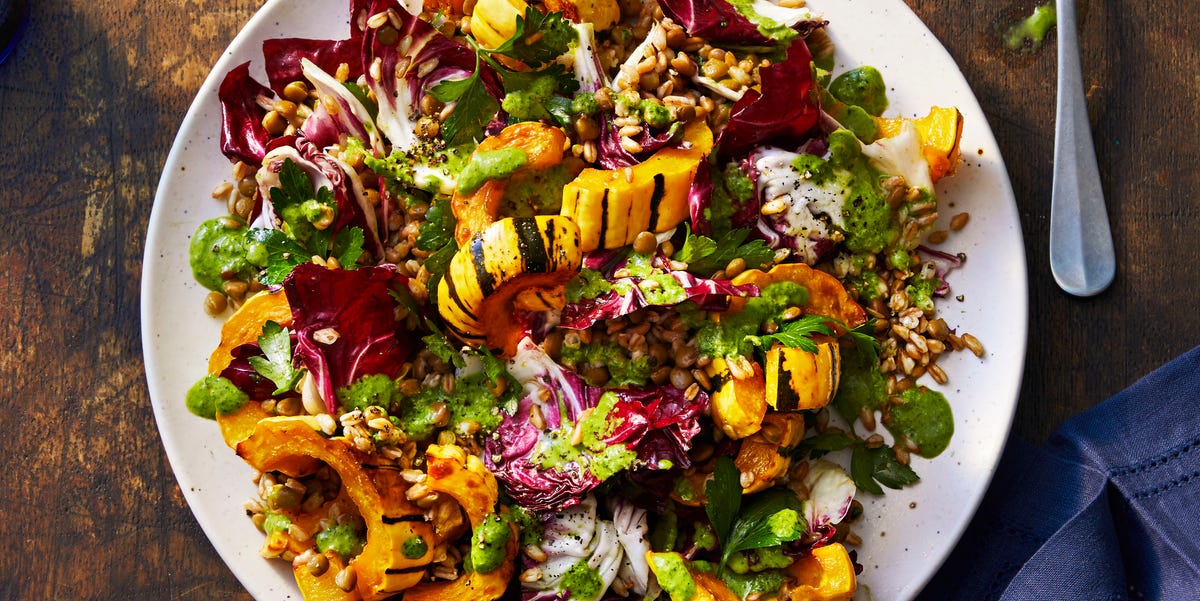
Some salads whisper politely from the side of the plate. This roasted delicata squash and farro salad walks in wearing a cable-knit sweater, carrying a maple-Dijon vinaigrette, and asking where the good serving bowl is. It is hearty without being heavy, colorful without requiring a culinary arts degree, and cozy enough to make you forget that “salad” once meant three sad lettuce leaves and a tomato wedge.
The magic comes from balance. Delicata squash roasts into sweet, golden crescents with caramelized edges and tender edible skin. Farro brings a nutty chew that makes the salad feel like a meal instead of a decorative side quest. Peppery greens, crisp apples, toasted nuts, herbs, and a tangy dressing pull everything together. The result is a fall salad recipe that works for weeknight dinners, Thanksgiving tables, meal prep lunches, and those moments when you want to eat something wholesome but still want it to taste like you have excellent life choices.
Why This Roasted Delicata Squash and Farro Salad Works
A great grain salad needs three things: texture, contrast, and a dressing that does more than wave from across the room. This recipe delivers all three. The roasted delicata squash is soft and sweet, the farro is chewy and earthy, the apple adds crunch, the greens bring freshness, and the nuts give every bite a little toasted drama. The maple-Dijon vinaigrette ties it together with sweetness, acidity, mustardy sharpness, and just enough garlic to keep things interesting.
Delicata squash is especially useful because it does not need peeling. Its thin skin softens in the oven, which saves prep time and adds a pretty striped edge to each slice. That means you get the look of a restaurant salad with the effort level of “I found my sharp knife and turned on the oven.” Farro is equally dependable. Cook it like pasta in salted water, drain it well, and it stays pleasantly chewy instead of turning into grainy wallpaper paste.
Recipe Overview
- Prep time: 20 minutes
- Cook time: 30 minutes
- Total time: About 50 minutes
- Servings: 4 main-dish servings or 6 side-dish servings
- Best for: Fall dinners, holiday sides, meal prep, vegetarian lunches, potlucks
Ingredients
For the Salad
- 2 medium delicata squash, scrubbed, halved lengthwise, seeded, and sliced into 1/2-inch crescents
- 1 cup uncooked pearled or semi-pearled farro
- 2 tablespoons olive oil, divided
- 1 teaspoon kosher salt, divided, plus more to taste
- 1/2 teaspoon freshly ground black pepper
- 1/2 teaspoon smoked paprika or ground cumin, optional
- 4 cups baby arugula, baby kale, or chopped lacinato kale
- 1 crisp apple, thinly sliced or diced
- 1/2 cup toasted pecans, walnuts, almonds, or pistachios
- 1/3 cup dried cranberries, chopped dates, or pomegranate arils
- 1/3 cup crumbled feta, goat cheese, or shaved Parmesan, optional
- 1/4 cup chopped fresh parsley
- 2 tablespoons chopped fresh mint, basil, or dill
For the Maple-Dijon Vinaigrette
- 1/4 cup extra-virgin olive oil
- 2 tablespoons apple cider vinegar
- 1 tablespoon fresh lemon juice
- 1 tablespoon maple syrup
- 2 teaspoons Dijon mustard
- 1 small shallot, finely minced
- 1 small garlic clove, grated or minced
- 1/2 teaspoon kosher salt
- 1/4 teaspoon freshly ground black pepper
How To Make Roasted Delicata Squash and Farro Salad
Step 1: Roast the Delicata Squash
Preheat the oven to 425°F. Line a large rimmed baking sheet with parchment paper. Scrub the delicata squash well because the skin stays on. Cut each squash in half lengthwise, scoop out the seeds, and slice the halves into 1/2-inch crescents.
Toss the squash with 1 tablespoon olive oil, 1/2 teaspoon kosher salt, black pepper, and smoked paprika or cumin if using. Spread the slices in a single layer with space between them. Crowding the pan is how squash starts steaming instead of roasting, and steamed squash is basically roasted squash that gave up.
Roast for 22 to 28 minutes, flipping halfway through, until the squash is tender and caramelized at the edges. The skin should be soft enough to eat, and the flesh should look golden and slightly blistered.
Step 2: Cook the Farro
While the squash roasts, bring a medium pot of salted water to a boil. Add the farro and cook according to package directions, usually 18 to 30 minutes depending on whether it is pearled or semi-pearled. Start tasting around the 18-minute mark. You want it tender but still chewy, like a grain with self-respect.
Drain the farro well. For the best texture, spread it on a plate or baking sheet for a few minutes so the steam can escape. This small step keeps the grains fluffy and prevents a watery salad. If you want extra flavor, cook the farro in vegetable broth or add a bay leaf to the boiling water.
Step 3: Make the Maple-Dijon Dressing
In a jar or small bowl, combine olive oil, apple cider vinegar, lemon juice, maple syrup, Dijon mustard, shallot, garlic, salt, and pepper. Shake or whisk until emulsified. Taste and adjust. If it feels too sharp, add a tiny splash of maple syrup. If it tastes flat, add another squeeze of lemon or pinch of salt.
Step 4: Assemble the Salad
In a large bowl, combine the cooked farro with half the dressing while the farro is still slightly warm. This helps the grains absorb flavor instead of simply wearing dressing on the outside like a raincoat.
Add the roasted delicata squash, greens, apple, toasted nuts, dried cranberries or pomegranate, cheese if using, parsley, and mint. Drizzle with more dressing and toss gently. Be kind to the squash; it is tender and has been through a hot oven. Taste once more and adjust with salt, pepper, or lemon juice.
Best Tips for Perfect Roasted Delicata Squash
Do Not Peel It
The best part of delicata squash is that the skin is edible. Once roasted, it becomes tender and adds color, texture, and a slightly nutty flavor. Just scrub the squash well before slicing.
Slice Evenly
Aim for 1/2-inch crescents. Thin slices may burn before the centers soften, while thick slices can take too long and miss those caramelized edges. Even pieces cook evenly, which is the kind of kitchen math everyone can appreciate.
Use a Hot Oven
A 425°F oven encourages browning. Roasting at a lower temperature can work, but a hotter oven gives you the sweet, concentrated flavor that makes delicata squash so good in salads.
Give the Squash Space
Use two pans if needed. If the slices overlap, they steam. If they have room, they roast. This is also good life advice for squash and possibly humans.
How To Cook Farro for Salad
Farro comes in several forms, and the cooking time depends on how much of the bran has been removed. Pearled farro cooks fastest, semi-pearled takes a little longer, and whole farro takes the longest. For this roasted delicata squash and farro salad recipe, pearled or semi-pearled farro is the easiest choice because it cooks relatively quickly and still has a satisfying chew.
The most reliable method is the pasta method: boil farro in plenty of salted water until tender, then drain. This gives you control over texture because you can taste as it cooks. For extra flavor, toast the dry farro in a little olive oil for two or three minutes before boiling, or cook it in broth instead of water.
Flavor Variations
Make It Vegan
Skip the cheese or use a dairy-free feta-style crumble. The salad is already full of flavor from the roasted squash, herbs, maple-Dijon dressing, nuts, and fruit.
Add Protein
For a heartier main dish, add roasted chickpeas, white beans, grilled chicken, baked tofu, salmon, or turkey. The farro and squash provide a strong base, so the salad can handle extra protein without getting crowded.
Change the Greens
Arugula gives peppery brightness. Baby kale adds structure and works well for make-ahead meals. Chopped lacinato kale is excellent if massaged with a spoonful of dressing before assembling. Spinach works too, but it wilts faster.
Try a Different Dressing
Maple-Dijon is the classic choice here, but balsamic vinaigrette, lemon-tahini dressing, orange-miso dressing, or pomegranate molasses vinaigrette all pair beautifully with roasted squash and nutty farro.
What To Serve With Roasted Delicata Squash and Farro Salad
This salad can stand alone as a vegetarian main dish, but it also plays nicely with others. Serve it beside roast chicken, turkey, pork tenderloin, salmon, lentil soup, mushroom toast, or a simple frittata. For holiday meals, it brings freshness to a table full of rich dishes. For weeknights, it turns leftovers into lunch that does not feel like punishment.
It is also a strong potluck choice because it can be served warm, room temperature, or chilled. Unlike delicate lettuce salads that collapse if you look at them too sternly, farro salads hold up well. Just keep a little dressing aside and refresh the salad before serving.
Make-Ahead and Storage Tips
This roasted delicata squash and farro salad is meal-prep friendly. Cook the farro up to three days ahead and store it in an airtight container in the refrigerator. Roast the squash a day ahead if needed, though it tastes best when freshly roasted. The dressing can be made up to five days ahead and kept in a jar in the fridge.
If preparing the whole salad in advance, choose sturdy greens like kale and keep delicate toppings separate. Apples can brown, so toss them with lemon juice before adding. Nuts stay crunchier when sprinkled on right before serving. Leftovers keep for about three days, though the greens will soften over time. The flavor, however, often gets deeper after a night in the fridge.
Common Mistakes To Avoid
Overcooking the Farro
Mushy farro makes the salad heavy. Taste early and often. Drain when it is tender but chewy.
Underseasoning the Grain
Farro needs salt. Cook it in salted water and dress it while warm so it absorbs flavor.
Adding Hot Squash Directly to Tender Greens
Let the squash cool slightly before tossing with arugula or spinach. Warm is lovely. Blazing hot is a leafy tragedy.
Skipping Acid
Roasted squash and farro are both earthy and sweet. Lemon juice and vinegar keep the salad bright, balanced, and lively.
Why This Salad Is Great for Fall and Winter
Delicata squash shines in cooler months, when markets fill with winter squash and everyone starts pretending they own more sweaters than they actually do. Its sweet flavor fits naturally with apples, cranberries, maple syrup, toasted nuts, and hearty grains. Farro makes the salad substantial enough for cold-weather eating while still keeping it fresh.
This is the kind of recipe that bridges the gap between comfort food and clean eating. It has vegetables, whole grains, greens, fruit, herbs, and healthy fats, but it does not taste like a lecture. It tastes like autumn got organized and learned how to roast properly.
Kitchen Experience Notes: What Makes This Recipe Feel Special
The first thing people usually notice about roasted delicata squash and farro salad is how pretty it looks. The squash slices curl into golden half-moons with striped edges, the greens add a deep green background, and the cranberries or pomegranate seeds bring little ruby pops of color. It is the rare salad that looks fancy before you have done anything complicated. That matters when you are putting food on a holiday table or trying to convince your family that “grain salad” is not a suspicious phrase.
In a real kitchen, this recipe is forgiving. If the farro finishes before the squash, it can sit. If the squash comes out first, it can cool. If you forgot the goat cheese, the salad still works. If the apple is not perfect, dice it small and let the dressing do its job. The only real non-negotiables are roasting the squash until it browns and seasoning the farro enough. Those two steps create the backbone of the dish.
Another useful experience is learning how much dressing the salad wants. Warm farro drinks dressing quickly, so start with half, toss, and wait a minute. Then add more only if needed. This keeps the salad glossy and flavorful instead of oily. The greens should look lightly coated, not like they survived a vinaigrette flood. A good grain salad has movement and texture; it should never slump sadly in the bowl.
The toppings are where personality comes in. Pecans make the salad taste classic and cozy. Pistachios make it feel a little more restaurant-style. Walnuts add pleasant bitterness. Pomegranate seeds are bright and festive, while dried cranberries are sweeter and easier to find. Feta makes the salad saltier and sharper; goat cheese makes it creamier; Parmesan makes it savory and grown-up. There is no wrong answer, only different routes to the same happy forkful.
For meal prep, the best approach is to store the components separately. Keep the farro, squash, dressing, greens, and crunchy toppings in different containers, then assemble portions as needed. This prevents soggy greens and keeps the nuts crisp. If packing lunch, layer farro on the bottom, squash next, apples and dried fruit after that, then greens on top. Add nuts and dressing right before eating. Your lunch container will look suspiciously competent.
For entertaining, serve the salad on a wide platter instead of a deep bowl. Spread the dressed farro and greens first, then arrange the roasted delicata squash on top so the golden crescents stay visible. Finish with nuts, herbs, cheese, and fruit. It takes thirty extra seconds and makes the dish look like it came from a cafe where the chairs do not match but the olive oil is excellent.
The best part is that this roasted delicata squash and farro salad satisfies different appetites at the same table. It is hearty enough for people who claim salad is “not food,” fresh enough for people who want something lighter, and flexible enough for vegetarians, holiday guests, and weekday meal-preppers. It is practical, pretty, and deeply flavorful. In other words, it is exactly what fall cooking should be: low drama, high reward, and just fancy enough to make you feel like you have your life together.
Conclusion
The best roasted delicata squash and farro salad is not just a side dish; it is a full seasonal mood. With sweet caramelized squash, chewy farro, crisp apples, greens, toasted nuts, herbs, and a tangy maple-Dijon dressing, it offers the perfect mix of cozy and fresh. It is easy enough for a weeknight, attractive enough for a holiday spread, and sturdy enough for make-ahead lunches.
Once you learn the basic formula, you can change it endlessly. Swap the greens, change the nuts, add beans or chicken, use pomegranate instead of cranberries, or turn the dressing toward balsamic, citrus, or tahini. The heart of the recipe stays the same: roast the squash well, cook the farro properly, season boldly, and let every ingredient bring something useful to the bowl. That is how you make a roasted delicata squash and farro salad that people actually remember.














