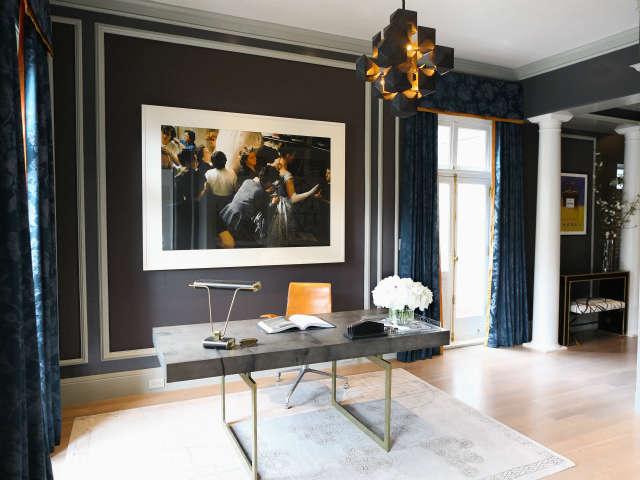
Note: This article is an independent editorial overview based on publicly available information about Catherine Kwong Design and related interior design coverage.
Catherine Kwong Design is the kind of studio that makes “quiet luxury” feel less like a social media trend and more like a deeply considered way of living. Based in San Francisco, the boutique interior design firm is known for modern luxury homes that balance architectural discipline, tactile warmth, custom detailing, vintage character, and just enough edge to keep a room from behaving too politely.
At the center of the studio is Catherine Kwong, a designer whose career connects East Coast training, New York polish, Bay Area ease, and a serious respect for craft. Her work often appears calm at first glance, but look closer and the rooms begin to wink: a sculptural chair, a mohair texture, a dramatic slab of stone, a vintage piece with a little attitude, or a piece of art that politely refuses to blend into the wallpaper.
For homeowners searching for refined interiors that do not feel cold, Catherine Kwong Design offers a useful case study. The firm’s projects show that a luxury home does not need to shout. Sometimes it only needs perfect proportions, honest materials, strong architecture, and a chair that looks like it has better weekend plans than you do.
Who Is Catherine Kwong?
Catherine Kwong is an American interior designer and the founder of Catherine Kwong Design, a San Francisco-based studio established in 2011. Before launching her own firm, Kwong built her design foundation in New York, working on luxury interiors at Studio Sofield and flagship retail environments for Ralph Lauren. She also worked alongside Paul Vincent Wiseman, another major name in refined residential design.
That background matters. Studio Sofield is associated with strong architectural thinking, Ralph Lauren with lifestyle storytelling, and Wiseman with highly cultivated residential interiors. Kwong’s own work seems to absorb all three lessons without becoming a copy of any of them. Her rooms are architectural but not rigid, polished but not precious, layered but not cluttered.
Kwong holds degrees from Brown University and Parsons School of Design. Her academic and professional path helps explain why her interiors often feel intelligent without feeling over-explained. They are not rooms that scream, “Behold, my concept board!” They simply work.
The Design Philosophy: Modernist, Romantic, and Slightly Mischievous
Catherine Kwong has often been described as “a modernist with romantic tendencies,” which may be one of the most accurate summaries of her style. The modernist side appears in clean lines, architectural clarity, strong circulation, and respect for proportion. The romantic side arrives through soft textiles, artful silhouettes, collectible objects, vintage furniture, natural materials, and emotional warmth.
The studio’s favorite interiors are elegant “with a bit of an edge.” That phrase is important because it separates the work from safer, showroom-perfect luxury. A Catherine Kwong Design space may include contemporary lines, but it usually avoids feeling sterile. It may include fine art, but it does not feel like a gallery where everyone must whisper. It may include expensive materials, but the mood is more “come in and live beautifully” than “please hover three inches above the sofa.”
Architecture Comes First
One reason Catherine Kwong Design projects feel grounded is that the studio appears to start with the architecture rather than treating interiors as decoration applied at the end. In ground-up homes and major renovations, the interior design responds to structure, site, light, circulation, and scale. That approach is especially visible in the firm’s California and Hawaii projects, where the landscape often becomes part of the room.
This architecture-first philosophy helps explain why the studio’s work rarely feels random. Furniture, stone, lighting, textiles, and art are not scattered like stylish confetti. They are chosen to support the home’s larger rhythm. In other words, the sofa is not just a sofa. It is part of a conversation with the ceiling height, the window line, the fireplace, the view, and possibly your dog, who will choose the best seat anyway.
Signature Elements of Catherine Kwong Design
While each project is tailored to its client and setting, several design themes appear again and again in Catherine Kwong Design interiors.
1. Modern Architecture With Warm Materials
Kwong’s interiors often work within modern architecture, but she softens clean lines with materials such as linen, mohair, leather, wood, plaster, stone, ceramic, and textured rugs. This is a crucial lesson for anyone designing a contemporary home: minimalism without texture can feel like a waiting room for very attractive robots. Texture gives modern spaces humanity.
2. Vintage Pieces Mixed With Contemporary Art
A Catherine Kwong room frequently benefits from contrast. Vintage furniture can add soul, while contemporary art brings energy and freshness. Together, they prevent a home from looking as if every item arrived on the same delivery truck. The best interiors feel collected over time, even when a designer has carefully orchestrated every inch behind the scenes.
3. Custom Detailing
The studio is known for custom detailing, and this is where luxury becomes more than a price tag. Custom millwork, tailored furniture, thoughtful window treatments, architectural finishes, and carefully selected hardware all help a room feel specific. In high-end interiors, the magic often lives in the details no one notices immediately but everyone feels.
4. Restraint Instead of Over-Furnishing
Many Catherine Kwong Design projects show the power of restraint. The rooms are not empty, but they are edited. In Hawaii homes especially, the studio often allows the landscape to remain the star. This is wise. When the view includes ocean, sky, volcanic rock, or lush greenery, the interior does not need to compete like a contestant on a design reality show.
5. Elegance With an Edge
The “edge” may come from a sculptural chair, a bold artwork, an unexpected pattern, a darker metal finish, or a vintage piece with personality. It is rarely loud, but it adds tension. That tension is what keeps an elegant room from becoming boring. Think of it as the design equivalent of wearing a perfect black dress with shoes that have a secret agenda.
Notable Projects and What They Reveal
Catherine Kwong Design has been featured in major design publications for projects across San Francisco, California, and Hawaii. These homes reveal how the studio adapts its approach to different settings while maintaining a consistent design language.
Pacific Heights: A Serene San Francisco Family Home
One widely covered San Francisco project involved a Pacific Heights residence with sweeping views of the bay. The home needed to feel modern, open, and calm without turning into a glassy museum. Catherine Kwong Design layered materials such as linen, mohair, leather, wood, marble, and lacquered millwork to create warmth within a clean architectural shell.
The lesson here is simple but powerful: modern homes need softness. Without it, even the most beautiful architecture can feel like it is judging your socks. By mixing sleek surfaces with tactile materials, the studio helped the home support both entertaining and family life.
Kauai: A Jewel-Box Hawaiian Retreat
In a Kauai retreat designed with Zak Architecture, Catherine Kwong Design created interiors that respected the island setting without relying on tropical clichés. The home used pale woods, neutral tones, durable kitchen materials, and open circulation. Rather than filling every corner, Kwong allowed air, light, and landscape to do much of the heavy lifting.
This project is a strong example of place-sensitive design. The interior does not announce “vacation home” with seashells, palm prints, and decorative pineapples doing jazz hands. Instead, it feels serene, durable, and deeply connected to its architecture.
Hale Mau’u: Indoor-Outdoor Luxury on Hawaii’s Big Island
Another major Hawaiian project, Hale Mau’u, brought together Walker Warner Architects and Catherine Kwong Design. The home responds to ocean and mountain views, natural ventilation, volcanic landscape, and indoor-outdoor living. Kwong’s interiors use restrained modernism, textiles, organic materials, and artful focal points to create a luxurious home that feels respectful of its environment.
The most successful resort-style homes do not simply import luxury into a beautiful place. They listen to the place first. Hale Mau’u shows how interiors can support landscape, climate, privacy, and cultural sensitivity without losing sophistication.
The Sea Ranch: Preservation With Personality
Catherine Kwong’s own family home at The Sea Ranch offers another side of her design thinking. The house, originally built in 1972 by architect John Haag, reflects the coastal community’s famous respect for nature, modesty, and architectural restraint. Kwong’s updates preserved the home’s integrity while refreshing the kitchen, bathrooms, millwork, and surfaces.
This project matters because it shows that great design is not always about dramatic transformation. Sometimes the smartest move is knowing when not to overdo it. In a world addicted to before-and-after reveals, restraint can feel almost radical. No sledgehammer montage required.
A San Francisco Home With History
In a San Francisco residence once connected to the city’s layered past, Catherine Kwong Design helped balance traditional architecture with contemporary living. The result showed how historic homes can be updated without erasing their memory. This is one of the studio’s strengths: contrast without conflict.
Old homes do not need to become museums, and modern additions do not need to act like rebellious teenagers. When handled carefully, past and present can sit at the same table and behave beautifully.
Why Catherine Kwong Design Appeals to Luxury Homeowners
Luxury homeowners often want more than beautiful furniture. They want a home that reflects their life, supports their routines, welcomes guests, honors the architecture, and still feels personal after the photoshoot ends. Catherine Kwong Design speaks to that desire by combining polish with livability.
The firm’s projects are not built around disposable trends. Instead, they lean into timeless materials, architectural logic, art, craft, and atmosphere. That does not mean the rooms are plain. It means their impact comes from proportion, detail, and mood rather than gimmicks.
For clients in California and Hawaii, this approach makes particular sense. These regions reward interiors that understand light, indoor-outdoor movement, natural materials, casual elegance, and landscape. A stiff room can feel especially silly when the Pacific Ocean is outside doing all the drama for free.
How to Bring Catherine Kwong-Inspired Style Into Your Own Home
You do not need a cliffside retreat, a Pacific Heights townhouse, or a custom bronze range hood to learn from Catherine Kwong Design. The principles behind the work can guide any thoughtful interior project.
Start With the Bones of the Room
Before buying furniture, study the architecture. Where does the light enter? What view matters most? Is the room asking for symmetry, looseness, drama, or calm? Good design begins by listening to the space. Bad design begins with panic-ordering six accent chairs at midnight. We have all been there emotionally.
Use Texture to Add Warmth
If your room feels flat, add tactile contrast. Pair smooth stone with wool, linen with leather, plaster with wood, or ceramic with metal. Texture makes neutral rooms interesting and helps modern interiors feel inviting.
Mix Old and New
A contemporary room becomes richer when it includes something with history. Try a vintage side table, antique mirror, sculptural lamp, or collected artwork. The goal is not to make the room look old; it is to make it feel layered.
Edit Ruthlessly
Restraint is not emptiness. It is confidence. Leave breathing room around important pieces. Give art enough space to matter. Let a view remain visible. Not every corner needs a basket, stool, plant, candle, tray, book stack, and emotionally supportive ceramic mushroom.
Choose One Unexpected Moment
Elegant rooms need a spark. Add one piece that breaks the predictable pattern: a bold artwork, sculptural chair, unusual pendant, dramatic stone, or offbeat vintage find. The edge should feel intentional, not like a raccoon decorated during a power outage.
Experience: What a Catherine Kwong Design-Inspired Home Feels Like
Living with a Catherine Kwong Design-inspired approach is less about copying a look and more about changing how a home feels from morning to night. Imagine walking into a living room where the first impression is calm. The sofa is low and generous, the rug has texture underfoot, the coffee table is sculptural but not fussy, and the art has enough presence to make the wall feel awake. Nothing screams for attention, yet every object seems to have earned its place.
In the morning, the room works quietly. Natural light lands on wood grain, stone, and fabric instead of bouncing off overly shiny surfaces. The kitchen feels durable enough for real breakfast, not just a bowl of decorative lemons auditioning for a lifestyle magazine. Cabinetry is simple, hardware is precise, and a single special material gives the space character. You can make coffee without feeling like you have disturbed the exhibit.
By afternoon, the value of restraint becomes obvious. Circulation matters. Chairs are placed for conversation, not just photography. A hallway does not feel like wasted space because the home has been planned around movement. If there is a view, the interior steps aside and lets it breathe. If there is no grand view, the room creates its own atmosphere through texture, art, and proportion.
In the evening, the romantic side appears. Soft textiles matter more. Lighting becomes warmer. A vintage table or unusual chair starts to feel like a character in the room. The home does not become flashy; it becomes deeper. That is the beauty of this design language. It is not trying to impress guests with obvious luxury. It is trying to make daily life feel more graceful.
For homeowners, the most useful experience-related lesson is patience. A layered interior cannot be rushed into existence with one shopping cart. It needs editing, contrast, and the courage to leave some spaces unresolved until the right piece appears. That may be a custom cabinet, a vintage lamp, a handmade ceramic bowl, or a painting that changes the mood of the room. The process rewards observation.
A Catherine Kwong Design-inspired home also teaches that elegance should not be fragile. Beautiful rooms are better when people can actually live in them. A beach house should survive sandy feet. A family room should welcome children. A kitchen should handle cooking, conversation, and the occasional heroic spill. Real luxury is not a room that makes everyone nervous. Real luxury is a room that looks refined and still says, “Yes, sit down. You are allowed to be human here.”
Conclusion
Catherine Kwong Design stands out because it understands balance: modern and romantic, elegant and edgy, disciplined and warm, luxurious and livable. The studio’s San Francisco roots, California and Hawaii portfolio, and architecture-first approach have produced interiors that feel deeply tailored rather than trend-driven.
For anyone interested in modern luxury interior design, Catherine Kwong’s work offers a clear lesson: the best rooms do not rely on noise. They rely on proportion, restraint, craftsmanship, contrast, and emotional intelligence. A great interior can be calm without being boring, polished without being stiff, and beautiful without requiring guests to speak in gallery voices.
That is the lasting appeal of Catherine Kwong Design. It creates homes with atmosphere, confidence, and soul. And if a room can be elegant, comfortable, and just a little bit mischievous, why settle for anything less?