A plain table lamp is useful. A Christmas lamp filled with shimmering ornaments, dressed in vintage postcards, or transformed into a tiny snow-covered villagedid you actually make that?” That is the cheerful idea behind the Christmas Lamp Design Challenge: take an ordinary light source and turn it into a festive focal point without sacrificing function, proportion, or electrical safety.
The concept is inspired by a real holiday design contest organized by Hometalk and Lamps Plus in 2013. Participating creators received a fillable clear-glass table lamp and were challenged to decorate it for Christmas. The resulting projects included glittered ornaments, paper bunting, vintage holiday postcards, metallic pinecones, and miniature winter scenes. In other words, it was part lighting exercise, part craft project, and part friendly competition to see who could make a lamp wear Christmas better than most people wear an ugly sweater. >
What Is the Christmas Lamp Design Challenge?
The Christmas Lamp Design Challenge is a creative decorating project centered on transforming a lamp into a seasonal design. The lamp may be completely redesigned, temporarily decorated, or simply styled with removable Christmas elements.
The most successful entries combine four qualities:
- A recognizable holiday theme
- A visually balanced lamp base and shade
- Safe, practical illumination
- Decorations that can be removed or reused
A fillable glass lamp is ideal because the transparent base becomes a display container. However, the challenge also works with thrift-store lamps, wooden bases, ceramic lamps, lantern-style fixtures, or an existing bedside lamp that could use a festive personality upgrade.
The Original Creative Brief
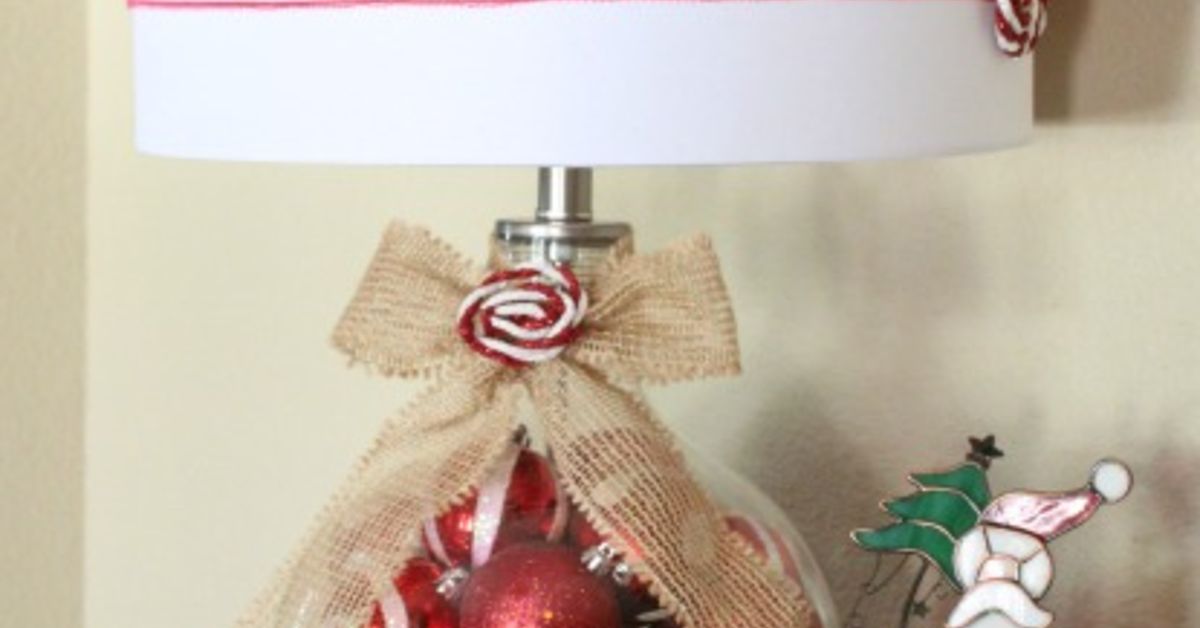
In the original contest, participants worked with the same clear-glass lamp but interpreted the holiday theme differently. One creator filled the base with glittered glass ornaments and added a snowflake banner to the shade. Another used family-owned vintage Christmas postcards, gold trim, and glittered pinecones. A third created a miniature winter-wonderland scene inside the lamp. These examples demonstrated an important design principle: limitations often encourage originality rather than suppress it. n>
Start With a Strong Christmas Lamp Theme
Before opening the glitter containera decision that may affect your carpet until Easterchoose one clear design direction. A lamp overloaded with unrelated decorations can look less like a thoughtful holiday project and more like Santa’s craft drawer exploded.
Traditional Christmas
Use red, forest green, gold, tartan ribbon, faux evergreen sprigs, pinecones, berries, and small ornaments. Warm-white illumination complements this palette and creates the cozy glow associated with classic Christmas interiors.
Winter Wonderland
Build the design around white, silver, pale blue, translucent glass, artificial snow, snowflakes, and miniature trees. A clear lamp base can become a snow globe without the water, the leaking, or the tiny plastic snowman quietly floating upside down.
Vintage Christmas
Try reproductions of antique postcards, faded red ribbon, brass details, old-fashioned bells, mercury-glass ornaments, and handmade paper decorations. Jewel tones such as burgundy, emerald, and gold can create a rich Victorian-inspired appearance. Historic-style Christmas decorating often relies on elaborate ornaments, handmade elements, greenery, ribbon, and warm light. andy Cane and Gingerbread
Combine red-and-white stripes, peppermint shapes, gumdrop colors, tiny gingerbread figures, and soft pink accents. This playful theme works especially well in kitchens, children’s rooms, party spaces, and homes where subtlety has politely been asked to take December off.
Natural Woodland
Use pinecones, dried orange slices, cinnamon sticks, twigs, wooden stars, kraft paper, burlap, and faux moss. This theme pairs beautifully with warm white LEDs and a neutral linen shade.
Design the Lamp as One Complete Composition
A decorated lamp has three visible zones: the base, the shade, and the space immediately around it. Treating these zones as one composition prevents the top and bottom from looking like they attended different holiday parties.
Decorating the Lamp Base
For a fillable lamp, begin with larger objects and add smaller items around them. Suitable fillers include lightweight shatter-resistant ornaments, pinecones, ribbons, wood beads, faux snowballs, bells, bottlebrush trees, paper stars, and battery-free decorative objects.
Avoid packing the base too tightly. Transparent areas create visual breathing room and allow the viewer to recognize individual details. Repeating two or three colors usually looks more intentional than using every ornament left at the bottom of the storage bin.
If the lamp is not fillable, attach removable decorations around the base using ribbon, reusable ties, or temporary adhesive suitable for the lamp’s finish. Never block ventilation openings or interfere with the cord, switch, socket, or structural stability.
Decorating the Lampshade
The shade controls both the appearance and distribution of light. Its shape, opacity, and material affect how much illumination escapes through the sides and how much is directed upward or downward. Opaque shades produce more focused, atmospheric lighting, while lighter or semi-opaque shades allow a softer overall glow. Proper proportion also matters; a shade that is too small makes the lamp look top-heavy in reverse, while an oversized shade can resemble a festive mushroom. e decorative options include removable ribbon bands, lightweight paper silhouettes, a fabric sleeve, a miniature banner, bows, stenciled motifs, or embellishments attached near the shade’s outer edges. DIY shade makeovers commonly use fabric, paint, thread, decoupage, foil tape, rope, and inner-shade patterns, but materials should always be compatible with the shade and kept away from heat-producing components. tyling the Area Around the Lamp
Finish the display with a small supporting vignette. A tray, several miniature trees, a stack of holiday books, a bowl of ornaments, or one strand of greenery can visually anchor the lamp. Leave enough clear surface around the fixture so it remains usable and cannot be knocked over by a sleeve, a pet, or an enthusiastic guest reaching for another cookie.
Choose the Right Light Color and Brightness
A Christmas lamp should create atmosphere without making the room resemble an airport runway. Light color is measured in kelvins. Lower color temperatures appear warmer, while higher temperatures look cooler and more blue-white.
For traditional, woodland, vintage, and gingerbread themes, a warm white bulb around 2700K to 3000K usually provides the most inviting result. Cooler illumination can work for icy winter-wonderland designs, but mixing noticeably different white tones in one small display may make the arrangement feel disconnected. Designers often recommend maintaining a consistent color temperature across nearby fixtures to create a cohesive lighting scheme. ghtness should match the lamp’s role. A decorative corner lamp can be relatively soft. A lamp used for reading needs enough usable light below the shade. A dimmable or smart LED bulb offers flexibility, allowing the same fixture to provide practical illumination early in the evening and a gentle holiday glow later.
Why LED Lighting Is the Sensible Choice
LED bulbs and decorative light strings use substantially less electricity than traditional incandescent products and generally operate at lower temperatures. The U.S. Department of Energy notes that LED holiday lights consume far less power, are more durable, and are cooler than incandescent alternatives. ENERGY STAR has reported major energy savings for qualified decorative LED strings compared with conventional incandescent lights. a table lamp, choose an LED bulb that does not exceed the fixture’s labeled maximum wattage. Confirm that any dimmable bulb is compatible with the lamp’s dimmer. A color-changing smart bulb can add variety, but restraint helps: a slow transition from warm white to red may look festive; rapid flashing may make the living room feel as though Christmas has launched an emergency broadcast.
Christmas Lamp Safety Rules That Are Not Optional
Creative freedom ends where electrical hazards begin. Decorative lamps must remain stable, ventilated, and free from flammable material near the bulb and socket.
Use Certified Electrical Products
Choose bulbs, light strings, cords, and powered decorations evaluated by a recognized testing laboratory. UL Solutions tests seasonal decorative lighting under ANSI/UL 588, a safety standard addressing risks such as electric shock and fire. Products intended only for indoor use should not be moved outdoors simply because the porch “looks dry enough.” nspect Everything Before Use
Check cords, plugs, sockets, and light strings for cracked insulation, loose connections, damaged bulbs, or exposed wires. The Consumer Product Safety Commission and National Fire Protection Association advise replacing damaged light sets and following manufacturer instructions regarding the number of strands that may be connected. eep Decorations Away From Heat
Do not allow ribbon, paper, faux greenery, fabric, or artificial snow to touch the bulb. LEDs operate cooler than incandescent bulbs, but they still produce heat. Leave open space around the socket and maintain the lamp’s original ventilation.
Do Not Overload Outlets
A lamp, several light strings, a ceramic village, and an animated reindeer should not all be squeezed into one questionable extension cord. Avoid overloaded outlets, use cords with the correct rating, and plug outdoor decorations into GFCI-protected receptacles. Use plastic clips rather than nails or staples when securing decorative light strings. urn Lights Off When Unattended
Switch off the lamp and other holiday lights before leaving home or going to bed. NFPA guidance specifically recommends turning off Christmas tree lights when no one is present, and the same cautious habit makes sense for a decorated lamp. n>
How to Run Your Own Christmas Lamp Design Challenge
This project works well for families, schools, offices, neighborhood groups, design clubs, and holiday parties. Give every participant the same type of lamp, or allow thrifted lamps within an agreed size range.
Suggested Challenge Rules
- Select one Christmas theme.
- Set a spending limit, such as $25 or $40.
- Require removable or reusable decorations.
- Prohibit modifications to electrical wiring.
- Require LED bulbs and certified electrical accessories.
- Set a two-hour or one-week completion period.
- Ask participants to present the story behind the design.
Judging Categories
- Best Overall Design: Strong balance, craftsmanship, function, and originality
- Most Creative Theme: An unexpected interpretation of Christmas
- Best Use of Recycled Materials: Smart reuse without a homemade-in-a-bad-way appearance
- Best Family Design: A project that children and adults can safely create together
- Best Nighttime Effect: The most attractive appearance when illuminated
- People’s Choice: The design everyone secretly wishes they had made
A simple scorecard can award points for creativity, color harmony, craftsmanship, safety, illumination, and storytelling. Photograph every lamp both switched off and illuminated, because some designs reveal their best details only after dark.
Budget-Friendly Christmas Lamp Ideas
The Ornament-Filled Glass Lamp
Fill a clear base with shatter-resistant ornaments in two colors. Add a narrow ribbon band around the shade and finish it with a removable bow. This design is fast, polished, and easy to disassemble after the holidays.
The Family Memory Lamp
Print miniature copies of old family Christmas photographs on lightweight paper. Mount them on a removable shade wrap or arrange rolled copies inside a transparent base with ribbon. The lamp becomes part decoration and part illuminated family archive.
The Miniature Forest Lamp
Place bottlebrush trees, lightweight wooden deer, pinecones, and artificial snow inside the base. Keep the scene simple enough to read from across the room. Three well-positioned trees usually look more convincing than fourteen trees fighting for zoning approval.
The Recycled Gift-Wrap Lamp
Use leftover ribbon, gift tags, paper stars, fabric scraps, and saved bows. Repeat one pattern or color to unify the mixed materials. This approach reduces waste and proves that “leftover” does not have to mean “random.”
The Modern Minimalist Lamp
Choose a matte white shade, a clear base filled with natural wood beads, and one oversized black, red, or forest-green bow. Minimalist Christmas decor succeeds through scale and contrast rather than large quantities of decoration.
Common Christmas Lamp Design Mistakes
The first mistake is decorating before testing the lamp. Confirm that the socket, switch, cord, bulb, and shade are working properly before attaching anything.
The second mistake is ignoring proportion. If the base is visually busy, simplify the shade. If the shade contains a large pattern, keep the base restrained. Giving every surface equal decorative intensity produces visual competition rather than harmony.
The third mistake is making the design permanent without considering January. Hot glue, strong tape, paint, and glitter can permanently damage a good lamp. Removable sleeves, ribbon, reusable ties, and fillable bases make seasonal decorating easier to reverse.
The fourth mistake is forgetting daytime appearance. A design should still look intentional when the bulb is off. Examine it in natural light, from multiple angles, and from the room’s main entrance.
Finally, do not confuse brightness with beauty. Layered lighting works because different sources perform different jobs: ambient light establishes general visibility, task light supports activities, and accent or decorative light creates focus and mood. Your Christmas lamp should contribute one controlled layer rather than trying to illuminate the entire North Pole. n>
Experience Notes From Recreating a Christmas Lamp Design Challenge
The following is a composite experience based on common project methods and documented challenge entries rather than a claim of one individual’s personal participation.
The most surprising part of recreating a Christmas lamp challenge is how quickly a “simple decorating project” becomes a genuine design exercise. At first, the plan may sound delightfully easy: place ornaments in a glass base, tie on a ribbon, switch on the bulb, and accept applause. In practice, every decision affects another decision.
The first lesson is to test the lamp before decorating it. This sounds obvious, but creative enthusiasm has a habit of running several steps ahead of common sense. Testing the switch, bulb, cord, and shade fit at the beginning prevents the unpleasant discovery that a beautifully decorated lamp has an unreliable socket.
The second lesson is that clear lamp bases reveal everything. They reveal fingerprints, dust, loose thread, price-sticker residue, and the single ornament whose unattractive metal cap was supposed to face backward. Cleaning the inside and outside of the base before filling it makes a dramatic difference. It also helps to arrange decorative pieces on a table first rather than dropping them into the lamp randomly.
A trial arrangement using red, gold, and clear ornaments may initially look too crowded. Removing about one-third of the contents often improves the design. The empty areas allow light to move through the glass and help individual decorations stand out. This is the moment when the project teaches a useful rule: adding more objects is easy, but editing is what makes the display look designed.
Decorating the shade introduces another challenge. A wide ribbon can appear elegant when laid flat on a worktable but look heavy once wrapped around the shade. A narrower band, repeated near the top and bottom, may create better proportion. Temporary attachments are valuable because they allow several versions to be tested before committing to the final composition.
The lighting test is where the project becomes exciting. Under a warm LED bulb, metallic ornaments reflect soft points of light while transparent pieces create depth. Details that seemed minor during the day suddenly become important. Glitter sparkles, paper silhouettes appear sharper, and reflective ribbon may become much brighter than expected. Photographing the lamp at night reveals glare, unevenness, and empty spots that the eye may overlook.
There is also a practical lesson about glitter: it is not a material so much as a long-term household relationship. Applying it inside a tray, sealing glittered pieces, and cleaning the workspace before assembling the lamp can prevent the entire room from developing a mysterious sparkle.
The final lesson is that storytelling matters. A technically perfect lamp may be attractive, but a design connected to family photographs, inherited postcards, handmade ornaments, or a favorite holiday tradition feels more memorable. The strongest Christmas lamp is not necessarily the most expensive or elaborate one. It is the lamp whose colors, materials, illumination, and personal details all support the same idea.
After the project is finished, removable decorations make cleanup almost painless. Ornaments return to storage, ribbons can be rolled for another year, and the lamp resumes its everyday role. That temporary transformation is part of the charm. For several weeks, an ordinary household object becomes a tiny stage for holiday creativityand then, unlike the Christmas tree, it does not leave needles in the carpet.
Final Thoughts
The Christmas Lamp Design Challenge proves that seasonal decorating does not require covering every wall, window, and available houseplant. One thoughtfully designed lamp can establish a theme, warm a dark corner, display meaningful objects, and become a holiday conversation piece.
Choose a clear concept, repeat a limited color palette, balance the shade with the base, use warm and efficient LED lighting, and keep decorations safely away from electrical and heat-producing components. Most importantly, make the design personal. Trends may supply the ribbon, ornaments, and color ideas, but the story behind the lamp is what gives it lasting value.