Black-and-white photographs have a strange superpower: they make history look farther away than it really is. A child standing on a city sidewalk in 1942, a soldier leaning against a train station wall, a couple laughing on a beach, a worker taking a lunch break outside a factorythese people lived in a world full of color. Their coats were not “gray.” Their faces were not “sepia.” The sky did not politely remove its blue just because a camera was nearby.
That is why the work of a skilled colorization artist can feel so surprising. By restoring color to vintage black-and-white photographs, the artist does more than make old images prettier. They rebuild atmosphere. They invite viewers to slow down, look closer, and remember that the past was not a dusty museum shelf. It was loud, messy, fashionable, ordinary, emotional, and, yes, sometimes wearing an aggressively orange tie.
Photo colorization is not simply clicking a magic button and letting software sprinkle rainbow dust over an archive. Good colorization combines research, restoration, artistic judgment, and a healthy respect for historical uncertainty. The best results feel natural because the artist studies fabric, skin tones, architecture, light direction, local history, period advertising, military uniforms, and even the way old film translated real colors into grayscale.
Why Vintage Photo Colorization Feels So Powerful
We often treat black-and-white photography as a visual language of distance. It signals “long ago” before our brains have even read the caption. Add believable color, however, and the emotional gap shrinks. Suddenly, a woman waiting at a bus stop in the 1930s looks less like a historical figure and more like someone you might pass outside a coffee shopminus the smartphone, iced latte, and existential scrolling.
This is the main appeal of colorized vintage photographs: they make history feel human. A restored color portrait can reveal the warmth of a wool coat, the blush in a cheek, the shine of polished shoes, or the pale blue of a painted storefront. These details do not replace the original photograph; they offer a new way to experience it.
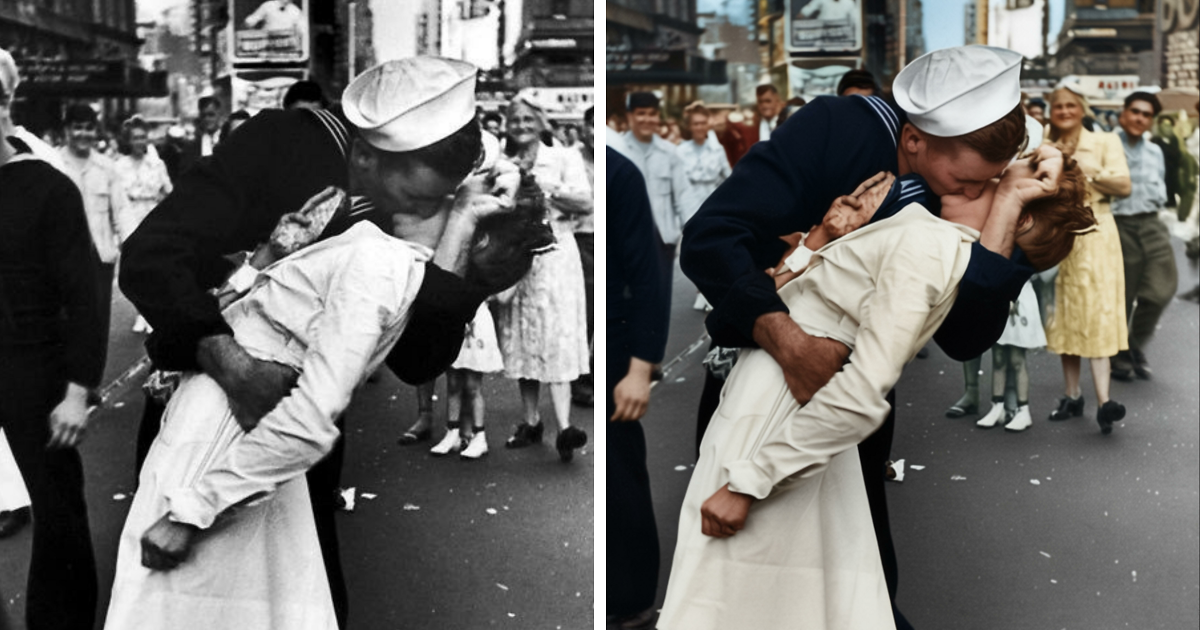
For readers browsing a 24-picture gallery, the transformation is often immediate. Before-and-after images work because they show two truths side by side. The black-and-white version preserves the documentary record. The colorized version asks, “What if you could step into this scene for a moment?” That little question is the doorway.
The Difference Between Restoration and Colorization
Photo restoration and photo colorization are closely related, but they are not identical. Restoration usually focuses on repairing damage: scratches, cracks, faded contrast, dust marks, torn corners, water stains, and missing details. Colorization adds carefully chosen colors after the image has been cleaned and balanced.
A responsible artist usually begins with restoration. If the original scan is full of dust, faded midtones, or distracting damage, color will only make those flaws more dramatic. It is like painting a house before fixing the roof. Technically possible? Sure. Wise? Not unless you enjoy indoor waterfalls.
Step 1: Cleaning the Image
The artist removes dust, scratches, and stains while preserving important texture. Skin should still look like skin, clothing should keep its weave, and old buildings should not become plastic movie sets. The goal is not to erase age completely. A vintage photograph should still feel vintage; it should simply stop looking like it lost a fight with a shoebox.
Step 2: Studying the Subject
Research is where serious colorization begins. A dress from 1915, a U.S. military uniform from the Civil War period, a 1940s storefront sign, or a farm truck from the New Deal era may have specific color clues. Artists often consult museum collections, public archives, period magazines, postcards, advertisements, surviving garments, and early color photographs for reference.
Step 3: Building Color in Layers
Professional colorization is usually done in layers. Skin, hair, eyes, lips, clothing, metal, wood, sky, grass, brick, and shadows may all receive separate treatment. This allows the artist to adjust hue, saturation, and opacity without turning the whole image into a fruit salad.
Step 4: Matching Light and Shadow
The most convincing colorized photographs respect the original lighting. Shadows should not glow like neon signs. Highlights should remain believable. If light falls from the left side of a face, the color must also respond to that light. A colorization artist is not only choosing colors; they are rebuilding how those colors behave.
What Makes a Colorized Photograph Look Real?
The secret is restraint. Beginners often use colors that are too bright, too smooth, or too modern. A 1908 street scene probably should not look like a smartphone HDR filter had a dramatic weekend. Realistic colorization usually requires slightly muted tones, subtle variation, and a willingness to let shadows stay shadowy.
Skin is especially challenging. Human skin is not one color. It includes reds, yellows, browns, blues, greens, and purples depending on blood flow, lighting, age, environment, and film response. A good artist paints skin in layers so it feels alive rather than waxy. Nobody wants Great-Grandpa to look like a department-store mannequin who knows family secrets.
Fabric is another test. Wool absorbs light differently from silk. Denim fades differently from cotton. Leather has shine, but not the same shine as polished metal. These material differences are what separate high-quality historical photo colorization from a quick automated pass.
Historical Accuracy: The Art of Educated Guessing
No colorization artist can know every original color unless reliable evidence survives. The artist may know the year, location, photographer, subject, and clothing style, but not the exact shade of a woman’s hat or a child’s toy wagon. That is why ethical colorization should be presented as an interpretation, not a replacement for the original.
This does not make colorization dishonest. Paintings, museum dioramas, historical films, and costume reconstructions all involve informed interpretation. The key is transparency. The original black-and-white photograph remains the source. The colorized version is a researched visual reconstruction designed to help viewers connect with the image in a different way.
Why Artists Choose Vintage Black-And-White Photos
Vintage photographs offer a rich playground for colorization because they contain emotional tension. Many were taken during eras when photography was technically demanding, expensive, or slower than today. People posed differently. Streets looked different. Clothing carried more formal structure. Even ordinary scenes feel cinematic because every object has historical texture.
Public archives are full of remarkable images: Civil War portraits, Farm Security Administration photographs, early 20th-century city life, immigration scenes, railroad workers, rural families, schoolchildren, factory employees, entertainers, athletes, and anonymous people who accidentally became time travelers through the camera lens.
Colorization can also draw attention to overlooked subjects. A quiet portrait of a young woman, a street vendor, or a family outside a wooden house may not have the instant drama of a famous battlefield photograph. But once color is added, viewers often notice small human details: a ribbon, a tired hand, a painted porch, a shy smile, a lunch pail, a pair of shoes that have clearly seen things.
24 Picture Ideas That Show the Magic of Photo Colorization
A strong gallery of colorized vintage photos works best when it mixes famous moments with everyday life. Here are 24 types of images that can make a restoration collection feel varied, emotional, and visually satisfying:
- A 1940s train station scene: Rich browns, brass fixtures, navy coats, and warm interior light can make the platform feel alive.
- A Civil War-era portrait: Subtle skin tones and uniform details can help viewers see the person behind the historical label.
- A street market from the early 1900s: Fruit stands, signs, aprons, and brick buildings offer wonderful color clues.
- A beach photograph from the 1930s: Sand, sky, striped swimsuits, and sunlit faces create a charming time-capsule effect.
- A farm family outside a wooden house: Earth tones, worn clothing, and natural light bring quiet dignity to the scene.
- A young factory worker during World War II: Denim, machinery, metal, and industrial lighting can create a strong visual story.
- A vintage classroom: Chalkboards, wooden desks, books, and children’s clothing make the past feel instantly relatable.
- A city street with old automobiles: Car paint, storefront awnings, pavement, and traffic signs add energy.
- A family portrait from the 1910s: Small differences in fabric and complexion help each person stand apart.
- A portrait of a musician: Brass instruments, velvet jackets, and stage lighting can make the image sing without making a sound.
- A woman reading by a window: Soft interior color can turn a quiet moment into a painting-like scene.
- A crowded ballpark: Green grass, white uniforms, and red signage can make old sports photography feel immediate.
- A rural general store: Wooden shelves, product labels, and faded paint create a nostalgic atmosphere.
- A firefighter or police officer portrait: Uniform research matters here, because accurate color builds credibility.
- A child with a pet: Gentle tones keep the image tender rather than overly polished.
- A carnival or fairground scene: Banners, rides, lights, and costumes offer controlled bursts of color.
- A wartime homecoming: Skin tones, uniforms, and station light can intensify the emotional moment.
- An old wedding photograph: White fabric is rarely pure white in real life; cream, ivory, and shadow make it believable.
- A worker on a skyscraper beam: Steel, sky, and work clothes create drama without needing exaggerated color.
- A portrait of an actress or performer: Makeup, hair, and costume details require a delicate touch.
- A neighborhood corner store: Painted signs and window displays make the setting feel lived-in.
- A group of soldiers resting: Mud, fabric, metal, and tired faces tell a stronger story than bright colors ever could.
- A family picnic: Grass, food, blankets, and summer clothing make the past feel almost reachable.
- An anonymous street portrait: Sometimes the most unforgettable image is simply a person looking into the camera as if they know we are coming.
Colorization and the Ethics of Changing Historical Images
Not everyone loves colorization, and the criticism deserves respect. Some historians and archivists worry that colorized photos can mislead viewers if they are not clearly labeled. Others argue that the black-and-white original has its own artistic and documentary value. They are right. A powerful black-and-white photograph does not need color to be meaningful.
The best approach is not to ask whether colorization should replace black-and-white photography. It should not. Instead, colorization should be treated as a companion version. The original is the record. The colorized image is an interpretive restoration that can help modern audiences engage with the record.
This distinction matters especially when working with sensitive subjects: war, poverty, disaster, forced migration, racial violence, or personal grief. Color should never be used to make suffering look decorative. A respectful artist knows when to be subtle, when to research deeply, and when to leave an image alone.
How Modern Tools Changed Photo Colorization
Today, artificial intelligence can add color to black-and-white images in seconds. That is useful, especially for rough drafts or family photos where speed matters. But AI still struggles with context. It may color a military uniform incorrectly, make old signs too modern, confuse materials, or give everyone the same suspiciously smooth complexion.
Human artists remain essential because they make judgment calls. They know when a shadow should stay cool, when a face needs warmth, when a red dress would be historically unlikely, and when the software has decided that a horse is somehow purple. Technology is a tool; the artist is the conscience, historian, painter, and quality-control department.
Why Viewers Love Before-And-After Galleries
Before-and-after photo galleries are satisfying because they let viewers witness transformation. In the black-and-white image, we search for shape, expression, and composition. In the colorized version, we notice material, weather, personality, and mood. The two versions teach us to look twice.
They also create a small emotional surprise. A young man in a century-old portrait may suddenly look fashionable. A woman in a factory may look powerful and modern. A city street may feel less like “history” and more like a place where someone just missed the bus and muttered something unprintable. Color makes the past less formal, and that is exactly why it works.
Experiences Related to Restoring Color on Vintage Black-And-White Photographs
Anyone who has tried to colorize an old photo quickly learns that the process is both relaxing and mildly dangerous to your schedule. You begin by saying, “I’ll just fix this one portrait.” Four hours later, you are researching 1920s wallpaper patterns, arguing with yourself about the exact shade of a hat, and wondering whether your ancestors would approve of your artistic choices or haunt your laptop.
The first experience many people have with photo colorization is personal. A family member finds a black-and-white portrait in a drawer, usually tucked behind documents nobody wants to organize. The photo may show grandparents as teenagers, a great-grandfather in uniform, or a wedding couple standing stiffly because old cameras were not designed for casual duck-face energy. When color is added carefully, the image can shift from “old relative” to “real person.” That moment is powerful.
Restoring color also teaches patience. You start noticing how many colors hide inside simple objects. A white shirt has blue shadows, yellow highlights, gray folds, and sometimes a little reflected color from nearby walls. A face is never just peach, brown, or beige. It changes across the forehead, cheeks, lips, ears, neck, and hands. The more you look, the more you realize that reality is wonderfully inconvenient.
Another experience is the detective work. Colorization often sends artists into archives, museum databases, vintage catalogs, old postcards, military uniform guides, and period advertisements. This research can be surprisingly fun. A tiny badge on a jacket might reveal an organization. A storefront sign might identify a city block. A vehicle model might narrow the date. A fabric pattern might suggest social class or regional fashion. The photo becomes a puzzle, and every color choice becomes a clue.
There is also an emotional responsibility. When working with personal or historical images, the artist is touching memory. Too much color can feel disrespectful. Too little can feel lifeless. The best result usually sits somewhere in the middle: clear enough to feel immediate, restrained enough to honor the original. Colorization is not about showing off every color in the digital paint box. It is about listening to the photograph and giving it only what it needs.
One of the most rewarding experiences is showing the finished version to someone connected to the image. People often notice details they had ignored for years: the pattern of a dress, the shape of a chair, the warmth of a room, the youthfulness of a parent or grandparent. Color does not change the facts of the photo, but it can change the way people emotionally enter it. That is the quiet magic of the craft.
For beginners, the best advice is simple: start small, use references, avoid cartoon-bright colors, and keep the original safe. Work on a copy, never the only scan. Build color slowly. Compare your image with real color photographs from the same era when possible. Most importantly, accept that perfect historical accuracy is not always possible. Your goal is not to invent a fake past. Your goal is to create a thoughtful, believable interpretation that encourages people to care more deeply about the original image.
Conclusion
Colorization artists restore color on vintage black-and-white photographs because the past deserves more than a single visual language. Black-and-white images remain beautiful, important, and irreplaceable. But when color is added with care, research, and humility, old photographs can feel newly alive.
A 24-picture gallery of restored vintage photos can remind viewers that history was not flat, silent, or gray. It had blue skies, red signs, brown leather shoes, green fields, warm kitchens, tired faces, bright dresses, and ordinary people living ordinary days that somehow survived long enough to meet us. That is not just digital art. That is a bridge across timewith slightly better lighting.
Note: This article is original and source-informed for web publication. Pair any 24-picture gallery with properly licensed, credited, public-domain, or permission-cleared images before publishing.