
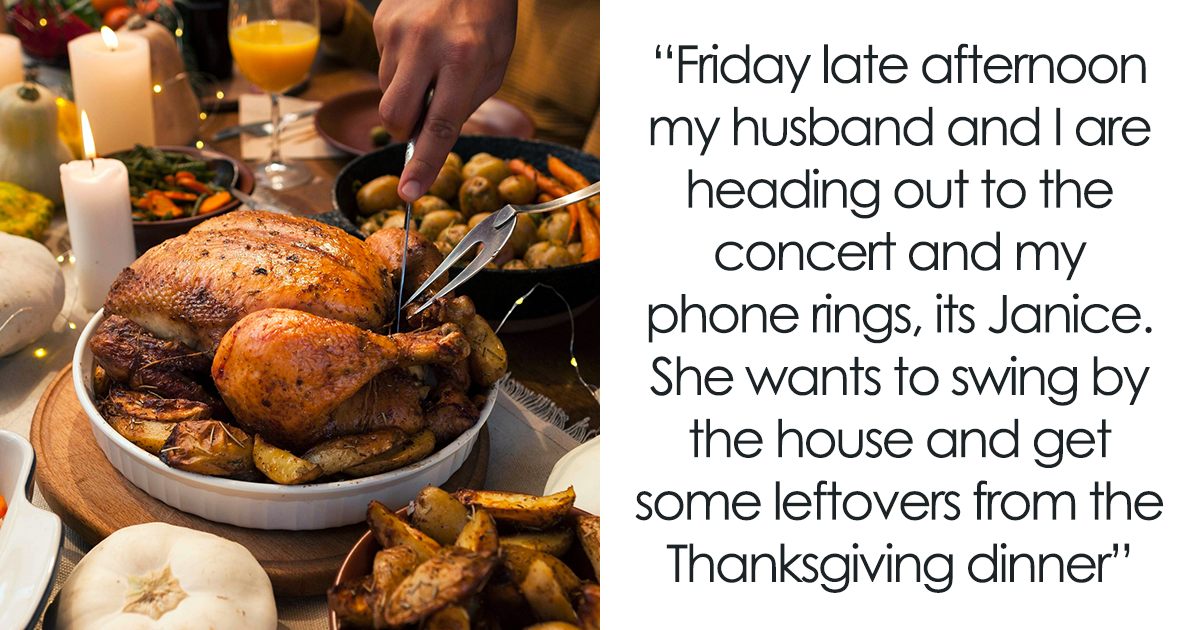
Thanksgiving is supposed to be the holiday where everyone loosens their belt, compliments the mashed potatoes, and pretends not to notice that one uncle has told the same football story since 2009. But sometimes, the real drama does not happen at the dinner table. It knocks on the door the next day, holding a container-sized expectation and asking, “So, where are my leftovers?”
That is exactly the kind of family etiquette storm behind the story of a cousin who made an early exit on Thanksgiving, only to return the next day demanding leftovers from the host. The situation sounds funny at firstalmost like a sitcom episode sponsored by gravybut it raises a surprisingly serious question: when someone leaves a family gathering, are they still entitled to the food they skipped?
The short answer: no. Thanksgiving leftovers are not a constitutional right, a family inheritance, or a rewards program. They are the host’s property until the host chooses to share them. The longer answer involves guest manners, host boundaries, food safety, emotional labor, and the strange way holidays can turn perfectly normal adults into competitive casserole negotiators.
When Thanksgiving Dinner Becomes A Family Test
In this Thanksgiving family drama, the host prepared a full holiday meal and welcomed relatives into the home. The cousin, however, left the gathering before fully participatingor at least before acting like someone who appreciated the effort. Then, the next day, the cousin returned with a bold request: leftovers.
That detail is what made the story explode. Leaving early can happen for many valid reasons. People may have work, kids, anxiety, another dinner to attend, or simply a stomach that waved the white napkin. But returning the next day and expecting a plate as though the refrigerator had been running a private catering service? That is where the etiquette turkey starts to wobble.
Thanksgiving meals are not casual snacks tossed together in ten minutes. A host often spends days planning, shopping, cleaning, thawing, chopping, cooking, timing, decorating, and silently begging the oven to behave. The final spread may look effortless, but that is usually because the host has already fought six battles before guests arrive. Asking for leftovers without gratitude can feel less like a request and more like a tiny invoice delivered in reverse.
The Real Issue Wasn’t Just Food
At first glance, this story is about turkey, stuffing, and maybe a suspiciously guarded sweet potato casserole. But underneath the food is a bigger issue: entitlement. The cousin did not merely ask whether there were any leftovers available. They reportedly arrived with the expectation that leftovers were owed.
That expectation changes the entire tone. A polite question sounds like, “If you have extra and do not need it, could I take a small plate?” An entitled demand sounds like, “I came back for my food.” One is a request. The other treats the host like a drive-thru window with family photos on the wall.
Good manners depend on recognizing effort. A guest who leaves early should be especially careful not to act as though the host must compensate them later. If the host offers food to take home, wonderful. If not, the guest should accept that decision with grace, not launch a leftovers negotiation like it is a holiday hostage situation.
Thanksgiving Leftovers Etiquette: Who Gets A Plate?
Leftovers are one of the best parts of Thanksgiving. Many Americans look forward to the next-day turkey sandwich almost as much as the actual dinner. There is something magical about cold cranberry sauce, reheated stuffing, and standing in front of the fridge pretending to “just check” what is inside.
Still, leftover etiquette has a simple foundation: the host decides. Guests should not pack food without permission, assume they are getting a container, or show up later expecting a personal share. The food belongs to the person who bought it, cooked it, stored it, and cleaned up after it.
Hosts may have plans for the food
A host might need leftovers for their own household. They may have budgeted carefully, planning to turn turkey into soup, sandwiches, casseroles, or lunches for the week. They may want to send food to an elderly neighbor, a friend who could not attend, or a family member who worked during the holiday. They may also simply want to enjoy the results of their own labor. Revolutionary, yes, but legal.
Guests should wait to be offered
The polite guest rule is beautifully simple: do not take leftovers unless the host offers them or clearly agrees. Bringing your own containers without being asked can look grabby, even if your intentions are innocent. It tells the host, “I have already made plans for your refrigerator.” That is not a compliment; that is a tiny heist with Tupperware.
Gratitude matters more than gravy
A guest who thanks the host, helps clean up, and respects the household is far more likely to be handed a plate. A guest who disappears early and returns with demands may discover that the turkey has mysteriously entered witness protection.
Why The Host Was Right To Feel Shocked
The host’s reaction makes sense because Thanksgiving hosting carries emotional weight. The meal is not only food; it is hospitality. When someone hosts a holiday, they are offering time, money, effort, space, and care. When a relative treats that generosity like an obligation, it can sting.
The next-day demand likely felt rude for several reasons. First, the cousin left the gathering, which may have already felt dismissive. Second, they returned not to apologize, thank the host, or reconnect, but to ask for food. Third, the request implied entitlement rather than appreciation. That combination could make even the calmest host stare at the doorbell like it had betrayed them.
Family relationships can make these moments trickier. If a coworker behaved this way, most people would laugh and close the door. But when it is a cousin, aunt, sibling, or in-law, the pressure to “keep the peace” can turn a simple no into a full emotional obstacle course. Suddenly, saying “we are keeping the leftovers” feels like announcing a new national policy.
Food Safety Adds Another Layer
Beyond etiquette, Thanksgiving leftovers come with practical limits. Perishable foods should be refrigerated promptly, stored properly, and eaten within a safe window. Turkey, stuffing, gravy, casseroles, and creamy sides are delicious, but they are not immortal. They do not gain wisdom with age. They gain bacteria.
Food safety guidance generally recommends refrigerating perishable leftovers within two hours and using refrigerated leftovers within three to four days. Large portions should be divided into shallow containers so they cool faster. Reheating should be thorough, especially for meats, sauces, and casseroles.
This matters because a host may not feel comfortable handing out food the next day if it was not packaged for guests, if containers are limited, or if the host is unsure how long certain dishes sat out during the post-dinner chaos. After all, Thanksgiving cleanup can be a blur. One minute you are wrapping turkey; the next, someone has put a serving spoon in the pie.
A polite guest understands that leftovers are not just “extra food.” They are food that must be handled safely, divided fairly, and stored with intention. Demanding them after the fact ignores the host’s responsibility and effort.
The Psychology Of Holiday Entitlement
Holiday gatherings can bring out old family patterns. The cousin who always expects special treatment may not suddenly become humble because cranberry sauce is present. The relative who thinks “family helps family” may use that phrase whenever they want something, but mysteriously misplace it when dishes need washing.
Thanksgiving can also trigger competition. Who got the biggest serving? Who was invited first? Who took home pie? Who received the “good” leftovers? In some families, a container of stuffing can become a symbol of love, status, or revenge. It sounds dramatic until you have seen two adults negotiate over the last scoop of macaroni and cheese like diplomats at a peace summit.
That is why boundaries matter. A host does not need to justify every decision. “We are keeping the leftovers this year” is enough. So is, “I am sorry, but I do not have anything packed to send home.” A clear, calm boundary can prevent a small request from becoming a family courtroom drama.
How A Guest Should Ask For Leftovers
There is nothing wrong with loving leftovers. In fact, appreciating the food can be a compliment. The problem is not wanting a plate; the problem is acting entitled to one.
A considerate guest can say something like, “Dinner was amazing. If you end up having extra and want to send any home, I would be gratefulbut please do not worry if you are keeping it.” That sentence does three important things. It compliments the host, makes the request optional, and removes pressure.
Guests should also avoid asking too early. Requesting leftovers before everyone has eaten is bold in a way that should be studied by scientists. Wait until the meal is over, the host has assessed what remains, and the kitchen is not in full emergency mode.
Most importantly, guests should accept the answer. If the host says no, that is the end of the conversation. No guilt trips. No sighing. No “but I barely ate.” No dramatic glance toward the refrigerator. Thanksgiving is about gratitude, not auditioning for a soap opera called Days of Our Leftovers.
How Hosts Can Prevent Leftover Drama
Hosts who know their family has strong leftover opinions can prevent drama with a little planning. This does not mean the host must become a holiday project manager with color-coded turkey spreadsheets, but a few simple steps help.
Announce the plan early
If leftovers are not available, say so casually near the end of dinner: “We are going to keep the leftovers for meals this week, but I am so glad everyone enjoyed dinner.” This makes the boundary clear before anyone starts mentally labeling containers.
Prepare small take-home portions
If the host wants to share, packing a few small containers ahead of time can prevent confusion. Guests receive what is offered, and the host avoids the awkward moment where someone tries to adopt an entire pie.
Keep the tone warm but firm
There is no need to argue. A calm “That will not work for us” is often better than a long explanation. The more reasons a host gives, the more an entitled person may treat those reasons like obstacles to debate.
Was The Cousin Completely Wrong?
It depends on the full context, but based on the core situation, the cousin handled it badly. Leaving Thanksgiving early is not automatically rude. Returning the next day to demand leftovers is the problem. If the cousin had apologized, explained, and asked gently, the host might have felt differently.
For example, imagine the cousin left because of a sudden work emergency, a sick child, or another unavoidable situation. A kind message later“I am sorry I had to leave so quickly. Thank you for hosting. The food smelled amazing”would have gone a long way. If the host then offered a plate, lovely. If not, life would continue, with fewer mashed-potato-related injuries to the family bond.
But when someone skips the gratitude and goes straight to the demand, they create resentment. The host is no longer thinking, “How can I share?” They are thinking, “How did my house become a leftover pickup counter?”
What This Story Teaches About Family Boundaries
The biggest lesson is not about turkey. It is about the right to say no without being treated like the villain. Hosts are allowed to protect their time, food, money, and peace. Guests are allowed to ask politely. Nobody is allowed to demand generosity as though it were an unpaid family subscription.
Healthy boundaries do not ruin holidays. They protect them. Without boundaries, the person doing the most work often becomes the person expected to absorb the most disrespect. That is how hosts burn out. That is how one rude request becomes the reason next year’s Thanksgiving mysteriously turns into “everyone fend for themselves.”
A good family gathering depends on mutual respect. Hosts should be generous when they can, but guests should never confuse generosity with obligation. The best guests bring gratitude, not entitlement. They offer help, read the room, and never assume the last container of stuffing has their name tattooed on it.
Specific Examples Of Better Thanksgiving Behavior
Here are a few realistic examples that show the difference between polite and pushy behavior.
Polite: “Thank you so much for dinner. Everything was wonderful. Please let me know if you need help cleaning up.”
Pushy: “I brought three containers. I want turkey, stuffing, and two slices of pie.”
Polite: “If there is extra after everyone has had some, I would love a small plate, but no pressure.”
Pushy: “I did not eat much, so I should get leftovers.”
Polite: “Sorry I had to leave early yesterday. Thank you for hosting.”
Pushy: “I am here for the food I missed.”
The difference is not complicated. Polite guests leave room for the host to say no. Pushy guests act like the answer was yes before they asked.
Why Online Readers React Strongly To Stories Like This
Stories about Thanksgiving leftovers go viral because everyone recognizes the pattern. Most people have known someone who takes more than they give, complains more than they helps, or treats family hospitality like an all-inclusive resort. The details change, but the frustration is universal.
Readers often side with the host because hosting is work. Even people who love cooking know that Thanksgiving can be exhausting. The shopping bill is higher, the kitchen is hotter, and the cleanup somehow creates dishes that nobody remembers using. When a guest acts entitled on top of that, sympathy usually lands with the person holding the sponge.
There is also a fairness issue. What about guests who stayed, helped, thanked the host, and waited politely? Why should someone who left early and returned demanding food receive special treatment? That question is what makes the cousin’s request feel especially irritating. It is not only about leftovers; it is about respect.
Experience Section: What This Thanksgiving Leftovers Drama Reminds Us About Real Family Gatherings
Anyone who has hosted a major holiday knows the day begins long before guests arrive. The host wakes up thinking about oven space, serving spoons, table settings, ice, drinks, dietary restrictions, and whether the turkey is cooking evenly or plotting rebellion. By the time relatives walk in, the host has already made dozens of tiny decisions that nobody sees.
That is why a careless leftovers demand can feel so personal. It ignores the invisible labor behind the meal. It also ignores the emotional goal of hosting: bringing people together. A host usually wants guests to feel welcome, not to feel like customers collecting a delayed order.
Many families have a “leftovers culture.” In some homes, leaving without a plate is practically an insult. Grandma may chase you to the car with foil-wrapped turkey and enough pie to survive a snowstorm. In other homes, leftovers are part of the host’s weekly meal plan, especially when groceries are expensive. Neither tradition is wrong. The key is not assuming your family’s habit is universal.
A good approach is to pay attention. If the host starts handing out containers, accept graciously. If the host is quietly packing food for their own fridge, do not hover nearby like a raccoon in formalwear. If you really want something, ask once, kindly, and let the answer stand.
This story also shows why communication matters. A cousin who needed to leave early could have sent a simple message: “Thank you for inviting me. I am sorry I had to run. I hope everyone had a great night.” That message would have softened the situation. Gratitude first, request secondif there is a request at all.
For hosts, the experience offers another lesson: it is okay to be direct. Many people over-explain because they fear sounding rude. But boundaries do not require a courtroom defense. “I am keeping the leftovers this year” is not cruel. “I do not have any extra to send home” is not selfish. “Please check with me before coming by” is not dramatic. It is basic respect.
Sometimes, the healthiest holiday tradition is learning that a peaceful no is better than a resentful yes. If giving away food leaves the host frustrated, pressured, or short on meals, then the gift is no longer generous; it is forced. And forced generosity has a way of turning sweet potato casserole into emotional cement.
For guests, the lesson is equally useful. Show up with appreciation. Offer to help. Compliment the cook. Do not treat the host’s home like a buffet with a storage unit attached. If leftovers are offered, say thank you. If they are not, go home with your dignity, which is lighter than a casserole dish and much easier to carry.
Thanksgiving is not really about who gets the last scoop of stuffing. It is about gratitude, connection, and remembering that the people feeding us are people, not food machines wearing aprons. The cousin in this story may have wanted leftovers, but what they really revealed was a lack of awareness. And sometimes, the most important thing served at Thanksgiving is a lesson with a side of boundaries.
Conclusion
The story of a cousin leaving Thanksgiving and returning the next day demanding leftovers is funny because it is absurd, but it is also relatable because holiday entitlement is real. The host had every reason to feel shocked. Leftovers are not automatically owed to anyone, especially someone who left early and came back with expectations instead of gratitude.
Thanksgiving works best when generosity and manners meet in the middle. Hosts can be kind without becoming doormats. Guests can enjoy food without acting entitled to the fridge. And everyone can remember that the phrase “family dinner” does not mean “unlimited takeout with emotional blackmail.”
In the end, the cousin may have expected turkey, stuffing, and pie. What they received instead was a classic holiday lesson: if you want leftovers, start by bringing respect to the table.














