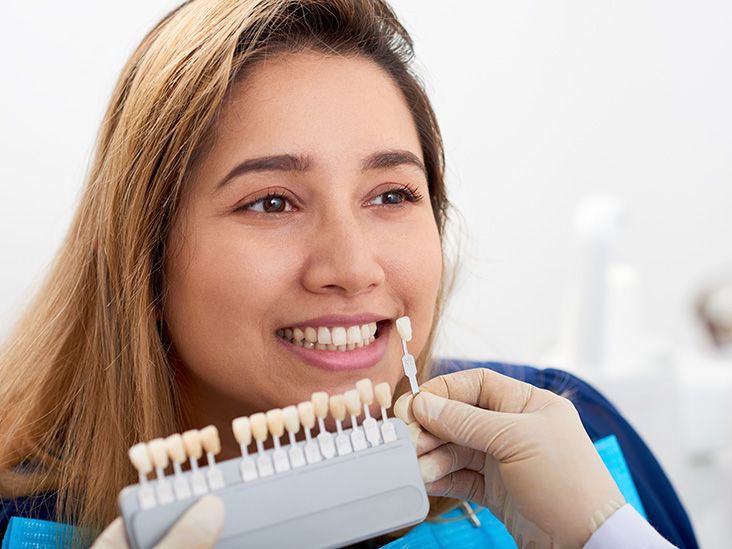
A camera comes out, everyone smiles, and suddenly you notice that one tooth has apparently been freelancing in y shaped teeth make you hesitate before smiling, dental veneers may offer a dramatic cosmetic upgrade.
Veneers are thin, tooth-colored coverings placed over the visible surfaces of teeth. They can create a brighter, more symmetrical smile without covering the entire tooth as a crown does. However, veneers are not press-on accessories for teeth. Traditional treatment usually requires permanent changes to natural enamel, and the restorations will eventually need maintenance or replacement.
This guide explains dental veneer costs in the United States, how the procedure works, what the final results can realistically look like, and which risks deserve careful consideration before anyone reaches for the extra-white shade sample.
What Are Dental Veneers?
A dental veneer is a custom-made shell bonded to the front of a tooth. Dentists commonly use veneers to improve tooth color, size, shape, proportion, and alignment. They are primarily cosmetic restorations, although they may also restore the appearance of worn or mildly damaged enamel.
Unlike a crown, which surrounds most or all of a tooth, a veneer covers mainly the front surface. This generally allows the dentist to preserve more natural tooth structure. Still, “less invasive than a crown” does not mean “no commitment.” In many cases, the dentist removes a small amount of enamel so the veneer will sit naturally rather than making the tooth look like it is wearing a winter coat.
Research basis: Dental Veneers
Porcelain Veneers
Porcelain veneers are thin ceramic shells fabricated in a dental laboratory or, in some practices, produced with an in-office digital milling system. They are known for their translucent, enamel-like appearance, color stability, and resistance to staining.
Porcelain is usually the premium option. It costs more and typically requires at least two appointments, but it can deliver highly detailed results when the dentist and dental laboratory carefully control the shape, surface texture, translucency, and shade.
Composite Resin Veneers
Composite veneers are made from tooth-colored resin similar to the material used for cosmetic dental bonding. The dentist applies, shapes, hardens, and polishes the resin directly on the tooth. Many composite veneer cases can be completed in one appointment.
Composite costs less than porcelain and may require less enamel reduction. It is also easier to repair if a small section chips. The trade-off is that composite generally stains, scratches, and loses polish more quickly than porcelain.
Minimal-Preparation and No-Preparation Veneers
Some ceramic veneers are marketed as minimal-preparation or “no-prep” restorations. These options may require little or no enamel removal in carefully selected cases. They are not appropriate for every smile, however. Adding material without reducing the tooth can make certain teeth look thick, bulky, or overcontoured.
The amount of preparation should depend on the tooth’s position, existing enamel, desired color change, bite, and final designnot on a catchy product label. Even a no-prep veneer may still involve etching the enamel and creating a long-term bonded restoration.
What Problems Can Veneers Correct?
Dental veneers may improve the appearance of:
- Permanent discoloration that does not respond well to whitening
- Small chips, cracks, or worn tooth edges
- Minor gaps between front teeth
- Teeth that appear too short, narrow, pointed, or uneven
- Mild cosmetic misalignment
- Old composite bonding that has stained or repeatedly chipped
- An uneven or asymmetrical smile line
Veneers can visually disguise mild crookedness, but they do not move teeth or correct a significant bite problem. When teeth are substantially crowded, rotated, or protruding, orthodontic treatment may produce a healthier and more conservative result.
Who Is a Good Candidate for Veneers?
A good candidate generally has healthy teeth and gums, enough enamel for predictable bonding, realistic expectations, and a bite that will not place destructive pressure on the restorations.
Before treatment, the dentist should look for cavities, gum disease, enamel erosion, large fillings, cracked teeth, tooth-grinding damage, and signs of an unstable bite. Existing oral disease must be treated first. Covering an unhealthy tooth does not cure the problem; it merely gives the problem a stylish hiding place while it gets worse.
Veneers may not be the best first choice for someone with:
- Active tooth decay or untreated gum disease
- Very little remaining enamel
- Severe clenching or grinding without proper management
- A deep overbite or bite pattern that overloads the front teeth
- Extensively fractured or structurally weak teeth
- Large existing restorations that would be better protected by crowns
- Expectations of a permanent restoration that will never require replacement
Candidate and risk guidance: Do Dental Veneers Cost?
In the United States, veneer prices vary considerably by material, location, dentist experience, laboratory quality, and case complexity. A reasonable planning range is approximately $1,000 to $2,500 per tooth for porcelain veneers. Some cases fall below this range, while highly customized treatment in major metropolitan areas may cost more.
Composite veneers commonly cost about $250 to $1,500 per tooth. Direct composite treatment is often less expensive because it may not require a dental laboratory and can frequently be completed in one visit.
| Veneer Type | Estimated U.S. Cost per Tooth | Typical Treatment Time | Common Lifespan |
|---|---|---|---|
| Porcelain veneer | $1,000–$2,500 | Two or more visits | About 10–15 years or longer |
| Composite veneer | $250–$1,500 | Often one visit | About 5–7 years |
| Minimal-prep ceramic veneer | $1,000–$2,500 or more | Usually two or more visits | Varies by material and case |
For example, eight porcelain veneers priced at $1,800 each would total $14,400 before additional services. A smile makeover involving six to ten visible teeth can therefore become a five-figure investment faster than a dentist can say, “Open a little wider.”
What Affects the Final Price?
The quoted fee may reflect far more than the ceramic shell itself. Major pricing factors include:
- The number of teeth being treated
- Porcelain, composite, or another restorative material
- The dentist’s training and experience with cosmetic cases
- The skill and fees of the dental laboratory
- Local operating costs and geographic location
- The need for diagnostic images, scans, photographs, or X-rays
- Digital smile design, wax-ups, trial smiles, or mock-ups
- Temporary veneers
- Gum contouring, orthodontics, whitening, or other preliminary care
- Replacement of old fillings or treatment of decay
- A custom nightguard after treatment
Does Dental Insurance Cover Veneers?
Most dental plans classify veneers as elective cosmetic treatment and do not cover them. Coverage may be possible when a restoration is medically necessary because of an injury, developmental defect, or other documented dental condition, but plan rules differ.
Ask the dental office to submit a pretreatment estimate before starting. Obtain a written treatment plan that separates the veneer fee from exams, X-rays, temporary restorations, gum treatment, nightguards, and future maintenance. Financing can make a large case easier to manage, but monthly payments do not make the underlying price disappear. They simply teach it to travel in smaller groups.
U.S. cost and coverage estimates: eneer Procedure: Step by Step
1. Consultation and Oral Examination
The first appointment should include more than choosing a shade. The dentist evaluates the teeth, gums, bite, facial proportions, smile line, existing restorations, and available enamel. Dental photographs, X-rays, impressions, or digital scans may be taken.
This is also the time to discuss what you dislike about your smile. Be specific. “I want natural-looking teeth with slightly rounded edges” gives the clinical team more useful information than “Make me look expensive.”
2. Smile Planning and Preview
For multiple veneers, the dentist may create a digital simulation, diagnostic wax-up, or temporary mock-up. A mock-up allows you to preview proposed tooth length and shape before permanent enamel is removed.
The preview is important because “white” and “natural” are not opposites, but they do require balance. Real teeth have surface texture, gentle variations in translucency, and proportions that fit the face. Perfectly flat, identical rectangles can look less like premium dentistry and more like a freshly installed picket fence.
3. Tooth Preparation
For traditional porcelain veneers, local anesthetic may be used while the dentist removes a thin layer of enamel. The amount varies by tooth and treatment plan. Conservative preparation aims to create enough room for the ceramic while preserving as much enamel as possible.
Enamel preservation matters because bonding to enamel is generally predictable. Excessive reduction can expose dentin, increase sensitivity, and make the restoration more technically demanding.
4. Impressions or Digital Scans
After preparation, the dentist records the shape and position of the teeth with impression material or an intraoral scanner. The records, photographs, shade information, and design instructions are sent to the dental laboratory.
5. Temporary Veneers
Patients receiving laboratory-made porcelain veneers may wear temporary restorations while the final ceramics are produced. Temporaries protect the prepared teeth and provide a useful test drive for length, speech, comfort, and appearance.
Temporary veneers may feel rougher and look less refined than the final result. They can also be more fragile, so this is not the ideal week to rediscover a passion for peanut brittle.
6. Try-In and Final Bonding
At the delivery appointment, the dentist checks each veneer’s fit, color, shape, contact points, and relationship with the gums. You should be given an opportunity to examine the appearance before final bonding.
The teeth and veneers are conditioned with specific materials, dental adhesive and resin cement are applied, and the restorations are positioned. A curing light hardens the cement. The dentist then removes excess material, checks the bite, and polishes the margins.
7. Follow-Up Visit
A follow-up appointment may be scheduled to check the gums, bite, comfort, speech, and cleaning technique. Small bite adjustments can be important because one slightly high contact may place unnecessary force on a veneer.
Procedure and enamel-preparation evidence: ng Veneers Painful?
The procedure is usually manageable with local anesthetic. Patients may feel pressure, vibration, or water spray during preparation rather than sharp pain. Composite veneers that require little preparation may not need anesthesia in every case.
Temporary sensitivity to cold, heat, sweets, or air can occur after enamel preparation and bonding. The gums may also feel tender for a few days. Mild sensitivity often settles as the tissues recover, but persistent, severe, or worsening pain should be evaluated promptly.
A veneer should not cause ongoing throbbing pain, swelling, a bad taste, fever, or significant pain when biting. Those symptoms may indicate inflammation, infection, an unfavorable bite, or another dental problem requiring professional care.
What Results Can You Expect?
Well-designed veneers can produce an immediate change in tooth color, shape, apparent alignment, and overall smile balance. Porcelain can be layered or characterized to imitate natural enamel, allowing light to reflect and pass through the restoration in a lifelike way.
Results depend heavily on planning. The most attractive veneer is not necessarily the whitest or longest one. It is the restoration that fits the person’s facial features, lip movement, gumline, bite, age, and neighboring teeth.
Potential improvements include:
- A more even tooth shape and length
- Improved symmetry between the left and right sides
- A brighter, more stable shade
- Less visible spacing or minor misalignment
- Smoother edges and repaired-looking chips
- A fuller smile when small or narrow teeth are widened appropriately
Veneers do not make the underlying teeth immune to decay, gum recession, trauma, or wear. Natural teeth remain beneath the restorations, and the margins still require careful cleaning.
How Long Do Veneers Last?
Porcelain veneers commonly remain functional for about 10 to 15 years, and some last significantly longer with favorable conditions and good care. Composite veneers often need polishing, repair, or replacement sooner, commonly after roughly five to seven years.
A systematic review involving thousands of porcelain laminate veneers estimated a 10-year cumulative survival rate of approximately 95.5%. Fracture and debonding were among the leading reasons for failure. Research results should not be interpreted as a personal guarantee, because longevity varies with tooth preparation, material, bite forces, oral hygiene, bonding quality, and patient habits.
Longevity evidence: d Disadvantages of Dental Veneers
Irreversible Enamel Removal
Traditional veneers usually require enamel reduction. Because enamel does not grow back, prepared teeth will generally continue to need veneers or another restoration in the future.
Tooth Sensitivity
Some patients experience temporary sensitivity after treatment. The risk may increase when more tooth structure is removed or dentin becomes exposed.
Chipping, Cracking, or Debonding
Veneers are strong but not indestructible. Biting ice, opening packages with the teeth, chewing pens, nail biting, trauma, or uncontrolled grinding can damage them.
Decay and Gum Problems
A veneer cannot develop a cavity, but the natural tooth around or beneath it can. Plaque at the margins may contribute to decay and gum inflammation. Poorly shaped or overcontoured restorations can also make cleaning difficult.
Color Limitations
Porcelain does not whiten with bleaching products. If surrounding natural teeth change color, the veneers may no longer match. Dentists often recommend completing any desired whitening before selecting the final veneer shade.
Future Replacement Costs
Veneers are long-lasting restorations, not lifetime purchases. A person receiving veneers at age 25 may face several replacement cycles. The future budget deserves a place in the decision alongside the exciting before-and-after photographs.
Unsatisfactory Appearance
Veneers can look too opaque, bulky, uniform, long, or bright when the treatment is poorly planned. Correcting an unsatisfactory result may require replacement, additional tooth reduction, gum treatment, or complex restorative work.
Always choose a licensed dentist. Unlicensed “veneer technicians” promoted through social media may place materials over untreated decay, use unsafe equipment, or permanently damage teeth and gums.
Safety guidance: are for Veneers
Veneers do not require a mysterious celebrity maintenance ritual. They need the same fundamentals as natural teeth, performed consistently:
- Brush twice daily with a soft-bristled toothbrush.
- Use fluoride toothpaste unless your dentist advises otherwise.
- Floss or clean between the teeth every day.
- Attend regular dental examinations and professional cleanings.
- Avoid using the teeth as scissors, bottle openers, or emergency toolkits.
- Limit frequent exposure to sugary and acidic drinks.
- Wear a sports mouthguard during contact activities.
- Use a prescribed nightguard if you clench or grind your teeth.
- Have rough edges, looseness, bite changes, or new sensitivity checked early.
Some highly abrasive toothpastes may gradually affect the polish of composite resin. Ask the treating dentist or hygienist which products are suitable for the specific veneer material.
Alternatives to Dental Veneers
Veneers are only one route to a better smile. Depending on the problem, a more conservative or functional treatment may be preferable.
Professional Teeth Whitening
Whitening may be enough when tooth shape and alignment are acceptable and the primary concern is color. It does not remove enamel and is far less expensive than covering multiple teeth.
Cosmetic Dental Bonding
Bonding can repair small chips, reshape edges, and close limited spaces. It is generally less expensive and easier to repair than porcelain, although it may stain and wear sooner.
Orthodontic Treatment
Braces or clear aligners physically move teeth instead of disguising their position. Orthodontics takes longer but may preserve healthy enamel and improve the bite.
Dental Crowns
A crown may be more appropriate when a tooth is severely damaged, heavily filled, weakened, or requires full structural protection. Crowns require more tooth reduction but serve a different restorative purpose.
Enamel Contouring
Minor reshaping can smooth a slightly uneven edge or correct a tiny difference in tooth length. It is suitable only when enough enamel is present and the desired change is small.
Questions to Ask Before Getting Veneers
- Why are veneers better for my case than whitening, bonding, or orthodontics?
- How much enamel will be removed from each tooth?
- Can I preview the proposed design with a mock-up?
- Who will fabricate the veneers?
- How many veneer cases does the dentist complete regularly?
- Can I see photographs of comparable cases treated by this dentist?
- What is included in the written price?
- Will I need temporaries, gum contouring, or a nightguard?
- What happens if a veneer chips, debonds, or looks different from the approved design?
- What maintenance and replacement expenses should I expect?
A Realistic Veneer Experience: What the Process Often Feels Like
The following scenario combines common experiences associated with professionally planned porcelain veneer treatment. It is not a promise that every patient will have the same timeline, sensations, or outcome.
The Consultation: More Decisions Than Expected
Imagine a patient named Maya who dislikes two chipped front teeth, uneven tooth lengths, and discoloration that whitening has not corrected. She enters the consultation assuming she needs ten veneers because that is the number repeatedly mentioned in smile-makeover videos.
After examining her bite and smile, the dentist recommends six veneers instead. The lower teeth are healthy and attractive, and the back teeth do not show when she smiles. Maya also learns that the brightest shade is not automatically the best shade. Under normal lighting, the sample she initially loves looks less like natural enamel and more like office printer paper.
A digital preview helps establish a softer design with slight variations between the teeth. Maya requests that the canine teeth retain a little character rather than becoming identical to the incisors. This planning phase feels surprisingly collaborative. The dentist is not simply ordering “new teeth”; the team is designing proportions that must work during speaking, smiling, and chewing.
Preparation Day: Manageable but Unusual
Local anesthetic keeps preparation comfortable, but Maya still notices vibration and pressure. The appointment is long because each tooth must be prepared carefully, scanned, photographed, and checked. She leaves with temporary veneers that look attractive from conversation distance but feel slightly rough when her tongue investigates them every four seconds.
For several days, cold water creates quick flashes of sensitivity. The temporaries also make her speech feel unfamiliar, especially with “s” and “f” sounds. By the end of the week, her tongue and lips adapt. She eats normally but avoids sticky candy, hard crusts, and the reckless belief that front teeth are designed to crack pistachio shells.
The Final Appointment: Excitement With a Pause Button
At the final visit, the dentist temporarily positions the porcelain veneers for evaluation. One central incisor appears slightly longer in photographs, even though it looked acceptable on the model. The dentist marks the adjustment rather than bonding immediately.
This pause initially frustrates Maya because she wants the finished smile that day. Later, she recognizes it as a positive sign. Permanent bonding should not be rushed merely because the patient has already planned a celebratory selfie.
At the next appointment, the revised veneers are tried in again. Maya checks them in several lighting conditions, looks at close-up photographs, speaks aloud, and smiles naturally instead of holding a rigid inspection grin. Once she approves the appearance, the dentist bonds the veneers and adjusts the bite.
The First Week: The Smile Looks New Because It Is New
During the first few days, the teeth seem larger and brighter than expected. Friends say the result looks natural, but Maya notices every microscopic detail because the teeth are approximately two inches from her eyes whenever she finds a mirror.
The gums are mildly tender, and flossing feels different around the new contact points. After professional guidance, she learns to slide the floss through the contacts rather than snapping it aggressively toward the gums. Sensitivity gradually decreases.
Several Months Later: The Result Becomes Normal
After a few months, Maya stops analyzing each tooth individually. She notices the broader result: she smiles without automatically covering her mouth. The veneers have not changed her personality, career, or ability to remember passwords, but they have removed a small source of self-consciousness.
Her biggest surprise is not the initial transformation. It is the long-term responsibility. She wears a nightguard, schedules regular cleanings, avoids biting hard objects with the front teeth, and understands that replacement will eventually be necessary.
The most valuable part of the experience was not selecting porcelain over composite. It was choosing conservative treatment, reviewing a mock-up, communicating preferences, and refusing to rush permanent bonding. A successful veneer experience is usually less about purchasing perfect teeth and more about making a series of careful, informed decisions.
Final Thoughts on Dental Veneers
Dental veneers can transform discolored, chipped, uneven, or mildly misaligned teeth with fast and visually impressive results. Porcelain generally provides the greatest stain resistance and longevity, while composite offers a lower initial cost, faster treatment, and easier repairs.
The procedure is not appropriate for every tooth or every budget. Traditional veneers usually involve irreversible enamel removal, and no restoration lasts forever. The best candidates enter treatment with healthy teeth, realistic expectations, a stable bite, and a clear understanding of future maintenance expenses.
Choose a licensed dentist who emphasizes oral health, conservative preparation, thoughtful smile design, and informed consent. A good veneer should complement the face rather than announce itself from across the parking lot.
Note: This article provides general educational information and is not a substitute for an examination by a licensed dentist. Prices are approximate U.S. estimates and may vary by location, material, provider, and individual treatment needs.