
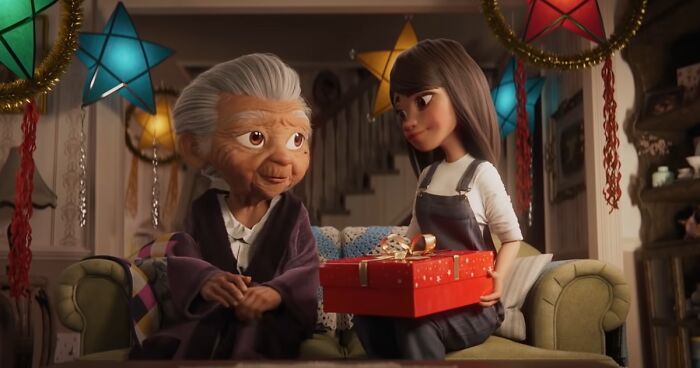
Every holiday season has its unofficial starter signal. For some people, it is the first peppermint mocha. For others, it is one brave neighbor inflating a 12-foot Santa before Thanksgiving leftovers have even cooled. But for many Disney fans, Christmas really begins when Disney releases a holiday ad designed to sneak past our defenses, sit beside our childhood memories, and politely ask, “Would you like to cry over a cartoon character today?”
Disney’s newest Christmas ad, A Disney Holiday Short: Best Christmas Ever, does exactly that. Directed by Academy Award winner Taika Waititi and featuring Disney Legend John Goodman as the voice of Doodle, the short is the emotional centerpiece of Disney’s 2025 “Make Someone’s Holiday Magic” campaign. On paper, the premise sounds delightfully simple: a little girl draws a tiny doodle on her letter to Santa, Santa mistakes the drawing for a Christmas wish, and the doodle comes to life. In practice, it becomes a three-minute holiday ambush. One moment you are watching a cute animated friend wobble around the house, and the next you are wondering why your coffee tastes like feelings.
The reason the ad works is not because it is complicated. It works because it understands what Christmas advertising does best: it takes ordinary love, wraps it in nostalgia, adds a sprinkle of magic, and lets the audience fill in the rest with their own memories.
What Is Disney’s New Christmas Ad About?
Best Christmas Ever follows a young girl whose doodle comes to life on Christmas morning. Doodle is not polished, perfect, or superhero-level impressive. He is a wobbly little creation made from the kind of imagination only a child can produce: part scribble, part best friend, part emotional support crayon incident.
Instead of building the story around a huge adventure, the short focuses on the gentle rhythm of friendship. The girl and Doodle spend time together through everyday moments, from playing around the house to enjoying the kind of childhood fun that feels small while it is happening and enormous years later. Disney has always known how to turn tiny details into emotional fireworks, and this ad is no exception.
There is also a clever emotional twist. Doodle is alive and lovable, but incomplete. He has no mouth, which means he cannot speak, laugh, or sing. The girl eventually notices his sadness and writes another letter to Santa, asking for a way to help her friend. That simple act transforms the ad from “cute magical companion story” into something warmer: a story about paying attention to someone else’s quiet need.
Why The Ad Is Hitting People Right In The Feels
The phrase “hitting people right in the feels” is internet language for emotional impact, but in this case, it is surprisingly accurate. The ad does not force tears with tragedy. It earns them through tenderness. That is a much harder trick to pull off.
Disney leans into three emotional engines: childhood imagination, friendship, and holiday generosity. The living doodle represents the kind of friend many people invented when they were young, whether it was a stuffed animal, an imaginary sidekick, a favorite toy, or a blanket that deserved its own chair at the dinner table. Doodle is not just a character. He is a reminder of the age when love could turn anything into someone.
The ad also taps into the ache of being understood. Doodle’s sadness is quiet. He does not throw a tantrum or demand attention. He simply feels left out because he cannot join in the sounds of Christmas. When the girl notices, the emotional center of the story clicks into place. Christmas magic is not only about receiving the perfect gift. It is about becoming the kind of person who sees what someone else needs.
That is why the short lands so well. It gives viewers a clean, universal emotional message without turning into a lecture wearing a Santa hat. The best holiday ads rarely say, “Be kind.” They show kindness in motion, then let the viewer quietly decide to text their mom, hug their dog, or apologize to the houseplant they forgot to water.
Taika Waititi’s Touch: Whimsy With A Soft Center
Taika Waititi is a smart creative match for this kind of Disney holiday storytelling. His best work often blends absurdity with sincerity, and Best Christmas Ever needs both. A living doodle could easily become too silly. A sentimental Christmas short could easily become too syrupy. Waititi keeps the story balanced, giving Doodle enough oddball charm to be funny while keeping the emotional arc grounded in friendship.
The ad also follows Waititi’s 2024 Disney holiday short, The Boy & The Octopus, which similarly explored friendship, wonder, and the magic of unexpected companionship. With Best Christmas Ever, Disney continues a recent tradition of making holiday shorts that feel more like miniature family films than standard commercials.
That distinction matters. Many ads interrupt what people want to watch. Disney’s holiday shorts try to become what people want to watch. They are shareable because they feel like stories first and marketing second. Yes, the campaign supports Disney’s broader holiday ecosystem, from Disney+ to parks, products, and community events. But the short itself keeps its focus on feeling, not selling. That restraint is a big reason it works.
John Goodman As Doodle Is A Perfect Disney Choice
John Goodman’s voice brings warmth, humor, and instant familiarity to Doodle. For Disney fans, Goodman already carries a long history of beloved characters, most famously Sulley in Monsters, Inc.. His voice has a comforting texture: big, kind, slightly rumpled, and deeply human. In other words, exactly the voice you would want for a doodle who finally gets to speak.
The casting also gives the short a nostalgic bridge for adults. Kids may simply hear a funny, lovable character. Parents and longtime Disney fans hear echoes of past Disney and Pixar stories they grew up with or shared with their own children. That is one of Disney’s strongest emotional advantages: its characters do not arrive alone. They bring a whole suitcase of memories with them, and somehow that suitcase always fits in the overhead bin.
The Animation Makes Doodle Feel Handmade
One of the smartest choices in Best Christmas Ever is that Doodle still feels like a doodle. He is not overdesigned into a glossy mascot. He has the loose, playful personality of a child’s drawing, and that visual simplicity is what makes him charming.
Disney brought in legendary animator Eric Goldberg as an animation advisor, a meaningful detail for fans who appreciate the craft behind character movement. Goldberg is known for helping bring the Genie from Aladdin to life, and that background matters because Doodle’s personality depends heavily on movement. He has to communicate before he can speak. His body language carries the story.
The production involved Untold Studios, hungryman, and creative agency adam&eveDDB, giving the short a polished but handcrafted feel. The result is a character who looks simple enough for a child to create but expressive enough for an audience to care about within seconds. That is not easy. Many brands chase cuteness during the holidays. Disney remembers that cuteness only matters if it has a soul.
“Make Someone’s Holiday Magic” Gives The Ad A Bigger Purpose
The short is part of Disney’s larger “Make Someone’s Holiday Magic” campaign, which celebrates giving, connection, and community. Disney also announced a Holiday Magic Tour reaching more than 20 cities around the world, with donations, community activations, surprises, and family-focused moments of joy.
That broader campaign helps the ad feel less like a standalone tearjerker and more like an invitation. The call to action is not complicated: make someone’s holiday more magical. That could mean a big charitable gesture, but it could also mean noticing someone who feels forgotten, creating a small tradition, sending a thoughtful message, or giving a gift that says, “I know you.”
Disney’s long partnership with Make-A-Wish also gives its holiday messaging a deeper emotional foundation. For decades, Disney and Make-A-Wish have worked together to grant wishes for children with critical illnesses, making Disney one of the most recognizable brands associated with wish-granting experiences. That history adds credibility to the campaign’s theme of giving because it connects the seasonal message to real-world impact.
Why Emotional Christmas Ads Work So Well
Holiday advertising is a strange little art form. For most of the year, brands compete by shouting about features, prices, convenience, and why their product is better than the other product wearing a slightly different label. Then Christmas arrives, and suddenly everyone is making tiny films about grandmothers, snowmen, lost pets, family recipes, and the emotional importance of a well-lit living room.
There is a reason for that shift. Christmas is memory season. People are already thinking about childhood, family, distance, grief, joy, traditions, and the passage of time. A strong holiday ad does not create those emotions from scratch. It gives them a place to land.
Disney’s new Christmas ad succeeds because it does not try to explain the holiday spirit. It dramatizes it through one child and one impossible friend. The story is specific enough to be memorable but broad enough for viewers to project themselves into it. Some people may think of a childhood toy. Others may think of a best friend, a sibling, a child, or someone they wish they had understood sooner.
How The Ad Fits Into Disney’s Holiday Storytelling Legacy
Disney has spent generations linking its brand to family rituals. Holiday specials, park celebrations, Christmas parades, seasonal films, ornaments, plush toys, and Disney+ collections all feed into a larger idea: Disney is not just something people watch; it is something families return to.
Best Christmas Ever fits that legacy neatly. It is not about Santa saving the world or a villain trying to steal Christmas. It is about a child’s imagination turning into companionship. That is classic Disney territory. The company has always been at its best when it treats imagination as emotionally real. Toys can have feelings. Monsters can be gentle. A drawing can become a friend. A snow-covered holiday morning can contain an entire universe.
The ad also understands that modern audiences are quick to reject anything that feels manipulative. Viewers can smell fake sentiment faster than burnt gingerbread. Disney avoids that problem by keeping the story compact, visually playful, and emotionally sincere. It is sentimental, yes, but not sticky. It gives you a lump in your throat without stealing your whole afternoon.
What Marketers Can Learn From Disney’s Christmas Ad
For marketers, Best Christmas Ever offers several useful lessons. First, emotional storytelling works best when the story is simple. The short does not require a complicated plot, a celebrity cameo parade, or a 14-page lore document. It has a girl, a doodle, a problem, and an act of kindness. That is enough.
Second, nostalgia should be used as seasoning, not the whole meal. Disney includes emotional echoes of childhood, classic animation, and familiar voices, but the ad still introduces a new character and a fresh scenario. It feels familiar without feeling recycled.
Third, the strongest holiday campaigns connect screen emotion to real-world action. Disney extends the idea of holiday magic through community activations, giving initiatives, and interactive experiences. That makes the campaign larger than a video and gives audiences ways to participate.
Finally, the ad shows that “cute” is not a strategy by itself. Doodle is adorable, but the reason people care about him is because he wants something deeply relatable: to belong, to express himself, and to be seen by someone he loves.
Audience Reaction: The Emotional Scoreboard
The ad’s emotional impact was not just a matter of fan comments and teary emojis. DAIVID’s holiday advertising analysis ranked Best Christmas Ever among the most emotionally engaging festive campaigns of 2025, reporting that it generated an intense positive emotional response from nearly six in 10 viewers. The campaign also scored strongly for feelings such as adoration, nostalgia, warmth, and joy.
That kind of response explains why the short has traveled well beyond a typical seasonal commercial. People do not share holiday ads because they need more ads in their life. Nobody wakes up and says, “You know what my group chat needs? Branded content.” They share them because the story gives them a feeling they want someone else to feel too.
Disney’s ad is especially shareable because it is family-safe, emotionally clear, and short enough to watch during a coffee break. It also has the advantage of Doodle, a character who feels instantly merchandisable without the short screaming, “Please buy the thing.” That is Disney’s magic trick: making the audience fall in love first.
Why Doodle Works As A Holiday Character
Doodle works because he is both new and familiar. He does not come with decades of backstory, but he feels like he belongs in the Disney emotional universe. He is expressive, imperfect, loyal, and just a little ridiculous. That combination makes him ideal for Christmas storytelling.
He also represents creativity itself. A doodle is usually something casual, tossed into a margin, made without pressure. By turning that little drawing into a living friend, Disney celebrates the emotional power of small creative acts. A child’s scribble becomes a companion. A simple wish becomes a relationship. A tiny drawing becomes the reason adults everywhere are pretending they just have allergies.
That is a beautiful message for the holidays. The best gifts are not always expensive or elaborate. Sometimes the most meaningful gift is attention. Sometimes it is noticing what would make someone feel included. Sometimes it is giving a voice to someone who has been quietly waiting to be heard.
Experiences Related To Disney’s Newest Christmas Ad
One reason Best Christmas Ever feels so powerful is that it mirrors experiences many people have had, even if no one in real life has unwrapped a living doodle under the tree. The magic is fictional, but the feelings are familiar.
Think about the childhood toy that became more than a toy. Maybe it was a teddy bear with one eye, a plastic dinosaur missing half a tail, a doll with hair that looked like it had survived a wind tunnel, or a blanket so loved it became legally part of the family. Children give objects emotional life. They name them, protect them, blame them for messes, and sometimes insist they need a seat belt. Disney understands that this is not childish nonsense. It is early love practice.
The ad also captures the experience of noticing someone’s hidden sadness. Many families have holiday memories where one person seemed fine on the outside but was quietly missing someone, feeling left out, or struggling to join the celebration. The girl’s decision to help Doodle gives the story emotional maturity. She does not just enjoy the magic she receives; she learns to give magic back.
For parents, the ad may bring up the bittersweet speed of childhood. Kids grow quickly. One year they are writing letters to Santa in giant uneven handwriting, and the next they are explaining streaming passwords to adults with the patience of tiny tech-support managers. A short like this freezes that stage of wonder, when a drawing can matter deeply and Christmas morning still feels like the universe opened a secret door.
For adults without children, the ad can still hit home because it speaks to friendship and belonging. Doodle wants a voice. He wants to participate. He wants to be part of the song, the laughter, the noisy warmth of the season. Many people know that feeling. The holidays can amplify joy, but they can also amplify loneliness. A story about being seen and included carries emotional weight because it answers a very human wish.
There is also something relatable in the idea of imperfect gifts. The girl did not ask Santa for a flawless best friend. She made a doodle, and that doodle became precious because of the relationship they built. In real life, the gifts people remember most are often not the fanciest ones. They are the handmade ornament, the slightly lopsided card, the old recipe, the surprise visit, the inside joke wrapped in tissue paper, or the small gesture that says, “I thought about you.”
That is the experience Disney’s ad captures so well. It reminds viewers that holiday magic is not always loud. It can be a quiet act of care. It can be noticing the person who cannot say what they need. It can be making room for someone at the table, in the song, or in the memory. And yes, sometimes it can be a talking doodle with John Goodman’s voice, because Disney is going to Disney.
Conclusion
Disney’s newest Christmas ad is hitting people right in the feels because it understands the emotional recipe of the season: imagination, friendship, nostalgia, generosity, and just enough whimsy to make a grown adult emotionally compromised by a scribble. A Disney Holiday Short: Best Christmas Ever is not merely a cute holiday commercial. It is a compact story about seeing someone clearly and giving them what they need to feel included.
With Taika Waititi’s playful sincerity, John Goodman’s warm voice performance, expressive animation, and a campaign message centered on making someone’s holiday magical, Disney has created a festive short that feels both brand-perfect and genuinely touching. It reminds us that the holidays are not only about receiving wonder. They are about creating it for someone else.














