
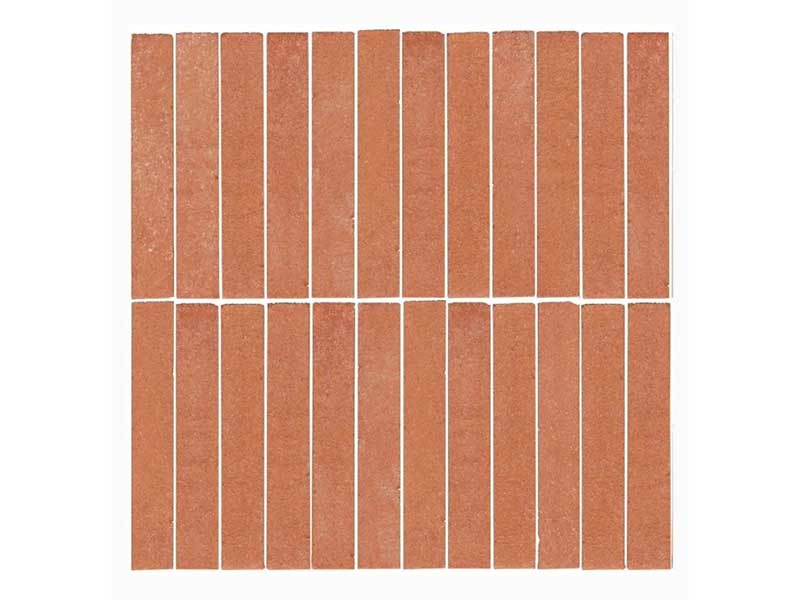
If a kitchen backsplash could take a short vacation to the hills outside Florence, return with a sun-kissed glow, and casually make your cabinets look more expensive, it might look a lot like Ema Terracotta Mosaic Tetto. This tile is not the shiny, anonymous rectangle that quietly does its job in the background. It has texture. It has warmth. It has the kind of natural variation that says, “Yes, I am sophisticated, but I also know how to make pasta from scratch.”
Ema Terracotta Mosaic Tetto is a terracotta mosaic tile with a slim, stacked look and a distinct handmade spirit. The word “Tetto” means “roof” in Italian, which feels fitting because the design has an architectural rhythm: long vertical bars arranged in clean rows, like a little clay cityscape for your wall or floor. Made from Galestro clay found near Florence, this mosaic belongs to the world of natural materials, warm interiors, artisan surfaces, and design choices that refuse to look flat or boring.
For homeowners, designers, and renovation daydreamers, this tile offers a compelling mix of old-world material and modern geometry. It can bring warmth to a minimalist kitchen, texture to a bathroom, or a boutique-hotel mood to a powder room. But like most beautiful natural materials, it also asks for respect. Terracotta is porous, sealing matters, layout planning matters, and hiring an experienced installer is not a dramatic overreaction. It is more like wearing oven mitts when pulling out lasagna: technically obvious, but still worth saying.
What Is Ema Terracotta Mosaic Tetto?
Ema Terracotta Mosaic Tetto is a terracotta mosaic tile designed for walls and floors, featuring a warm clay color, a brushed surface, and tumbled edges. The tile is part of the Ema Terracotta range, which includes several mosaic formats and brick-style options. Tetto is one of the larger mosaic layouts, usually supplied on sheets that make installation more practical while preserving the look of individual clay pieces.
The material is terracotta, a fired clay product known for its reddish-brown, orange, and earthy tones. Unlike factory-perfect porcelain that can sometimes look as emotionally available as a spreadsheet, terracotta has movement. Each piece can show subtle shifts in tone and texture. That variation is not a flaw; it is the point. The surface looks alive because it comes from a natural material shaped, fired, brushed, and finished in a way that celebrates imperfection.
The Ema collection is especially notable because it is made from Galestro clay, a clay associated with the area near Florence, Italy, particularly around the Ema and Greve river valleys. This gives the tile a regional story as well as a visual identity. It is the sort of detail designers love because it adds authenticity without needing a giant sign above the sink that says “authentic.”
Why Terracotta Is Back in Modern Interiors
Terracotta has been used in architecture and interiors for centuries, but it keeps finding new ways to look current. One reason is simple: people are tired of sterile spaces. After years of bright-white kitchens, gray-on-gray rooms, and interiors that looked like they were waiting for a dental exam, homeowners are leaning toward warmth, tactility, and natural materials.
Terracotta fits that shift beautifully. It brings color without shouting, texture without clutter, and history without feeling dusty. In modern kitchens, bathrooms, and entryways, terracotta tile adds a grounded quality that pairs well with wood cabinets, stone countertops, brass hardware, plaster walls, linen textiles, and deep green or navy accents.
Ema Terracotta Mosaic Tetto works especially well because its shape feels contemporary. The slim stacked pattern gives the tile a clean architectural line, while the clay color keeps it warm and human. It is a smart balance: modern enough for a sleek kitchen, earthy enough for a rustic home, and charming enough for anyone who has ever saved 43 backsplash photos and called it “research.”
Design Characteristics That Make Tetto Stand Out
1. A Warm Natural Clay Color
The main visual attraction of Ema Terracotta Mosaic Tetto is its warm terracotta color. It can read as burnt orange, soft brick, clay red, or earthy salmon depending on the lighting and surrounding materials. In bright daylight, it feels fresh and sunbaked. Under warm evening lighting, it becomes deeper and cozier.
This flexibility makes it easier to use than many bold colors. It has personality, but it still behaves like a natural neutral. Pair it with creamy white walls and it looks Mediterranean. Pair it with walnut cabinets and it feels high-end. Pair it with matte black fixtures and suddenly your bathroom thinks it is in a design magazine.
2. A Brushed Surface
The brushed surface gives the tile a tactile finish. It is not slick or overly polished. Instead, the texture catches light in small ways, helping the surface feel dimensional. This is important for mosaic tile because small pieces can easily become visually busy. The brushed finish creates depth without turning the wall into a disco ball.
3. Tumbled Edges
The tumbled edge softens the look. Rather than crisp machine-cut perfection, the edges have a relaxed, handcrafted feel. This makes the tile forgiving in character, though not necessarily in installation. A professional installer still matters because natural variation needs thoughtful layout, dry-fitting, and careful grout work.
4. A Stacked Mosaic Pattern
The Tetto layout has a structured rhythm. It creates vertical emphasis, which can make walls appear taller and backsplashes feel more architectural. In a shower, the vertical lines can visually lift the space. In a kitchen, they can create a refined backdrop behind open shelving, a range hood, or a simple stone countertop.
Best Places to Use Ema Terracotta Mosaic Tetto
Kitchen Backsplash
A kitchen backsplash is one of the strongest applications for this tile. Ema Terracotta Mosaic Tetto adds warmth behind a sink, range, or prep area. It works well with white oak cabinets, cream cabinetry, natural stone counters, soapstone, honed marble, and butcher block. It also softens stainless steel appliances, which is helpful because stainless steel can sometimes make a kitchen feel like it is preparing for surgery.
Because terracotta is porous, sealing is essential in a kitchen. Cooking splashes, tomato sauce, oil, coffee, and the mysterious liquid that appears near the espresso machine all need to be taken seriously. Proper sealing gives the surface better stain resistance and makes everyday cleaning easier.
Bathroom Walls
On bathroom walls, Tetto brings spa-like warmth without relying on the usual beige stone look. It can be used behind a vanity, around a tub, or on a feature wall. The clay color pairs beautifully with plaster-style walls, creamy grout, bronze mirrors, and natural wood vanities.
In shower areas, the tile may be suitable when properly sealed and installed over a correctly waterproofed substrate. This is not the place for improvisation. The wall behind the tile must be prepared correctly, the sealers must be compatible, and the installer should understand terracotta. A shower is basically a daily weather event, and your tile assembly needs to be ready for the forecast.
Powder Rooms
A powder room is a perfect stage for a bold material. Since it usually has less water exposure than a full bathroom, it allows the tile to shine with slightly less maintenance pressure. Use Tetto behind a wall-mounted sink, pair it with a stone basin, and add a sculptural mirror. Suddenly, the smallest room in the house has main-character energy.
Fireplace Surrounds
Ema Terracotta Mosaic Tetto can also be considered for fireplace surrounds, depending on product suitability and local installation requirements. The warm color naturally complements flame, wood, and stone. Around a fireplace, the tile creates a cozy focal point that feels timeless rather than trendy.
Floors and Feature Areas
The tile may be suitable for some floor applications, but this is where careful specification matters. Terracotta is a natural, textured material that requires sealing and maintenance. It may work beautifully in a bathroom floor, hallway, or accent zone when installed and maintained correctly, but homeowners should confirm slip ratings, sealing needs, and cleaning expectations before committing.
Color Pairing Ideas for Ema Terracotta Mosaic Tetto
Cream and Warm White
Creamy whites are the easiest companions. They allow the terracotta to stand out while keeping the room light. Choose off-white rather than cold white. A cool white can make terracotta look too orange, like it accidentally wandered into a laboratory.
Olive Green and Sage
Green and terracotta are natural friends because they echo the colors of clay and foliage. Olive cabinets, sage walls, or green accessories can make the tile feel grounded and organic. This pairing works especially well in kitchens with wood shelving or brass hardware.
Navy and Deep Blue
Blue is a strong contrast to warm clay. Navy cabinets or blue-gray walls can give Ema Terracotta Mosaic Tetto a more tailored, dramatic personality. The result feels rich but not fussy.
Walnut, Oak, and Natural Wood
Wood is one of the best materials to pair with terracotta. White oak keeps the look soft and modern. Walnut adds drama. Reclaimed wood adds rustic charm. The key is to let both materials breathe. Too many competing wood tones can make the room feel like a lumberyard with opinions.
Brass, Bronze, and Matte Black
Warm metals such as brass and bronze enhance the clay tones. Matte black adds contrast and makes the tile look more contemporary. Chrome can work too, but warmer finishes usually feel more harmonious with terracotta.
Installation Tips Before You Fall in Love Too Hard
Natural terracotta tile needs a more thoughtful installation process than standard ceramic tile. Before installation, sheets should be unpacked and dry-laid so the installer can distribute color variation evenly. This prevents one area from looking much darker or lighter than the rest. Think of it as seating guests at a wedding: you want balance, not one table full of drama.
The substrate should be flat, stable, clean, and dust-free. For wet areas, waterproofing is essential. On floors or walls with movement, the structure must be properly prepared with suitable tile backer board or other recommended materials. Terracotta is beautiful, but it cannot rescue a bad substrate. No tile can. Tile is a finish, not a therapist.
Cutting should also be handled carefully. Slim terracotta pieces can chip if the wrong blade or technique is used. A water-cooled tile cutter and a clean, sharp blade are typically preferred for precision cuts. Small cuts should be planned carefully because narrow slivers can be fragile and visually awkward.
Sealing and Maintenance: The Non-Negotiable Part
Sealing is one of the most important parts of owning terracotta tile. Ema Terracotta Mosaic Tetto requires sealing because natural clay is porous. Without proper sealing, it can absorb moisture, oils, pigments, and stains. That rustic charm can quickly become “Why is there a permanent salsa memory on my backsplash?”
Before sealing, surface salts may need to be removed. This is common with some natural clay products and should be handled according to the manufacturer’s installation guidance. Once sealed, the tile becomes easier to live with, but it is not maintenance-free. In higher-use areas, especially wet rooms or floors, the protective finish may need periodic reapplication.
For cleaning, use pH-neutral products suitable for tile and grout. Avoid harsh acidic cleaners, abrasive powders, and mystery sprays from the back of the cabinet. Terracotta likes gentle care. A soft cloth, mild cleaner, and regular wipe-downs will do more good than occasional aggressive scrubbing.
Grout Choices: Small Lines, Big Impact
Grout color can completely change the look of Ema Terracotta Mosaic Tetto. A warm beige or driftwood-colored grout softens the grid and gives the surface a relaxed, tonal appearance. A lighter grout highlights the stacked pattern and makes each slim piece more visible. A darker grout can create a bolder, graphic effect, though it should be tested first because pigments may interact with porous surfaces.
The recommended grout width for this type of mosaic is typically narrow, often around 2 to 3 millimeters depending on the format and installation guidance. Because terracotta has texture and porosity, grout should always be tested on a sample before committing. This step is not glamorous, but neither is discovering that your grout has stained your expensive tile. Testing is cheaper than regret, and regret does not come with free shipping.
Pros and Cons of Ema Terracotta Mosaic Tetto
Pros
The biggest advantage is character. Ema Terracotta Mosaic Tetto delivers a natural warmth that printed surfaces often struggle to imitate. It has depth, texture, and a handcrafted feel. It also works across several design styles, from modern rustic to Mediterranean, contemporary organic, farmhouse, boutique hotel, and warm minimalism.
Another benefit is versatility. The tile can be used on walls, backsplashes, bathrooms, and selected floor areas when properly specified. Its vertical format gives spaces movement and height, while the terracotta color adds instant atmosphere.
Cons
The main drawback is maintenance. This is not the lowest-maintenance tile on earth. It needs sealing, gentle cleaning, and thoughtful installation. It may not be ideal for homeowners who want a surface they can ignore for five years while cleaning it with whatever is on sale.
Another consideration is variation. Most people choose terracotta because they love variation, but it must be expected. If you want every piece to look identical, natural terracotta may make you twitch. Porcelain-look terracotta tile may be a better option for those who prefer perfect consistency.
Who Should Choose This Tile?
Ema Terracotta Mosaic Tetto is ideal for people who want warmth, texture, and authenticity. It is a strong choice for homeowners who appreciate natural materials and are comfortable with some maintenance. Designers may love it for projects that need a memorable surface without relying on loud color or complicated pattern.
It is especially good for kitchens that need warmth, bathrooms that feel too cold, and powder rooms that deserve a little drama. It is not the best choice for someone who wants a completely uniform, maintenance-light, ultra-polished surface. This tile is more “hand-thrown espresso cup” than “airport lounge countertop.”
Real-World Styling Examples
Modern Organic Kitchen
Imagine flat-panel white oak cabinets, a creamy quartzite countertop, bronze hardware, and Ema Terracotta Mosaic Tetto running from the counter to the ceiling behind open shelves. The tile becomes the warm center of the room. Add a few ceramic bowls, a linen Roman shade, and suddenly the kitchen feels designed rather than merely assembled.
Small Bathroom With Big Personality
Use the tile behind a floating vanity with a stone sink and a rounded mirror. Keep the other walls simple in warm white plaster or paint. The mosaic gives the small room texture without overwhelming it. Add a wall sconce with aged brass, and the bathroom becomes the kind of space guests mention twice.
Earthy Laundry Room
A laundry room does not have to look like a place where socks go to disappear. Tetto can add charm behind a utility sink or folding counter. Pair it with sage cabinets, butcher block, and woven baskets. Even laundry may feel slightly more dignified, though it will still not fold itself. Science has failed us there.
of Experience: Living With the Look and Feel of Ema Terracotta Mosaic Tetto
The first experience most people have with a tile like Ema Terracotta Mosaic Tetto is emotional, not technical. You see the color, the skinny stacked lines, the soft edges, and your brain immediately starts renovating a kitchen you may or may not own. That is the power of terracotta. It does not simply cover a wall; it changes the temperature of a room visually. A space that once felt crisp, cool, or unfinished suddenly feels warmer and more layered.
In real design use, the tile rewards patience. The smartest approach is to order samples and view them in the actual room. Morning light, afternoon light, and artificial light can make terracotta shift noticeably. In a north-facing room, the tile may appear deeper and moodier. In a sunny kitchen, it can glow. This is why sampling is not optional. It is the design version of trying on shoes before a long walk.
Another practical experience is learning that grout is not a background character. With Ema Terracotta Mosaic Tetto, grout becomes part of the design because the tile has many slim joints. A soft, warm grout can blend beautifully and create a calm clay field. A pale grout can make the pattern pop. A darker grout can look stylish, but it needs testing because terracotta can be sensitive to pigments and residue. The best installers know this and will create a sample board before covering an entire wall.
Maintenance is also part of the ownership experience. People who enjoy natural stone, unlacquered brass, marble, limewash, and real wood usually understand the deal: natural materials change, need care, and develop character. Terracotta belongs to that family. It does not want harsh chemicals or neglect. It wants sealing, pH-neutral cleaning, and quick attention to spills. In return, it gives a richness that many low-maintenance surfaces only pretend to have.
One of the nicest experiences with Tetto-style mosaics is how they photograph and how they feel in person. The vertical rhythm adds subtle movement, while the brushed texture prevents the surface from looking flat. In photos, it gives depth. In real life, it gives touchable interest. That matters because interiors are not only seen; they are lived in. A backsplash is beside you while you make coffee. A bathroom wall catches your eye while you brush your teeth. A fireplace surround sits in the room through every season. Materials with texture make those everyday moments feel more considered.
The biggest lesson is simple: do not treat Ema Terracotta Mosaic Tetto like a generic tile. Treat it like a feature material. Plan the layout, choose nearby finishes carefully, hire a skilled installer, and maintain it properly. Do that, and the tile can become the element that makes the whole room feel intentional. Ignore those steps, and you may end up having a very expensive conversation with your wall.
Conclusion
Ema Terracotta Mosaic Tetto is a strong choice for anyone looking to bring warmth, texture, and artisan character into a kitchen, bathroom, powder room, or feature wall. Its Galestro clay origin, brushed surface, tumbled edges, and modern stacked format make it feel both old-world and current. It pairs beautifully with warm whites, natural woods, green cabinets, navy accents, brass fixtures, and stone surfaces.
The key is to respect the material. Terracotta requires sealing, thoughtful installation, careful grout selection, and gentle cleaning. It is not a “set it and forget it” surface, but that is part of its charm. Like a cast-iron skillet, a wool sweater, or a very opinionated houseplant, it rewards the people who care for it properly.
For the right project, Ema Terracotta Mosaic Tetto can turn a plain wall into a warm architectural feature. It gives a room soul without shouting, texture without chaos, and color without trend fatigue. In other words, it is clay with confidence.
Note: This article is written for web publication and synthesizes real product characteristics, terracotta tile behavior, design trends, installation principles, sealing guidance, and practical maintenance considerations into original editorial content.














