Loading a dishwasher sounds simpleopen door, insert chaos, press button, hope for the best. But anyone who has ever pulled out a spoon wearing dried oatmeal like body armor knows there is a right way and a very, very wrong way. Bosch dishwashers are known for smart rack systems, quiet performance, flexible tines, third racks, and strong cleaning technology, but even the best dishwasher cannot perform magic if a casserole dish is blocking the spray arm like a defensive lineman.
This guide explains how to load a dishwasher using Bosch-inspired expert advice, plus practical tips from appliance manufacturers and cleaning pros. The goal is cleaner plates, drier glasses, fewer water spots, and fewer “Who loaded this?” family investigations. Whether you own a Bosch dishwasher or another modern machine, these rules will help you get better results from every cycle.
Why Proper Dishwasher Loading Matters
A dishwasher cleans with a coordinated system: hot water, detergent, spray arms, filters, racks, and drying technology. When dishes are placed correctly, water can reach the dirty surfaces, detergent can circulate, food can move toward the filter, and water can drain away during drying. When dishes are crammed in like concertgoers at the front row, water gets blocked, bowls hold puddles, utensils nest together, and the machine has to work harder.
Proper loading also protects your dishes. Glasses are less likely to chip when placed between tines instead of over them. Plastics are less likely to flip over and fill with water when secured. Sharp knives are less likely to turn unloading into an emergency room audition when placed safely. In short, loading well saves time, energy, water, dishes, and your patience.
Start Before You Load: Scrape, Don’t Pre-Rinse
One of the biggest dishwasher myths is that dishes need a full sink rinse before going into the machine. Modern dishwashers and detergents are designed to clean food residue, not perfectly polished plates. The better habit is to scrape large food scraps into the trash or compost, then load the dishes. Remove bones, toothpicks, fruit pits, and anything that looks like it could start a small plumbing rebellion.
Pre-rinsing wastes water and may reduce detergent performance because many dishwasher detergents are formulated to interact with food particles. If dishes will sit all day or overnight, use a rinse-only cycle if your model offers one. That freshens the load without turning your sink into a pre-wash station.
Check the Dishwasher-Safe Label First
Before loading, ask one important question: should this item even be in the dishwasher? Some things simply prefer the spa treatment of handwashing. Avoid loading wooden spoons, wooden cutting boards, cast iron, fine china, delicate crystal, copper, brass, tin, aluminum, antique dishes, hand-painted mugs, and high-quality chef’s knives unless the manufacturer says they are dishwasher-safe.
Also remove paper labels from jars and containers. Labels can peel off, break apart, and clog the filter. That means your dishwasher may end up washing a jar, a plate, and a confetti parade of glue-backed paper. Nobody ordered that cycle.
How to Load the Top Rack
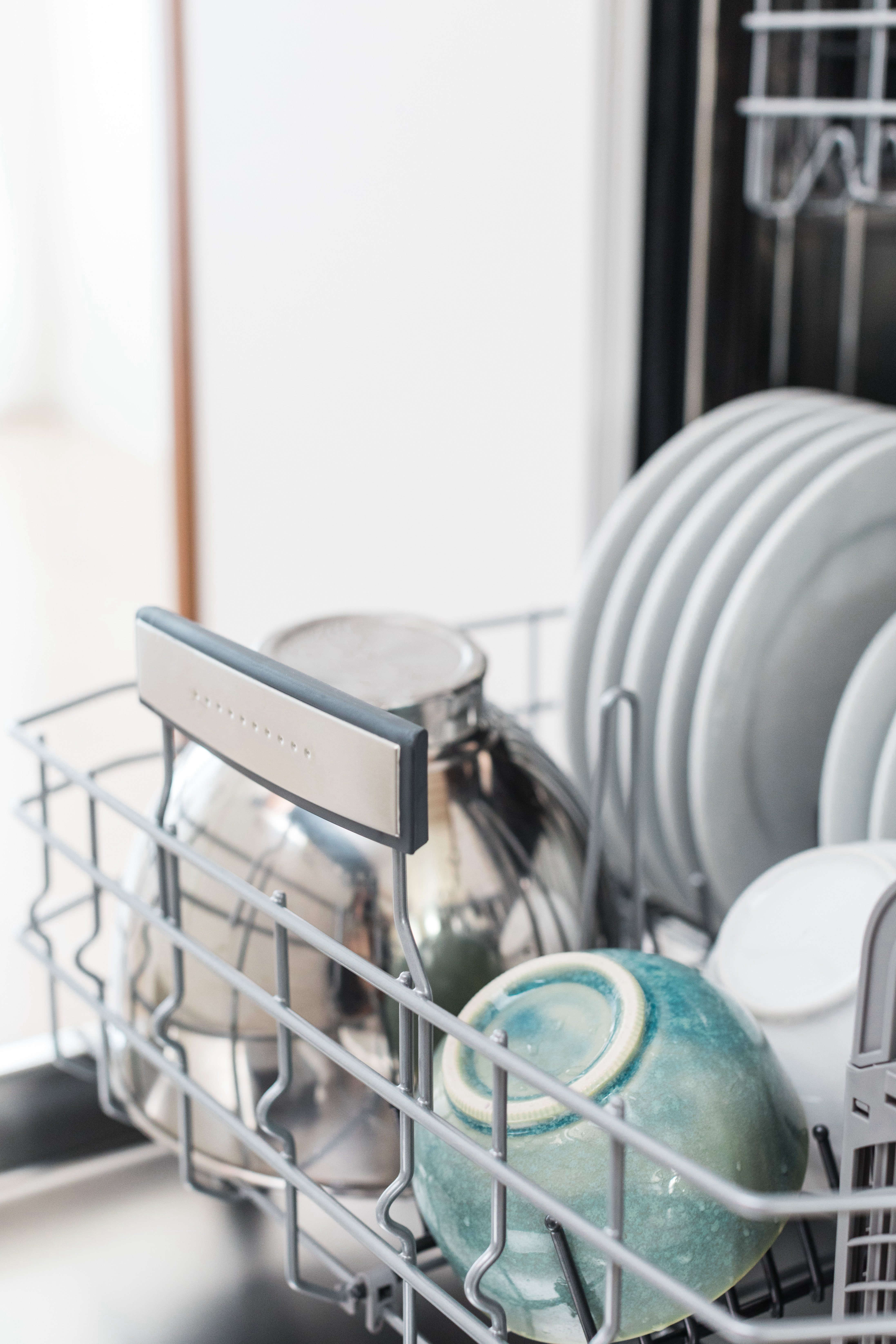
The top rack is best for glasses, mugs, cups, small bowls, saucers, lightweight dishwasher-safe plastics, and delicate items that can handle the dishwasher but should stay away from stronger bottom-rack heat and water pressure. Place cups and glasses upside down and slightly angled so water drains instead of pooling in the bottom. If your mug comes out holding a tiny lake, it was probably too flat.
Place items between the tines, not over them. Tines are designed to separate dishes and reduce rattling. When glasses rest over the tines, they can bump against each other during the cycle and chip. Bowls should face downward and toward the spray area. Do not stack bowls tightly together; water needs a clear path between surfaces.
Use Adjustable Rack Features
Many Bosch dishwashers include adjustable upper racks, often designed to make room for tall dishes below or tall glasses above. If you need to fit a stockpot on the bottom rack, raise the upper rack. If you are loading wine glasses or taller cups, lower it. Flexible rack systems are not decoration; they are the dishwasher equivalent of moving furniture before a party.
Bosch-style flexible tines can also help with awkward items such as mixing bowls, measuring cups, and oddly shaped containers. Fold or reposition them when needed so items sit securely and remain open to the spray.
How to Load the Bottom Rack
The bottom rack is the power zone. Load dinner plates, serving plates, larger bowls, pots, pans, casserole dishes, and heavier cookware here. The dirtiest surfaces should face inward and downward toward the spray arms. Plates usually belong between the tines, arranged so each plate has breathing room. Think “organized library shelf,” not “garage after a yard sale.”
Large platters, baking sheets, and cutting boards should go along the sides or back, not across the front. If a big item blocks the detergent dispenser, the detergent may not release properly. If it blocks the spray arm, water cannot circulate. Before starting the cycle, spin the spray arms gently by hand. If they hit a pan handle, spatula, or heroic lasagna dish, adjust the load.
Angle Bowls and Pans
Bowls, pots, and pans should face downward at an angle. This helps water hit the dirty surface and drain away during drying. Deep bowls loaded straight down may trap water. Pans laid flat can block spray. Angle them toward the center or the nearest spray zone so the dishwasher can do its job without needing a motivational speech.
How to Load the Third Rack
If your Bosch dishwasher has a third rack, use it for flatware, serving utensils, measuring spoons, lids, chopsticks, spatulas, and other shallow items. A third rack helps prevent utensils from nesting and can free space in the lower basket. Place items so they do not overlap heavily. If two spoons are spooning, only the outside one is getting clean.
Long utensils should lie flat on the third rack or upper rack. Avoid placing long spatulas or ladles in the lower utensil basket if they can fall through and block the spray arm.
How to Load Silverware
Silverware loading is where household debates become strangely passionate. For the cleanest results, mix forks, spoons, and knives rather than grouping all spoons together. Alternating utensils helps prevent nesting. Spoons are especially guilty of clinging together like they are afraid of the dishwasher.
For safety, place sharp knives blade-down or wash valuable knives by hand. Forks and spoons often clean well with the eating end up, but if your household includes kids or anyone who unloads at high speed, handles-up may be safer. The best approach is to follow your dishwasher manual and use common sense: clean is good, but keeping fingers intact is better.
Use Detergent and Rinse Aid Correctly
Place detergent pods, tablets, powder, or gel in the detergent dispensernot loose in the bottom of the dishwasher unless your manual specifically says otherwise. The dispenser releases detergent at the correct part of the cycle. Tossing detergent into the tub can cause it to dissolve too early, leaving the main wash underpowered.
Rinse aid is especially useful in hard-water areas and for modern energy-efficient dishwashers. It helps water sheet off dishes instead of forming droplets, which improves drying and reduces spots on glasses, plates, and cutlery. If you see water marks, your rinse aid setting may be too low. If you see rainbow-like streaks, it may be too high. Adjust according to your manual.
Do Not Overload the Dishwasher
Overloading feels efficient until half the load comes out dirty and you have to run it again. That is not efficiency; that is dishwashing déjà vu. Leave enough space between items for water and detergent to circulate. Never stack dishes directly on top of each other. If water cannot touch it, it cannot clean it.
A full dishwasher is efficient. An overstuffed dishwasher is a ceramic traffic jam. The difference is spacing. Load full, but load smart.
Choose the Right Cycle
For everyday plates and cups, an auto or normal cycle usually works well. For baked-on casserole residue, dried oatmeal, greasy pans, or dishes from a dinner party that got a little too enthusiastic, choose a heavy-duty cycle. For lightly soiled glassware, a delicate or quick cycle may be enough. Bosch dishwashers and other modern models often use sensors to adjust cleaning based on soil level, but the cycle still matters.
Drying options also matter. If your dishes are coming out wet, check rinse aid levels, use an enhanced dry setting if available, and make sure cups and bowls are angled properly. Plastic items often remain wetter than glass or ceramic because they do not retain heat as well. That is not personal failure; that is physics being annoying.
Unload Bottom to Top
When the cycle is finished, unload the bottom rack first. Water often collects on mugs, bowls, and plastic lids in the upper rack. If you unload the top first, that water can drip onto clean dishes below. Bottom-to-top unloading keeps dry dishes dry and prevents the classic “why is this plate wet again?” moment.
Maintenance Makes Loading Work Better
Even a perfectly loaded dishwasher will struggle if the filter is clogged or the spray arms are blocked. Clean the filter regularly to remove food debris, grease, and residue. Check the spray arm holes and gently clear buildup if needed. A blocked spray arm turns a dishwasher from a cleaning machine into a warm dish closet.
Run a dishwasher cleaner or maintenance cycle as recommended by your appliance manual. In hard-water areas, descaling may be necessary. Clean door seals and wipe away residue around the detergent and rinse aid compartments. Good loading and good maintenance work together; one without the other is like brushing your teeth while eating cookies.
Common Dishwasher Loading Mistakes
Blocking the Spray Arm
Always check that spray arms rotate freely before starting the dishwasher. Pan handles, tall utensils, and fallen lids are common blockers.
Putting Plastics Anywhere
Load dishwasher-safe plastics on the top rack unless your manual says otherwise. Secure lightweight plastics so they do not flip over, fill with water, or land near a heating element.
Facing Plates the Wrong Direction
Dirty surfaces should face the spray. In many machines, that means facing inward and downward. Your plate’s clean side does not need the VIP treatment; the saucy side does.
Using Too Much Detergent
More detergent does not always mean cleaner dishes. Too much can leave residue or contribute to cloudy glassware. Follow the product directions and your appliance manual.
Real-Life Experience: What Finally Worked in a Busy Kitchen
Here is the practical truth: most dishwasher problems are not caused by one dramatic mistake. They are caused by tiny habits that pile up. In a busy kitchen, the dishwasher often becomes a negotiation table. Someone loads cereal bowls like nesting dolls. Someone else puts a cutting board across the front like a castle gate. A third person believes spoons clean better when packed into a shiny metal bouquet. Then everyone acts shocked when the machine returns a fork with avocado still clinging to it.
The biggest improvement comes from creating a simple house system. In my experience, the easiest rule is this: top rack for cups, glasses, small bowls, and plastics; bottom rack for plates, pans, and big bowls; third rack or basket for utensils; dirty sides facing spray; nothing blocking the arms. It sounds almost too basic, but basic rules are the ones people actually follow when dinner is over and everyone wants to sit down.
Another helpful habit is the “spray arm spin test.” Before pressing start, slide the racks in and spin the spray arms. If they move freely, great. If they hit something, fix it immediately. This takes five seconds and can save an entire rewash cycle. It also makes you feel like a dishwasher pilot doing a pre-flight inspection, which is more exciting than it has any right to be.
Scraping instead of rinsing also changes the rhythm of cleanup. At first, it can feel wrong to put a saucy plate into the dishwasher without rinsing it. Many of us were raised to believe the dishwasher was basically a sanitizer for dishes we had already washed by hand. But once you trust the machine and use a quality detergent, the routine gets faster. Scrape the chunks, load with space, choose the right cycle, and let the dishwasher earn its square footage.
Drying improves when cups and bowls are angled instead of loaded flat. This is especially noticeable with mugs, storage containers, and small bowls. A mug loaded flat can come out holding enough water to hydrate a houseplant. A mug loaded at an angle drains better and dries faster. Rinse aid helps too, especially if glasses often look spotty or dishes feel damp after the cycle.
The final lesson is that the dishwasher is not a junk drawer with water jets. It is a machine with a pattern. Once you load according to that pattern, the results become more consistent. Plates come out cleaner. Glasses look clearer. Utensils stop staging spoon-based protests. And the kitchen closes faster after dinner, which may be the greatest household luxury of all.
Conclusion
Learning how to load a dishwasher properly is one of those small household skills that pays off every day. Bosch’s best dishwasher advice comes down to smart placement, flexible rack use, proper detergent, rinse aid, clear spray paths, and regular maintenance. Scrape instead of pre-rinsing, load dishes so water can reach the dirty surfaces, keep plastics secure, place bulky items along the sides or back, and avoid overcrowding.
A Bosch dishwasher can be impressively quiet and efficient, but the secret to sparkling dishes is teamwork between the machine and the person loading it. Give the spray arms room, give the detergent a fair chance, and give the spoons enough personal space. Your dishes will thank yousilently, because they are dishes, but still.