Note: This article is written in standard American English, fully rewritten in an original style, and based on publicly available reporting, airline-family travel guidance, parenting travel advice, and online etiquette discussions.
When Family Travel Turns Into Internet Theater
Traveling with kids is not for the faint of heart. It is less “family vacation” and more “mobile crisis management with snacks.” There are bags, bottles, wipes, chargers, car seats, sleepy toddlers, mystery crumbs, and at least one child who suddenly decides that shoes are a personal insult. So when parents take young children on a plane, most reasonable people understand that things may get loud, sticky, or emotionally Shakespearean.
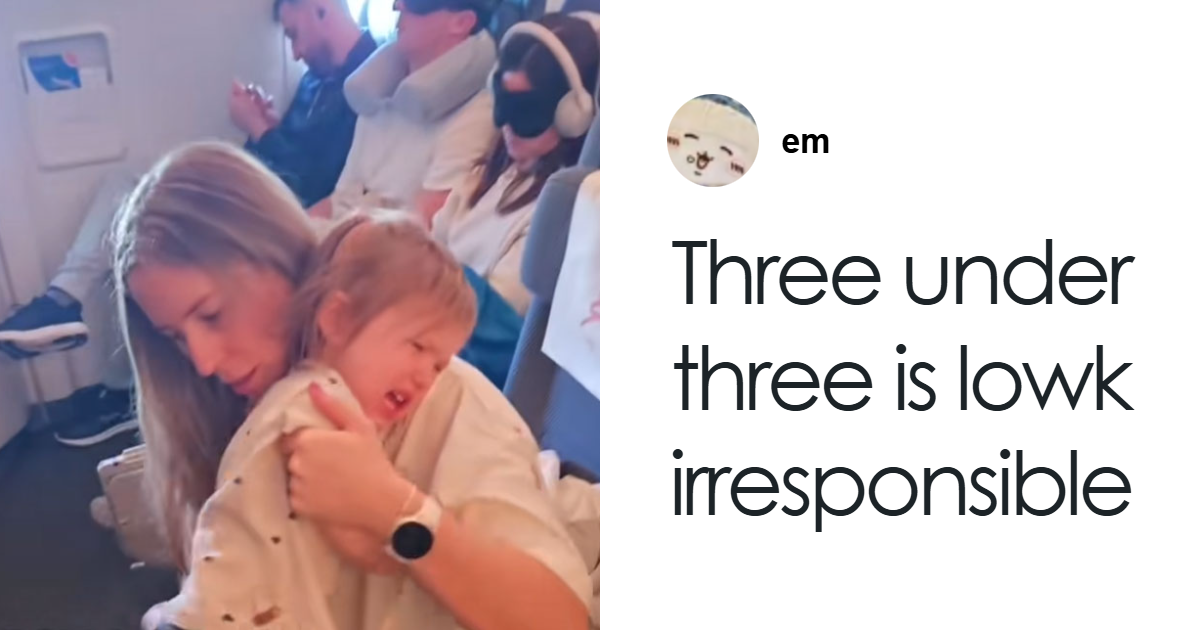
But sympathy has a funny expiration date. It tends to disappear the moment a stressed parent stops asking for grace and starts demanding applause. That is exactly why the story behind “Family Posts A Self-Righteous Video About Traveling With Kids, Get Roasted Online” became such a perfect internet storm. A family reportedly posted a video about traveling with three children under three, joking about their own chaos while taking a swipe at other passengers who were simply trying to rest. Online viewers were not impressed. In fact, they responded with the kind of roasting usually reserved for burnt toast, bad hot takes, and people who clap when the plane lands.
The viral debate was not really about whether children should be allowed on airplanes. Of course they should. Kids are people, not carry-on violations. The real issue was tone: the suggestion that other passengers were somehow wrong for wearing headphones, closing their eyes, or refusing to participate in the family’s airborne circus. The internet’s message was blunt: your kids are your responsibility, not a group project assigned to row 18.
The Viral Video That Sparked the Backlash
According to online coverage of the incident, the father’s video showed the family struggling through a flight with three very young children. That alone would have earned plenty of compassion. Many parents know the feeling: one child is hungry, one is overtired, one has discovered the tray table, and suddenly your vacation feels like a hostage negotiation conducted at cruising altitude.
What changed the mood was the self-righteous framing. The post appeared to mock or resent nearby passengers who were resting peacefully while the parents handled the chaos. Instead of viewers seeing a relatable “parenting is hard” moment, many saw a complaint that other people had not volunteered to emotionally co-parent strangers’ children for the duration of the flight.
That distinction matters. A parent saying, “Wow, traveling with toddlers is humbling,” usually gets support. A parent implying, “How dare these people relax while we suffer?” gets a comment section carrying pitchforks and boarding passes.
Why the Internet Roasted the Family So Quickly
1. Nobody Bought the Entitlement
Online audiences are often willing to defend parents when they are doing their best. A crying baby during takeoff? Normal. A toddler melting down because the banana broke in half? Tragic, but normal. A parent sweating through an apology while trying to calm everyone down? Most people will understand.
But the moment a parent acts as though everyone else on the plane owes them emotional labor, free babysitting, seat swaps, entertainment, or a standing ovation, public sympathy takes a sharp left turn into “absolutely not.” The reaction to this family’s travel video reflected a broader cultural frustration with what many call “entitled parenting”: the belief that having children automatically makes everyone else responsible for adjusting, sacrificing, and smiling through the inconvenience.
2. Headphones Are Not an Attack
One of the funniest parts of the backlash was how many people defended the passengers who were sleeping or wearing headphones. In modern air travel, headphones are not rude. They are emotional armor. They are the thin padded wall between a traveler and a chorus of engine noise, boarding announcements, coughing, snack wrappers, and someone watching videos at full volume like civilization was merely a suggestion.
Passengers who tune out are not rejecting your children. They are surviving the flight in their own way. For some, that nap may be the only rest they get between work shifts. For others, the flight may come after a funeral, medical appointment, breakup, deployment, or plain old exhaustion. The parent may be having a hard day, but so might everyone else.
3. The Plane Is Public Space, Not a Family Living Room
The biggest lesson from the viral travel-with-kids debate is that airplanes are shared spaces. A parent’s stress is real, but it does not erase everyone else’s right to quiet, boundaries, and personal comfort. Public parenting requires a balance: other people should show basic patience toward children, and parents should make a sincere effort to manage behavior that affects others.
That does not mean kids must behave like tiny accountants in wrinkle-free cardigans. Children cry, fidget, spill things, ask loud questions, and occasionally narrate bathroom needs to the entire cabin. The issue is not perfection. The issue is effort. People can usually tell the difference between a parent trying and a parent outsourcing responsibility to “the village,” without asking whether the village purchased a ticket.
Flying With Kids Is HardThat Part Is Not Up for Debate
To be fair, family travel can be brutally difficult. Parents are expected to manage safety rules, airport security, boarding logistics, hunger, sleep schedules, ear pressure, entertainment, bathroom emergencies, and unpredictable airline policies. The U.S. Department of Transportation has even maintained public information about family seating because parents can struggle to sit next to young children without extra fees or careful planning. That is not a small problem; it affects safety, comfort, and basic common sense.
The Federal Aviation Administration also recommends that young children use approved child restraint systems on airplanes when possible, especially because turbulence can be dangerous for lap-held infants. Meanwhile, the Transportation Security Administration allows certain baby and toddler essentials, such as formula, breast milk, toddler drinks, and baby food, in quantities above the standard liquid limit, though they must still be screened. In other words, flying with children requires parents to understand rules that many solo travelers never have to think about.
So yes, parents deserve grace. They deserve family-friendly policies. They deserve flight crews who understand that children are not malfunctioning luggage. But deserving grace is not the same as demanding that strangers absorb every inconvenience with a smile and then get mocked online for protecting their peace.
The Difference Between “Please Be Patient” and “Everyone Must Serve Us”
There is a world of difference between a parent silently hoping fellow passengers will be patient and a parent publicly shaming those passengers for not joining the struggle. The first is human. The second is how you get roasted online before the beverage cart reaches row 12.
Most people do not expect parents to control every sound their children make. Babies cry. Toddlers resist sleep. Preschoolers ask why the wing is “doing that thing.” What people do expect is that parents stay engaged. Bring snacks. Bring activities. Prepare the kids for what flying will feel like. Use headphones for tablets. Walk the aisle when allowed. Apologize when a child kicks a seat. Ask politely if help is needed, instead of assuming help is owed.
In public, effort is social currency. A parent who is visibly trying often receives compassion, even from people who do not particularly enjoy children. A parent who films the chaos and frames other passengers as villains may receive something else entirely: a comment section with no mercy and excellent Wi-Fi.
Why Social Media Makes Parenting Conflicts Worse
Social media rewards drama, exaggeration, and moral certainty. A calm post saying, “Traveling with three toddlers was tough, but we made it,” may get polite likes from grandparents. A post implying that everyone else on the plane was selfish? That gets engagement. Unfortunately, engagement is not the same as approval.
The internet has become very good at detecting tone. Viewers may not know the whole story, but they can smell entitlement through a screen. When parents post children’s difficult moments online, they also risk turning a normal family struggle into public content. That raises questions about privacy, dignity, and whether kids should become props in a parent’s viral complaint.
There is also the issue of “sharenting,” the habit of parents posting extensive content about their children’s lives. A funny travel clip may seem harmless, but children grow older. One day, they may not appreciate that their meltdown, mess, or stressful flight became part of a public debate. Before posting, parents should ask: Is this helpful? Is it kind? Is it fair to my child? Or am I just farming sympathy because row 18 had the audacity to nap?
What Parents Can Do Instead
Plan Like a Pessimist
The best family travel strategy is to assume something will go wrong. Pack more snacks than seems reasonable. Bring quiet toys, extra clothes, wipes, chargers, child-friendly headphones, and comfort items. Download shows before the flight. Practice wearing headphones at home. Explain what security, boarding, takeoff, and landing will feel like. Children often behave better when the unknown becomes familiar.
Respect the Bubble
Every passenger has an invisible bubble of personal space, and on airplanes that bubble is already the size of a grape. Teach kids not to kick seats, grab hair, tap strangers, play sound out loud, or use the tray table like a percussion instrument. If they do, correct it quickly and calmly. A simple “I’m sorry, we’re working on it” can rescue a lot of goodwill.
Ask, Don’t Assume
Need to swap seats? Ask politely and accept “no” without turning it into a courtroom drama. Need help lifting a bag? Ask kindly. Need a minute of patience? Most people will give it if they do not feel manipulated. The magic words are still magic: please, thank you, and sorry about that.
Keep the Camera Away From Other Passengers
Filming strangers on planes is a fast way to create conflict. People did not buy a ticket to become background characters in someone else’s parenting content. If the moment is stressful, solve the problem first and post laterpreferably without mocking anyone who was simply minding their business.
What Other Passengers Should Remember
The backlash against this family does not mean travelers should be cruel to parents. Public spaces require patience from everyone. Babies cannot regulate their emotions like adults. Toddlers do not understand cabin etiquette. Even excellent parents can have a nightmare flight. A little kindness can make a huge difference.
If a child is crying, glaring rarely helps. If a toddler kicks your seat, politely alert the parent or ask a flight attendant for help. If the family looks overwhelmed but respectful, offer grace instead of judgment. And if you truly cannot handle noise, bring headphones. In 2026, boarding a plane without headphones is like going camping without bug spray and then blaming nature.
The Bigger Cultural Lesson
The reason “Family Posts A Self-Righteous Video About Traveling With Kids, Get Roasted Online” struck a nerve is because it sits at the intersection of several modern tensions: parenting stress, public etiquette, travel discomfort, and social media performance. Parents want understanding. Non-parents want boundaries. Kids need guidance. Airlines need better family policies. And the internet, as always, wants popcorn.
The fairest answer is not “children should never fly” or “everyone must tolerate everything children do.” The answer is shared responsibility. Parents should prepare, supervise, and avoid turning strangers into villains. Fellow passengers should be patient with normal child behavior and save outrage for genuine neglect or entitlement. Airlines should make family seating and safety clearer. Everyone should stop pretending that a commercial flight is a luxury spa with wings.
Experiences and Practical Reflections on Traveling With Kids
Anyone who has traveled with children knows the trip begins long before the airport. It begins at home, where one parent is trying to pack efficiently while a child removes socks from the suitcase with the determination of a raccoon in a bakery. The night before departure, nobody sleeps properly. The adults worry about documents, weather, traffic, boarding times, and whether the stroller will survive baggage handling. The children somehow sense the tension and choose that exact moment to become deeply attached to a stuffed animal last seen under the couch in 2022.
At the airport, the family becomes a small moving village. There are backpacks, bottles, boarding passes, a stroller, a car seat, tiny shoes, and one snack cup that sounds like maracas. Security can feel like a game show where the prize is making it through without losing a shoe, a tablet, or your dignity. Parents have to remove items, fold gear, answer questions, calm children, and still remember which pocket contains the passports. It is impressive that any family arrives at the gate without needing a motivational speech.
On the plane, the real test begins. The best parents usually have a system. They bring snacks that are not too messy, toys that are quiet, and screens with headphones. They do not release glitter stickers into the cabin like festive pollution. They pace entertainment carefully, because giving a toddler every activity in the first 12 minutes of a five-hour flight is rookie behavior. They also know that hunger, boredom, and fatigue are the unholy trinity of travel meltdowns.
Still, even the most prepared parent can face chaos. A child may cry during descent because ear pressure hurts. A baby may refuse sleep. A toddler may decide the seat belt is a villain. These moments are stressful, but they are not moral failures. The difference is how parents respond. A calm parent who keeps trying earns far more respect than one who shrugs, records the scene, and expects everyone else to admire the “adventure.”
Good family travel etiquette is really about humility. Parents can acknowledge that their children are allowed to exist in public while also recognizing that public comfort matters. Other travelers can acknowledge that kids are unpredictable without treating every sound like a personal attack. The best flights happen when everyone gives a little: parents give effort, passengers give patience, and nobody gives TikTok a fresh reason to assemble a jury.
The viral roasting of this family is a reminder that online audiences are not opposed to children. They are opposed to entitlement. People are much more likely to support parents who say, “This was hard, and we did our best,” than parents who imply, “This was hard, and everyone else should feel guilty for not suffering with us.” Traveling with kids may build character, but so does respecting strangers who just want to nap through the turbulence.
Conclusion
The story of a family posting a self-righteous video about traveling with kids and getting roasted online is not simply another internet pile-on. It is a lesson in public etiquette, social media tone, and the delicate balance between empathy and responsibility. Families deserve understanding when travel gets messy. Children deserve patience while they learn how to behave in public. But strangers also deserve boundaries, quiet, and the right to wear headphones without being drafted into someone else’s parenting narrative.
In the end, the internet roasted the family because the post seemed to confuse hardship with heroism and inconvenience with injustice. Traveling with children is difficult, sometimes wildly so, but difficulty does not automatically make other passengers the villains. The smartest move for parents is to prepare well, stay humble, respect shared spaces, and keep the camera pointed away from people who are simply trying to survive the flight in peace.