
Every ambitious DIY project begins with a beautiful vision: a sturdy backyard fence, a freshly repaired deck, a storage shed that finally liberates the garage, or a raised garden bed worthy of suspiciously perfect tomatoes. Then the screws arrive. Hundreds of them.
Repetitive fastening can turn an exciting build into a slow-motion wrist workout. You pick up a screw, balance it on the bit, drop it, retrieve it from beneath a board, drive it crooked, remove it, and reconsider every life decision that led you to woodworking.
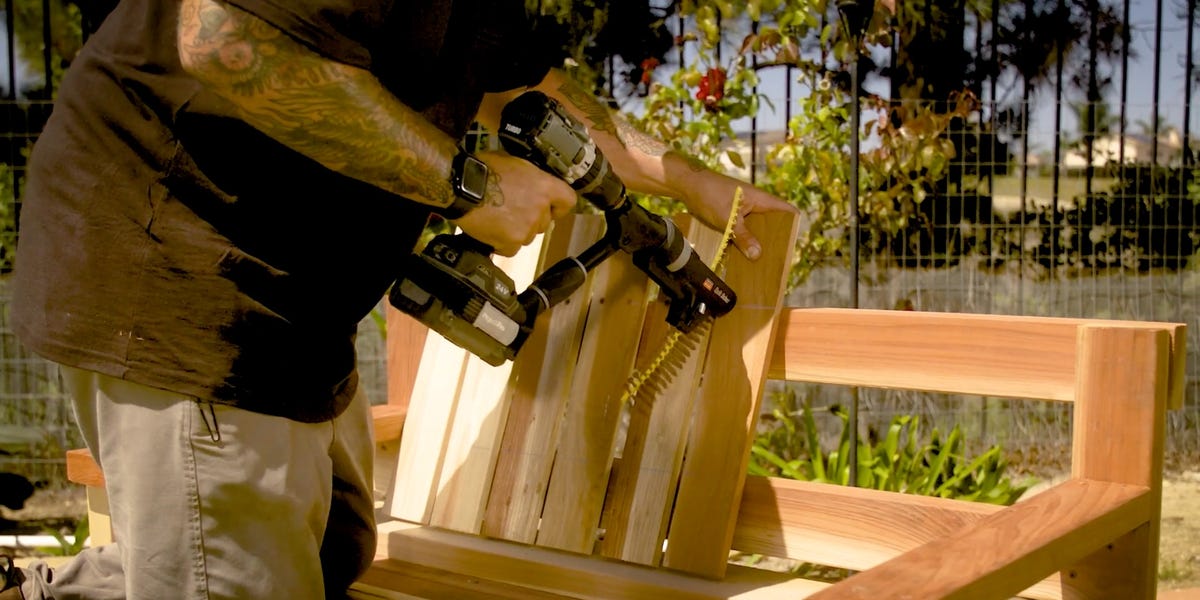
An auto-feed screw-driving tool offers a smarter approach. The Simpson Strong-Tie Quik Drive Project Pro, for example, attaches to most compatible cordless drill/driver motors and feeds collated screws automatically. Instead of handling each fastener separately, you load a strip, position the nose, and drive. It is a simple idea with the potential to transform decks, fences, subfloors, sheathing, and other screw-heavy projects.
Product features and compatibility:
Why Repetitive Fastening Slows Good Projects Down
Driving one screw is easy. Driving 300 screws while maintaining consistent spacing, alignment, and depth is a different activity entirely. The difficulty is not usually a lack of power. It is the collection of tiny interruptions between fasteners.
With loose screws, every cycle includes reaching, grabbing, placing, aligning, driving, and checking. Drop a few screws into grass, sawdust, or the mysterious dimension beneath your workbench, and the rhythm disappears completely.
Fatigue also affects quality. As your hands and shoulders tire, the driver begins to tilt. Screw heads get stripped, fasteners wander away from layout lines, and some screws are buried deeply enough to qualify as archaeological artifacts.
An auto-feed screw system removes several of those steps. The fasteners arrive on a collated strip, and the mechanism advances the next screw after each drive. You still need to position the tool correctly, but you no longer have to pick up and balance every fastener individually.
Meet the Auto-Feed Screw-Driving Tool
The Project Pro is not a complete power tool with its own motor and battery. It is a lightweight attachment that uses a compatible cordless drill or driver motor as its power source. That distinction matters because homeowners may be able to use a battery platform they already own rather than purchasing another full-size powered system.
How the Auto-Feed Mechanism Works
Compatible screws are connected in a flexible strip. The strip passes through the attachment, positioning one fastener beneath the drive bit. When the nose is pressed against the work surface and the trigger is activated, the bit engages the screw and drives it into the material. As the tool is lifted, the feed mechanism advances the next screw.
Traditional professional auto-feed systems have been used for years on subfloors, drywall, decking, and other large installations. The Project Pro brings the same basic workflow to a more approachable attachment designed for DIYers and lighter project use.
Auto-feed operating principle and established applications:
Important Compatibility Details
The attachment is designed for designated collated Simpson Strong-Tie WSV and DSV wood screws measuring from 1 5/8 inches to 2 1/2 inches. A T25 drive bit is included with the system. Because compatibility can vary by motor, fastener, and application, buyers should verify their exact drill or driver model before beginning a project.
This is not a universal device for every screw in the hardware aisle. That limitation is intentional. A controlled combination of attachment, strip, bit, and fastener helps the feeding mechanism operate predictably and produce more consistent results.
How Much Time Can It Save?
Simpson Strong-Tie promotes the tool as capable of fastening projects up to four times faster than conventional screw-driving methods. Actual speed will depend on the material, screw spacing, tool setup, operator experience, battery condition, and accessibility of the work area.
The greatest gains usually appear on uninterrupted rows of identical fasteners. A long fence rail or a sheet of subfloor is ideal. A tiny cabinet repair involving three different screw lengths and a corner that requires the flexibility of a circus performer is not.
Projects Where This Screw-Driving Tool Makes Sense
Wood Fence Construction
Fence building may be the natural habitat of an auto-feed driver. Every rail needs secure connections, and every picket may require multiple screws. Even a modest fence can contain hundreds of fasteners.
Once the posts and rails are aligned, the tool can help the installer work steadily from one marked location to the next. The absence of loose screws also means fewer fasteners dropped into grass, gravel, or the neighbor’s flower bed.
Deck Building and Deck Repair
Decking requires repetitive fastening across broad surfaces. An auto-feed attachment can be useful when face-fastening compatible wood boards, replacing sections of damaged decking, installing stair components, or assembling railings and other non-specialized wood connections.
It should not be treated as permission to substitute ordinary screws for structural fasteners. Ledgers, joist hangers, posts, beams, and other load-bearing connections may require specific code-approved screws, bolts, or nails. The project plan and fastener manufacturernot enthusiasmdetermine what belongs in those locations.
Subfloors and Sheathing
Subfloor installation combines large fastener counts with plenty of bending and kneeling. A compatible auto-feed tool can simplify the repetitive driving stage and help maintain a steadier pace across full sheets.
Consistent screw depth is especially valuable here. A proud screw head can interfere with the finished flooring, while an excessively buried screw can damage the panel surface and reduce the quality of the connection.
Raised Garden Beds
Raised beds look simple until you begin fastening long boards, corner posts, interior braces, trim pieces, and protective caps. The Project Pro can accelerate compatible wood-to-wood connections, particularly when several beds share the same design.
Use exterior-rated fasteners suitable for the lumber and exposure conditions. Soil, irrigation, rain, preservatives, fertilizers, and changing temperatures create a considerably harsher environment than the average living-room bookshelf.
Sheds, Benches, Racks, and Backyard Builds
Storage sheds, firewood racks, outdoor benches, cornhole boards, privacy screens, worktables, and utility shelving all include stages where the same screw is installed repeatedly. These are excellent opportunities to use an auto-feed attachment for basic assembly while reserving a regular drill for pilot holes and a hand driver for delicate hardware.
Common applications and real project examples:
How to Set Up the Tool for Better Results
1. Read the Instructions Before Loading Screws
The mechanism is straightforward, but its attachment points, adjustment controls, and compatible fasteners matter. Confirm that the motor is supported, install the specified bit, and make sure every component is fully seated.
2. Disconnect the Battery During Setup
Remove the battery before attaching the system, replacing a bit, clearing a jam, or making adjustments near the drive mechanism. A trigger that gets pressed accidentally has an impressive ability to make a calm afternoon suddenly memorable.
3. Load the Correct Collated Strip
Use the approved screw type and length for the attachment and project. Insert the strip in the direction shown by the manufacturer. Do not force a damaged, twisted, or incompatible strip through the feed track.
4. Calibrate Depth on Scrap Material
Before approaching the actual project, drive several screws into a piece of scrap from the same material. Adjust the depth control until the screw head sits where the application requiresusually flush or slightly recessed, depending on the fastener and surface.
5. Keep the Tool Square
Place the nose flat against the workpiece and align the driver with the intended screw path. Starting at an angle increases the likelihood of wandering fasteners, damaged bits, stripped heads, and inconsistent depth.
6. Use Firm, Controlled Pressure
Apply enough forward pressure to keep the nose engaged and the bit seated, but do not attempt to body-slam the screw into submission. Let the motor, fastener threads, and feed system perform the work.
7. Inspect the First Few Connections
Check screw spacing, depth, material contact, and alignment after the first several drives. Recheck periodically throughout the project, particularly after changing batteries, moving to another type of lumber, or adjusting the tool.
How to Get Speed Without Sacrificing Quality
The fastest tool in the world cannot rescue a project with bad measurements or incorrect fasteners. True efficiency comes from organizing the entire fastening process.
Mark the Layout First
Snap chalk lines or mark screw locations before fastening. A clear layout eliminates hesitation and produces orderly rows. It also helps ensure that screws enter joists, studs, rails, or blocking instead of passing elegantly into empty space.
Stage Materials Within Reach
Place screw strips, batteries, measuring tools, and replacement bits where they can be reached safely. Continually walking across a deck frame to retrieve supplies can erase much of the time saved by automatic feeding.
Use a Drill-and-Drive Workflow
Keep a conventional drill fitted with the appropriate pilot or countersink bit and use the auto-feed attachment for driving. This two-tool arrangement avoids constant bit changes and is especially effective near board ends, in dense lumber, or wherever splitting is a concern.
Start Slowly on Visible Surfaces
Variable-speed control is useful when initiating a screw and approaching final depth. Excessive speed can overdrive fasteners or damage the screw recess. A fast project covered in crater-shaped holes is not technically a victory.
Driving technique, alignment, pilot-hole and speed guidance:
Choose the Right Screw, Not Merely the Convenient One
A screw-driving tool improves installation speed, but the fastener itself determines whether the connection is appropriate for the material and environment.
Outdoor projects generally require corrosion-resistant fasteners approved for exterior or preservative-treated lumber. Coastal locations, wet environments, chemical exposure, and certain wood treatments may require stainless steel or another specifically rated material.
Do not mix incompatible metals casually. Contact between different metal types can accelerate corrosion under some conditions. Match screws, connectors, and hardware according to the project specifications and manufacturer recommendations.
Predrilling may still be necessary near board ends, in hardwood, or when the wood begins to split. Automatic feeding removes the step of handling individual screws; it does not repeal the laws of wood movement.
Fastener coating, treated lumber and splitting guidance:
Safety and Ergonomics Still Matter
Auto-feed operation can reduce fumbling and shorten the time spent on repetitive fastening, but it remains a powered-tool activity. Wear eye protection, secure loose clothing and hair, maintain stable footing, and keep hands away from the nose and fastener path.
Hearing protection is sensible during extended use, particularly when the attachment is powered by an impact driver. Work areas should be well lit, and the lumber should be supported so it cannot shift unexpectedly.
Before driving into an existing wall, floor, or assembled structure, determine whether electrical wiring, plumbing, gas lines, or other hidden services could be present. A fast screw is still fully capable of finding the one pipe you hoped it would miss.
Repetitive motion, forceful gripping, vibration, and awkward posture are recognized ergonomic risk factors. Rotate tasks, take short breaks, relax your grip when possible, and avoid working for long periods with the wrist sharply bent. Faster completion is useful partly because it can reduce total exposure, but speed should never encourage careless posture.
Power-tool hazards and ergonomic risk factors:
Auto-Feed Attachment vs. Drill vs. Impact Driver
A cordless drill/driver remains the most versatile choice for drilling pilot holes, boring openings, using countersinks, and driving screws with clutch-controlled precision. An impact driver specializes in high-torque fastening and is particularly useful for long screws, dense lumber, and stubborn bolts.
An auto-feed attachment solves a different problem: fastener handling and repetition. It does not automatically make the motor more powerful, and it does not replace the need for drilling. It organizes compatible screws and presents them to the bit one after another.
For a substantial building project, an efficient tool setup may include all three functions:
- A drill/driver for pilot holes and general drilling
- An impact driver for heavy or high-torque fasteners
- An auto-feed attachment for long runs of compatible screws
The best combination depends on the work. A deck repair may justify all three. Hanging one small shelf probably does not require forming a cordless-tool orchestra.
Drill and impact-driver distinctions:
Who Will Benefit Most from This Tool?
The Project Pro is most attractive for homeowners, remodelers, maintenance crews, landlords, and DIY builders who routinely complete wood projects involving dozens or hundreds of similar screws.
It may be a worthwhile addition when you:
- Plan to build or repair a wood fence
- Need to install subfloor or sheathing
- Regularly build raised beds, benches, racks, or outdoor furniture
- Want to reduce time spent handling loose fasteners
- Already own a compatible cordless drill or driver motor
- Value repeatable screw depth and a more continuous workflow
It may be less useful when projects involve only a handful of screws, many different fastener lengths, delicate finish work, specialized composite-decking systems, confined corners, or structural connections requiring fasteners outside the approved range.
Common Mistakes to Avoid
- Buying screws by length alone: Verify the series, coating, head, bit, and application.
- Skipping the scrap test: Depth settings should be calibrated before fastening visible material.
- Driving at an angle: Keep the nose square unless the tool and connection are specifically designed for angled fastening.
- Using damaged strips: Bent or distorted collation can interfere with feeding.
- Ignoring splitting: Predrill where the lumber, fastener location, or manufacturer requires it.
- Assuming every screw is structural: Use code-approved fasteners for load-bearing connections.
- Clearing jams with the battery installed: Disconnect power before placing fingers near the mechanism.
- Chasing speed immediately: Establish accuracy first; speed develops naturally after several successful drives.
Conclusion: A Small Tool That Can Unlock Bigger Builds
The best project tools do not merely add power. They remove friction. An auto-feed screw-driving attachment eliminates much of the repetitive handling that makes decks, fences, subfloors, and backyard structures feel longer than they need to be.
The Project Pro is particularly compelling because it works with compatible cordless motors many DIYers already own. Its collated fasteners, automatic advancement, adjustable depth, and straightforward point-and-drive operation can improve momentum and consistency during screw-heavy jobs.
It is not a universal replacement for a drill, an impact driver, careful layout, or correct fastener selection. Used in the right application, however, it can convert an afternoon of picking up loose screws into an afternoon of visible progress. Your dream project still requires measuring, cutting, fitting, and the occasional conversation with a board that refuses to be straightbut fastening no longer has to be the part that steals the weekend.
Extended Experience: What a Weekend Build Feels Like with an Auto-Feed Driver
Consider a typical weekend project: building two long raised garden beds from exterior lumber. The pieces have already been cut, the ground is reasonably level, and every corner requires multiple screws. With a conventional driver and a box of loose fasteners, the first few connections go smoothly. By the fourth corner, screws are rolling off boards, the driver bit is occasionally slipping, and several fasteners have disappeared into the lawn.
The auto-feed experience begins with a few minutes of setup. The attachment must be connected correctly, the approved T25 bit installed, and the first collated strip loaded in the proper direction. It is tempting to skip the depth test because the boards are waiting and confidence is dangerously high. Testing on scrap proves valuable, however: the initial screw sits slightly proud, so the depth control receives a small adjustment.
The first project screw is driven slowly. The tool nose rests squarely against the lumber, the trigger starts gently, and the fastener enters without requiring a free hand to hold it. When the tool lifts, the next screw advances. That small movement is the moment the system begins to make sense.
After several drives, the workflow becomes rhythmic: position, press, drive, lift, advance. There is no repeated reach toward a box and no attempt to balance a screw while holding two boards together. One hand can stabilize the workpiece while the other operates the driver, provided both remain safely away from the fastener path.
The greatest benefit is not breathtaking raw speed during a single drive. It is the disappearance of interruptions between drives. Ten seconds saved here, a dropped screw avoided there, and fewer pauses for bit alignment accumulate across the entire build. By the time the second bed is assembled, the improvement feels substantial.
The tool does not make every connection effortless. Near the end of one board, the wood begins to show signs of splitting. The correct response is not to squeeze the trigger harder. A pilot hole is drilled, and the screw is installed normally. At another corner, limited clearance makes the attachment awkward, so a compact driver handles the final fastener.
Battery management also becomes part of the experience. Repetitive fastening can consume energy steadily, especially when dense or treated lumber is involved. Keeping a charged spare nearby prevents an unwanted break halfway through a row. A fresh bit is equally useful because a worn T25 interface can reduce control and damage screw heads.
By the end of the project, the most noticeable difference is physical and mental. There has been less bending to collect dropped screws, less pinching of individual fasteners, and less frustration from repeatedly starting the same tiny operation. The finished rows also appear more consistent because depth was set once and monitored throughout the build.
The practical lesson is that an auto-feed screw-driving tool rewards preparation. Organize the materials, mark fastener locations, confirm compatibility, test the depth, and keep the tool square. Do those things, and the attachment becomes a genuine productivity aid rather than another gadget occupying a shelf. It will not design the project, correct inaccurate cuts, or explain why one board is shaped like a banana. It will simply make the repetitive fastening stage faster, cleaner, and considerably less annoyingwhich, during a long weekend build, can feel surprisingly close to magic.
Research synthesized from current U.S. guidance and reporting published by Simpson Strong-Tie, Popular Mechanics, Fine Homebuilding, OSHA, CDC/NIOSH, The Home Depot, Lowe’s, This Old House, Pro Tool Reviews, Bob Vila, WOOD Magazine, The Spruce, and Better Homes & Gardens.














