Most productivity apps walk into your life wearing a tiny digital suit and carrying a clipboard. They want your deadlines, your recurring tasks, your five-year goals, your quarterly priorities, and possibly your blood type. Finch does something different. It hands you a tiny bird, asks how you feel, and gently suggests that brushing your teeth, drinking water, or taking one deep breath might count as progress. Honestly? Rude of it to be so effective.
In this Finch review, we are looking at why a cute self-care app has become a surprisingly powerful productivity tool for people who dislike being bullied by their own to-do list. Finch is not trying to be Asana, Notion, Todoist, or a hyper-optimized CEO morning routine with cold plunges and suspiciously perfect lighting. It is a habit tracker, mood journal, self-care companion, and motivational app built around one soft idea: taking care of yourself can be easier when it feels kind, playful, and low-pressure.
The headline promise is simple: take care of your virtual pet by taking care of yourself. Complete goals, journal, breathe, reflect, check in with your mood, and your little “birb” grows, explores, earns rewards, and becomes weirdly important to you. One day you are skeptical. Three days later you are emotionally invested in whether your cartoon bird has a seasonal sweater. This is how they get you.
What Is Finch?
Finch is a self-care pet app for iOS and Android that combines habit tracking, mood tracking, journaling, breathing exercises, reflections, focus timers, quizzes, motivational prompts, streaks, and light social encouragement. Instead of treating personal growth like a military operation, Finch turns small daily actions into energy for your virtual pet. Your bird goes on adventures, learns about the world, collects items, decorates a room, and sends back little discoveries.
At first glance, Finch looks like a wellness app wearing pajamas. Underneath the cozy design, however, it uses familiar behavior-change mechanics: small goals, positive reinforcement, daily check-ins, rewards, customization, reflection, and gentle repetition. These are not magical productivity beans. They are practical tools that help reduce friction between “I should do this” and “Fine, I’ll do the tiny version.”
That difference matters. A traditional productivity app often assumes your main problem is organization. Finch assumes your main problem might be energy, mood, overwhelm, perfectionism, anxiety, burnout, or simply being a human being with laundry on a chair. For many users, that makes it feel less like a task manager and more like a supportive pocket companion.
How Finch Works
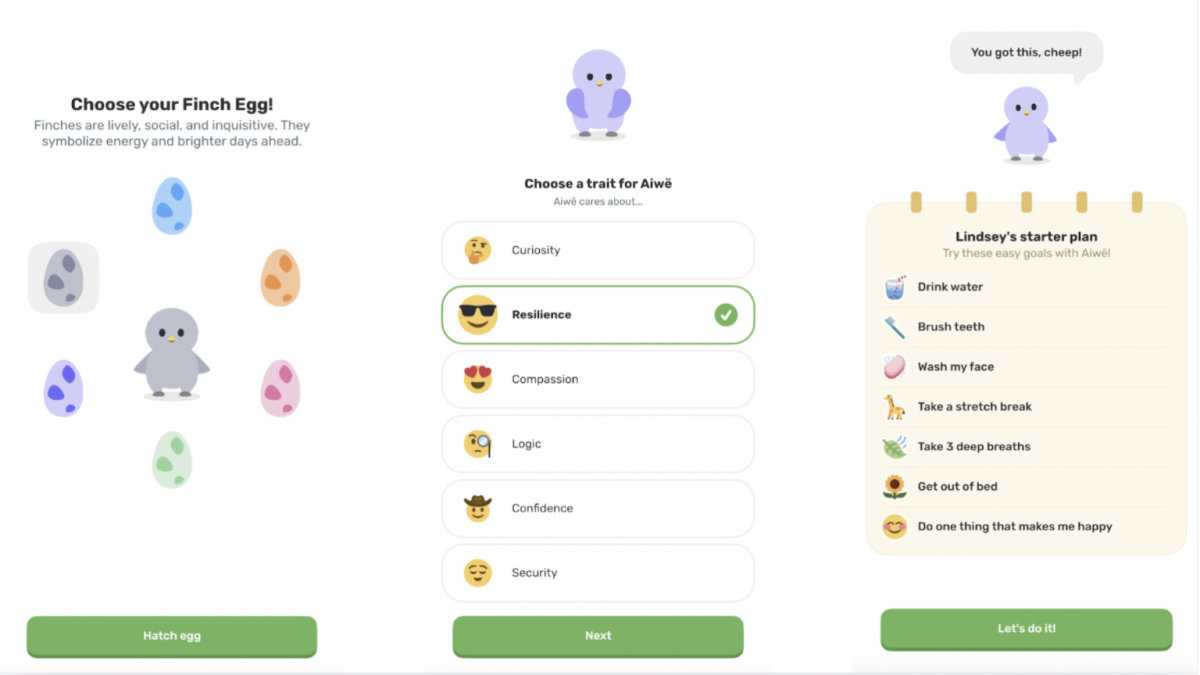
When you open Finch, you typically start with a mood check-in. The app asks how you are feeling, then gives you a daily space where your goals, reflections, and self-care activities live. You can choose suggested goals or create your own. These can be as basic as “get out of bed,” “drink water,” “brush teeth,” “take medication,” “stretch,” “step outside,” or “reply to one message.”
Completing goals gives your bird energy. With enough energy, your bird can go exploring. You also earn rainbow stones, Finch’s in-app currency, which can be used for outfits, room decor, and other customization items. The reward loop is cheerful without feeling like a casino machine. You are not being punished for being imperfect; you are being nudged toward noticing what you did accomplish.
Daily Goals
The daily goal system is the productivity center of Finch. You can set recurring tasks, one-time tasks, or journey-based goals around themes like movement, mindfulness, tidying, sleep, confidence, gratitude, or emotional regulation. The best part is that goals can be hilariously small. Finch does not sneer at “stand up for ten seconds.” It says, “Nice job, champion. Your bird has energy now.”
Mood Tracking and Reflections
Finch also includes mood check-ins and guided reflections. Over time, these can help you notice patterns: maybe your mood dips on late-night scrolling days, improves after walks, or gets chaotic when you forget lunch. The app’s insights are not a substitute for therapy or medical care, but they can give you useful clues about your daily rhythms.
Breathing, Focus Timers, and Quizzes
Beyond goals and journaling, Finch offers breathing exercises, focus timers, soundscapes, and short quizzes related to emotional well-being. These tools make the app feel broader than a checklist. It can help you start work, calm down, pause before reacting, or end the day with a moment of gratitude instead of falling asleep while your phone hits your face.
Why Finch Feels Different From Other Productivity Apps
The big reason Finch stands out is tone. Many productivity apps are built around urgency. Finch is built around care. It does not shame you for missing tasks. It does not make your bird suffer because you forgot to drink water. It does not turn your life into a red-alert dashboard of failure. That may sound small, but for people who already feel behind, it is huge.
Shame can make productivity worse because it turns a missed habit into an identity crisis. You did not simply skip stretching; suddenly you are “bad at routines.” Finch avoids that trap by making progress feel renewable. You can return after a messy day, check in, complete one tiny goal, and still feel welcomed back. The app’s emotional design says, “You are here now. Let’s do one thing.”
This is why Finch works especially well for self-care productivity. It is not ideal for managing a complex work project with dependencies, due dates, collaborators, and quarterly metrics. But it is excellent for the invisible maintenance tasks that keep a person functioning: hydration, hygiene, movement, rest, emotional check-ins, medication reminders, gratitude, tidying, and gentle routines.
The Best Finch Features
1. Shame-Free Habit Tracking
The strongest Finch feature is its shame-free approach to habit tracking. You can create habits that match your actual life, not your fantasy life. A fantasy habit says, “Run five miles before sunrise.” A real-life Finch habit might say, “Put on walking shoes.” That smaller step may look unimpressive, but it is often the bridge between avoidance and action.
Finch makes small wins visible. On low-energy days, that matters. When your brain tells you that you did “nothing,” your checklist might show that you drank water, washed your face, fed the dog, replied to one email, and opened the blinds. That is not nothing. That is maintenance, and maintenance is the boring backbone of a functional life.
2. A Virtual Pet That Actually Motivates
The virtual pet concept sounds childish until it works. Your Finch is cute, customizable, and emotionally disarming. Because your bird benefits when you complete goals, the app turns self-care into caretaking. That tiny psychological shift can be surprisingly useful. Some people find it easier to help a little digital creature than to help themselves directly. Is that slightly ridiculous? Yes. Is being human slightly ridiculous? Also yes.
The pet never feels like a threat. It is not a Tamagotchi situation where neglect leads to doom and childhood trauma, version 2.0. Finch keeps the stakes low, which is exactly why the motivation feels safe.
3. Flexible Goal Sizes
Finch lets you scale goals down to match your energy. This is one of the app’s smartest design choices. Big goals are inspiring when you feel strong and oppressive when you feel drained. Tiny goals create momentum. “Clean the house” is a mountain. “Pick up five things” is a pebble. Finch is very good at pebbles.
4. Mood Insights Without Overcomplication
Finch’s mood tracking is simple enough to use regularly. You do not need to write a dissertation every time you feel “meh.” Quick check-ins, tags, and reflections can help you notice emotional patterns without turning self-awareness into homework. For users who enjoy journaling, the prompts add structure. For users who hate journaling, the app lets you keep it short.
5. Gentle Social Encouragement
Finch includes friend features that let users send encouragement or “good vibes.” This is social support without the usual social-media circus. You are not posting your productivity streak for applause from strangers. You are sending small supportive nudges to people you choose. It feels more like passing a note in class than performing wellness on a stage.
Finch Plus: Is the Paid Version Worth It?
Finch is free to download and offers a meaningful free experience. Finch Plus unlocks more customization, expanded exercises, more choices, and premium features. Pricing can vary by platform, promotion, region, and subscription type, so users should check the App Store or Google Play before subscribing.
Is Finch Plus worth it? For many users, yes, if they use the app daily and enjoy customization, extra exercises, and a richer library of tools. If the bird outfits, room themes, soundscapes, and expanded options make you return consistently, the subscription may be worth the cost. If you only need a simple mood check-in and a few daily goals, the free version may be enough.
One unusually thoughtful part of Finch’s ecosystem is its Guardian program and raffle structure, designed to help users who cannot afford Plus access. That does not make every pricing concern disappear, but it does show that Finch is trying to keep the app accessible beyond a standard “pay or leave” model.
What I Like Most About Finch
What I like most is that Finch treats motivation as something tender, not something you beat into submission. It understands that people do not always need a productivity lecture. Sometimes they need a starter button. Sometimes they need permission to do the smallest version of the task. Sometimes they need a cartoon bird named Pickle wearing a mushroom hat to remind them that drinking water counts.
The app’s biggest strength is emotional safety. You can fail softly. You can restart without ceremony. You can set goals that would look silly in a corporate productivity workshop but make perfect sense in real life. “Take a shower” may not belong on a quarterly roadmap, but on a hard day, it can be a genuine victory.
Finch also makes progress feel more visible. Many self-care tasks disappear the moment they are done. No one applauds you for taking your vitamins or stretching your neck. Finch gives those actions a small moment of recognition. That recognition can help build consistency, especially for people who struggle with executive function, anxiety, depression, burnout, or low motivation.
What Could Be Better
Finch is charming, but it is not perfect. The app can feel busy at first. There are goals, journeys, reflections, shops, outfits, rooms, quests, friends, events, soundscapes, and more. For some users, that abundance feels delightful. For others, it can feel like walking into a self-care carnival when you only came for a glass of water.
The solution is to simplify aggressively. Start with three goals. Keep one reminder. Use mood check-ins. Ignore the rest until you want it. Finch works best when it supports your routine, not when it becomes another app you feel obligated to manage.
Another limitation is that Finch is not a serious productivity suite. If you manage client work, editorial calendars, team projects, budgets, or deadlines, you will still want a dedicated project management tool. Finch can help you build the personal habits that make work easier, but it should not be expected to replace a full task manager.
Finally, Finch is not therapy. It can support emotional awareness and self-care, but it cannot diagnose, treat, or replace professional mental health care. Anyone dealing with severe distress, crisis symptoms, or persistent mental health concerns should seek help from a qualified professional. Finch is a companion, not a clinician.
Who Should Try Finch?
Finch is a great fit for people who want to build habits without harsh accountability. It is especially useful if you like gentle gamification, cute design, mood tracking, journaling prompts, and small daily routines. It may also appeal to people who find normal productivity apps too cold, too demanding, or too focused on work output.
You might like Finch if you want help with basic routines, emotional check-ins, low-pressure habit building, morning and evening rituals, mindfulness, gratitude, or self-care consistency. You may not like it if you dislike cute interfaces, feel overwhelmed by gamification, want a minimalist task manager, or prefer productivity tools with calendars, labels, filters, and integrations.
Finch vs. Traditional Productivity Apps
Traditional productivity apps ask, “What do you need to get done?” Finch asks, “How are you doing, and what would help today?” That is the core difference. Both questions are useful, but they serve different needs.
Todoist, Things, Notion, Trello, and Asana are better for projects. Finch is better for personal momentum. Traditional apps are good at deadlines. Finch is good at helping you become the kind of person who has enough emotional fuel to face deadlines. Traditional apps organize tasks. Finch helps you approach tasks with less dread.
In an ideal setup, Finch can sit beside a serious productivity tool. Use your project manager for work, then use Finch for the habits that keep you from becoming a haunted office chair: sleep, hydration, walks, breaks, meals, journaling, breathing, and basic life care.
Practical Tips for Getting the Most Out of Finch
Start Embarrassingly Small
Do not load your first day with 27 goals. That is not ambition; that is a trap wearing sneakers. Start with three to five goals you can actually complete. Good starter goals include “drink water,” “step outside,” “brush teeth,” “make bed,” “take medication,” “stretch for one minute,” or “write one sentence.”
Use Finch for Life Maintenance
Finch shines when you use it for personal care. Put your invisible tasks in the app. Add the things you forget, avoid, or dismiss as “too basic.” Basic does not mean unimportant. A stable day is usually built from basic actions done repeatedly.
Turn Off What Feels Noisy
If the app feels overwhelming, reduce the inputs. Use fewer goals, fewer notifications, and fewer features. Finch is flexible enough to become simple if you let it. The goal is not to use every feature. The goal is to create a ritual you can repeat.
Pair It With Real-World Cues
Finch works even better when paired with existing routines. Check in after brushing your teeth. Reflect after dinner. Start a focus timer before opening your laptop. Use the app as a cue, not a command center.
My Verdict: Finch Is Productivity for People Who Are Tired of Feeling Bad
Finch is not the most powerful productivity app. It is not the most minimalist habit tracker. It is not the most serious wellness tool. But it may be one of the kindest productivity apps available, and that kindness is not decoration. It is the feature.
The app works because it lowers the emotional cost of starting. It makes self-care visible, rewards small wins, and removes the shame spiral that often follows missed habits. It is hard to overstate how refreshing that feels in a productivity culture obsessed with optimization. Finch does not ask you to become a machine. It asks you to take one small step and maybe buy your bird a tiny hat afterward.
For users who need strict project planning, Finch will not be enough. For users who need medical or mental health treatment, Finch is only a supplement. But for anyone who wants a gentle habit tracker that makes daily care feel doable, Finch is absolutely worth trying.
Personal Experience: Living With a Tiny Bird as My Accountability Buddy
The most surprising thing about using Finch is how quickly the app changes the emotional texture of small tasks. Before Finch, a basic habit list can feel like a receipt for everything you failed to become. Drink water. Move your body. Clean your desk. Answer that message. Sleep earlier. Eat something green that did not arrive in a drive-thru bag. None of these tasks are dramatic, but together they can feel like a swarm of tiny bees wearing gym whistles.
Finch softens that swarm. Instead of opening an app and seeing a stern list, you see your bird. The mood check-in comes first, which changes the entire interaction. The app is not immediately demanding output. It is asking for context. Are you tired? Anxious? Energized? Flat? That pause matters because productivity is not separate from mood. A task that feels simple on a good day can feel impossible on a bad one.
In practice, the best Finch setup is modest. A morning check-in, three non-negotiable self-care goals, one stretch goal, and an evening reflection can be enough. For example: drink water, take a short walk, tidy one surface, spend ten minutes on focused work, and write one sentence about the day. That list will not impress a productivity influencer standing beside a whiteboard. Good. It is not for them. It is for real life.
The virtual rewards help more than I expected. I do not need a digital bird to congratulate me for washing a mug, but somehow the small celebration makes the task feel complete. It adds a little punctuation mark to the day. This is especially useful for chores and wellness habits that do not produce immediate visible results. You may not instantly feel transformed after breathing for two minutes, but Finch says, “That counted.” Sometimes “that counted” is exactly the message you need.
Finch also makes rest feel less like failure. A strong productivity system should not only help you do more; it should help you recover better. Adding goals like “take a break,” “go outside,” “eat lunch away from the screen,” or “write down one thing that went okay” reframes rest as part of the plan. That is a healthier rhythm than sprinting until your brain files a formal complaint.
The app is not immune to overuse. There were moments when I wanted to customize everything, check every menu, earn every reward, and turn self-care into another achievement game. That is when Finch works best with boundaries. Use it as a doorway into real action, not as a place to hide from action. Open the app, choose a small task, do the task, come back, celebrate, and leave. The bird will survive without you micromanaging its wallpaper for twenty minutes. Probably.
After enough days, Finch begins to feel less like a novelty and more like a ritual. Not a miracle. Not a cure. Not a replacement for discipline, therapy, community, sleep, or a calendar. But a ritual that makes starting easier. And when it comes to productivity, starting is often the whole dragon.
That is why Finch motivates without shame. It does not demand that you become your best self by Tuesday. It helps you care for your current self today. That may be less glamorous than a total life overhaul, but it is far more sustainable. Also, your bird may get a tiny scarf out of it, and frankly, that is the kind of productivity culture I can support.
Conclusion
Finch succeeds because it understands something many productivity tools miss: people are not machines with calendar access. We are moody, distracted, hopeful, tired, funny little creatures who sometimes need a reward for doing the obvious thing. By combining habit tracking, mood journaling, reflection, breathing exercises, focus tools, and a lovable virtual pet, Finch turns self-care into a low-pressure daily ritual.
It will not replace a full project management system, and it should not be treated as professional mental health care. But as a shame-free productivity app for building personal routines, Finch is charming, practical, and surprisingly sticky. If you have ever abandoned a habit tracker because it made you feel worse, Finch may be the soft landing you need.