
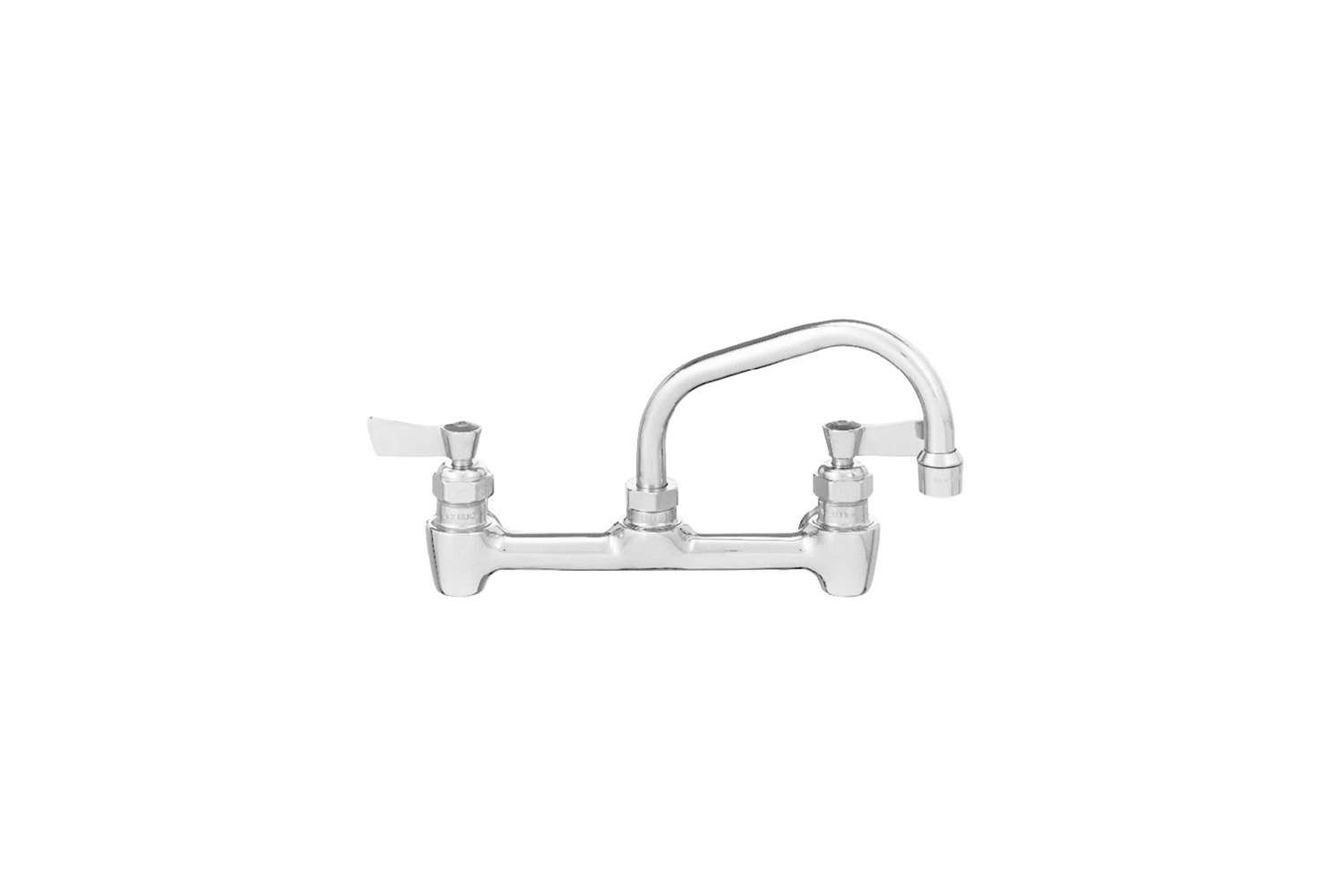
In a busy kitchen, the faucet is not just a faucet. It is the rinse station, the pot-filling hero, the cleanup assistant, and occasionally the object everyone blames when the dish area turns into a tiny indoor water park. That is why the Fisher backsplash mounted swivel faucet deserves more attention than most people give it. It may not be glamorous, but in commercial kitchens, utility rooms, prep sinks, and high-use work areas, it can make the difference between smooth workflow and “who installed this thing?” frustration.
Fisher faucets are widely used in foodservice and commercial plumbing because they are built with function first. Many Fisher backsplash faucet models feature 8-inch centers, swing or swivel spouts, lever handles, stainless steel or brass construction, and practical inlet options designed for real-world installation. In plain English: these faucets are made for places where water gets used a lot, fast, and not always gently.
This guide explains what a Fisher backsplash mounted swivel faucet is, why it is popular, how to choose the right model, what features matter, and how to keep it working without needing a toolbox intervention every other Tuesday.
What Is a Fisher Backsplash Mounted Swivel Faucet?
A backsplash mounted faucet is installed vertically through the backsplash or wall area behind a sink rather than through the horizontal deck or countertop. In commercial kitchens, this setup is common because it keeps the sink deck cleaner, saves counter space, and makes it easier to wash large pots, sheet pans, prep containers, and anything else that looks innocent until it is covered in sauce.
The “swivel” part refers to the spout or stem design. A swing spout can move side to side, letting the user direct water where it is needed. That is especially helpful in multi-compartment sinks, pot sinks, bar sinks, and workstations where one fixed stream would be about as useful as a spoon at a steakhouse.
Fisher offers different backsplash faucet configurations. Some models use 1/2-inch male NPT inlets, while larger-duty models may use 3/4-inch connections. Spout lengths can vary, including common 6-inch, 8-inch, 10-inch, 12-inch, and longer swing-spout options. Many models are built around 8-inch centers, which is a standard spacing in commercial sink setups.
Why Fisher Faucets Are Popular in Commercial Kitchens
Fisher Manufacturing has built a strong reputation in the commercial faucet category because its products are practical, repairable, and designed for heavy use. A residential faucet might look elegant in a showroom, but a commercial kitchen asks a different question: “Can this survive hundreds of turns, splashes, bumps, and rushed dish shifts?”
The Fisher backsplash mounted swivel faucet answers that question with features that focus on reliability. Depending on the model, you may find stainless steel seats, swivel stems, lever handles with color-coded indexes, swing spouts, and installation-friendly adapters or elbows. These are not decorative extras. They are the small details that help a faucet last longer and work better in demanding settings.
Built for High-Use Environments
Commercial sinks see more action than the average home kitchen sink. They handle prep work, dishwashing, sanitizing, rinsing, soaking, and quick cleanup. A Fisher backsplash mounted faucet is designed for these repetitive tasks. The swing spout gives reach, the handles provide simple control, and the wall or backsplash placement helps keep the sink area more open.
Easy to Use During Fast Service
Lever handles are a major benefit in fast-paced kitchens. They are easier to operate with wet hands, gloved hands, or tired hands after a long shift. Color-coded hot and cold indexes also reduce guesswork. When everyone is moving quickly, a faucet should not require a committee meeting to figure out which handle does what.
Practical Fit for Commercial Sink Layouts
Many Fisher backsplash faucets are designed around 8-inch centers, a common layout for commercial sinks. This makes them suitable for many replacement projects, especially when upgrading from an older wall-mounted or backsplash-mounted fixture. Some models also include elbows or EZ install adapters, which can make installation more convenient depending on the sink and plumbing configuration.
Key Features to Look For
Not all Fisher backsplash mounted swivel faucets are the same. The right choice depends on your sink size, water-flow needs, connection type, material preference, and installation conditions. Before buying, compare the following features carefully.
1. Mounting Type
Make sure you are choosing a true backsplash or wall/splash mount faucet. This type mounts through a vertical surface behind the sink. It is different from a deck-mounted faucet, which installs through the flat rim or counter. If your sink already has holes in the backsplash, measure the spacing before ordering.
2. Faucet Centers
The term “8-inch centers” means the hot and cold inlet holes are spaced 8 inches apart from center to center. This is one of the most common configurations for commercial kitchen faucets. Some adjustable models allow a little flexibility, but you should never assume. Measure first, order second, celebrate third.
3. Spout Length
Spout length affects reach. A 6-inch swing spout may work well for a compact sink, while an 8-inch or 10-inch swing spout may be better for larger compartments. Longer spouts can reach farther but may splash more if paired with a shallow sink. The goal is to hit the usable center of the sink, not create a fountain tribute to poor planning.
4. Flow Rate
Some Fisher stainless steel backsplash faucets use 2.2 GPM aerators, which are practical for controlled water use. Other heavy-duty models, such as certain 3/4-inch commercial faucets, are designed for much higher flow rates to fill large pots or sinks quickly. Choose based on the job. A hand sink does not need fire-hose energy. A deep pot sink might.
5. Material
Fisher backsplash faucets may be available in stainless steel or brass construction depending on the model. Stainless steel is often preferred in foodservice environments because it resists corrosion, looks clean, and supports low-lead or no-lead design goals. Brass models can also be durable, especially in heavy commercial applications, but always check compliance requirements for your use case.
6. Handle Style
Lever handles are common and easy to operate. Wrist handles are also available on some configurations and can be useful in environments where users want to reduce hand contact. For accessibility and speed, lever handles with clear hot and cold indicators are a practical choice.
7. Inlet Type
Check whether the faucet uses 1/2-inch male NPT inlets, 1/2-inch slip joint connections, 3/4-inch female inlets, or another connection style. This is one of the most important installation details. The prettiest faucet in the world is still a paperweight if it does not connect to your plumbing.
Common Fisher Backsplash Faucet Configurations
Fisher offers several backsplash faucet variations. While exact availability may change by distributor, common configurations include stainless steel 8-inch backsplash faucets with lever handles and swing spouts, models with close elbows, models with EZ install adapters, and larger 3/4-inch units for high-flow pot sink applications.
For example, an 8-inch backsplash faucet with an 8-inch swing spout is a versatile option for many commercial sinks. A 10-inch swing spout provides more reach and is useful for wider compartments. A 6-inch spout may be better when space is tight or when splash control is more important than reach.
Gooseneck versions are another option. A swivel gooseneck spout provides more vertical clearance, which can be useful for filling pitchers, containers, or taller vessels. However, for heavy pot washing, a standard swing spout may feel sturdier and more direct.
Benefits of a Swivel Spout
The swivel spout is the feature that makes this faucet especially useful. A fixed spout sends water to one place. A swivel spout lets the user move the stream across sink compartments, around large cookware, and into different work zones.
In a three-compartment sink, for instance, a swing spout can help rinse in one basin and fill another without needing a separate fixture. In a prep area, it can move out of the way when large containers are placed in the sink. In a utility room, it can make bucket filling easier and less awkward.
The best swivel faucet does not just move; it moves smoothly and stays stable. That is where construction quality matters. Swiveling seat disks and two-part swivel stem designs can help reduce wear over time, which is important in kitchens where the faucet may be turned on and off constantly.
Installation Considerations
Installing a Fisher backsplash mounted swivel faucet is usually straightforward for a qualified plumber or experienced maintenance technician, but there are several details to confirm before beginning.
Measure the Center-to-Center Distance
Measure the distance between the hot and cold mounting holes. If the sink is designed for 8-inch centers, choose a faucet that matches or one with compatible adjustable centers. Even a small mismatch can create leaks, crooked mounting, or installation language not suitable for polite company.
Check the Backsplash Thickness
Commercial sink backsplashes vary. Confirm that the faucet shanks, elbows, or adapters work with the material thickness and available space behind the sink. Tight clearances can make installation more difficult.
Confirm Water Supply Connections
Match the faucet inlet type to the building’s supply lines. If the model includes close elbows or EZ install adapters, review how those parts affect the rough-in. Adapters can save time, but only when they match the actual job site.
Seal and Tighten Properly
A backsplash faucet must be secured firmly to avoid movement. Proper sealing helps prevent water from getting behind the sink or wall. Do not over-tighten parts, especially around washers and seats, because too much force can damage components. Plumbing is one of those fields where “a little tighter” can become “why is it leaking now?” very quickly.
Maintenance Tips for Long Faucet Life
A Fisher backsplash mounted swivel faucet is built for work, but maintenance still matters. The good news is that care is simple if it becomes part of the routine.
Clean the Spout and Aerator
Mineral buildup can reduce flow or cause uneven spray. Remove and clean the aerator when water starts coming out in strange directions. If the faucet has a high-flow swing nozzle instead of an aerated outlet, wipe the outlet regularly and inspect for debris.
Watch for Handle Drips
A slow drip around the handle may point to worn washers, seats, stems, or packing components. Addressing a drip early is cheaper than ignoring it until it becomes the kitchen’s unofficial background music.
Check the Swivel Joint
If the spout becomes stiff, loose, or leaky at the swivel joint, inspect the O-rings, seals, and retaining parts. In commercial settings, swivel joints do a lot of work. Routine inspection can prevent bigger problems.
Use Compatible Replacement Parts
One advantage of choosing a well-known commercial faucet brand is parts availability. When repairing a Fisher faucet, use compatible Fisher repair kits, stems, seats, washers, and spouts. Guessing with random parts may work for a minute, but it usually ends with another repair order.
Who Should Choose a Fisher Backsplash Mounted Swivel Faucet?
This faucet type is best for commercial kitchens, restaurants, cafés, bakeries, bars, schools, churches, commissaries, food trucks with fixed sinks, commercial dish areas, and utility rooms. It is also useful in workshops, janitorial spaces, and laundry-style environments where a rugged wall-mounted faucet makes sense.
It may be overbuilt for a decorative home kitchen, especially if the goal is a sleek residential look. However, for homeowners building a serious utility sink, garage sink, outdoor prep station, or heavy-duty laundry area, a Fisher-style commercial faucet can be a smart upgrade.
Pros and Cons
Pros
- Durable design for frequent use
- Swing or swivel spout improves reach
- Backsplash mounting keeps the sink deck clearer
- Available in multiple spout lengths and configurations
- Lever handles are easy to operate
- Commercial parts and repair kits are often available
- Good fit for many 8-inch center commercial sinks
Cons
- Industrial appearance may not suit decorative kitchens
- Wrong spout length can cause splashing or poor reach
- Installation requires accurate measurements
- Higher-flow models may use more water if not chosen carefully
- Some configurations may require specific adapters or elbows
How to Choose the Right Fisher Model
Start with the sink. Measure the faucet holes, check the backsplash height, and determine how much spout reach you need. Then think about water flow. If the faucet is for a handwashing or light prep sink, a lower-flow aerated model may be ideal. If it is for filling large pots or a deep utility sink, a high-flow commercial model may be more appropriate.
Next, decide between stainless steel and brass. Stainless steel is an excellent choice when corrosion resistance and low-lead construction are priorities. Brass can be a strong option for certain heavy-duty applications, but always confirm certification and code requirements.
Finally, review installation accessories. Close elbows can help connect the faucet in tight backsplash installations. EZ install adapters can reduce installation time in compatible setups. These small parts may not sound exciting, but anyone who has installed plumbing behind a sink knows that one helpful adapter can feel like a gift from the hardware gods.
Buying Mistakes to Avoid
The biggest mistake is buying by appearance alone. A Fisher backsplash mounted swivel faucet may look similar across models, but the details matter. One model may have a 6-inch spout and 1/2-inch inlets. Another may have a 10-inch spout and 3/4-inch connections. One may be stainless steel; another may be brass. These differences affect fit, flow, durability, and code suitability.
Another common mistake is choosing a spout that is too long. More reach sounds better until water hits the front wall of the sink and splashes onto the floor. Choose a spout length that reaches the working center of the basin without overshooting.
A third mistake is ignoring replacement parts. In commercial spaces, repairability is valuable. Before buying, check whether stems, handles, seats, spouts, aerators, and repair kits are available. A faucet that can be serviced is often more economical than one that must be replaced entirely.
Real-World Experience With a Fisher Backsplash Mounted Swivel Faucet
In everyday use, the Fisher backsplash mounted swivel faucet feels like the kind of fixture that quietly earns respect. It is not flashy. Nobody walks into a kitchen and says, “Wow, look at that faucet,” unless they are a plumber, a chef, or someone who has recently been betrayed by a cheap fixture. But after a few days of using a solid backsplash-mounted swivel faucet, the benefits become obvious.
The first thing users usually notice is the extra workspace. Because the faucet mounts to the backsplash, the sink deck stays less cluttered. This makes cleaning easier, especially in commercial sinks where food bits, soap residue, and mineral deposits love to gather around deck-mounted fixtures. Wiping down the sink area is faster when there are fewer obstacles in the way.
The swivel spout also makes a big difference during repetitive tasks. When washing large stockpots, the spout can move out of the way while the pot is placed in the basin, then swing back when it is time to rinse. When filling a bucket, the user can angle the water more precisely. In a multi-compartment sink, the spout can serve more than one basin without requiring awkward lifting or repositioning.
Lever handles are another practical advantage. During a busy shift, nobody wants to fight with tiny knobs. Lever handles are easy to bump on and off with the back of the hand or wrist, which is helpful when hands are wet, greasy, or gloved. Color-coded indexes also help new staff avoid confusion. It sounds small, but small details matter when a kitchen is moving at full speed.
From a maintenance perspective, the faucet’s commercial design is reassuring. A good Fisher setup feels serviceable rather than disposable. If the spout begins to drip or the handle feels loose, the issue can often be addressed with the correct replacement parts instead of replacing the entire faucet. That is a major advantage for restaurants and facilities where downtime costs money.
The main experience-based caution is to choose the spout length carefully. A long swing spout is excellent for reach, but it must match the sink depth. In a shallow sink, too much reach can create splash problems. In a deep pot sink, a short spout can feel limiting. The best setup feels natural: water lands where your hands already want to work.
Overall, a Fisher backsplash mounted swivel faucet is the sort of product that proves its value through daily use. It helps the sink area stay cleaner, makes washing and filling easier, and offers the rugged feel expected in a commercial environment. It may not be the star of the kitchen, but it is definitely part of the crew that keeps the show running.
Conclusion
The Fisher backsplash mounted swivel faucet is a practical, durable, and highly useful fixture for commercial kitchens and other demanding work areas. Its backsplash-mounted design saves space, its swivel spout improves reach, and its commercial construction supports frequent use. Whether you are replacing an old restaurant faucet, outfitting a new prep sink, or upgrading a utility area, the right Fisher model can make daily water tasks easier and more efficient.
The key is choosing carefully. Measure the centers, confirm the inlet type, pick the right spout length, and match the flow rate to the job. Do that, and this hardworking faucet can become one of those quiet upgrades you appreciate every single day.
Note: Before purchasing or installing any commercial faucet, verify local plumbing code requirements, sink compatibility, water-line size, and certification needs with a licensed plumber or facility professional.














