
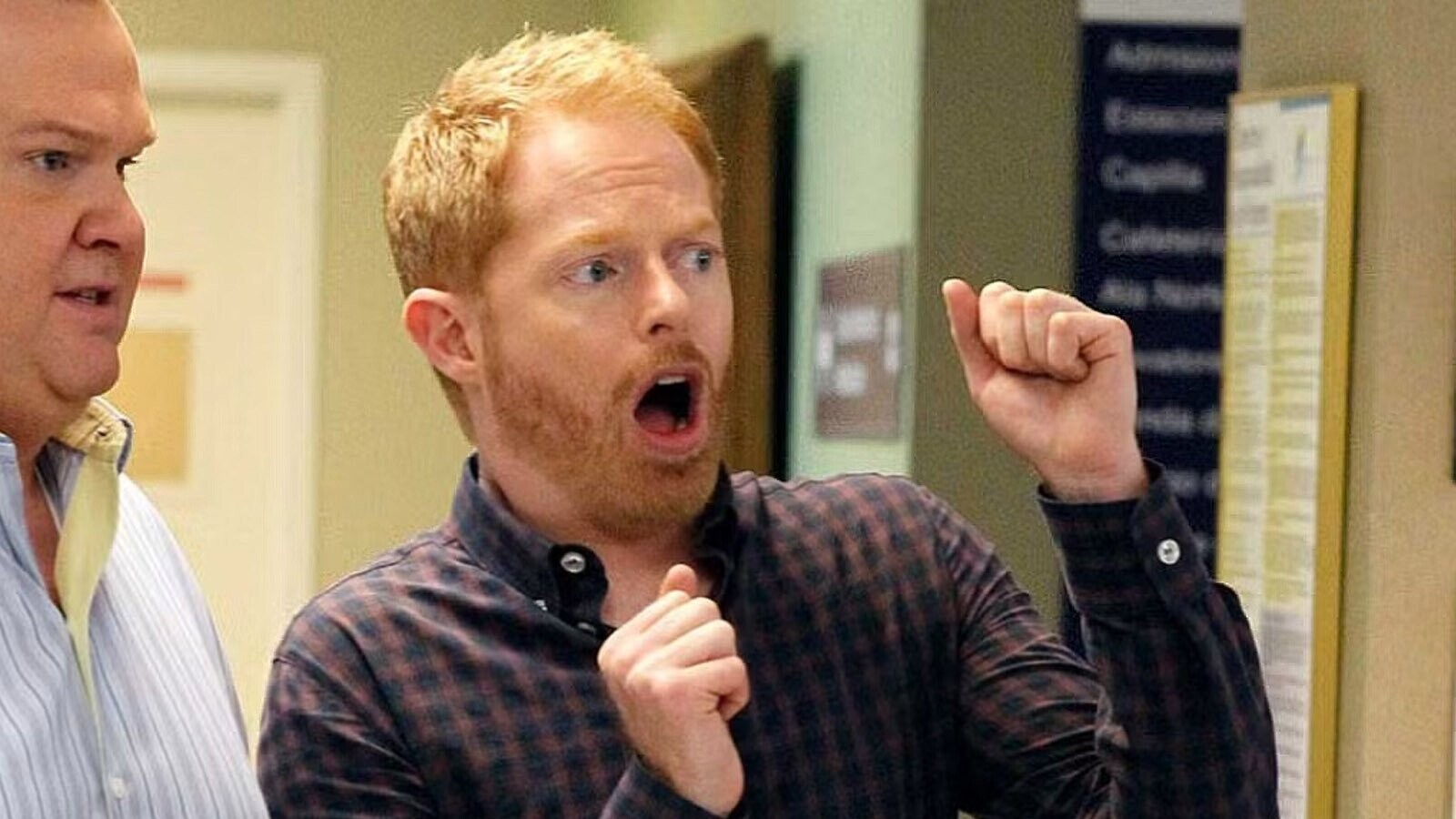
When Modern Family premiered in 2009, Mitchell Pritchett and Cameron Tucker were not just another sitcom couple arguing over parenting, dinner plans, and dramatic home décor. They were one of the most visible gay couples on American network television. Played by Jesse Tyler Ferguson and Eric Stonestreet, Mitch and Cam became familiar faces in millions of living rooms. They were funny, loving, flawed, theatrical, anxious, devoted, and occasionally so dramatic that even a throw pillow seemed emotionally exhausted.
But visibility is a tricky guest at the dinner table. It shows up wearing a nice jacket, then immediately starts a family debate. Over the years, some gay viewers called out Jesse Tyler Ferguson and Modern Family for leaning into stereotypes. The criticism was not simply “this character is too gay,” a phrase that usually says more about the critic than the character. The deeper concern was that Mitch and Cam sometimes seemed built from familiar sitcom shorthand: fussy, flamboyant, neurotic, dramatic, and often used as comic contrast against the “traditional” family members.
Ferguson has acknowledged that the criticism came strongly from inside the LGBTQ community. He has also explained that Mitchell was not meant to represent every gay man. He was one character, partly shaped by Ferguson’s own personality, experiences, humor, insecurities, and timing. That distinction matters. One gay character cannot carry the emotional luggage of an entire community without needing a very large overhead bin.
Why the Criticism Hit a Nerve
The debate around Jesse Tyler Ferguson and Modern Family stereotypes matters because it touches a larger question: What should representation do? Should it normalize LGBTQ people by making them familiar to mainstream audiences? Should it challenge old clichés? Should it show messy, specific, ordinary human beings? Ideally, yes to all of that. Unfortunately, television does not always work with ideal conditions. It works with time slots, network notes, laugh tracks, advertisers, and writers trying to land a joke before act break.
When Modern Family arrived, LGBTQ representation on broadcast TV was still limited. Gay characters existed, but they were not always parents, spouses, homeowners, or central members of a beloved ensemble comedy. Mitch and Cam were not sidekicks who wandered in to deliver one fabulous punchline and disappear into the wallpaper. They had a daughter, a home, conflicts, routines, and emotional arcs. That was significant.
At the same time, scarcity created pressure. Because there were fewer gay couples on prime-time network television, Mitch and Cam were askedfairly or unfairlyto represent far more than two fictional men in Los Angeles. Some viewers saw themselves in the couple. Others saw a polished, exaggerated, advertiser-safe version of gay life. Both reactions can be true, which is exactly why the conversation remains interesting.
Mitchell Pritchett: A Character, Not a Census
Jesse Tyler Ferguson’s Mitchell is tightly wound, sarcastic, intelligent, conflict-avoidant, and often hilariously uncomfortable with emotional mess. He is a lawyer who can argue with precision in court but still look like he swallowed a car alarm when family drama enters the room. Mitchell’s humor often comes from restraint. He tries to be composed, then life places him next to Cam, a man who treats every minor inconvenience like the second act of a Broadway musical.
For some gay viewers, Mitchell felt recognizable: a man balancing family expectations, internalized discomfort, parenting pressures, and the lifelong habit of managing how others perceive him. For others, he felt too familiar in a different way: another anxious, polished, slightly uptight gay man whose emotional life was filtered through comedy rather than depth.
The key issue is not whether Mitchell had stereotypical traits. Many real people have traits that resemble stereotypes because stereotypes are often lazy exaggerations of things that do exist. The problem begins when a character’s traits become the whole story. A great character can be flamboyant, shy, dramatic, masculine, feminine, messy, stylish, awkward, loud, quiet, or all of the above. A stereotype freezes one trait and pretends it is a complete person.
Cam and Mitch: Progress, Punchlines, and the Sitcom Machine
Cam and Mitch worked because Ferguson and Stonestreet had strong comic chemistry. Their arguments had rhythm. Their parenting anxieties felt specific. Their relationship had warmth even when the writing went broad. The audience understood that these two men loved each other, even when they communicated through panic, passive aggression, and decorative seasonal arrangements.
Still, the sitcom format often rewarded exaggeration. Cam’s theatricality became a reliable joke engine. Mitchell’s discomfort became another. The show could use their gayness as both representation and comedy, which made some viewers uneasy. There were moments when the humor came from their personalities, and there were other moments when critics felt the humor came from recognizable “gay couple” tropes.
The tension was especially clear in early discussions about physical affection. Viewers noticed that Mitch and Cam were not shown kissing with the same casual ease as some heterosexual couples on the show. The debate led to public criticism, and the series eventually addressed it in the 2010 episode “The Kiss.” That storyline gave Mitchell a reason for avoiding public affection, tying it to discomfort shaped by his relationship with his father and his personal history. It was a useful example of how a sitcom could turn criticism into character developmentthough some viewers still felt the show had been too cautious in the first place.
Why Gay Viewers Were Especially Vocal
Some people misunderstand this debate and ask, “Why would gay viewers criticize a gay character when representation was finally on TV?” The answer is simple: because representation matters most to the people being represented. The audience most affected by a portrayal is often the audience most capable of noticing its shortcuts.
Gay viewers were not necessarily rejecting Ferguson, Mitchell, Cam, or the importance of Modern Family. Many were asking for more texture. They wanted gay characters who could be funny without being reduced to comic accessories, affectionate without the network acting like a kiss required a congressional hearing, and complex without having every behavior treated as a “gay thing.”
That criticism came from care, not just complaint. When viewers call out stereotypes, they are often saying, “We know this can be better.” It is the same reason fans debate casting, storylines, language, and character arcs. People critique what they feel invested in. Nobody writes a passionate 900-word comment about a character they did not notice. Well, almost nobody. The internet remains undefeated in surprising us.
Jesse Tyler Ferguson’s Response Shows the Burden of Visibility
Ferguson’s response has been thoughtful because he does not dismiss the criticism outright. He has recognized that some viewers felt Mitch and Cam did not reflect their relationships or identities. At the same time, he has emphasized that Mitchell was only one version of a gay man, not a universal template.
This is the burden of being early in a representation wave. When there are only a few LGBTQ characters in mainstream entertainment, every character becomes symbolic. A single role must be funny, authentic, groundbreaking, safe for network TV, satisfying to queer audiences, palatable to general audiences, and still entertaining enough to survive Wednesday night ratings. That is a lot to ask from one fictional lawyer in a cardigan.
Ferguson also played Mitchell during a period of major cultural change. The show ran from 2009 to 2020, spanning debates over marriage equality, shifting public attitudes, and a rapid expansion of queer visibility in media. What felt bold in 2009 could feel cautious by 2015 and dated by 2020. That does not mean the show failed. It means culture moved, and viewers moved with it.
How Modern Family Helped Mainstream LGBTQ Parenting
One of the strongest arguments in favor of Modern Family is that it made a gay couple raising a child feel ordinary to a broad audience. Mitch and Cam were not framed as an after-school special. They were part of the family chaos. They worried about preschool, adoption, relatives, birthday parties, home repairs, and the emotional politics of family gatherings. In other words, they suffered the universal sitcom punishment: being surrounded by relatives with no sense of boundaries.
For viewers who had rarely seen gay parents portrayed with warmth on network television, that mattered. The show did not solve representation, but it helped normalize a family structure that was still being debated in politics and culture. Its popularity meant that many viewers who might not have sought out LGBTQ stories still spent years watching a gay couple love each other and raise a child.
That quiet normalization is powerful. It does not always announce itself with a speech. Sometimes it happens when a viewer stops thinking of a gay couple as “the issue” and starts thinking, “Cam is being dramatic again, and honestly, he may have a point about the party theme.”
The Difference Between Stereotype and Specificity
The controversy around Jesse Tyler Ferguson and Modern Family stereotypes is a useful reminder that the line between stereotype and specificity can be thin. A gay man who loves theater is not automatically a stereotype. A gay man who is emotional is not automatically a stereotype. A gay man who is stylish, anxious, witty, or particular is not automatically a stereotype. Real LGBTQ people contain all of those qualities and millions more.
The trouble starts when writers stop building a person and start assembling a checklist. Good representation asks: What does this character want? What scares him? What does he misunderstand about himself? How does he change? What is funny because it is human, not just because it is coded?
Mitchell often had that depth. He struggled with approval, control, vulnerability, and family history. Cam also had layers: ambition, insecurity, loyalty, vanity, tenderness, and a deep need to be seen. But because Modern Family was a broad network sitcom, the show often returned to familiar comedic beats. That repetition made the stereotypes easier to notice.
Why the Conversation Still Matters Today
Today’s television landscape includes more LGBTQ characters across streaming, cable, and broadcast than audiences had in the late 2000s. Viewers can find queer characters in dramas, teen series, comedies, sci-fi, animation, reality TV, and prestige shows where everyone whispers in expensive kitchens. With more options comes more room for variety.
That variety changes how we evaluate older shows. Modern Family can be appreciated as a cultural milestone and critiqued as a product of its time. Those ideas are not enemies. They are roommates who need to label their leftovers.
Modern audiences are better at asking sharper questions: Who is in the writers’ room? Who gets to be messy? Who gets romance? Who gets interiority? Who gets to be funny without being the joke? These questions do not erase the value of Mitch and Cam. They help explain why the next wave of LGBTQ characters needs to be broader, richer, and less burdened by scarcity.
Specific Examples That Fueled the Debate
The public affection issue
The early absence of casual kissing between Mitch and Cam became one of the most visible criticisms. Viewers noticed a difference between how straight couples and the gay couple were shown. The later episode “The Kiss” addressed this directly, but the fact that it needed addressing showed how carefully network television was still handling same-sex affection.
The “opposites attract” formula
Mitch and Cam were often written as a contrast: Mitchell was controlled and dry; Cam was expressive and theatrical. This created comedy, but it also made Cam’s flamboyance and Mitchell’s anxiety recurring sources of humor. Some gay viewers felt the show leaned too heavily on that formula.
The safe suburban framing
The couple’s life was presented in a polished, middle-class, family-friendly package. That helped mainstream audiences accept them, but it also narrowed the picture of gay life. LGBTQ communities are diverse across race, class, age, geography, gender expression, and family structure. Mitch and Cam were one slice, not the whole bakery.
What Writers Can Learn From the Backlash
The lesson is not “never write flamboyant characters” or “avoid gay humor.” That would be boring, and television already has enough beige couches. The lesson is to write LGBTQ characters with the same range granted to everyone else. Let them be ridiculous, but also competent. Let them be romantic, but also annoyed about the dishwasher. Let them be stylish or unstylish, brave or cowardly, loud or quiet, heroic or petty. In short, let them be people.
Creators should also understand that criticism from within a community is not automatically an attack. It can be a form of collaboration from the audience. Viewers are saying, “We are watching closely because this matters.” Smart shows listen without becoming terrified. They adjust, deepen, expand, and keep telling stories.
Experiences Related to the Topic: Watching Representation Grow Up in Real Time
For many viewers, watching Modern Family was not just entertainment. It was a weekly check-in with a changing culture. Imagine being a gay teenager in a household where LGBTQ topics were rarely discussed. Then, suddenly, a major network sitcom placed a gay couple in the center of family life. Not hidden. Not tragic. Not treated like a scandal in a very special episode. Just there, arguing about parenting and dinner and whether Cam was doing too muchwhich, of course, he was, but beautifully.
That kind of visibility could feel comforting. It gave some viewers language before they had confidence. It gave parents a softer entry point into conversations they might otherwise avoid. A family that laughed with Mitch and Cam every week might find it harder to believe that gay relationships were strange, threatening, or unfamiliar. Comedy can lower defenses. A joke can walk into a room before a serious conversation is brave enough to knock.
But the experience was different for viewers who already knew the community from the inside. Some watched and thought, “This is sweet, but where are the gay people who look like my friends?” Others wondered why Mitch and Cam’s affection sometimes seemed more carefully managed than the affection of straight couples. Some loved the characters but felt tired of seeing gay men written as anxious, theatrical, or overly polished. Their frustration came from wanting the same variety that straight characters had enjoyed for decades.
That is the complicated emotional math of representation. A character can make one viewer feel seen and another feel boxed in. A storyline can be groundbreaking in one decade and limited in the next. A joke can feel affectionate to some and stale to others. None of this means the show has no value. It means the audience is not a monolith. The LGBTQ community includes people with different personalities, politics, families, senses of humor, and tolerance for sitcom chaos.
There is also a personal experience many viewers share: revisiting the show years later and seeing it differently. A teenager who once felt grateful just to see a gay couple on screen may grow into an adult who notices the compromises. A viewer who once criticized the stereotypes may later appreciate how much cultural groundwork the show laid. Time adds context. It also adds the ability to hold two thoughts at once: Modern Family helped move television forward, and it did not go far enough.
That balanced view is probably the fairest one. Jesse Tyler Ferguson’s Mitchell Pritchett was not the perfect gay character, because perfect characters are usually terrible television. He was specific, funny, flawed, and sometimes trapped inside the limits of network sitcom writing. He gave many viewers joy, comfort, and recognition. He also gave critics a reason to ask for better, fuller, more varied LGBTQ representation.
In the end, the backlash says less about failure and more about growth. Audiences wanted more because Mitch and Cam proved that more was possible. They opened a door, even if the room on the other side needed redecorating. And if Cam were in charge of that redecoration, we can safely assume there would be bold colors, emotional lighting, and at least one centerpiece that Mitchell would quietly hate.
Conclusion
The conversation around gay viewers calling out Jesse Tyler Ferguson over Modern Family stereotypes is not a simple case of praise versus backlash. It is a story about progress under pressure. Mitch and Cam were meaningful because they brought a loving gay couple into mainstream American homes at a time when that visibility still felt rare. They were criticized because visibility alone is not the finish line.
Jesse Tyler Ferguson’s role as Mitchell Pritchett remains important precisely because it sits at the intersection of representation, comedy, cultural change, and audience expectation. The character helped normalize gay parenting and same-sex relationships for millions of viewers. At the same time, the criticism from gay audiences pushed the entertainment industry toward a better understanding of what authentic LGBTQ storytelling requires: not one perfect character, but many different characters with many different lives.
Modern Family did not represent every gay viewer. No single show can. But it gave television a memorable couple, started necessary conversations, and helped move the medium toward broader inclusion. That legacy is worth appreciatingand worth examining with clear eyes, a little humor, and maybe one tastefully arranged throw pillow.














