Some sofas politely wait in the background. The Swedish leather Kontiki sofa does not. It walks into the room wearing a vintage field jacket, orders a strong coffee, and somehow makes every paperback, fiddle-leaf fig, and ceramic bowl nearby look more intentional.
Designed by Swedish furniture maker Arne Norell, the Kontiki sofa is one of those rare mid-century modern pieces that feels both polished and slightly adventurous. It has the warmth of a well-worn leather bag, the relaxed posture of safari furniture, and enough beechwood and brass detailing to make design lovers quietly start checking auction listings during lunch.
But there is a catch: an original Kontiki sofa can carry a serious vintage-design price tag. That has created a familiar decorating dilemma. Should you save for the authentic Swedish leather icon, or choose a lower-cost sofa that captures the same laid-back, leather-and-wood mood without requiring a second mortgage and a dramatic family meeting?
This high/low guide breaks down what makes the Kontiki sofa special, what separates a true collectible from a lookalike, and how to create the same hipster Scandinavian leather sofa atmosphere at different budgets.
What Is the Kontiki Sofa?
The Kontiki sofa is associated with Swedish designer Arne Norell, whose furniture often blended Scandinavian restraint with relaxed, travel-inspired comfort. Rather than creating stiff showroom pieces that look frightened of human beings, Norell designed seating that invited people to sit down, lean back, and stay awhile.
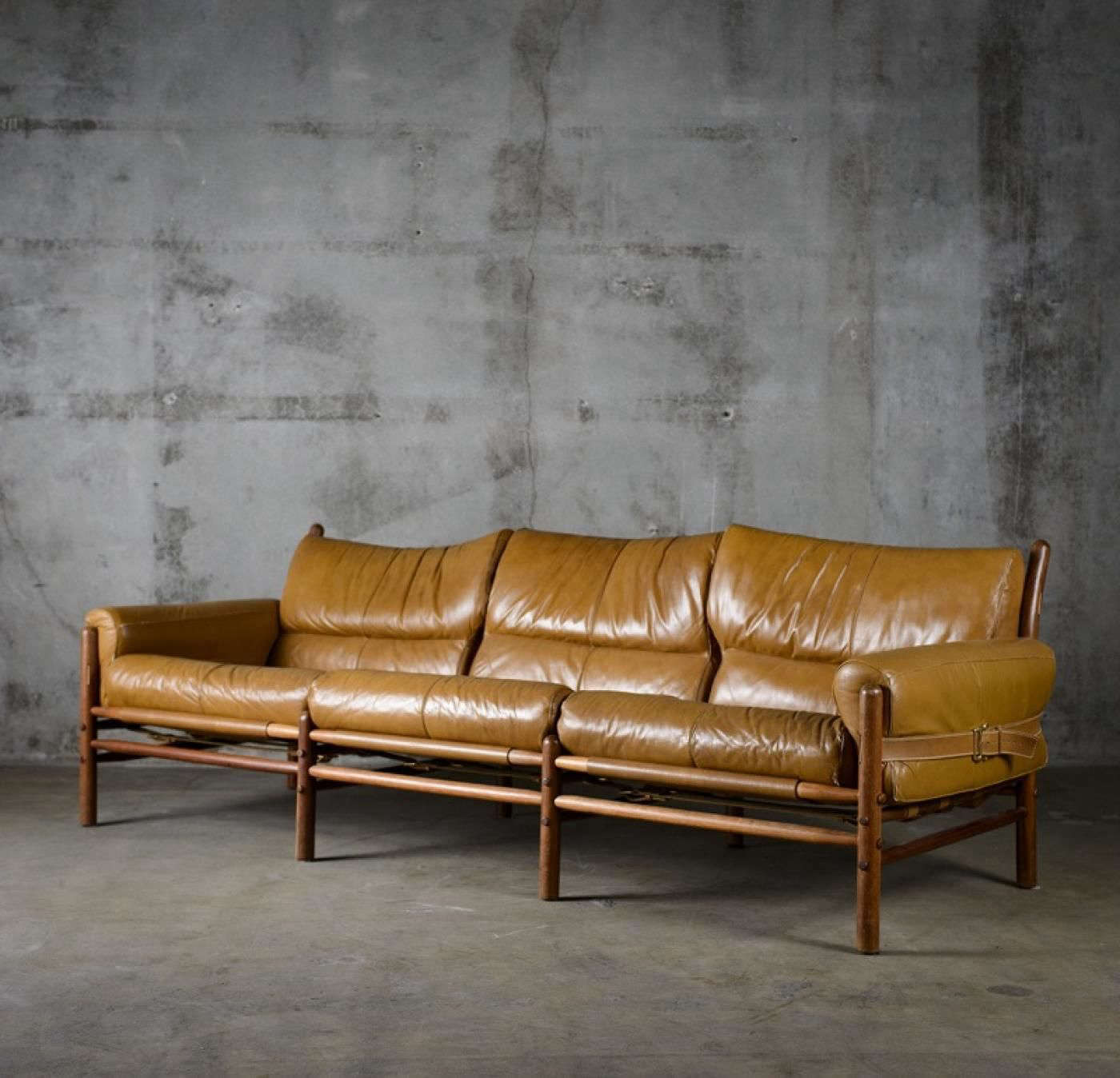
The Kontiki is especially recognizable for its combination of leather upholstery, a visible wooden frame, and brass hardware. Many versions feature rich brown, cognac, olive, or dark leather stretched over a solid beech structure. The result is part Scandinavian modern, part safari lounge, and part “this sofa has better stories than I do.”
Its overall silhouette is low, broad, and casual. The cushions tend to look suspended rather than heavily built-in, while the leather straps and brass buckles provide visual texture. That mix gives the sofa a handmade appearance that feels more soulful than a standard square-armed leather couch.
Why It Became a Design Favorite
The Kontiki sofa works because it avoids the two biggest risks of leather furniture: looking overly corporate or looking like it belongs in a basement sports bar. The exposed wood keeps the sofa light enough for a Scandinavian living room, while the leather adds depth, texture, and age-friendly character.
Unlike many glossy leather sofas, a Kontiki-style piece does not need to look perfect to look good. A little softening, creasing, and patina can improve the visual appeal. In other words, it is one of the few sofas that gets more interesting after someone actually sits on it. Revolutionary stuff.
The High Option: An Original Arne Norell Kontiki Sofa
The high-end choice is an original vintage Kontiki sofa or a contemporary piece produced by the Norell furniture company in Sweden. This is the route for buyers who care about design history, authentic materials, craftsmanship, and the thrill of owning an object that does not arrive in a cardboard box labeled “Assembly Required, Emotional Support Recommended.”
What You Are Paying For
An authentic Kontiki sofa is not expensive simply because it has a Scandinavian name and excellent cheekbones. Its value usually comes from several layers: the original design, hand-finished construction, quality leather, solid wood frame, metal hardware, rarity, condition, and provenance.
Vintage examples often use beechwood, leather upholstery, brass fittings, and carefully stitched details. The materials are not hidden beneath oversized padding or decorative fluff. The structure is part of the visual experience, which means the craftsmanship has nowhere to hide.
Collectors also value the fact that Arne Norell’s work sits comfortably within the Scandinavian modern tradition while maintaining a distinct personality. A Kontiki sofa is not just another low-profile mid-century couch. It is more relaxed and tactile than many sharply tailored Danish modern designs, yet more refined than a generic safari-style sofa.
The Advantages of Buying Original
An original Kontiki sofa can become the anchor of an entire room. Its materials are strong enough to work with oak floors, walnut furniture, antique rugs, black metal lighting, woven baskets, and even contemporary art. The sofa can look equally at home in a city apartment, a quiet cabin, or a well-designed home office where people pretend they are working but are mostly admiring the furniture.
Authentic vintage leather also has a quality that is difficult to fake. It tends to show natural variation, soft creases, subtle color shifts, and a patina developed through years of use. That character gives the room warmth without relying on clutter.
There is also the long-term value factor. While no piece of furniture should be treated as a guaranteed investment, a well-maintained original by a recognized designer may hold its appeal better than a mass-market imitation. The key is buying a piece in good structural condition, with intact straps, hardware, stitching, and frame joints.
The Drawbacks of Going High
The obvious drawback is cost. Original Kontiki sofas can be priced far above mainstream leather sofas, especially when they are in excellent condition or sold through established vintage dealers. Shipping can also be expensive, particularly for imported pieces, and leather condition varies widely from one listing to another.
Comfort can be another consideration. The Kontiki is lounge-oriented, but “lounge-oriented” does not always mean “ideal for an eight-hour streaming marathon with three blankets and a bowl of popcorn.” Its low profile may not suit everyone, particularly people who prefer a taller seat or need more support when standing up.
Finally, vintage ownership requires a little patience. You may need to monitor listings, inspect photos closely, ask for measurements, and accept that the perfect sofa will not necessarily appear the same week you decide your living room needs a Scandinavian personality transplant.
The Low Option: A Kontiki-Inspired Leather Sofa
The lower-cost route is not about finding an exact duplicate. It is about identifying the visual ingredients that make the Kontiki sofa feel special, then finding a sofa that delivers enough of those ingredients at a more accessible price.
A good Kontiki-inspired sofa usually includes warm leather or leather-like upholstery, a low profile, visible wood or metal legs, relaxed cushions, and a streamlined silhouette. You do not need every brass buckle and hand-stitched strap to create the mood. You need the right balance of materials and proportions.
Where Lower-Cost Sofas Usually Save Money
A more affordable leather sofa may use top-grain leather only on high-contact surfaces, corrected leather, split leather, bonded leather, or a faux leather alternative. It may also use engineered wood, foam-heavy cushions, machine-made stitching, and standard metal hardware rather than hand-finished details.
None of those choices automatically make a sofa bad. They simply mean the piece should be judged differently. A lower-priced sofa can still be comfortable, attractive, and practical, especially for renters, families, first-time homeowners, or anyone whose cat considers leather furniture a personal scratching résumé.
The smartest low option is one that borrows the Kontiki sofa’s relaxed attitude rather than trying too hard to imitate every detail. Look for clean lines, leather with a matte finish instead of a shiny plastic look, and warm wood tones that soften the sofa’s visual weight.
How to Avoid the “Mall Safari” Look
The danger with budget leather furniture is going too literal. A sofa with oversized brass decorations, aggressively distressed faux leather, and dark espresso wood can drift from Scandinavian modern into themed-restaurant territory very quickly.
Keep the surrounding room calm. Pair a lower-cost cognac leather sofa with a neutral wool rug, pale oak side tables, linen curtains, and one or two textured pillows. Skip the fake animal hide, fake palm tree, fake travel trunk, and fake passport stamps. The Kontiki look is adventurous, not costume-party adventurous.
High vs. Low: What Really Matters?
When comparing an original Kontiki sofa with a more affordable alternative, focus on the elements that affect daily life rather than only the Instagram angle.
Materials and Patina
Original aniline or premium leather develops a richer patina over time, but it also requires thoughtful care. Softer leather can scratch, darken, or change color with sunlight and use. That is part of its charm for some owners and a panic-inducing event for others.
A modern performance leather or durable upholstery alternative may be easier to clean and more forgiving in a busy household. For homes with young children, pets, frequent guests, or a suspiciously spill-prone partner, practicality can beat purism.
Construction and Longevity
Check the frame, suspension, cushion support, and joinery before obsessing over color. A beautiful leather sofa with weak support will become an expensive leather pancake. Look for a sturdy frame, reliable suspension, secure legs, and cushions that feel supportive rather than instantly exhausted.
Original vintage sofas should be inspected for loose leather straps, dry or cracked upholstery, unstable joints, missing brass hardware, and frame damage. A worn sofa can be charming. A structurally compromised sofa is simply a restoration project wearing nice leather.
Scale and Room Layout
Kontiki-style sofas are often long and low, which can make a room feel open but can also create practical challenges. Measure your wall, doorway, elevator, stairwell, and turning radius before buying. A sofa does not become more charming when it spends a weekend stuck in a hallway.
In a compact apartment, a two-seat leather sofa with exposed legs may create the same airy effect as a larger vintage piece. In a spacious living room, a three-seat Kontiki-style sofa can balance a large rug and give the room a strong focal point.
How to Style a Swedish Leather Kontiki Sofa
The Kontiki sofa does not need a room full of expensive vintage furniture to look convincing. It works best when surrounded by materials that support its warmth and simplicity.
Start With Natural Texture
Use a woven wool rug, jute rug, flatweave kilim, or subtle geometric rug under the sofa. Add a solid oak, ash, or walnut coffee table with simple lines. The goal is to create contrast between smooth leather and tactile materials without making the room feel like a furniture catalog trying too hard to be emotionally available.
Choose Relaxed Accent Pieces
A black floor lamp, ceramic table lamp, woven lounge chair, sculptural side table, or vintage-style reading lamp can complement the sofa beautifully. Avoid matching every wood tone exactly. A room feels more collected when the woods coordinate rather than behave like identical triplets.
Use Pillows Carefully
Leather looks best with texture. Add linen, wool, cotton, boucle, or handwoven pillow covers in cream, rust, moss green, charcoal, or muted navy. Two or three pillows are usually enough. Once you reach seven pillows, the sofa is no longer seating; it is a decorative obstacle course.
Leather Care for a Kontiki-Style Sofa
A leather sofa can last for years, but it should not be treated like an indestructible motorcycle jacket. Dust regularly with a soft microfiber cloth or vacuum attachment. Keep the sofa away from intense direct sunlight, heating vents, and damp conditions that can dry or discolor the leather.
For routine cleaning, use a lightly damp cloth and a mild leather-safe cleaner after testing it on an inconspicuous area. Avoid harsh solvents, bleach, ammonia, abrasive scrubbers, and random internet chemistry experiments involving vinegar, baking soda, mayonnaise, or a personality crisis.
Condition the leather periodically according to the manufacturer’s recommendations. Conditioning helps maintain softness and reduces the risk of cracking, but more product is not necessarily better. Think moisturizer, not pancake syrup.
Should You Buy the High or Low Version?
Choose an original Kontiki sofa when you love design history, appreciate visible craftsmanship, are comfortable with vintage maintenance, and want a piece that feels genuinely distinctive. The high option is best for buyers who see furniture as part of a long-term collection rather than a temporary solution.
Choose a Kontiki-inspired sofa when you want the warmth of leather, the low-slung Scandinavian look, and a budget that leaves room for rugs, lighting, groceries, and other wildly underrated household essentials. The low option can still look sophisticated when you prioritize proportion, material quality, and thoughtful styling.
The real victory is not owning the most expensive sofa in the room. It is choosing one that fits your space, your lifestyle, and your tolerance for leather conditioning. A great sofa should make your living room feel better, not make you afraid to sit down.
Living With the Look: The Real-Life Experience of a Kontiki-Style Sofa
Living with a Swedish leather Kontiki sofa, or even a well-chosen Kontiki-inspired sofa, is less about constantly admiring it from the doorway and more about noticing how it changes the rhythm of a room. At first, the sofa is the star. Guests walk in, pause for a second, and ask whether it is vintage. Someone will almost certainly run a hand across the leather. Another person will say it looks “very cool,” which is design-language shorthand for “I want one, but I am trying to appear emotionally stable about it.”
After a few weeks, the sofa becomes part of daily life. It is where coffee happens on slow mornings, where bags are dropped after work, where a laptop lands during an optimistic attempt to answer emails from a more stylish position. The low profile encourages lounging. You sit differently on it than you would on a tall, formal couch. You stretch out. You lean into the arm. You have conversations that last longer because the room feels less like a waiting area and more like somewhere people are allowed to relax.
Leather changes the experience, too. Fabric sofas absorb a room’s habits quietly. Leather keeps a record. A favorite seat develops a soft crease. The armrest becomes slightly darker where people rest their hands. A small scratch may appear after a pet leaps aboard or a belt buckle catches the cushion. At first, these marks can feel alarming. Then they begin to look like evidence that the sofa has been lived with rather than preserved behind museum glass.
The best part is how flexible the sofa feels across seasons. In summer, the leather looks crisp against pale walls, linen curtains, and bright daylight. In fall, it suddenly makes every wool blanket, brass lamp, and mug of coffee look more intentional. By winter, the whole room can feel like a Scandinavian cabin without requiring you to move to a forest or learn how to chop firewood.
There are practical quirks, of course. Leather can feel cool when you first sit down. A low seat may not be ideal for every guest. You may need to explain to enthusiastic visitors that the cushions are not a trampoline. But these are minor trade-offs for a sofa with enough personality to carry an entire room.
Ultimately, the Kontiki experience is about finding comfort in materials that improve with time. Whether you choose the original Swedish icon or a lower-cost alternative, the goal is the same: create a living room that feels relaxed, warm, and a little more interesting than the average beige-box setup.
Note: Vintage pricing, condition, availability, and leather care requirements vary by seller and manufacturer. Inspect measurements, materials, restoration history, and current condition before purchasing.