
Calculating a test grade should feel simple. You count what you got right, compare it with the total possible points, and boomthere is your score. In real life, however, test grades sometimes arrive wearing a tiny math disguise. Maybe your quiz has 47 questions. Maybe one section is worth more than another. Maybe your teacher says the exam is “weighted,” which sounds like it should come with dumbbells. Don’t worry. Once you understand the basic formula, calculating your test score becomes much less mysterious.
This guide explains how to calculate a test grade using points, percentages, weighted categories, letter grades, rubrics, and practical examples. Whether you are a student checking your score before the official grade posts, a parent helping with homework, or a teacher building a quick grading chart, the process is the same: identify the score earned, identify the total possible score, divide, and convert to a percentage.
What Is a Test Grade?
A test grade is a measure of how much credit you earned on an assessment compared with how much credit was available. In most classrooms, your test score may be shown as points, a percentage, a letter grade, or sometimes a standards-based rating. A 45 out of 50, for example, is a point score. Converted into a percentage, it becomes 90%. On many common grading scales, 90% is an A- or A, depending on the school’s policy.
The important thing to remember is that a grade is not magic. It is a ratio. You are comparing one number to another. The number you earned goes on top. The total possible number goes on the bottom. The calculator does the rest, although your brain gets bonus points for showing up.
The Basic Test Grade Formula
The simplest formula for finding your test score is:
Test Grade Percentage = (Points Earned ÷ Total Points Possible) × 100
That is the entire secret. If you earned 36 points on a 40-point test, divide 36 by 40. The answer is 0.9. Multiply by 100, and your grade is 90%.
Example: Simple Point-Based Test
Suppose your science test had 50 total points. You earned 43 points.
43 ÷ 50 = 0.86
0.86 × 100 = 86%
Your test grade is 86%. Depending on your school’s grading scale, that might be a B, B+, or another nearby letter grade. Always check the syllabus or class grading policy because schools do not all use the exact same cutoff points.
How to Calculate a Test Grade by Number of Questions
Many tests are graded by counting the number of correct answers. If every question is worth the same amount, you can use the same formula with questions instead of points.
Grade Percentage = (Number Correct ÷ Total Number of Questions) × 100
Let’s say you answered 27 questions correctly on a 30-question quiz.
27 ÷ 30 = 0.9
0.9 × 100 = 90%
That means your test score is 90%. Easy enough. Your calculator did not even need coffee.
What If You Know How Many You Got Wrong?
Sometimes students remember the painful part first: “I missed seven questions.” That is fine. Subtract the number wrong from the total number of questions to find the number correct.
Number Correct = Total Questions − Number Wrong
If a test has 40 questions and you missed 7, then:
40 − 7 = 33 correct
33 ÷ 40 = 0.825
0.825 × 100 = 82.5%
Your grade is 82.5%. If your teacher rounds to the nearest whole number, it may become 83%. If your teacher does not round, the 82.5% stays exactly where it is, sitting there like a tiny decimal with strong opinions.
How to Convert a Percentage to a Letter Grade
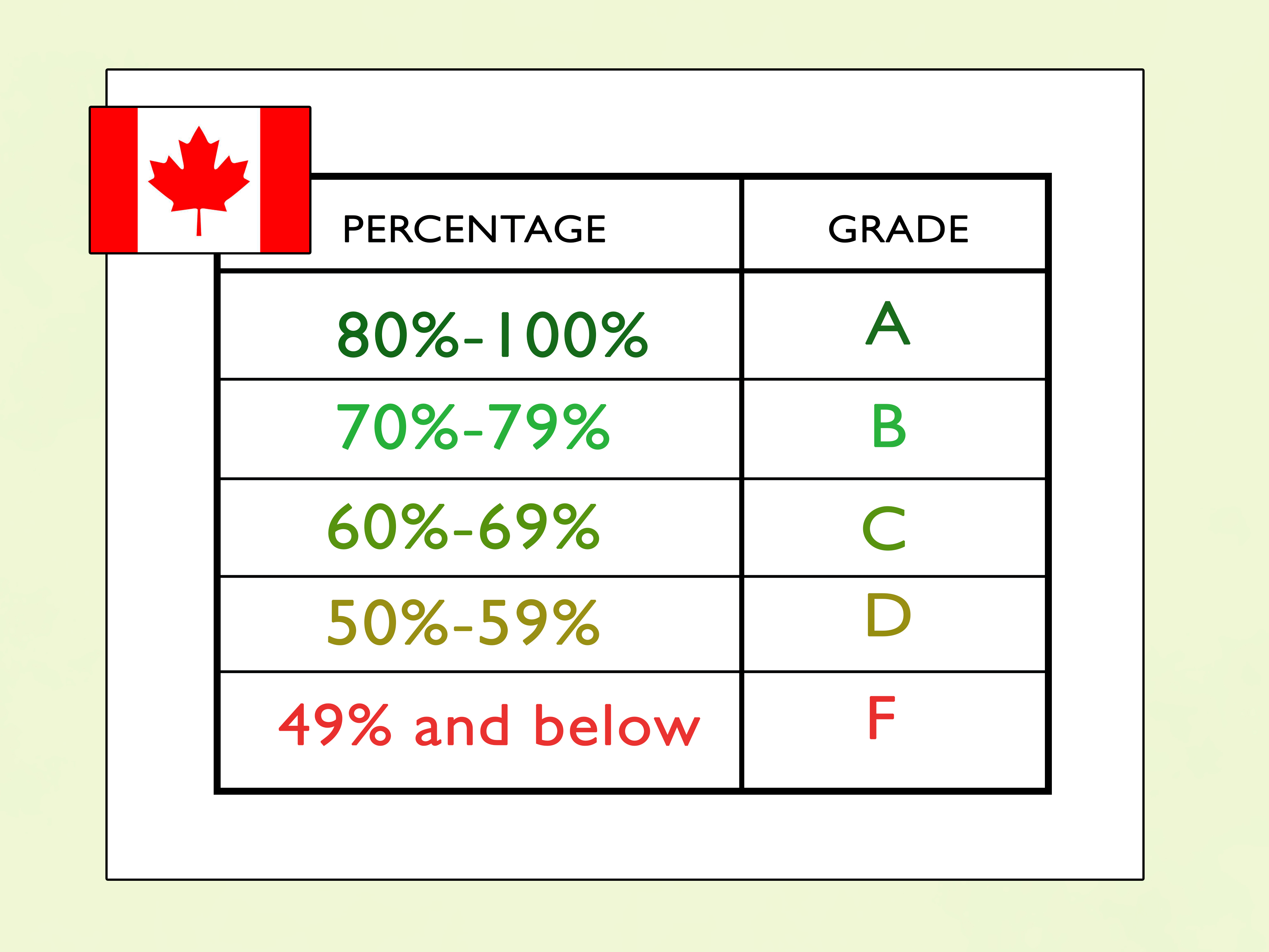
After calculating your percentage, you may want to know the letter grade. A common American grading scale looks like this:
| Percentage | Common Letter Grade |
|---|---|
| 90%–100% | A |
| 80%–89% | B |
| 70%–79% | C |
| 60%–69% | D |
| Below 60% | F |
This scale is common, but it is not universal. Some classes use plus and minus grades, such as B+ or C-. Some honors, AP, college, and graduate courses use stricter cutoffs. Some teachers curve exams. Some use standards-based grading instead of traditional letter grades. The safest move is to check your course syllabus, learning management system, or teacher’s posted grading scale.
How to Calculate a Weighted Test Grade
A weighted grade means not every score counts equally. For example, a final exam might be worth 30% of your course grade, while homework is worth 20%, quizzes 25%, and projects 25%. In that case, a 95% on one homework assignment does not carry the same power as a 95% on the final exam. The final exam is wearing the crown.
To calculate a weighted score, multiply each category score by its weight, then add the results together.
Weighted Grade = (Score × Category Weight) + (Score × Category Weight) + …
Example: Weighted Course Grade
Imagine your class grade is based on these categories:
- Tests: 50%
- Homework: 20%
- Projects: 20%
- Participation: 10%
Your current scores are:
- Tests: 84%
- Homework: 92%
- Projects: 88%
- Participation: 100%
Now multiply each score by its weight:
84 × 0.50 = 42
92 × 0.20 = 18.4
88 × 0.20 = 17.6
100 × 0.10 = 10
Add them together:
42 + 18.4 + 17.6 + 10 = 88%
Your weighted grade is 88%. Notice that the test category had the biggest influence because it was worth half the course grade. Weighted grading is why one major exam can move your grade more than several tiny assignments. Tiny assignments matter, but the final exam may still walk into the room like it owns the place.
How to Find the Grade You Need on a Future Test
Sometimes the real question is not “What did I get?” but “What do I need next time to survive academically and emotionally?” You can calculate the score needed on a future test if you know your current grade, the weight of the future test, and your target final grade.
Use this formula:
Needed Test Score = (Target Grade − Current Grade × Current Weight) ÷ Test Weight
Suppose your current grade is 82%, your final exam is worth 25% of your grade, and you want an 85% overall. Your current work counts for 75%.
Needed Score = (85 − 82 × 0.75) ÷ 0.25
82 × 0.75 = 61.5
85 − 61.5 = 23.5
23.5 ÷ 0.25 = 94
You need a 94% on the final exam to finish with an 85%. Is that possible? Maybe. Is it time to study? Absolutely. The calculator has spoken.
Raw Scores vs. Scaled Scores
Not all test scores are simple percentages. Standardized tests often use raw scores and scaled scores. A raw score is usually the number of questions answered correctly. A scaled score converts that raw score onto a standard scoring scale so results can be compared across different versions of a test.
For example, large tests like the SAT and ACT do not simply publish your percentage correct as your final score. They convert raw performance into scaled scores because one test form may be slightly more difficult than another. This process helps make scores more consistent across test dates. For regular classroom tests, however, your teacher will usually use points, percentages, rubrics, or category weights.
How Rubrics Affect Test and Assignment Grades
Some grades are not based on right-or-wrong questions. Essays, presentations, projects, lab reports, and creative work often use rubrics. A rubric is a scoring guide that lists the criteria for success and explains different performance levels. Instead of asking, “Did you get question 12 right?” a rubric may ask, “Did your essay have a clear thesis, strong evidence, organized paragraphs, and correct grammar?”
To calculate a rubric grade, add the points earned in each category, then divide by the total possible rubric points.
Example: Rubric-Based Score
Suppose an essay rubric has four categories worth 5 points each:
- Thesis: 4 out of 5
- Evidence: 5 out of 5
- Organization: 3 out of 5
- Grammar: 4 out of 5
You earned 16 points out of 20.
16 ÷ 20 = 0.8
0.8 × 100 = 80%
Your rubric grade is 80%. Rubrics are helpful because they show where points came from. Instead of staring at a grade and wondering what happened, you can see whether the issue was structure, evidence, clarity, formatting, or the classic villain of student writing: commas behaving badly.
How Test Grades Connect to GPA
A single test grade is usually only one piece of a larger course grade. Your course grade may later become part of your GPA, especially in high school and college. GPA stands for grade point average. In many U.S. schools, letter grades are converted into grade points, commonly on a 4.0 scale. For example, an A may equal 4.0, a B may equal 3.0, a C may equal 2.0, a D may equal 1.0, and an F may equal 0.0.
College GPA calculations often multiply grade points by credit hours, then divide by the total graded credits. That means a grade in a four-credit course usually affects your GPA more than a grade in a one-credit course. This is another version of weighting. Education loves weighting. It is basically math with a backpack.
Common Mistakes When Calculating Test Scores
1. Dividing by the Wrong Total
If a test has bonus points, dropped questions, or sections with different point values, the total possible score may not match the number of questions. Always use total points possible, not just the number of items on the test.
2. Forgetting to Multiply by 100
When you divide 45 by 50, you get 0.9. That is correct, but it is not the percentage yet. Multiply by 100 to get 90%.
3. Treating Weighted Categories Like Simple Averages
If tests are worth 60% of your grade and homework is worth 40%, you cannot simply average the test score and homework score unless the weights are equal. Weighted categories must be multiplied by their assigned values.
4. Ignoring Rounding Rules
Some teachers round 89.5% to 90%. Others do not. Some grading systems keep decimals. Some round only at the final course-grade stage. Before you emotionally celebrate an 89.49%, check the policy.
5. Assuming Every School Uses the Same Letter Scale
A 90% may be an A in one class and an A- in another. A 70% may be passing in one program and not enough in another. The percentage formula is universal, but letter-grade cutoffs are local.
Quick Test Grade Examples
| Score | Calculation | Percentage |
|---|---|---|
| 18 out of 20 | 18 ÷ 20 × 100 | 90% |
| 32 out of 40 | 32 ÷ 40 × 100 | 80% |
| 47 out of 50 | 47 ÷ 50 × 100 | 94% |
| 21 out of 25 | 21 ÷ 25 × 100 | 84% |
| 73 out of 80 | 73 ÷ 80 × 100 | 91.25% |
How to Calculate a Test Grade Without a Calculator
You can estimate your score mentally by converting the fraction into a familiar percentage. For example, 9 out of 10 is 90%, 4 out of 5 is 80%, and 3 out of 4 is 75%. If the numbers are less friendly, use a nearby benchmark.
Suppose you earned 38 out of 45. You know 36 out of 45 is 80% because 45 × 0.8 = 36. You earned 2 points more than that. Each point is worth about 2.22 percentage points because 100 ÷ 45 = 2.22. So your score is about 84.44%. That is not bad for mental math, especially if your brain was still recovering from the test.
What to Do After You Calculate Your Test Score
Once you know your score, use it as informationnot as a personal identity badge. A test grade tells you how you performed on one assessment under specific conditions. It does not tell you your future, your intelligence, your worth, or whether your dog still respects you. Your dog probably does.
Look at which questions you missed. Were they from one topic? Did you misunderstand directions? Did you rush? Did you make small arithmetic errors? Patterns matter. If you missed five questions from the same chapter, review that chapter. If you lost points for incomplete explanations, practice showing your work. If you ran out of time, try timed practice before the next test.
Experience-Based Tips for Finding and Understanding Your Test Score
One of the most useful habits I have seen among strong students is that they do not treat grades like surprise weather. They check the forecast. Before a test, they know how many points it is worth, how it fits into the class grade, and what score they need to stay on track. That sounds simple, but it changes everything. A student who knows that a quiz is worth 5% of the course grade will approach it differently from a final exam worth 30%. Both matter, but they do not carry the same academic thunder.
A practical experience is to create a small “grade notebook” or spreadsheet. It does not need to be fancy. Use columns for assignment name, points earned, points possible, percentage, category, and weight. After every test, enter the score. This gives you a clear picture of your progress. It also prevents the classic end-of-semester panic where students open the gradebook like it is a haunted house. When you track grades regularly, there are fewer jump scares.
Another real-world tip is to review the test before calculating the emotional meaning of the grade. A 78% may feel disappointing, but if the class average was 62%, your performance may be stronger than it first appears. On the other hand, a 92% may look wonderful, but if you lost points because of the same careless mistake repeated three times, that is still useful feedback. The number matters, but the story behind the number matters more.
Students also benefit from learning how teachers assign points. Not every question has equal value. A multiple-choice item may be worth 1 point, while a short-response question may be worth 4 points and an essay may be worth 20. That means missing one essay component can affect your grade more than missing several quick questions. Before a test, look at the point values. During the test, spend your time where the points are. This is not gaming the system; this is using common sense with a backpack.
Parents helping students should avoid turning every score into a courtroom drama. Instead of starting with “Why didn’t you get an A?” try “Which parts were easiest, and which parts cost the most points?” That question invites analysis instead of panic. It helps students connect grades to skills: reading directions, organizing answers, memorizing formulas, applying concepts, or managing time.
Teachers can make test scores easier to understand by showing the point breakdown clearly. A simple note such as “You earned 42 out of 50 points, which equals 84%” saves confusion. If a test includes weighted sections, the teacher can explain how each section contributes to the final score. Students are much more likely to accept feedback when the math is transparent. Nobody enjoys feeling like their grade came from a mysterious cave guarded by a spreadsheet dragon.
The best experience-based lesson is this: calculate your test grade quickly, but do not stop there. Ask what the score is telling you. Did your study method work? Did you practice the right material? Did you understand the format? Did nerves affect your performance? A grade is a signal. Use it to adjust your next move. The goal is not just to find your test score; it is to learn how to improve the next one.
Conclusion
Calculating a test grade is one of the most useful academic math skills you can learn. The basic formula is simple: divide the points earned by the total points possible, then multiply by 100. From there, you can convert the percentage to a letter grade, apply weighted categories, understand rubric scores, or estimate what you need on a future exam.
The key is to pay attention to the grading system. A straightforward quiz may only require a simple percentage calculation. A major exam, project, or final course grade may involve weights, rubrics, scaled scores, or GPA rules. Once you understand the structure, your grade becomes less confusing and more useful. And that is the whole point: not just to stare at a number, but to understand what it means and how to improve from it.
Note: This article is for general educational guidance. Grading scales, rounding rules, GPA policies, and weighted category systems can vary by teacher, school, district, college, or testing program. Always check the official syllabus, gradebook, or academic policy for the final rule.












