
Turtles look like tiny prehistoric philosophers who have discovered the secret to slow living. They swim, bask, blink thoughtfully, and sometimes stare at lettuce as if it owes them money. But behind that calm little shell is a pet with very specific needs. Learning how to care for turtles means understanding heat, lighting, water quality, diet, hygiene, safety, and long-term commitment.
A turtle is not a “set it and forget it” pet. It is more like a quiet roommate with a built-in helmet, strong opinions about basking spots, and a surprisingly messy lifestyle. With the right turtle habitat, clean water, balanced turtle food, UVB lighting, and regular health checks, many pet turtles can live for decades. With poor care, however, they can develop shell disease, vitamin deficiencies, respiratory infections, stress, and other preventable problems.
This guide focuses mainly on common pet turtles, especially aquatic and semi-aquatic species such as red-eared sliders, painted turtles, map turtles, and musk turtles. It also includes practical notes for box turtles, which are land-dwelling turtles with different housing and humidity needs.
Before Getting a Turtle: Know What You Are Signing Up For
The first rule of turtle care is simple: do not buy a turtle because it looks cute in a tiny container. That tiny turtle may become a large adult that needs a serious enclosure, strong filtration, proper heat, and years of consistent care. Many pet turtles live 20 to 30 years, and some live even longer. In other words, adopting a turtle can be closer to buying furniture than buying a hamster. It may be with you through apartments, jobs, relationships, and several questionable hairstyle phases.
Choose a Captive-Bred Turtle
Always choose a healthy captive-bred turtle from a reputable breeder, rescue, or knowledgeable reptile store. Never take a turtle from the wild. Wild turtles may be protected by state laws, may carry parasites, and often struggle to adapt to captivity. Removing them also damages local ecosystems. A turtle that belongs in a pond, marsh, or forest should stay there doing turtle things on its own schedule.
Avoid Illegal Small Turtles
In the United States, the sale of turtles with shells under four inches long as pets has been banned for decades because of Salmonella risk. Tiny turtles are still sometimes sold illegally online, at flea markets, roadside stands, or as novelty gifts. Do not buy them. A responsible turtle owner starts with legal, ethical, health-conscious choices.
Set Up the Right Turtle Habitat
A turtle’s home is the foundation of its health. Most common pet turtles are aquatic or semi-aquatic, meaning they need both swimming water and a completely dry basking area. A bowl with a plastic palm tree is not a habitat; it is a waiting room for problems.
Tank Size: Bigger Is Better
A common rule for aquatic turtle care is to provide about 10 gallons of water capacity for every inch of shell length. For example, a 4-inch turtle needs around a 40-gallon setup, while a full-grown adult slider may need 75 to 100 gallons or more. The enclosure should give the turtle enough room to swim, turn around, climb out of the water, and behave naturally.
Small tanks get dirty fast, and turtles are not delicate little goldfish. They eat, poop, shred plants, drag food around, and generally treat water like a soup pot. A larger tank gives your filter a fighting chance and gives your turtle a healthier environment.
Water Depth and Safety
The water should be deep enough for the turtle to swim naturally and to flip itself upright if it turns upside down. For many aquatic turtles, the water can be deeper than the turtle’s shell length as long as there are safe resting areas, ramps, and no dangerous decorations. Avoid sharp rocks, small gravel that can be swallowed, unstable platforms, or anything that can trap the turtle underwater.
Create a Dry Basking Area
Every aquatic turtle needs a dry basking dock where it can climb completely out of the water. This area should be stable, easy to access, and large enough for the turtle’s whole body. Basking allows turtles to warm up, dry their shells, absorb UVB light, and support healthy metabolism. If the dock wobbles like a cheap folding table at a family picnic, your turtle may avoid it.
Lighting and Temperature: The Turtle Power System
Turtles are ectothermic, which means they depend on their environment to regulate body temperature. They cannot simply throw on a hoodie when chilly. They need a carefully designed temperature gradient with warm basking space, appropriate water temperature, and access to UVB lighting.
UVB Lighting Is Essential
Indoor turtles need UVB light to produce vitamin D3, which helps them absorb calcium. Without proper UVB exposure, turtles can develop metabolic bone disease, soft shells, weakness, poor growth, and serious health problems. Use a reptile-specific UVB bulb positioned according to the manufacturer’s directions. Glass and plastic can block UVB, so the light should not shine through a solid lid.
Replace UVB bulbs regularly, usually every six months or as directed by the brand, because UVB output declines even when the bulb still appears bright. Your turtle does not care that the bulb “still looks fine.” Its bones care very much.
Heat Lamps and Basking Temperature
A heat lamp should warm the basking area. Many aquatic turtles do well with a basking surface roughly in the upper 80s to mid-90s Fahrenheit, depending on species, age, and health. Water temperatures often range from the mid-70s to low 80s Fahrenheit for many common aquatic turtles, with younger or sick turtles often needing warmer conditions under veterinary guidance.
Use digital thermometers to measure water temperature and an infrared temperature gun to check the basking surface. Guessing by touch is not reliable. Human hands are not scientific instruments, no matter how confident they feel.
Use a Day-Night Cycle
Most pet turtles benefit from a consistent light cycle, often around 10 to 12 hours of daytime light. A timer makes this easy. At night, lights should usually be off unless a veterinarian recommends otherwise. Turtles need routine, not a reptile nightclub.
Water Quality and Cleaning
Clean water is one of the biggest secrets to healthy turtle care. Dirty water can contribute to skin irritation, shell problems, eye issues, odor, and stress. A strong filtration system is not optional for aquatic turtles; it is the unsung hero of the whole setup.
Choose a Powerful Filter
Turtles produce more waste than fish of similar size, so choose a filter rated for more than the tank’s volume. Canister filters are popular because they handle large amounts of waste and provide good mechanical and biological filtration. Internal filters can work for smaller setups, but they often need more frequent cleaning.
Do Partial Water Changes
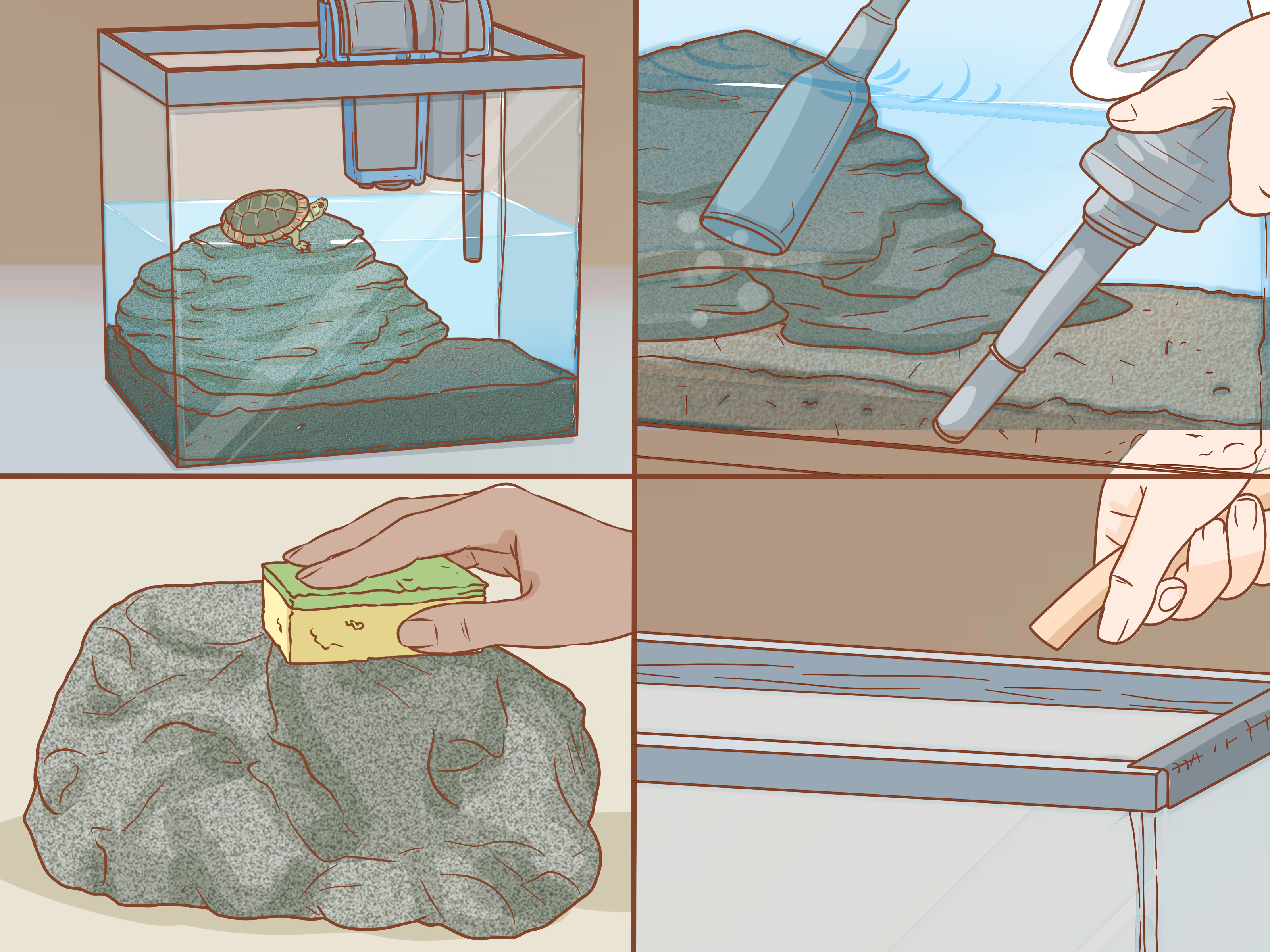
Perform regular partial water changes, often weekly, depending on tank size, filter strength, number of turtles, and feeding habits. Remove uneaten food quickly. Many owners feed turtles in a separate container to keep the main tank cleaner, although this depends on the turtle’s stress level and routine.
Clean Safely
Do not clean turtle tanks, filters, or decorations in the kitchen sink or anywhere food is prepared. Use dedicated buckets, brushes, and cleaning tools. Disinfect safely, rinse thoroughly, and keep turtle supplies separate from human dishes. Your turtle’s sponge should never become your coffee mug sponge. That is not “eco-friendly”; that is chaos.
What to Feed a Turtle
A healthy turtle diet depends on species, age, and lifestyle. Many common aquatic turtles are omnivores. Young turtles often eat more animal protein, while adults may eat more plant matter. Box turtles are also omnivores, enjoying a mix of insects, worms, vegetables, leafy greens, and occasional fruit.
For Aquatic Turtles
A balanced aquatic turtle diet may include high-quality commercial turtle pellets, leafy greens, aquatic plants, occasional vegetables, and appropriate animal protein such as insects or small feeder items. Good greens may include romaine, dandelion greens, mustard greens, collard greens, and other safe vegetables. Avoid relying only on dried shrimp or one favorite snack. That is like raising a child on cheese crackers and optimism.
For Box Turtles
Box turtles need variety. Their meals may include earthworms, crickets, snails, dark leafy greens, squash, carrots, berries, and other safe produce. They also need proper humidity, shallow drinking water, and access to UVB light. Their diet should be adjusted by species and age, so a reptile veterinarian is your best guide for exact feeding plans.
Calcium and Supplements
Many turtles need calcium supplementation, especially growing turtles, egg-laying females, and turtles housed indoors. Calcium powder, cuttlebone, and veterinarian-recommended supplements can support shell and bone health. Do not over-supplement blindly. More vitamins are not always better; sometimes they are just expensive trouble in a jar.
Handling and Hygiene
Turtles are fascinating pets, but they are not cuddly pets. Most turtles prefer minimal handling. Too much handling can cause stress, and stressed turtles may stop eating, hide constantly, or become more vulnerable to illness.
Handle Gently and Briefly
When you need to handle your turtle, support its body securely with both hands. Keep it low over a safe surface in case it wiggles. Never pick up a turtle by the tail, legs, or edge of the shell. The shell is living bone, not a suitcase handle.
Prevent Salmonella
Turtles can carry Salmonella even when they look healthy and clean. Always wash your hands with soap and water after touching a turtle, its tank, its water, its food bowls, or anything in its habitat. Do not kiss turtles, put them near your face, let them roam on kitchen counters, or allow them near food preparation areas.
Homes with children under five, older adults, pregnant people, or anyone with a weakened immune system should be especially cautious. Turtle ownership may not be the best fit for households where safe hygiene rules cannot be followed every time.
Health Checks: What a Healthy Turtle Looks Like
A healthy turtle is alert, active for its species, has clear eyes, smooth breathing, a firm shell, and a steady appetite. It should swim normally, bask regularly, and respond to its environment. Some turtles are naturally shy, but sudden hiding, floating oddly, wheezing, swollen eyes, shell discoloration, or refusal to eat can be warning signs.
Common Turtle Health Problems
Common issues include respiratory infections, shell rot, vitamin A deficiency, metabolic bone disease, parasites, injuries, and retained eggs in females. Many of these problems are linked to incorrect lighting, poor diet, dirty water, low temperatures, or lack of veterinary care.
Find an Exotic Animal Veterinarian
Not every dog-and-cat clinic treats turtles. Before trouble appears, find a veterinarian experienced with reptiles or exotic pets. A wellness exam can help identify husbandry mistakes early. Bring details about your turtle’s setup, including tank size, water temperature, basking temperature, UVB bulb type, diet, and cleaning routine. A good reptile vet is part doctor, part detective, and part habitat consultant.
Box Turtle Care Notes
Box turtles are not aquatic turtles. They need land-based enclosures with proper substrate, humidity, hiding areas, shallow soaking water, UVB lighting, and temperature gradients. Many box turtles do best in secure outdoor pens when climate and safety allow.
Humidity is especially important for many box turtle species. Too-dry conditions can lead to dehydration, eye problems, poor shedding, and stress. Safe substrates may include soil-based mixes, coconut fiber, or other reptile-safe bedding that holds moisture without molding quickly. Avoid cedar shavings, strong aromatic woods, and dusty or moldy materials.
Enrichment: Help Your Turtle Act Like a Turtle
Good turtle care is not only about preventing disease. It is also about giving your turtle a life worth slowly marching through. Add enrichment through safe plants, varied feeding methods, hiding spots, basking options, visual barriers, and room to explore. Aquatic turtles enjoy swimming space, resting ledges, and objects they can investigate. Box turtles enjoy leaf litter, soil, logs, and safe digging areas.
Change things gradually. Turtles can be curious, but they can also be suspicious little tanks with legs. A sudden complete habitat makeover may cause stress, while small improvements keep life interesting.
Common Mistakes New Turtle Owners Make
Using a Tank That Is Too Small
The cute baby turtle setup usually becomes inadequate fast. Plan for adult size from the beginning. Buying the right enclosure early saves money and prevents health problems.
Skipping UVB Lighting
A heat lamp is not the same as UVB. Turtles need both warmth and ultraviolet exposure. Without UVB, calcium metabolism suffers.
Feeding Too Much Protein
Many turtles love protein-rich foods, but too much can contribute to poor shell growth and obesity. Balance matters. Your turtle may beg like a tiny shelled dog, but you are the adult in the room.
Letting the Tank Get Dirty
If the tank smells bad, looks cloudy, or grows slime everywhere, your cleaning system needs improvement. Filtration, water changes, and smart feeding routines make turtle care much easier.
Releasing a Pet Turtle Outdoors
Never release a pet turtle into the wild. It may die, spread disease, disrupt native wildlife, or become invasive. If you can no longer care for a turtle, contact a reptile rescue, exotic veterinarian, or local animal organization.
Real-Life Experiences: What Turtle Care Teaches You
One of the first experiences many turtle owners have is the “tank reality check.” A turtle may arrive small, quiet, and adorable, and the owner thinks a modest aquarium will be plenty. Then the turtle grows. The filter starts working overtime. The basking dock becomes too small. The water gets cloudy faster than expected. Suddenly, the owner realizes that turtle care is not about buying a pet; it is about building a miniature ecosystem in the living room.
A common lesson is that turtles are messy in a very committed way. They may grab a pellet, swim dramatically to the other side of the tank, chew it into confetti, and then look innocent while the filter deals with the aftermath. Many experienced keepers learn to feed in a separate container or remove uneaten food quickly. This small habit can make a huge difference in water quality. It is not glamorous, but neither is cleaning lettuce shrapnel out of a filter intake at 10 p.m.
Another memorable experience is watching a turtle bask properly for the first time. At first, new owners may worry when their turtle climbs onto the dock and stretches out like a tiny sunbather on vacation. One leg goes back. The neck extends. The eyes half close. It looks ridiculous and wonderful. That behavior is a good sign when temperatures and lighting are correct. It means the turtle feels secure enough to dry off, warm up, and absorb light.
Turtle owners also learn patience. Unlike dogs, turtles do not usually perform tricks to win approval. They build trust slowly. A turtle may hide for days after moving into a new enclosure. Then one morning it swims to the front of the tank when breakfast appears. Over time, it may recognize the person who feeds it and paddle over with great enthusiasm. Is it love? Is it pellets? Probably both, but mostly pellets.
One practical experience is the value of thermometers. Many beginners assume the tank is “warm enough” because the room feels comfortable. But a comfortable room for humans may be too cool for a turtle’s digestion and immune function. Once owners start measuring the basking area and water temperature, they often discover why the turtle was sluggish or refusing food. Good care becomes easier when you stop guessing.
Cleaning routines also become part of life. The best turtle owners do not wait until the tank becomes swampy. They create a schedule: check temperatures daily, remove waste, test or inspect water quality, rinse filter media as needed, and do partial water changes. The routine becomes quick with practice. Like brushing your teeth, it is much easier when done regularly instead of waiting for disaster.
Finally, caring for turtles teaches respect. These animals are ancient, alert, and surprisingly expressive in subtle ways. They are not decorations. They are living reptiles with needs that cannot be replaced by good intentions. The reward for careful husbandry is a healthy turtle that swims strongly, basks confidently, eats well, and lives a long, steady life. That may not sound dramatic, but in turtle terms, it is a standing ovation.
Conclusion
Learning how to care for turtles means creating the right balance of space, heat, UVB lighting, clean water, nutrition, hygiene, and patience. A turtle’s shell may look like armor, but its health depends heavily on the environment you provide. Give your turtle a large enough habitat, a safe basking area, strong filtration, a varied diet, and regular veterinary support, and you will be far ahead of the “tiny bowl and wishful thinking” approach.
Turtles are calm, fascinating, long-lived pets, but they are not low-effort decorations. They need informed care every week, every month, and often for decades. Treat that responsibility seriously, and your turtle can become one of the most interesting companions in your home: quiet, curious, slightly messy, and always dressed for battle.














