Firearm safety is not about looking tough, sounding knowledgeable, or owning the most expensive lockbox in the zip code. It is about consistent habits. The kind that still work when you are tired, distracted, in a hurry, or convinced that “it is probably unloaded.”
rm for sport shooting, hunting, collecting, work, or home protection, safe gun handling begins with a simple idea: every moment of contact should be deliberate. The goal is not to become nervous around firearms. The goal is to become predictably careful.
The Four Core Rules of Firearm Safety
Most responsible firearm-safety programs teach variations of the same core rules. The wording may differ slightly, but the purpose is identical: build overlapping layers of protection. One mistake should not become a catastrophe because several safety habits are working at the same time.
1. Treat Every Firearm as Though It Is Loaded
Never accept assumptions as proof. Do not rely on someone saying, “It is empty,” and do not rely on the firearm’s appearance. Treat every firearm with the same level of caution you would use if you knew it were loaded.
This mindset changes behavior immediately. You avoid careless pointing, unnecessary handling, and casual “look what I found” moments. A firearm is not a toy, a decoration, or a conversation prop. It deserves the same seriousness whether it is on a range, in a cabinet, or being handed to you by a friend.
When a firearm changes hands, use the safe verification process recommended in that firearm’s manufacturer manual or demonstrated by a qualified instructor. Until you have confirmed its condition, act as if it can fire.
2. Always Keep the Muzzle Pointed in a Safe Direction
Muzzle direction is one of the most important firearm safety habits because it protects people even if another rule fails. A safe direction is one where an unintended discharge would be unlikely to injure someone or cause serious property damage.
That direction changes depending on where you are. A safe direction at an outdoor range may not be safe in a living room, a vehicle, a garage, or a crowded hunting camp. Think beyond walls, doors, furniture, and “I do not think anyone is over there.” Projectiles can travel through materials that look reassuringly solid until they are not.
Keep the muzzle under control whenever you handle a firearm. Do not sweep it across people, pets, windows, hallways, or places where someone could suddenly appear. Good muzzle discipline is not dramatic. It is almost boring. That is exactly why it works.
3. Keep Your Finger Outside the Trigger Guard Until You Have Made a Deliberate Decision to Fire
Trigger discipline is a habit, not a last-second decision. Keep your finger outside the trigger guard and indexed along the frame or receiver until you are legally and deliberately ready to fire at an identified target in a safe setting.
This rule matters during every non-firing activity: picking up a firearm, moving it, setting it down, storing it, inspecting it, or receiving it from another person. A finger that stays away from the trigger cannot accidentally press it during a stumble, surprise, startle response, or moment of confusion.
Think of the trigger as a button marked “only touch when absolutely intended.” It is not a hand rest. It is not a fidget tool. It is definitely not where your finger goes while explaining your weekend plans.
4. Know Your Target, What Is Beyond It, and What Is Around It
Safe firearm handling is not only about the target itself. You must know what is behind it, beside it, and potentially beyond it. A target is not an isolated object floating in a video game. Real environments have people, animals, roads, homes, trails, windows, vehicles, and unexpected movement.
Before firing at an authorized range or hunting location, identify the target clearly and evaluate the surrounding area. Do not shoot at movement, shadows, sounds, rustling brush, or anything you have not positively identified. “I thought it was…” is not a safety plan.
Safe Gun Handling Starts Before You Touch the Firearm
Responsible gun ownership is less about reacting perfectly in a stressful moment and more about preventing unnecessary risk before the moment arrives. Before handling a firearm, pause for a quick mental check.
- Am I alert, sober, calm, and able to focus?
- Is this an appropriate and lawful place to handle a firearm?
- Do I know who is nearby and where the muzzle can safely point?
- Do I understand this specific firearm’s manual and safety features?
- Is there any reason to leave it secured rather than handle it right now?
If you are exhausted, angry, impaired, rushing, emotionally overwhelmed, or distracted by children, pets, calls, or visitors, the safest choice is usually simple: do not handle the firearm at that moment. Secure it and return when your full attention is available.
Alcohol, recreational drugs, misuse of medication, and firearms are a terrible combination. So are heated arguments and impulsive decisions. A responsible owner treats impaired judgment as a stop sign, not a speed bump.
Learn Your Specific Firearm Without Guessing
Not all firearms operate the same way. Controls, magazine systems, chamber indicators, safeties, loading procedures, and storage recommendations vary by model. The manufacturer’s manual is not exciting reading, but neither is an insurance claim or a hospital waiting room.
Read the manual for the exact firearm you own. If you acquired it secondhand and do not have the manual, obtain a legitimate copy from the manufacturer or consult a qualified instructor. Do not learn its operation through social-media clips, movie scenes, or confident advice from someone whose credentials are “my cousin has one too.”
Mechanical Safeties Are Helpful, Not Magical
A mechanical safety can be an important feature, but it is not a replacement for safe behavior. Treat a firearm as capable of firing regardless of its safety setting. Keep it pointed in a safe direction, keep your finger off the trigger, and handle it carefully every time.
Devices can fail, be misunderstood, or be left in the wrong position. Habits are the true safety system. The safest owner is not the person who trusts a switch; it is the person who never needs that switch to rescue bad decisions.
How to Store Firearms Safely at Home
Safe firearm storage is one of the most important parts of responsible gun ownership. A firearm that is not being actively used should not be casually accessible to children, guests, burglars, relatives, roommates, or anyone else who is not authorized and trained to handle it.
A strong home-storage standard is straightforward: store firearms locked, unloaded, and separate from ammunition. Use a secure storage method appropriate to the firearm and household, such as a lockbox, safe, gun vault, locked cabinet, or approved locking device.
Choose Storage That Matches Your Household
The right storage setup depends on your living situation. A single adult in a private home has different risks from a family with young children, teenagers, frequent visitors, housekeepers, roommates, or relatives with memory issues. Safety planning should reflect reality, not wishful thinking.
Ask yourself who could enter your home, who might know where items are kept, and who could access keys, codes, or combinations. Children are naturally curious. Teenagers can be resourceful. Guests may bring other guests. The “nobody would ever look there” theory has a very poor track record.
Keep Keys and Codes Secure
A lock is only useful if unauthorized people cannot open it. Do not leave keys in obvious locations, share combinations casually, or assume a hidden key is secure because it is behind a stack of old mail. Children and teenagers are astonishingly effective detectives when snacks, secrets, or shiny objects are involved.
Review who has access to firearm storage regularly. Change codes when household circumstances change, after a breakup, after a roommate moves out, or if you believe access may have been compromised.
Do Not Leave Firearms Unattended
Never leave a firearm unattended on a table, nightstand, vehicle seat, counter, shelf, or in an unlocked drawer. “Just for a minute” is an unreliable unit of measurement. A child can enter the room. A visitor can arrive early. A pet can create chaos. A burglar does not need an appointment.
Vehicles also create risks. Leaving a firearm unsecured in a car can increase the chance of theft or unauthorized access. Follow applicable laws and use secure storage practices whenever transportation is necessary.
Firearm Safety Around Children and Teenagers
When children are present, secure storage is not optional common sense; it is a central safety responsibility. Talking to children about firearms is important, but conversation alone is not enough. Curiosity can overpower rules, especially when adults are not around.
Children should learn a simple response if they encounter a firearm: do not touch it, move away from it, and tell a responsible adult immediately. The message should be calm and repeated without making the firearm seem mysterious, glamorous, or forbidden in a way that fuels curiosity.
Adults should also ask about firearm storage before children visit other homes. This can feel awkward at first, but it is no stranger than asking about pets, pools, allergies, or supervision. A direct question can prevent an irreversible mistake.
Teenagers Need Clearer Boundaries, Not Assumptions
Older children and teenagers may believe that experience, maturity, or online knowledge makes them capable of handling a firearm alone. That is not a safe assumption. Access, training, emotional state, peer pressure, and local laws all matter.
Keep firearms secured, keep access credentials private, and set clear household rules. If a young person is going through depression, severe stress, substance misuse, emotional instability, or a major life crisis, strengthen storage immediately and consider temporarily removing access in a lawful manner.
Range Safety: Courtesy Is Part of Safety
A shooting range has its own rules, but the fundamentals stay the same. Listen to range officers, follow posted procedures, use required eye and ear protection, and never handle firearms when someone is downrange or when the range is called cold.
Keep your attention on what is happening around you. Avoid distractions, arguments, horseplay, and trying to impress friends. Firearm safety is not a performance. Nobody wins points for being the loudest expert in the lane.
If you are unsure what to do, ask a range officer or qualified instructor. A good question is cheaper than a bad assumption.
Cleaning, Maintenance, and Inspection Safety
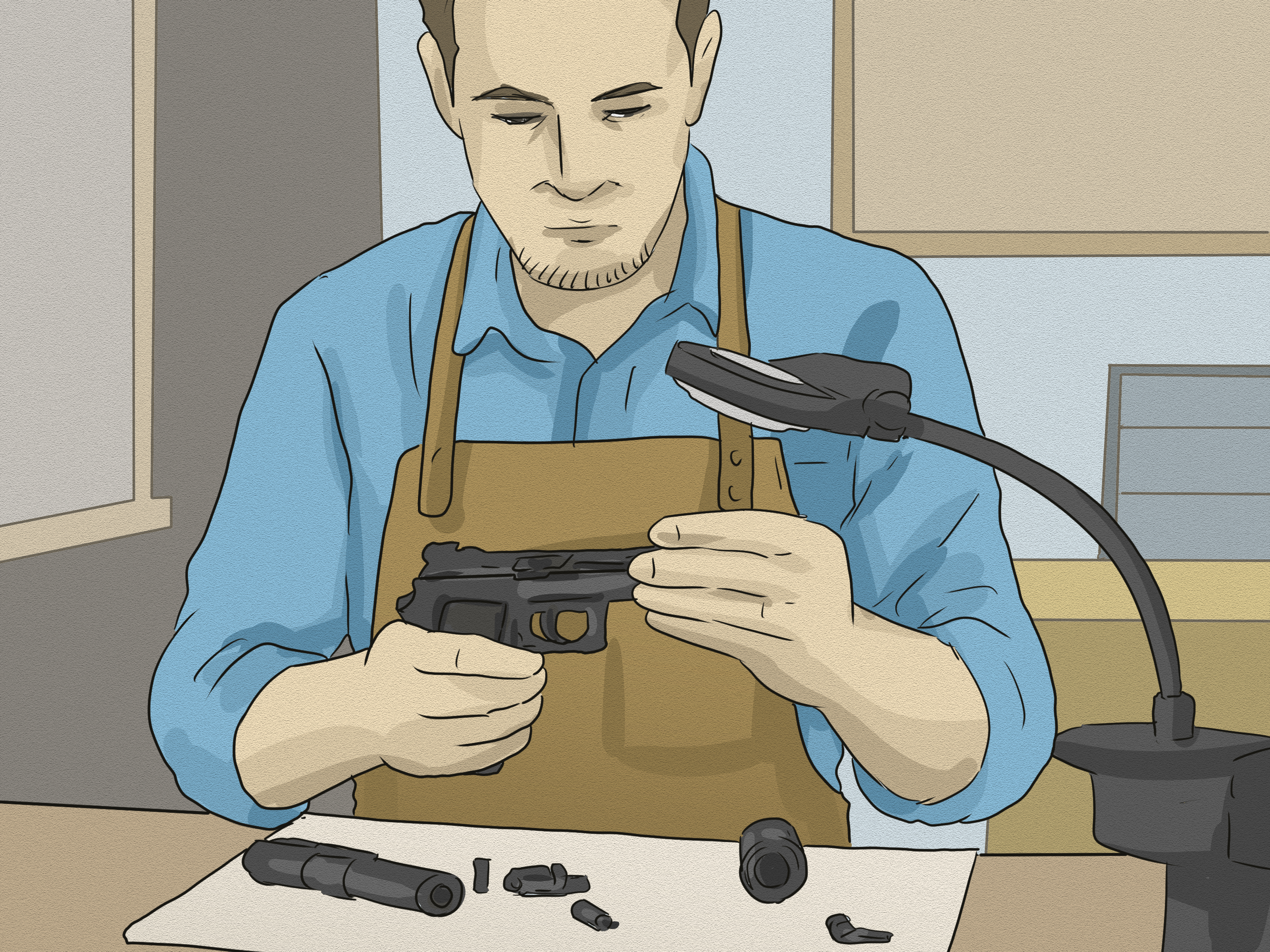
Many firearm incidents happen during cleaning, maintenance, inspection, or casual handling at home. That is why maintenance should be treated with the same seriousness as range time.
Before cleaning or inspecting a firearm, follow the manufacturer’s instructions for making it safe. Keep the muzzle in a safe direction, maintain trigger discipline, remove ammunition from the work area, and avoid distractions. Do not clean firearms around children, pets, guests, or anyone likely to interrupt you.
Use the correct tools and products recommended for the firearm. If something appears damaged, malfunctioning, or unfamiliar, stop and seek help from a qualified gunsmith, manufacturer service department, or certified instructor. Guessing is not maintenance. Guessing is how a simple task becomes an expensive lesson.
When Not to Handle a Firearm
One of the most responsible firearm safety skills is recognizing when not to touch one. Avoid handling firearms when you are:
- Under the influence of alcohol, drugs, or impairing medication.
- Sleep-deprived, distracted, or rushing.
- Angry, panicked, grieving, or emotionally overwhelmed.
- In the middle of an argument or family conflict.
- Unsure about the firearm’s condition or operation.
- Unable to provide full supervision around children or unauthorized people.
If someone in the home is experiencing a serious mental-health crisis, threats of self-harm, severe depression, violent behavior, or substance misuse, take immediate steps to prevent access to firearms. Secure them more rigorously and seek urgent local professional support. Safety planning is not a judgment of someone’s character. It is a practical way to create time and distance during a dangerous moment.
Common Firearm Safety Mistakes to Avoid
Many unsafe habits begin with overconfidence rather than bad intentions. The person who says, “I have done this a thousand times,” may be one routine lapse away from making that thousand-and-one time memorable for all the wrong reasons.
- Assuming a firearm is unloaded because someone else said so.
- Pointing the muzzle at something “just as a joke.”
- Placing a finger on the trigger while moving or discussing the firearm.
- Leaving a firearm unsecured because children are “too young to know.”
- Keeping keys, codes, or lock combinations accessible to unauthorized people.
- Handling firearms while drinking, arguing, exhausted, or distracted.
- Relying on a mechanical safety instead of safe handling habits.
- Failing to read the firearm’s specific manufacturer manual.
- Leaving firearms unattended in vehicles, drawers, bags, or open storage areas.
- Trying to fix a malfunction without appropriate training or professional help.
The best firearm safety routine is not complicated. It is repetitive, calm, and disciplined. Repetition may feel dull, but dull is good. “Nothing happened” is the gold medal of safety outcomes.
Build a Personal Firearm Safety Routine
Safety is easier when it becomes automatic. Create a routine you follow every time you handle, store, transport, clean, or inspect a firearm. Consistency reduces the chance that fatigue, distraction, or confidence will create a gap in your judgment.
- Pause before touching the firearm.
- Confirm a safe direction.
- Keep your finger outside the trigger guard.
- Treat the firearm as loaded until verified safe according to the manual or qualified instruction.
- Keep unauthorized people away from the area.
- Secure the firearm immediately when you are finished.
- Review storage access and household risks regularly.
Consider taking an accredited firearm safety course, even if you grew up around guns or have handled them for years. Formal instruction can identify habits you do not notice in yourself. It can also help you better understand local rules, safe storage choices, and the specific characteristics of your firearm.
Practical Safety Lessons From Everyday Scenarios
The following examples are composite safety scenarios, not personal accounts. They are included to show how ordinary moments can create preventable risks.
The “It’s Unloaded” Living Room Moment
A family friend visits and wants to show another adult a recently purchased firearm. He brings it into the living room, says it is unloaded, and starts explaining how much lighter it feels than his old one. The problem is not that he intends harm. The problem is that he has skipped the safety mindset before the conversation even begins.
A safer approach would be to keep the firearm secured unless there is a clear reason to handle it, move to a controlled area, ensure children and visitors are away, maintain a safe muzzle direction, and follow the manufacturer-approved process for verifying its condition. The lesson is simple: casual settings do not make firearms casual objects.
The Busy Parent and the Open Drawer
A parent keeps a firearm in a bedside drawer because the household feels familiar and the children are “too little to reach it.” Then a visiting child comes over, an older sibling pulls open the drawer, or a chair gets moved close enough for a curious kid to climb. Suddenly, the safety plan turns out to be a hope plan.
Secure storage is not about distrusting your children. It is about accepting that children explore, guests vary, and homes change. A locked storage device, restricted access to keys or codes, and separate secured ammunition create layers that do not depend on perfect supervision every minute of every day.
The Rushed Cleaning Session
Someone decides to clean a firearm quickly before dinner. Their phone buzzes, the dog barks, a delivery arrives, and they are trying to finish before the pasta turns into a science experiment. Rushing creates a dangerous environment because attention is split among too many things.
The better choice is to pause. Secure the firearm, remove ammunition from the area, and return to the task when there is enough uninterrupted time. Cleaning and maintenance should happen in a quiet, controlled place, not in the middle of household chaos. A safe routine is worth more than a fast one.
The Teenager Who “Already Knows”
A teenager has watched range videos, played shooting games, and attended a family outing where adults handled firearms. They may genuinely believe they understand enough to handle one independently. Adults sometimes mistake familiarity for readiness, especially when a teenager seems mature in other areas.
The safer response is clear communication and secure boundaries. Firearms should remain inaccessible without adult permission and supervision. Explain that knowledge, confidence, and legal authority are not the same thing. Good safety education does not shame curiosity; it gives curiosity a safe place to go, such as a supervised class with a qualified instructor.
The “Just Leave It in the Car” Decision
After a range visit or outdoor activity, someone leaves a firearm in a vehicle because they plan to return soon. Then an errand takes longer, the car is left unattended, or a break-in occurs. Firearms that are not properly secured can be stolen or accessed by unauthorized people.
Transportation requires the same planning as home storage. Follow applicable laws, minimize unnecessary stops, and use secure methods appropriate to your vehicle and circumstances. The most reliable safety choice is not to create an unattended-access opportunity in the first place.
The Difficult Conversation That Prevented a Tragedy
A family notices that a loved one is going through intense stress, depression, substance misuse, or a painful breakup. Nobody wants to bring up firearms because the topic feels uncomfortable. But avoiding the subject does not reduce the risk; it simply leaves the risk unaddressed.
A calm, respectful conversation about securing firearms can create breathing room during a crisis. Temporary changes in access, stronger locking measures, or lawful off-site storage may be appropriate depending on the situation. The goal is not punishment. The goal is safety, time, and the chance for everyone to get through a difficult period alive and supported.
Final Thoughts: Responsible Gun Ownership Means Consistent Safety
Knowing how to handle a firearm safely is not about memorizing a few rules once and forgetting them. It is about applying those rules every single time, even when nobody is watching and even when the firearm is believed to be unloaded.
Treat every firearm as loaded. Control the muzzle. Keep your finger away from the trigger until a lawful, deliberate decision to fire. Know your target and what surrounds it. Store firearms locked, unloaded, and inaccessible to unauthorized people, with ammunition secured separately.
Those habits may not make for dramatic stories. That is the point. The best firearm safety story is usually the one where nothing goes wrong, nobody gets hurt, and the firearm returns securely to storage when the day is done.