
Stick RPG looks simple for about twelve seconds. Then the game cheerfully tosses you into a tiny city where every bad decision costs time, health, money, or dignity. That is exactly why getting rich in the Stickpage version feels so satisfying. You are not winning because the game hands you a golden wallet. You are winning because you finally understand the rhythm: raise the right stat, take the right job, protect your schedule, and make your money start earning money.
This guide is built for players who want a no-cheat money strategy in Stick RPG. No magic codes. No mystery hacks. Just smart planning, efficient routes, and a healthy respect for the fact that this game will happily let you waste an entire day doing something spectacularly unprofitable.
The big secret is that the fastest road to wealth is not one single trick. It is a stack of good decisions. Early on, you need reliable income. In the middle game, you need better time management and better investment choices. In the late game, you want enough money, stats, and status to unlock the top-tier earning paths. Once you treat Stick RPG like a money snowball instead of a random sandbox, your bank account stops crawling and starts sprinting.
Step 1: Start with an intelligence-first mindset
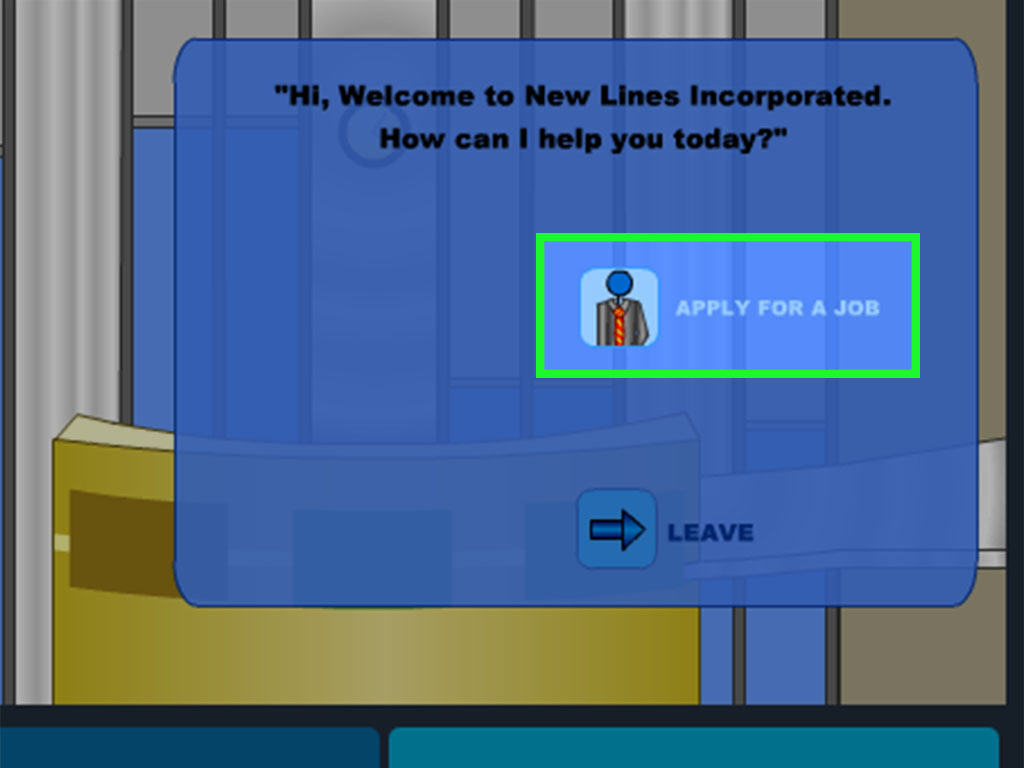
If your goal is making a lot of money in Stick RPG, intelligence should be your early favorite. Strength and charm matter, but intelligence opens one of the best early money routes in the game: New Lines Inc. That matters because the fastest way to stop being broke is getting onto a stable job ladder as soon as possible.
Too many players begin by wandering around town, testing random buildings, getting distracted, or spending money on things that feel cool but do not improve their income. That is the Stick RPG version of buying sports rims before you can afford groceries. Instead, think like a future corporate machine. Your first mission is not to look rich. Your first mission is to become employable.
In practical terms, that means choosing options and activities that push your intelligence upward early. Once your intelligence improves, your earning ceiling improves too. And in Stick RPG, ceilings matter. The game loves rewarding players who invest in long-term growth instead of short-term nonsense.
Step 2: Use the University of Stick like your personal ATM factory
The University of Stick is not flashy, but it is one of the smartest places to spend your early-game time. Free study gives you a steady way to build intelligence, and paid class time pushes it faster. That may not feel exciting in the moment, but this is where future dollars are born.
Think of the university as your startup phase. You are not making huge money there directly. You are building the stat that unlocks better wages, faster promotions, and a much smoother route into the game’s strongest legal income source. In other words, the university is where your broke stick figure stops being “random guy in traffic” and starts becoming “future executive with suspiciously perfect posture.”
A smart pattern is to alternate efficient training with income-producing activities. That way, you are not all grind and no cash, or all cash and no progress. The players who get rich fastest usually have one thing in common: they stop treating training as a detour. In Stick RPG, training is part of the money route.
Step 3: Climb New Lines Inc. as early as possible
Once your intelligence is high enough, New Lines Inc. becomes the backbone of your money-making strategy. This is where Stick RPG turns into a beautifully weird office simulator. Promotions improve your pay, and the whole structure rewards consistency. The sooner you get on that ladder, the sooner the game starts paying you like it finally respects your existence.
New Lines is especially important because it offers dependable money. Dependable money is boring, yes. It is also wonderful. Gambling can spike your cash. Risky routes can create big swings. But a job ladder gives you repeatable progress, and repeatable progress is what powers everything else.
At first, do not obsess over buying fancy upgrades or trying every side activity in town. Focus on getting promoted. Show up, work, raise the needed stats, and keep moving upward. The job ladder pays off more and more as your intelligence rises. By the time you reach the top, the income difference between “messing around” and “running your life like a spreadsheet” becomes hilariously obvious.
Why New Lines is such a strong money route
It is reliable, it scales with your intelligence, and it fits perfectly with the rest of a no-cheat strategy. You do not need luck. You do not need a miracle. You just need discipline, which is much less glamorous than luck but a lot more profitable.
Step 4: Buy time-saving tools before luxury items
In Stick RPG, time is basically another currency. A player who squeezes more useful actions out of each day will almost always out-earn a player who buys cool stuff too early. That is why utility purchases matter more than decorative flexes in the early and middle game.
The best example is buying items that help you start earlier or move through your routine more efficiently. An alarm clock is not sexy. It is also exactly the kind of item that quietly turns average runs into rich runs. More productive time means more work shifts, more study opportunities, more errands completed, and more chances to make profitable decisions before the day disappears.
This is the part where many players sabotage themselves. They see money in their pocket and immediately spend it on whatever feels like progress. But wealth in Stick RPG comes from compounding efficiency. If an item helps you work more, train faster, or keep a better schedule, it usually deserves priority over status purchases.
The rule is simple: buy things that create more earning opportunities first. Buy bragging rights later.
Step 5: Turn your home into a money hub
Your living quarters are more important than they first appear. They are not just where you sleep and save. They are also where the stock market side of the game becomes relevant. That changes everything, because it means your home is not just downtime. It is part of your financial engine.
Once you have real money to work with, begin treating your apartment or upgraded home like a control room. End the day, review what worked, sleep, and monitor stock opportunities. This is where patient players start separating from impulsive ones.
The best way to think about stocks in Stick RPG is wonderfully old-school: buy low, sell high, and do not act like every tiny movement is a once-in-a-lifetime event. If a stock is depressed, that may be your entry point. If it jumps nicely after you bought in, that may be your exit. The key is not being greedy. A good profit taken consistently beats holding forever and talking yourself into nonsense.
Home also gives you a place to reset your day cleanly. That matters because the richer you get, the more your money route becomes about routine. Rich players in Stick RPG are not usually doing one brilliant thing. They are doing ten sensible things in the right order every day.
Step 6: Make the bank your quiet business partner
The bank is one of the most underrated parts of a no-cheat money strategy. Players often think of wealth as cash in hand, but idle cash is lazy cash. Deposited money can work for you while you handle other parts of your routine.
That does not mean you should dump every dollar into the bank and stare at the ceiling until sunrise. It means you should stop carrying more dead cash than necessary. Keep enough on hand for training, essential purchases, and opportunities. Let the rest start building value instead of sitting around like a decorative paperweight.
There is a psychological benefit too. Money in the bank feels less spendable, which protects you from one of the most common Stick RPG diseases: “I suddenly have money, therefore I must immediately do something dumb with it.” We have all been there. The game practically invites it.
As your income grows, the bank becomes more useful because it supports the larger loop: work, train, invest, sleep, repeat. It is not the most exciting piece of the puzzle, but neither are tax returns, and somehow adults still keep talking about them.
Step 7: Treat the casino like a tool, not a personality
Yes, the casino can make you richer. It can also turn your progress into confetti. That is why the smartest players use it selectively instead of emotionally. Stick RPG includes several casino games, and while gambling is absolutely part of the game’s identity, it should not become your whole financial plan unless you enjoy living on the edge of chaos.
If you decide to gamble, do it with rules. Set a target. Set a stop point. Never risk your whole run on one dramatic mood swing. The worst casino decisions happen when a player is not trying to make money anymore. They are trying to avenge an earlier loss, and that is when their bankroll starts doing interpretive dance out the window.
For a no-cheat guide, the safest advice is simple: use the casino as a side option when you have spare cash, not as your foundation. Your foundation should still be job income, stat growth, and investments. The casino is seasoning. It is not dinner.
When the casino actually makes sense
It makes sense when you already have stable income, when losing would not derail your run, and when you are using it to accelerate progress rather than rescue bad planning. A controlled risk can help. Desperation rarely does.
Step 8: Consider the bus depot only after your finances are stable
The bus depot opens a riskier money path. It can be profitable, but it is not the route you should build first. Think of it as an advanced option for players who already understand the city, can afford mistakes, and are not depending on one perfect outcome to stay afloat.
This route takes preparation, costs time, and carries real downside in the game. That means it can be useful, but only after you have enough money, enough game knowledge, and enough patience to handle a bad day without your whole strategy falling apart.
The mistake is trying high-risk money methods too early because they sound faster. Sometimes they are faster. Sometimes they are just a stylish shortcut to being broke again. The smarter move is to build a cushion through work, training, banking, and stocks first. Once your core economy is healthy, then you can experiment with the bus depot route without sweating every setback.
In other words, use high-risk methods when you are already financially comfortable in the run. Do not use them as a substitute for having a plan.
Step 9: Turn wealth into top-tier status and top-tier income
The late game in Stick RPG is where your money strategy finally shows its full power. By now, you should not be thinking about “How do I make a few extra dollars?” You should be thinking about unlocking the biggest career outcomes and using your wealth to qualify for them.
That means aiming for the top. President and Dictator are the game’s ultimate status jobs, and both paths reward players who have already built serious wealth, strong stats, and the right career position. If you have climbed to CEO, bought major real estate, stacked money, and aligned your karma appropriately, you are no longer surviving the city. You are preparing to own it.
This is what makes the game’s economy so fun. Early money helps you get smarter. Smarter choices help you get promoted. Promotions help you get richer. Richer runs help you qualify for late-game opportunities. The whole system feeds itself once you stop interrupting it with bad decisions and random distractions.
And yes, by this point you are allowed to feel a little smug. You earned it.
Common mistakes that keep players broke
- Training without a plan and never turning stats into income.
- Spending on status purchases before buying useful time-saving tools.
- Ignoring stocks and bank deposits once cash starts accumulating.
- Trying risky money methods too early.
- Using the casino as a full-time career instead of a side opportunity.
- Wandering aimlessly instead of building a repeatable daily routine.
A practical no-cheat money route that works
If you want the short version, here it is: raise intelligence early, use the University of Stick efficiently, get into New Lines Inc. fast, prioritize time-saving items, climb to better pay, store and invest your cash wisely, use the casino sparingly, and save risk-heavy methods for later. That is the backbone of a strong Stick RPG money guide.
It is not flashy. It is not magical. It is just effective. And in Stick RPG, effective beats flashy almost every time.
Conclusion
If you are wondering how to make a lot of money in Stick RPG at Stickpage, the answer is not “press one secret button and become rich.” The answer is to play like a patient opportunist. Build intelligence. Turn that intelligence into promotions. Turn promotions into cash flow. Turn cash flow into investments. Then use that wealth to unlock the game’s biggest endgame rewards.
The beauty of Stick RPG is that it lets you chase money in multiple ways, but the best no-cheat path is the one that stacks stability with smart risk. Make your early game efficient, your midgame disciplined, and your late game ambitious. Do that, and your stick figure stops scraping by and starts looking like the tiny ruler of a very weird economic empire.
Extended experiences: what getting rich in Stick RPG actually feels like
One of the reasons this game stayed so memorable is that the money grind feels personal. In a lot of browser games, money is just a number. In Stick RPG, money feels like momentum. The first time you scrape together a decent amount, it feels enormous. Then the game humbles you by showing how many more upgrades, promotions, and milestones still sit in front of you like a smug little mountain.
Early runs often feel messy. You waste hours. You buy something too soon. You gamble when you should have trained. You walk around town like a confused tourist with a wallet problem. That is part of the charm. The city is small, but the learning curve is real. Every building starts to mean something only after you have made enough mistakes to understand why it matters.
Then the game clicks. Suddenly, you stop reacting and start planning. You realize the university is not a chore. It is leverage. You realize a better schedule makes the day feel longer. You notice that stable wages calm down your whole run. You start ending the day with a purpose instead of collapsing into sleep because everything went sideways.
That middle phase is probably the most satisfying part of Stick RPG. You are not rich yet, but you can feel it coming. A promotion lands and now your work matters more. A bank deposit starts to feel worthwhile. A stock move finally pays off and you get that wonderful browser-game feeling of, “Oh, this is not luck anymore. I actually understand what I’m doing.” Those are the moments that keep players hooked.
There is also a funny emotional shift that happens when your money stops being fragile. In the early game, every purchase feels dramatic. In the late game, you start thinking bigger. You are no longer asking whether you can survive the day. You are asking how fast you can dominate the whole run. That is a great feeling in a game built around small decisions, because it proves those small decisions were doing real work the entire time.
Even the setbacks become part of the experience. A bad gamble, an inefficient day, or a careless purchase feels annoying, but it also teaches you something. Stick RPG is sneaky that way. It trains you through embarrassment. The game practically leans over your shoulder and says, “Interesting choice. Terrible, but interesting.” Then you reload your brain, not your save file, and do better next time.
And that is probably why the money chase still works all these years later. It is not just about getting a huge number on screen. It is about watching your tiny stick figure evolve from broke and directionless into someone who controls the pace of the city. Once that transformation starts, every shift, every stat point, and every smarter decision feels rewarding. You are not just making money in Stick RPG. You are learning how the whole strange little world fits together, and that is what makes the riches feel earned instead of handed to you.
Note: This article is written for web publication in standard American English and intentionally omits inline source links by request.














