
Tight legs can make normal life feel like you accidentally downloaded the “rusty robot” software update. Walking upstairs, getting out of the car, bending to tie your shoes, or standing after a long day at your desk can suddenly become a full dramatic event. The good news? Learning how to stretch your legs safely can help improve flexibility, reduce everyday stiffness, and support better movement from your hips all the way down to your ankles.
Leg stretching is not about forcing your body into a pretzel shape or competing with that one yoga friend who appears to have no bones. It is about gently improving range of motion in the major lower-body muscle groups: hamstrings, quadriceps, calves, hip flexors, glutes, inner thighs, and the muscles around the hips. When these areas move well, daily activities usually feel smoother, workouts feel better, and your legs stop sending passive-aggressive complaints every time you stand up.
Before you begin, warm up for five to ten minutes with easy movement such as walking, marching in place, or light cycling. Stretching cold muscles can increase discomfort, while warm muscles are more prepared to lengthen. Hold most static stretches for about 20 to 30 seconds, breathe normally, and aim for mild tensionnot pain. Sharp pain, numbness, tingling, or a pulling sensation that feels wrong is your body’s polite but firm way of saying, “Please stop doing that.”
Why Leg Muscles Get Tight
Leg tightness often comes from a mix of sitting too long, repetitive workouts, poor recovery, weak supporting muscles, dehydration, stress, or simply asking your body to do more than it is used to doing. Sitting can shorten the hip flexors and make the hamstrings feel stiff. Running and cycling can leave the calves, quads, and IT band area feeling overworked. Strength training can create temporary muscle tightness when your tissues are adapting.
The goal is not to eliminate all tightness forever. Some muscle tension is normal. The real goal is to restore comfortable movement, improve flexibility gradually, and help your body feel less like an old folding chair.
How to Stretch Your Legs Safely
1. Standing Calf Stretch
The calf muscles work hard every time you walk, run, climb stairs, or stand on your toes to reach the good snacks on the top shelf. Tight calves can affect ankle mobility and may contribute to foot, heel, or knee discomfort.
Stand facing a wall. Place both hands on the wall at shoulder height. Step one foot back, keeping that heel on the floor and the back knee straight. Bend your front knee slightly until you feel a stretch in the calf of the back leg. Hold for 20 to 30 seconds, then switch sides.
Tip: Keep your toes pointing forward. If your back foot turns outward, the stretch becomes less effective.
2. Bent-Knee Soleus Stretch
Your soleus is the deeper calf muscle, and it deserves attention because it helps with walking, balance, and ankle control. This stretch looks similar to the standard calf stretch, but the back knee bends.
Stand near a wall with one foot behind you. Keep your back heel down, then bend both knees slightly. You should feel the stretch lower in the calf, closer to the Achilles area. Hold for 20 to 30 seconds on each side.
Best for: People who feel ankle stiffness during squats, lunges, running, or long walks.
3. Supine Hamstring Stretch With a Towel
The hamstrings run along the back of your thighs. When they are tight, bending forward can feel like your legs are made of guitar strings. A towel or yoga strap makes this stretch more controlled.
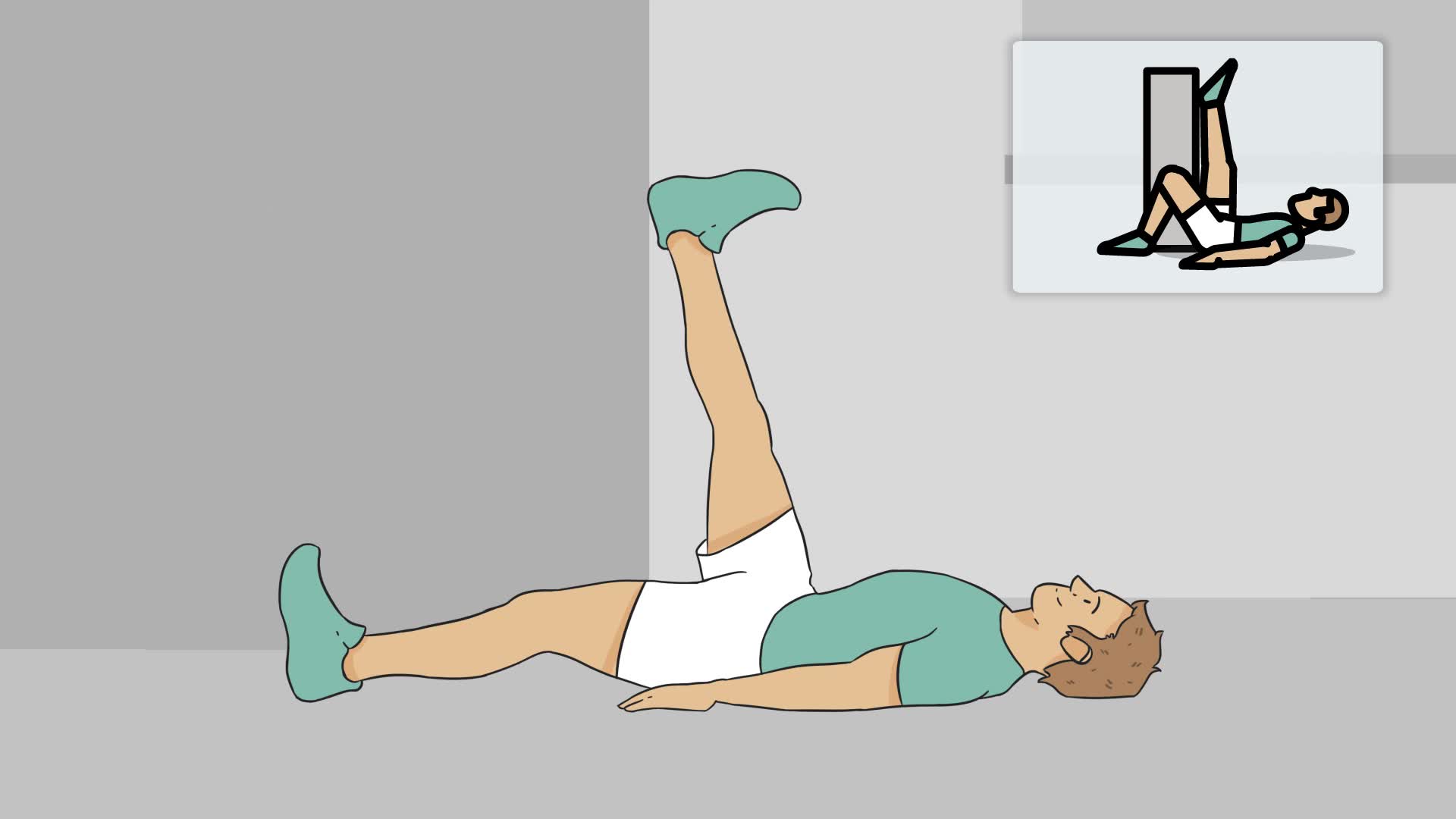
Lie on your back with both legs extended. Loop a towel around the ball of one foot. Slowly raise that leg toward the ceiling while keeping the knee slightly bent. Pull gently until you feel a stretch along the back of your thigh. Hold for 20 to 30 seconds, then switch legs.
Form note: Keep your lower back relaxed against the floor. Do not yank the leg toward your face like you are starting a lawn mower.
4. Seated Hamstring Stretch
This is a classic leg stretch because it is simple, effective, and easy to modify. Sit on the floor with one leg extended and the other knee bent, with the sole of that foot resting near the inner thigh of the straight leg.
Sit tall, hinge forward from your hips, and reach toward your shin, ankle, or foot. Stop when you feel a comfortable stretch behind the thigh. Hold for 20 to 30 seconds, then change sides.
Common mistake: Rounding your back aggressively. Think “chest forward” rather than “nose to knee.” Your hamstrings do not need a dramatic monologue.
5. Standing Quadriceps Stretch
The quadriceps are the big muscles at the front of your thighs. They help straighten your knees and support activities like climbing stairs, squatting, and getting up from a chair. Tight quads can make the front of the hips and knees feel tense.
Stand near a wall or chair for balance. Bend one knee and bring your heel toward your glutes. Hold your ankle or foot with the same-side hand. Keep your knees close together and your torso tall. Hold for 20 to 30 seconds, then switch sides.
Modification: If grabbing your foot is difficult, use a towel or strap around your ankle.
6. Kneeling Hip Flexor Stretch
Hip flexors often get tight from long sitting. When they are stiff, your hips may feel restricted, your stride may feel shorter, and your lower back may complain like it has joined a workplace union.
Kneel on one knee with the other foot in front, forming a lunge position. Gently tuck your pelvis under, squeeze the glute on the kneeling side, and shift forward slightly. You should feel a stretch in the front of the hip of the back leg. Hold for 20 to 30 seconds, then switch sides.
Important: Do not arch your lower back. The stretch should come from the hip, not from turning your spine into a suspension bridge.
7. Figure-Four Glute Stretch
Your glutes and deep hip muscles can become tight from sitting, running, lifting, or simply living in a body that has opinions. The figure-four stretch targets the glutes and piriformis area.
Lie on your back with both knees bent. Cross your right ankle over your left thigh, creating a “4” shape. Hold behind the left thigh and gently pull the legs toward your chest. Hold for 20 to 30 seconds, then switch sides.
Good sign: You should feel the stretch in the outside of the hip and glute, not in the knee.
8. Butterfly Inner Thigh Stretch
The inner thighs, or adductors, help stabilize the hips and legs. Tight adductors can make side lunges, squats, and everyday movement feel limited.
Sit on the floor with the soles of your feet together and your knees gently falling outward. Hold your feet or ankles, sit tall, and lean forward slightly from the hips. Hold for 20 to 30 seconds.
Do not: Bounce your knees up and down. Your inner thighs are not trampoline equipment.
9. Side Lunge Adductor Stretch
This stretch is excellent for loosening the inner thighs while also training your body to move side to side. Stand with your feet wider than hip-width apart. Shift your weight toward one side by bending that knee while keeping the opposite leg straight.
Keep both feet flat if possible. You should feel the stretch along the inner thigh of the straight leg. Hold for 20 to 30 seconds, then switch sides.
Best for: Athletes, walkers, runners, and anyone whose hips feel stuck in “forward only” mode.
10. IT Band and Outer Hip Stretch
The iliotibial band, often called the IT band, is a thick band of connective tissue along the outside of the thigh. You cannot exactly “stretch” it like a muscle, but you can stretch and relax the surrounding hip muscles that influence tension in that area.
Stand next to a wall for balance. Cross the leg closest to the wall behind the other leg. Lean your hip gently toward the wall until you feel a stretch along the outside of the hip and thigh. Hold for 20 to 30 seconds, then switch sides.
Tip: Keep your torso upright. Avoid twisting forward.
11. Downward Dog Calf and Hamstring Stretch
Downward dog is a yoga-inspired stretch that targets the calves, hamstrings, hips, and back side of the body. Start on your hands and knees. Tuck your toes, lift your hips up and back, and create an upside-down V shape.
Keep your knees slightly bent if your hamstrings are tight. Press your chest gently toward your thighs and alternate bending one knee at a time to “pedal” the feet. Hold for 20 to 30 seconds while breathing steadily.
Modification: Place your hands on a bench, couch, or wall if the floor version feels too intense.
12. Dynamic Leg Swings
Dynamic stretches are controlled movements that prepare your muscles for activity. Leg swings are especially useful before walking, running, sports, or lower-body workouts.
Stand near a wall or chair for balance. Swing one leg forward and backward in a comfortable range of motion. Keep your torso tall and your movement controlled. Perform 10 to 15 swings per leg. Then try side-to-side swings across the body for the hips and inner thighs.
When to use: Before exercise. Save longer static holds for after workouts or separate mobility sessions.
A Simple 10-Minute Leg Stretching Routine
If you want a quick routine, try this sequence after a short warm-up or at the end of a workout:
- Standing calf stretch: 30 seconds per side
- Bent-knee soleus stretch: 30 seconds per side
- Supine hamstring stretch: 30 seconds per side
- Standing quad stretch: 30 seconds per side
- Kneeling hip flexor stretch: 30 seconds per side
- Figure-four glute stretch: 30 seconds per side
- Butterfly stretch: 30 seconds
- Side lunge adductor stretch: 30 seconds per side
That is enough to cover the major lower-body areas without turning your evening into a documentary called The Person Who Stretched Forever. Repeat the routine three to five times per week for best results.
Common Stretching Mistakes to Avoid
Stretching Cold Muscles
Do not treat stretching as the warm-up itself. Warm up first with light movement. Your muscles respond better when blood flow increases and your body temperature rises.
Pushing Into Pain
A stretch should feel like gentle tension, not punishment. Pain can signal that you are pulling too hard, using poor form, or irritating an injury.
Bouncing
Fast bouncing can cause muscles to tighten defensively. Use slow, controlled movement instead.
Holding Your Breath
Breathing helps your nervous system relax. Inhale through your nose, exhale slowly, and let the stretch become calmer with each breath.
Ignoring Strength Training
Stretching helps flexibility, but strength helps control. If your legs are always tight, weak glutes, hips, or calves may be part of the story. Combine stretching with basic strengthening exercises such as bridges, squats, calf raises, step-ups, and lunges.
When Should You Stretch Your Legs?
The best time depends on your goal. Before exercise, use dynamic stretches such as leg swings, walking lunges, and gentle high knees. These prepare the muscles without relaxing them too much before performance. After exercise, use static stretches such as hamstring, quad, calf, and hip flexor holds.
You can also stretch during the day if you sit for long periods. A two-minute break every hour can help your hips and legs feel less stiff. Stand up, walk around, stretch your calves, and remind your chair that it does not own you.
Experience-Based Tips for Loosening Tight Legs
Many people start stretching only when their legs already feel tight enough to audition for a wooden furniture catalog. The better strategy is to stretch before stiffness becomes a full personality trait. From a practical, real-life perspective, consistency matters more than intensity. A gentle five-minute routine done most days usually beats one heroic 45-minute session followed by three weeks of forgetting stretching exists.
One helpful approach is to connect leg stretching to something you already do. Stretch your calves after brushing your teeth. Do a hip flexor stretch after shutting down your laptop. Try a figure-four stretch while watching TV. The routine becomes easier when it attaches itself to normal life instead of requiring a motivational speech, a perfect yoga mat, and a dramatic sunrise.
Another experience-based lesson: tightness is not always located where you feel it. For example, tight hamstrings may feel like the main problem, but the hips, glutes, calves, or lower back may also be involved. Someone who sits all day may stretch the hamstrings repeatedly and still feel stiff because the hip flexors are short and the glutes are underactive. That is why a balanced lower-body stretching plan works better than obsessing over one muscle group.
Breathing also makes a surprising difference. When people rush stretches, they often hold their breath and brace their body. That turns a relaxing stretch into a tiny wrestling match with your own nervous system. Instead, take slow breaths and ease into the position gradually. On each exhale, allow the muscle to soften slightly. You are not trying to win against your legs; you are trying to negotiate a peace treaty.
Props are your friends. A towel, yoga strap, wall, chair, pillow, or folded blanket can make stretches safer and more comfortable. If you cannot reach your foot during a hamstring stretch, use a towel. If kneeling bothers your knee during a hip flexor stretch, place a folded towel underneath it. If balance is tricky during a standing quad stretch, hold a wall or chair. Good stretching is not about looking impressive. It is about feeling better afterward.
Progress may be subtle. You might not suddenly become flexible after three sessions, but you may notice that stairs feel easier, your stride feels smoother, or your lower body feels less cranky after sitting. Those small changes count. Flexibility improves gradually, and the body tends to reward patience.
Finally, listen to patterns. If one leg is always tighter, if pain keeps returning, or if stretching makes symptoms worse, it may be time to check in with a physical therapist or qualified healthcare professional. Stretching is powerful, but it is not magic. Sometimes tight muscles are protecting an irritated joint, healing tissue, or a movement imbalance. Getting the right guidance can save you weeks of guessing.
Conclusion
Learning how to stretch your legs is one of the simplest ways to support flexibility, mobility, and everyday comfort. The best routine targets all major lower-body areas: calves, hamstrings, quads, hip flexors, glutes, inner thighs, and outer hips. Warm up first, stretch gently, breathe steadily, and stay consistent. Your legs do a lot for you every day, so giving them a few minutes of care is not a luxury. It is basic maintenancelike charging your phone, but with fewer notifications.














