
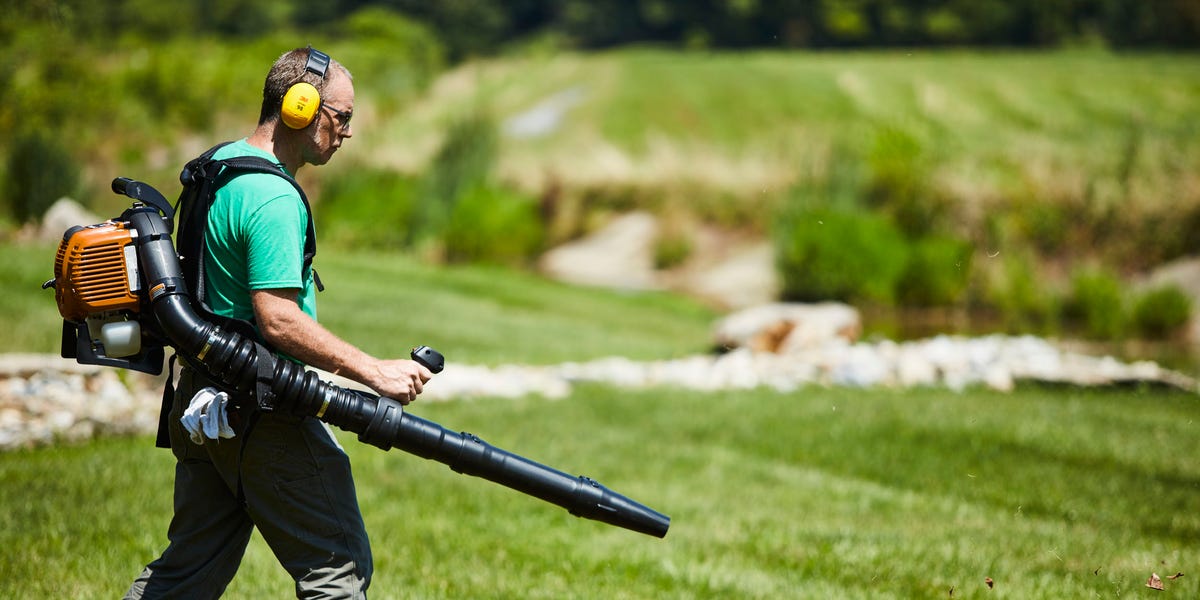
There are few suburban sounds more capable of starting a silent blood feud than a gas leaf blower at the wrong hour. A barking dog? Annoying. A car alarm? Rude. But a gas blower screaming through a peaceful morning has a special talent for making curtains twitch and coffee mugs shake. The truth is, a gas leaf blower can be a useful tool. It clears leaves fast, handles large yards well, and saves your back from endless raking. The problem is not always the machine itself. The problem is usually how, when, and where people use it.
If you want to keep your yard tidy without becoming the villain of the cul-de-sac, you need more than horsepower. You need timing, restraint, decent technique, and a little social intelligence. Think of it as lawn care with manners. In other words: do not operate your gas leaf blower like you are conducting an air raid on acorns. Use it like an adult who understands that other people also live here.
Why Gas Leaf Blowers Make People So Mad So Fast
Let’s be honest about the source of the drama. Gas leaf blowers are loud. They can also throw around dust, pollen, dirt, and debris in ways that feel personal when you are the one next door trying to work, nap, talk, or enjoy a Saturday that does not sound like a racetrack. Even when the operator thinks, “I’ll only be out here for ten minutes,” that noise can travel farther than expected, especially in tight neighborhoods, townhome communities, or streets lined with hard surfaces that bounce sound around like a pinball machine.
That is why communities across the United States have become much stricter. Some places limit hours. Some set decibel caps. Some restrict or ban gas-powered models entirely. That should tell you something important: neighbor-friendly blower use is no longer just a courtesy issue. In many places, it is a compliance issue too.
Step One: Check Your Local Rules Before You Pull the Cord
Before you worry about technique, worry about legality. Leaf blower rules vary wildly by city, county, and HOA. One town may allow use during standard daytime hours. Another may prohibit gas-powered models altogether. A third may say your equipment must stay under a certain decibel level when measured from 50 feet away.
Some local rules are very specific. In residential areas of Palo Alto, leaf blowers are limited to 9 a.m. to 5 p.m. on weekdays and 10 a.m. to 4 p.m. on Saturdays, with no use on Sundays or holidays. Greenwich, Connecticut, restricts leaf blower use before 8 a.m. on weekdays and before 9 a.m. on weekends and holidays, and it bans commercial gasoline-powered leaf blower use on Sundays in residential zones. Cupertino and Culver City both use a 65 dBA-at-50-feet standard for permitted blowers. Washington, D.C., goes further and prohibits the sale or use of gasoline-powered leaf blowers. California has also pushed new small off-road engines toward zero-emission standards starting with 2024 model years.
The lesson is simple: “I didn’t know” is not a magical legal defense, and it definitely does not improve neighbor relations. Check your city website, county code, or HOA rules first. Two minutes of research can save you from a fine, a complaint, or a front-yard argument nobody wins.
Choose the Least Annoying Time, Not Merely the Earliest Legal Time
This is where good judgment matters more than technical compliance. Just because your local rule allows blower use at 8 a.m. does not mean 8:01 a.m. is the kind move. Legal and considerate are not always identical twins. If you want to avoid annoying people, start later than the minimum whenever possible.
Better timing habits that keep the peace
A smart rule of thumb is to avoid early mornings, dinner hours, and lazy Sunday windows. Mid-morning to late afternoon is usually the least disruptive period for most neighborhoods. If you can wait until around 10 a.m. on weekends, even better. That gives people time to sleep in, wrangle children, recover from a late shift, or simply enjoy a peaceful breakfast without being serenaded by mechanical hurricane noises.
Also pay attention to what is happening around you. Is your neighbor hosting a backyard party? Is the family next door obviously putting a baby down for a nap? Is someone working from a home office with the window open? You do not need psychic powers to notice basic context. The more tuned in you are to your surroundings, the less likely you are to become neighborhood folklore.
Use Technique, Not Brute Force
One of the biggest mistakes people make with a gas leaf blower is using full throttle for everything, as if the machine only has two settings: off and apocalypse. Efficient blower use is about control, not drama. The lowest effective throttle is usually the best one. Less power often means less noise, less dust, and less debris ending up where it should never go.
Start low and aim low
Keep the nozzle close to the ground when you begin. This helps move leaves without launching a cloud of dirt and grit into the air. Raise the nozzle only as needed. If you immediately point the tube upward and blast at maximum speed, you are not cleaning; you are creating a weather event.
Work in one direction
Pick a destination inside your own property and move debris there in stages. Do not zigzag wildly like you are chasing each leaf individually out of spite. Work from edges inward. Use short, deliberate passes. Build manageable piles. Then bag, compost, mulch, or collect the debris instead of redistributing it into public space and pretending nature sorted it out.
Watch the wind
Wind direction matters. If the breeze is pushing dust toward open windows, parked cars, porches, or your neighbor’s patio furniture, stop and reset. A good operator works with the wind when possible, not against it. If the day is gusty and dusty, that may be your cue to switch tools, delay the job, or scale it back.
Know when a blower is the wrong tool
Gas leaf blowers are good for leaves, grass clippings, and light yard debris. They are not ideal for big gravel dust, construction dirt, cement dust, dry topsoil, or anything that turns into a nasty airborne mess. In those cases, a rake, broom, shop vacuum, or plain old elbow grease may actually be faster and far less obnoxious. Sometimes the most neighbor-friendly move is choosing a different tool.
Keep the Debris on Your Property Like a Civilized Human
This should not need to be said, and yet here we are. Do not blow leaves into the street. Do not blow clippings onto sidewalks. Do not blast yard debris into the gutter. And absolutely do not send your leaf pile on a one-way trip into the neighbor’s yard like a passive-aggressive care package.
Leaves and clippings in the street can clog storm drains, contribute to flooding, and wash organic waste into waterways. Cities and stormwater agencies regularly tell residents to keep leaves out of gutters and to blow or sweep clippings back onto the lawn instead. In short: the road is not your mulch bin, and the storm drain is not your landscaping assistant.
If you use a blower, finish the job. That means collecting the pile you created. Good options include:
- Composting: A great use for leaves and yard trimmings, and a smart way to build healthier soil.
- Mulching: Shredded or chopped leaves can work beautifully in beds, around trees, and in garden areas.
- Grasscycling: Grass clippings can often stay on the lawn as natural fertilizer.
- Bagging for yard waste pickup: Not glamorous, but still far better than exporting your mess to public space.
In many cases, the best move is to leave some leaves where they can do useful work. Mulched leaves help suppress weeds, hold moisture, buffer temperature swings, protect soil, and feed beneficial organisms as they break down. A perfectly stripped yard may look tidy for a minute, but it is not always the healthiest or smartest outcome.
Protect People, Pets, and Your Own Ears
Courtesy is not just about noise. It is also about safety. Do not point an operating blower toward people, pets, open doors, open garages, or open windows. Keep bystanders away from the work zone. Small sticks, gravel, and hidden junk can become instant projectiles, and nobody wants their windshield, shin, or golden retriever involved in your leaf management strategy.
You should also take the machine’s impact on you seriously. Gas leaf blowers can easily reach sound levels associated with hearing risk. That means “I’m just out here for a little while” is not always harmless, especially if your sessions are frequent. Wear hearing protection. Earplugs or earmuffs are a lot cheaper than pretending tinnitus is just a quirky lifestyle soundtrack.
Wear eye protection too, because leaves are not the only things that move. Dust, pollen, and mystery particles love to fly. Closed-toe shoes, long pants, and basic caution are not overkill. They are what separate a competent homeowner from someone making very bad choices in athletic slides.
Short Sessions Beat Long Sonic Marathons
Another way to stay on good terms with your neighbors is to reduce how long the machine runs in the first place. A 12-minute focused cleanup is easier to tolerate than a 45-minute noise festival with multiple intermissions. Plan the job before you start. Know where the debris is going. Have bags, bins, a tarp, or a compost spot ready. That way, you are not wandering around the driveway with the engine idling while deciding what your leaves mean to you.
It also helps to combine tasks. Instead of firing up the blower three separate times in one weekend, batch the work into one efficient session. Your neighbors will appreciate fewer disruptions, and your future self will appreciate not having to keep revisiting the same chore like a yard-work boomerang.
Be a Good Neighbor on Purpose
The most underrated leaf blower accessory is communication. If you know you need to clear a big mess after a storm, or you are helping an older relative on a property that takes longer than usual, a quick heads-up can go a long way. You do not need a formal press release. Something as simple as, “Hey, I’m going to knock out the leaves tomorrow around 11 and should be done quickly,” can lower irritation before it starts.
That is especially true in close-knit neighborhoods, duplexes, and places where people share walls, driveways, or tiny lot lines. A small courtesy often prevents a larger complaint. People are far more forgiving when they feel considered rather than ambushed.
When You Should Skip the Gas Blower Altogether
Sometimes the most respectful way to use a gas leaf blower is not to use it at all. If you have a tiny yard, only a small patch of leaves, or a lot of dust-prone surfaces, a rake may be quieter, cleaner, and honestly less hassle. If the leaves are destined for compost or mulch, a mulching mower can be the better move. If you have noise-sensitive neighbors, battery-powered equipment may be worth the switch for routine cleanup.
That does not mean gas blowers never make sense. On larger lots, after storms, or with heavy seasonal drop, they can still be practical. But the smaller the job and the tighter the neighborhood, the harder it is to justify the full gasoline soundtrack.
A Simple Neighbor-Friendly Gas Leaf Blower Checklist
- Check your local laws, HOA rules, and time restrictions first.
- Start later than the earliest legal time when you can.
- Keep sessions short and purposeful.
- Use the lowest throttle that gets the job done.
- Keep the nozzle low and work in one direction.
- Do not blow leaves into streets, sidewalks, storm drains, or neighboring yards.
- Bag, compost, mulch, or otherwise collect what you move.
- Wear hearing and eye protection.
- Avoid dusty conditions and do not blast debris toward homes, pets, or people.
- Use another tool when a blower is clearly the wrong choice.
Conclusion
Using a gas leaf blower without irritating the entire neighborhood is not some impossible suburban fantasy. It is mostly a matter of respect. Respect the clock. Respect the law. Respect where the debris ends up. Respect the fact that your “quick cleanup” is somebody else’s soundtrack. If you use the machine later in the morning, for shorter periods, at lower throttle, with smarter technique, and with an actual cleanup plan, you stop being the person everyone complains about and become the rare leaf blower owner who seems, against all odds, reasonable.
And really, that is the goal. Not to win the leaf war. Not to dominate every acorn. Just to clean your yard efficiently without making the neighborhood fantasize about hiding your spark plug.
Experiences From Real-World Yard Work Situations
In real neighborhoods, the difference between “helpful homeowner” and “that guy with the blower” usually comes down to small choices. Consider the classic Saturday scenario. One person starts a gas leaf blower at 7:15 a.m. because the air is cool and the job will be done before breakfast. From the operator’s point of view, that sounds efficient. From everyone else’s point of view, it sounds like a lawn-equipment jump scare. Curtains open, dogs bark, and one sleep-deprived parent silently adds a new enemy to the list. The leaves may be gone in fifteen minutes, but the social damage hangs around longer than the smell of two-stroke exhaust.
Now compare that with the homeowner who waits until 10:30 a.m., checks that the wind is not pushing dust toward anyone’s patio, uses a moderate throttle, clears the driveway and front walk in one pass, and bags the pile right away. Same neighborhood. Same basic chore. Totally different reaction. People are usually much more tolerant when the work is brief, predictable, and contained. The machine is still noisy, but it does not feel like a hostile act.
Another common experience happens when someone uses a blower as a relocation service instead of a cleanup tool. They move leaves from the lawn to the curb, from the curb to the gutter, and from the gutter to “I guess nature will figure it out.” Neighbors notice that immediately. What annoys people is not just the sound; it is the sense that one yard got cleaner by making the whole street messier. By contrast, the residents who blow leaves onto a tarp, drag the load to a compost pile, or shred the leaves into garden beds tend to cause much less resentment. The job looks finished, not outsourced to the nearest storm drain.
There is also the issue of using maximum power for no reason. Many people assume full throttle equals efficiency. In practice, it often means swirling dust, scattered piles, and a job that takes longer because the operator is fighting the chaos they just created. Experienced users usually learn the opposite lesson: lighter passes are cleaner. They start low, move leaves in the same direction, and only hit extra power when a damp pile or stubborn corner actually needs it. That quieter, more controlled method is usually faster in the end and far less irritating to everyone within earshot.
One more real-world pattern: people remember consideration. A quick warning to a next-door neighbor, an effort to avoid nap time, or a choice to skip the blower on a sleepy Sunday morning tends to earn goodwill. That goodwill matters because neighborhood life runs on repetition. You are not just doing yard work once. You are building a pattern people will come to expect. If your pattern says, “I use loud equipment thoughtfully and finish fast,” most neighbors will shrug and move on. If your pattern says, “I blast leaves into the street at sunrise every weekend,” they will remember that too.
So the practical experience is clear. People rarely hate leaf blowers in the abstract. They hate careless use. The homeowners who cause the fewest problems are not necessarily the ones with the newest tools. They are the ones with the best habits.














